260 books match the query 'Human ecology' and 13 start with p
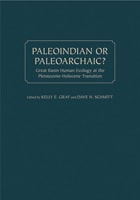
cover of Paleoindian or Paleoarchaic?: Great Basin Human Ecology at the Pleistocene-Holocene Transition

Paleoindian or Paleoarchaic?

Great Basin Human Ecology at the Pleistocene-Holocene Transition

Kelly E Graf

University of Utah Press, 2008
Were the earliest inhabitants of the Great Basin 'Paleoindians' in the traditional sense? Were they highly mobile foragers? Did they hunt large, now extinct animals like mammoth, horse, and camel?
 
Great Basin archaeologists have argued that the earliest inhabitants possessed an organization strategy of mixed 'Paleoindian' and 'Archaic' lifeways, referring to them as 'Paleoarchaic.'
 
Recent excavations of rock shelters and caves, coupled with innovative studies of the surface archaeological record have increased our understanding of human organization in the Great Basin during the late Pleistocene and early Holocene. When did humans first inhabit the Great Basin? How do we interpret projectile point variability from late Pleistocene and early Holocene contexts? What land-use and foraging strategies characterized the early inhabitants? Did these hunter-gatherers possess a Paleoindian or Paleoarchaic lifeway?
 
This volume offers an updated perspective of human ecology and organization during the Pleistocene-Holocene transition in the Great Basin, 13,000–8,000 years ago.
[more]
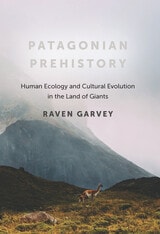
cover of Patagonian Prehistory: Human Ecology and Cultural Evolution in the Land of Giants

Patagonian Prehistory

Human Ecology and Cultural Evolution in the Land of Giants

Raven Garvey

University of Utah Press, 2021

Generally portrayed as a windswept wasteland of marginal use for human habitation, Patagonia is an unmatched testing ground for some of the world’s most important questions about human ecology and cultural change. In this volume, archaeologist Raven Garvey presents a critical synthesis of Patagonian prehistory, bringing an evolutionary perspective and unconventional evidence to bear on enduringly contentious issues in New World archaeology, including initial human colonization of the Americas, widespread depopulation between 8,000 and 4,000 years ago, and the transition from foraging to farming.
 
Garvey’s novel hypotheses question common assumptions regarding Patagonia’s suitability for prehistoric hunter-gatherers. She makes four primary arguments: (1) the surprising lack of clothing in parts of prehistoric Patagonia supports a relatively slow initial colonization of the Americas; (2) the sparse record of human habitation during the middle Holocene may be due to prehistoric behavioral changes and archaeological sampling methods rather than population decline; (3) farming never took root in Patagonia because risks associated with farming likely outweighed potential benefits; and, finally, (4) the broad trajectory of cultural change in Patagonia owes as much to feedback between population size and technology as to conditions in the rugged Patagonian outback itself.
[more]
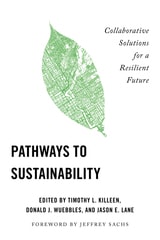
cover of Pathways to Sustainability: Collaborative Solutions for a Resilient Future

Pathways to Sustainability

Collaborative Solutions for a Resilient Future

Edited by Timothy L. Killeen, Donald J. Wuebbles, and Jason E. Lane

University of Illinois Press, 2025

In an era defined by unprecedented environmental challenges and rapid societal change, how can we build a sustainable and resilient future? In this collection, the editors bring together groundbreaking insights and inspiring stories from around the globe, illuminating how innovative partnerships across sectors and borders are driving meaningful progress toward sustainability. Contributors from science, business, non-governmental organizations, and university leadership engage across their areas of expertise to discuss how to apply cutting-edge research toward understanding, mitigating, and adapting to today’s alarming environmental stresses. Throughout, the essayists showcase breakthroughs in sustainability science while providing a blueprint for creating collaborations, expanding networks, and connecting with new markets. Essential reading for sustainability leaders, educators, policymakers, and change-makers everywhere, this volume offers a visionary yet practical roadmap for harnessing the power of collaboration to advance practical solutions necessary to ensure a thriving planet for future generations. Expert and interdisciplinary, Pathways to Sustainability focuses on human capacity building and innovation to explore holistic solutions to climate change, unsustainable resource consumption, and other inevitable challenges of our time. Contributors: Nicole Arbour, Rebecca T. Barnes, Kyle Blount, Kayla Boparai, Caleb S. Brooks, Benjamin B. Campion, Christopher Castle, William L. Chadderton, Kenneth T. Christensen, Emily M. Clegg, Asher Cohen, Jonathan Coppess, Nathan L. Cummins, John D. Den Uyl, Miranda N. Domico, Francina Dominguez, Patrick J. Doran, Kelvin K. Droegemeier, Pengyue Du, Luis Gomez Echeverri, Brian Fath, John Ferry, Trent W. Ford, Regina Mae Francia, Georgie B. Geraghty, Janet Gooch, Timothy P. Grunloh, Kaiyu Guan, Luiz Gutierrez, Sam S. Haapaniemi, Julian Heiss, Barb Helland, Catherine Hurley, Atul K. Jain, Paul Kearns, Timothy L. Killeen, Rao Kotamarthi, Jason E. Lane, Wendy Larner, John T. Legge, L. Ruby Leung, Peiyuan Li, Leila Loupis, Josephine M. Malonza, Mark Manns, Lia Merminga, Maria J. Molina, David Muchangi Mugo, Meridith F. Muth, Selvaprabu Nadarajah, Cristina Negri, Pratik Patil, Andreas F. Prein, Ziqi Qin, Fany Ramos Quispe, Jonathan Radcliffe, Omer Rana, Dan Reed, Alyssa Rodway, Christine Rovelli, Elena Rovenskaya, Gabriella Pinheiro Servi, Gavin Shaddick, John Shalf, Ashish Sharma, Bjorn Stevens, Tih-Fen Ting, Dennis Todey, John Towns, Andrew J. Tucker, Albert van Jaarsveld, Carolina Veiga, Abhinav Wadhwa, Peter W. Wangai, Melissa Widhalm, Aaron B. Wilson, Molly Woloszyn, Sicheng Wu, Donald J. Wuebbles, and Joel Zavala
[more]
cover of People And The Planet: Holism and Humanism in Environmental Ethics

People And The Planet

Holism and Humanism in Environmental Ethics

Don Marietta

Temple University Press, 1994
[more]
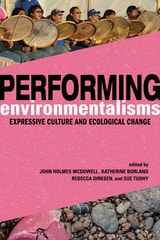
cover of Performing Environmentalisms: Expressive Culture and Ecological Change

Performing Environmentalisms

Expressive Culture and Ecological Change

Edited by John Holmes McDowell, Katherine Borland, Rebecca Dirksen, and Sue Tuohy

University of Illinois Press, 2021

Performing Environmentalisms examines the existential challenge of the twenty-first century: improving the prospects for maintaining life on our planet. The contributors focus on the strategic use of traditional artistic expression--storytelling and songs, crafted objects, and ceremonies and rituals--performed during the social turmoil provoked by environmental degradation and ecological collapse. Highlighting alternative visions of what it means to be human, the authors place performance at the center of people's responses to the crises. Such expression reinforces the agency of human beings as they work, independently and together, to address ecological dilemmas. The essays add these people's critical perspectives--gained through intimate struggle with life-altering force--to the global dialogue surrounding humanity's response to climate change, threats to biocultural diversity, and environmental catastrophe.

Interdisciplinary in approach and wide-ranging in scope, Performing Environmentalisms is an engaging look at the merger of cultural expression and environmental action on the front lines of today's global emergency.

Contributors: Aaron S. Allen, Eduardo S. Brondizio, Assefa Tefera Dibaba, Rebecca Dirksen, Mary Hufford, John Holmes McDowell, Mark Pedelty, Jennifer C. Post, Chie Sakakibara, Jeff Todd Titon, Rory Turner, Lois Wilcken
[more]
cover of Picturing Sabino: A Photographic History of a Southwestern Canyon

Picturing Sabino

A Photographic History of a Southwestern Canyon

David Wentworth Lazaroff

University of Arizona Press, 2023

Sabino Canyon, a desert canyon in the American Southwest near Tucson, Arizona, is enjoyed yearly by thousands of city residents as well as visitors from around the world. Picturing Sabino tells the story of the canyon’s transformation from a barely known oasis, miles from a small nineteenth-century town, into an immensely popular recreation area on the edge of a modern metropolis. Covering a century of change, from 1885 to 1985, this work rejoices in the canyon’s natural beauty and also relates the ups and downs of its protection and enjoyment.

The story is vividly told through numerous historical photographs, lively anecdotes, and an engaging text, informed by decades of research by David Wentworth Lazaroff. Along the way the reader makes the acquaintance of ordinary picnickers as well as influential citizens who helped to reshape the canyon, while witnessing the canyon’s evolving relationship with its growing urban neighbor. The book will fascinate readers who are already familiar with Sabino Canyon, as well as anyone with an interest in local or regional history, or in historical photography.
[more]
cover of Pigs That Ate the Garden: A Human Ecology from Papua New Guinea

Pigs That Ate the Garden

A Human Ecology from Papua New Guinea

Peter D. Dwyer

University of Michigan Press, 1990

In The Pigs that Ate the Garden, Peter D. Dwyer examines the subsistence ecology of 109 Etolo people who live on the wet, forested mountain slopes of Papua New Guinea. Dwyer describes the community's method of deliberately placing pigs in gardens so that the pigs depredate the vegetation there. He shows how this practice is actually the community's method of sending a message to itself that serves to resynchronize a switch from sweet potato gardening to sago starch processing. The interrelationships of the different food-producing activities of the Etolo — gardening, hunting, tree-crop cultivation, etc. — are shown to have seasonal rhythms, and these rhythms maximize the Etolo's use of food resources at appropriate times and areas. Dwyer argues that the "shape" of Etolo ecology is ultimately driven by socio-cultural, rather than environmental, forces, and is set within a theoretical frame, concerning processes of communication and change in open systems.
[more]
cover of Pigs That Ate the Garden: A Human Ecology from Papua New Guinea

Pigs That Ate the Garden

A Human Ecology from Papua New Guinea

Peter D. Dwyer

University of Michigan Press, 1990

In The Pigs that Ate the Garden, Peter D. Dwyer examines the subsistence ecology of 109 Etolo people who live on the wet, forested mountain slopes of Papua New Guinea. Dwyer describes the community's method of deliberately placing pigs in gardens so that the pigs depredate the vegetation there. He shows how this practice is actually the community's method of sending a message to itself that serves to resynchronize a switch from sweet potato gardening to sago starch processing. The interrelationships of the different food-producing activities of the Etolo — gardening, hunting, tree-crop cultivation, etc. — are shown to have seasonal rhythms, and these rhythms maximize the Etolo's use of food resources at appropriate times and areas. Dwyer argues that the "shape" of Etolo ecology is ultimately driven by socio-cultural, rather than environmental, forces, and is set within a theoretical frame, concerning processes of communication and change in open systems.
[more]
cover of Planet Management: Limits to Growth, Computer Simulation, and the Emergence of Global Spaces

Planet Management

Limits to Growth, Computer Simulation, and the Emergence of Global Spaces

Fernando Elichirigoity

Northwestern University Press, 1999
Planet Management is a study of, and contribution to, the history of "globality" — the emergence of a complex organization of politics, economics, and culture at a planetary rather than a national level. Drawing on historical archival research as well as recent theoretical work in science studies and critical theory, the book tell the story of the central role of technoscientific discourses and practices in the emergence of globality.
[more]
cover of Playing with Fish and Other Lessons from the North

Playing with Fish and Other Lessons from the North

Robert J. Wolfe

University of Arizona Press, 2006
According to the Yup’ik Eskimo of Alaska, fish are not to be played with. It’s an adage instilled in children that’s as basic as looking both ways before crossing the street, but at its heart lies a concern for nature. Yup’ik traditions are tested each generation by this people’s struggle for survival, the admonition not to play with fish has been further tested by the arrival of sport fishing from the south. Worlds are colliding—whose will emerge unscathed? Robert J. Wolfe, a cultural anthropologist from California, spent twenty years in Alaska documenting the traditional hunting and fishing practices of Alaska Natives. During that northern sojourn he discovered much about sustainable relationships between people and nature and about the basis of meaningful communities. In Playing with Fish he has crafted a series of thought-provoking essays on nature, culture, and the human condition that convey unsuspected lessons from the North. In contrasting California and Alaska—worlds far apart yet connected by peoples, cultural traditions, and ecology—Wolfe not only draws distinctions between compass points, he also conveys memorable stories about nature and life. He depicts bears and humans as both neighbors and ancient adversaries, and how cultural views about bears can destroy or preserve those relationships. He shows us Alaskan villages where security is found not in locks but in neighbors, unlike electronically sealed suburban California homes, their lawns studded with security signs. And he describes the peaceful resolution of conflict between California bird hunters and Eskimos of the Bering Sea coast over declining geese numbers, where small humanizing acts tipped the balance in favor of cooperation. Blending insights into subjects as diverse as music and chaos theory, Wolfe challenges readers to reflect on their own personal conduct within nature and within our multicultural world. Playing with Fish is a delightful and insightful collection of modern parables that offer a new way of looking at cultural and ecological issues, reminding us that the road between two worlds is always a two-way street.
[more]
cover of Prehistory and Human Ecology of the Deh Luran Plain: An Early Village Sequence from Khuzistan, Iran

Prehistory and Human Ecology of the Deh Luran Plain

An Early Village Sequence from Khuzistan, Iran

Frank Hole, Kent V. Flannery, and James A. Neely

University of Michigan Press, 1969
In the early 1960s, archaeologists Frank Hole, Kent V. Flannery, and James A. Neely surveyed the prehistoric mounds in Deh Luran and then excavated at two sites: Ali Kosh and Tepe Sabz. The researchers found evidence that the sites dated to between 7500 and 3500 BC, during which time the residents domesticated plants and animals. This volume, published in 1969, was the first in the Museum’s Memoir series—designed for data-rich, heavily illustrated archaeological monographs.
[more]
cover of Profiles in Cultural Evolution: Papers from a Conference in Honor of Elman R. Service

Profiles in Cultural Evolution

Papers from a Conference in Honor of Elman R. Service

Edited by A. Terry Rambo and Kathleen Gillogly

University of Michigan Press, 1991
Presenting diverse viewpoints and topics, this collection includes the following sections:Part I presents a background on the study of cultural evolution. Part II deals with the evolution of complex societies in the tropics of South America. Part III discusses stage sequences and directionality in cultural evolution. Part IV examines the role of prime movers in cultural evolution. Part V discusses diversity and change.
[more]
cover of Prophets of Agroforestry: Guaraní Communities and Commercial Gathering

Prophets of Agroforestry

Guaraní Communities and Commercial Gathering

By Richard K. Reed

University of Texas Press, 1995

For almost four centuries, the indigenous Chiripá (Guaraní) people of eastern Paraguay have maintained themselves as a distinct society and culture, despite continual and often intense relations with Paraguayan society and the international economy. In this study, Richard K. Reed explores the economic and social basis for this ethnic autonomy.

Reed finds that Chiripá economic power derives from their practice of commercial agroforestry. Unlike Latin American indigenous societies that have been forced to clear land for commercial agriculture, the Chiripá continue to harvest and sell forest products, such as caffeinated yerba mate, without destroying the forests. Reed also explores the relation of this complex economy to Chiripá social organization and shows how flexible kin ties allowed the Chiripá to adapt to the pressure and opportunities of the commercial economy without adopting the authoritarian nature of rural Paraguayan society.

These findings offer important insights into the relations among indigenous groups, nation-states, and the international economy. They also provide a timely alternative model for sustainable management of subtropical forests that will be of interest in the fields of development and environmental studies.

[more]