Results by title
67 books match the query 'Imagination' and 2 start with p

Poverty of the Imagination
Nineteenth-Century Russian Literature about the PoDavid Herman
Northwestern University Press, 2001
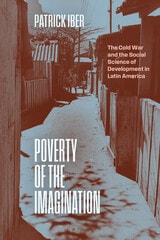
Poverty of the Imagination
The Cold War and the Social Science of Development in Latin AmericaPatrick Iber
University of Chicago Press, 2026
Explores the history of the “science of development” during the Cold War and how experts across the social sciences tried to create the tools to address the problem of poverty across Latin America.
In the mid-twentieth century, Latin America had the world’s starkest internal inequality. In Brazil in 1960, for example, the top 10 percent took upward of 60 percent of the country’s total income, while its entire bottom half took only 10 percent. As Patrick Iber shows in Poverty of the Imagination, this problem of poverty and social inequality focused the attention of social scientists on the task of articulating a “science of development.” In the context of the Cold War, this project drew the attention of the US government and the Ford Foundation, which hoped that peaceful development would prevent revolutions.
This book examines the five central frameworks that emerged to explain poverty: from dependency theory on the Marxist left; to theories of modernization, the culture of poverty, and marginality in the center; to neoliberalism on the right. Iber shows how each rose (and fell) by connecting them to political projects such as the War on Poverty in the United States and the dictatorship of Augusto Pinochet in Chile. Through vivid portraits of key thinkers, he shows how each was shaped by the environment of the Cold War and the presence of the Ford Foundation. It is a story with surprising turns: What began for Ford as a Cold War project to support university “modernization” changed as dictatorships took control of much of the region. Then, Ford took the side of the dissidents, supporting an antipoverty agenda for the restoration of democracy. A guide to some of the most important ideas in global development and Latin American studies alike, this book also shows how scholars and institutions faced down authoritarian threats—and won.