Results by title
517 books match the query 'In literature' and 23 start with p
Paging New Jersey
A Literary Guide to the Garden StateBroderick, James F
Rutgers University Press, 2003
For 300 years, New Jersey writers, books, and historical events have helped shape the cultural landscape of the nation, and yet the state is rarely credited for its numerous contributions to American letters and folklore. Paging New Jersey is just the book for those interested in uncovering a treasure trove of information about the Garden State’s key role in the creation of U.S. literary and popular culture. New Jersey writers from Stephen Crane to Toni Morrison are included as well as longtime Camden resident Walt Whitman and Newark native Philip Roth.
James F. Broderick’s unique look at the state’s literary and cultural history answers intriguing Jersey-related questions such as: how author Peter Benchley got the idea for Jaws; where Aaron Burr shot Alexander Hamilton; why the Hindenberg exploded over Lakehurst in 1937; and where to find help in locating Captain Kidd’s buried treasure along the Jersey Shore. Most people know that television’s fictional Tony Soprano lives in New Jersey, but what about the state’s other mobsters— The real “goombahs?” Who are they and what have these particular Jersey devils written?
Full of commentary, biographical information, and history—along with suggested reading lists— Paging New Jersey is a crash course in Jerseyana. For those who live in the state, expatriots, and yes, even those who think all New Jersey has to offer is the Turnpike, Broderick’s engaging yet learned book provides an entertaining look at the Garden State’s rich cultural heritage.
Performing Unification
History and Nation in German Theater after 1989Matt Cornish
University of Michigan Press, 2017
Pericles on Stage
Political Comedy in Aristophanes' Early PlaysBy Michael Vickers
University of Texas Press, 1996
Since the eighteenth century, classical scholars have generally agreed that the Greek playwright Aristophanes did not as a matter of course write "political" plays. Yet, according to an anonymous Life of Aristophanes, when Dionysius the tyrant of Syracuse wanted to know about the government of Athens, Plato sent him a copy of Aristophanes' Clouds.
In this boldly revisionist work, Michael Vickers convincingly argues that in his earlier plays, Aristophanes in fact commented on the day-to-day political concerns of Athenians. Vickers reads the first six of Aristophanes' eleven extant plays in a way that reveals the principal characters to be based in large part on Pericles and his ward Alcibiades.
According to Vickers, the plays of Aristophanes—far from being nonpolitical—actually allow us to gauge the reaction of the Athenian public to the events that followed Pericles' death in 429 B.C., to the struggle for the political succession, and to the problems presented by Alcibiades' emergence as one of the most powerful figures in the state. This view of Aristophanes reaffirms the central role of allegory in his work and challenges all students of ancient Greece to rethink long-held assumptions about this important playwright.
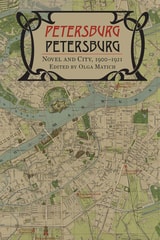
Petersburg/Petersburg
Novel and City, 1900–1921Olga Matich
University of Wisconsin Press, 2010
Since its founding three hundred years ago, the city of Saint Petersburg has captured the imaginations of the most celebrated Russian writers, whose characters map the city by navigating its streets from the aristocratic center to the gritty outskirts. While Tsar Peter the Great planned the streetscapes of Russia’s northern capital as a contrast to the muddy and crooked streets of Moscow, Andrei Bely’s novel Petersburg (1916), a cornerstone of Russian modernism and the culmination of the “Petersburg myth” in Russian culture, takes issue with the city’s premeditated and supposedly rational character in the early twentieth century.
“Petersburg”/Petersburg studies the book and the city against and through each other. It begins with new readings of the novel—as a detective story inspired by bomb-throwing terrorists, as a representation of the aversive emotion of disgust, and as a painterly avant-garde text—stressing the novel’s phantasmagoric and apocalyptic vision of the city. Taking a cue from Petersburg’s narrator, the rest of this volume (and the companion Web site, stpetersburg.berkeley.edu/) explores the city from vantage points that have not been considered before—from its streetcars and iconic art-nouveau office buildings to the slaughterhouse on the city fringes. From poetry and terrorist memoirs, photographs and artwork, maps and guidebooks of that period, the city emerges as a living organism, a dreamworld in flux, and a junction of modernity and modernism.
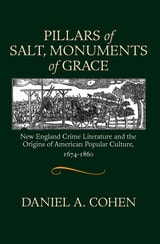
Pillars of Salt, Monuments of Grace
New England Crime Literature and the Origins of American Popular Culture, 1674-1860Daniel A. Cohen
University of Massachusetts Press, 2006
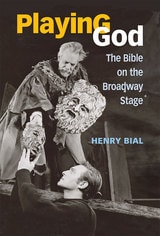
Playing God
The Bible on the Broadway StageHenry Bial
University of Michigan Press, 2015
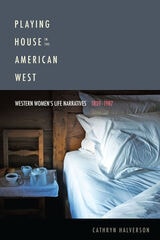
Playing House in the American West
Western Women's Life Narratives, 1839–1987Cathryn Halverson
University of Alabama Press, 2013
How domestic life shaped identity, gender, and power in the American West
The controlling metaphor Cathryn Halverson uses in her engrossing study is “playing house.” From Caroline Kirkland and Laura Ingalls Wilder to Willa Cather and Marilynne Robinson, from the mid-nineteenth to the late-twentieth centuries, western authors have persistently embraced wayward or eccentric housekeeping to prove a woman’s difference from western neighbors and eastern readers alike.
The readings in Playing House investigate the surprising textual ends to which westerners turn the familiar terrain of the home: evaluating community; arguing for different conceptions of race and class; and perhaps most especially, resisting traditional gender roles. Western women writers, Halverson argues, render the home as a stage for autonomy, resistance, and imagination rather than as a site of sacrifice and obligation.
The western women examined in Playing House in the American West are promoted and read as representatives of a region, as insiders offering views of distant and intriguing ways of life, even as they conceive of themselves as outsiders. By playing with domestic conventions, they recast the region they describe, portraying the West as a place that fosters female agency, individuality, and subjectivity.
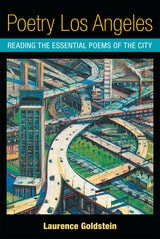
Poetry Los Angeles
Reading the Essential Poems of the CityLaurence Goldstein
University of Michigan Press, 2014
One chapter is devoted to Charles Bukowski, the celebrity face of the city’s poetry. Other chapters discuss the ways that poets explore “Interiors” and “Exteriors” throughout the cityscape. Goldstein also provides ample connections to the novels, films, art, and politics of Southern California. In clear prose, Poetry Los Angeles examines the strategies by which poets make significant places meaningful and memorable to readers of every region of the U.S. and elsewhere.
Poetry Of Resistance
Seamus HeaneySidney Burris
Ohio University Press, 1990
Poetry and the Cult of the Martyrs
The Liber Peristephanon of PrudentiusMichael Roberts
University of Michigan Press, 1993
Poets On Place
W. T. Pfefferle
Utah State University Press, 2005
Out to see America and satisfy his travel bug, W. T. Pfefferle resigned from his position as director of the writing program at Johns Hopkins University and hit the road to interview sixty-two poets about the significance of place in their work. The lively conversations that resulted may surprise with the potential meanings of a seemingly simple concept. This gathering of voices and ideas is illustrated with photo and word portraits from the road and represented with suitable poems.
The poets are James Harms, David Citino, Martha Collins, Linda Gregerson, Richard Tillinghast, Orlando Ricardo Menes, Mark Strand, Karen Volkman, Lisa Samuels, Marvin Bell, Michael Dennis Browne, David Allan Evans, David Romtvedt, Sandra Alcosser, Robert Wrigley, Nance Van Winckel, Christopher Howell, Mark Halperin, Jana Harris, Sam Hamill, Barbara Drake, Floyd Skloot, Ralph Angel, Carol Muske-Dukes, David St. John, Sharon Bryan, Donald Revell, Claudia Keelan, Alberto Rios, Richard Shelton, Jane Miller, William Wenthe, Naomi Shihab Nye, Peter Cooley, Miller Williams, Beth Ann Fennelly, Natasha Trethewey, Denise Duhamel, Campbell McGrath, Terrance Hayes, Alan Shapiro, Nikki Giovanni, Charles Wright, Rita Dove, Henry Taylor, Dave Smith, Nicole Cooley, David Lehman, Lucie Brock-Broido, Michael S. Harper, C. D. Wright, Mark Wunderlich, James Cummins, Frederick Smock, Mark Jarman, Carl Phillips, Scott Cairns, Elizabeth Dodd, Jonathan Holden, Bin Ramke, Kenneth Brewer, and Paisley Rekdal.
Politics, Desire, and the Hollywood Novel
Chip Rhodes
University of Iowa Press, 2008
Rhodes considers how novels about the film industry changed between the studio era of the 1930s and 1940s and the era of deregulated film making that has existed since the 1960s. He asserts that Americans are now driven by cultural, rather than class, differences and that our mainstream notion of love has gone from repressed desire to “abnormal desire” to, finally, strictly business.
Politics, Desire, and the Hollywood Novel pays close attention to six authors—Nathanael West, Raymond Chandler, Budd Schulberg, Joan Didion, Bruce Wagner, and Elmore Leonard—who have toiled in the film industry and written to tell about it. More specifically, Rhodes considers both screenplays and novels with an eye toward the different formulations of sexuality, art, and ultimately political action that exist in these two kinds of storytelling.
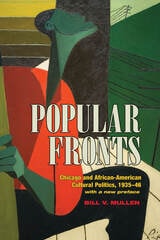
Popular Fronts
Chicago and African-American Cultural Politics, 1935-46Bill V. Mullen
University of Illinois Press, 2015
With a new preface Bill V. Mullen updates his dynamic reappraisal of a critical moment in American cultural history. Mullen's study includes reassessments of the politics of Richard Wright's critical reputation and a provocative reading of class struggle in Gwendolyn Brooks' A Street in Bronzeville. He also takes an in-depth look at the institutions that comprised Chicago's black popular front: the Chicago Defender, the period's leading black newspaper; Negro Story, the first magazine devoted to publishing short stories by and about African Americans; and the WPA-sponsored South Side Community Art Center.
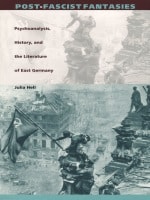
Post-Fascist Fantasies
Psychoanalysis, History, and the Literature of East GermanyJulia Hell
Duke University Press, 1997
By focusing on the unconscious fantasies about post-fascist body and post-fascist voice that suffuse the texts of Wolf and others, Hell radically reconceptualizes the notion of the author’s subjective authenticity. Since this notion occupies a key position in previous literary-historical accounts of East German culture, Hell’s psychoanalytic approach problematizes the established literary model of an "authentic feminine voice" that gradually liberates itself from the GDR’s dominant ideological narrative. Far from operating solely on a narrowly political level, the novels of Wolf and others were intricate family sagas portraying psychic structures linked in complex ways to the GDR’s social dynamics. Hell traces this link through East German literatrure’s dominant narrative, a paternal narrative organized around the figure of the Communist father as antifascist hero.
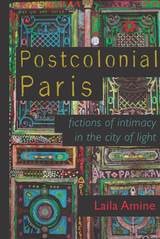
Postcolonial Paris
Fictions of Intimacy in the City of LightLaila Amine
University of Wisconsin Press, 2021
Spanning the decades from the post–World War II era to the present day, Amine demonstrates that the postcolonial other is both peripheral to and intimately entangled with all the ideals so famously evoked by the French capital—romance, modernity, equality, and liberty. In their work, postcolonial writers and artists have juxtaposed these ideals with colonial tropes of intimacy (the interracial couple, the harem, the Arab queer) to expose their hidden violence. Amine highlights the intrusion of race in everyday life in a nation where, officially, it does not exist.
Postcoloniality-Decoloniality-Black Critique
Joints and FissuresEdited by Sabine Broeck and Carsten Junker
Campus Verlag, 2014
Postnationalism in Chicana/o Literature and Culture
By Ellie D. Hernández
University of Texas Press, 2009
In recent decades, Chicana/o literary and cultural productions have dramatically shifted from a nationalist movement that emphasized unity to one that openly celebrates diverse experiences. Charting this transformation, Postnationalism in Chicana/o Literature and Culture looks to the late 1970s, during a resurgence of global culture, as a crucial turning point whose reverberations in twenty-first-century late capitalism have been profound.
Arguing for a postnationalism that documents the radical politics and aesthetic processes of the past while embracing contemporary cultural and sociopolitical expressions among Chicana/o peoples, Hernández links the multiple forces at play in these interactions. Reconfiguring text-based analysis, she looks at the comparative development of movements within women's rights and LGBTQI activist circles. Incorporating economic influences, this unique trajectory leads to a new conception of border studies as well, rethinking the effects of a restructured masculinity as a symbol of national cultural transformation. Ultimately positing that globalization has enhanced the emergence of new Chicana/o identities, Hernández cultivates important new understandings of borderlands identities and postnationalism itself.
Prague Palimpsest
Writing, Memory, and the CityAlfred Thomas
University of Chicago Press, 2010
A city of immense literary mystique, Prague has inspired writers across the centuries with its beauty, cosmopolitanism, and tragic history. Envisioning the ancient city in central Europe as a multilayered text, or palimpsest, that has been constantly revised and rewritten—from the medieval and Renaissance chroniclers who legitimized the city’s foundational origins to the modernists of the early twentieth century who established its reputation as the new capital of the avant-garde—Alfred Thomas argues that Prague has become a paradoxical site of inscription and effacement, of memory and forgetting, a utopian link to the prewar and pre-Holocaust European past and a dystopia of totalitarian amnesia.
Considering a wide range of writers, including the city’s most famous son, Franz Kafka, Prague Palimpsest reassesses the work of poets and novelists such as Bohumil Hrabal, Milan Kundera, Gustav Meyrink, Jan Neruda, Vítĕzslav Nezval, and Rainer Maria Rilke and engages with other famous authors who “wrote” Prague, including Guillaume Apollinaire, Ingeborg Bachmann, Albert Camus, Paul Celan, and W. G. Sebald. The result is a comparative, interdisciplinary study that helps to explain why Prague—more than any other major European city—has haunted the cultural and political imagination of the West.
Preserving the Self in the South Seas, 1680-1840
Jonathan Lamb
University of Chicago Press, 2001
Lamb contends that European exploration of the South Seas was less confident and mindful than we have assumed. It was, instead, conducted in moods of distraction and infatuation that were hard to make sense of and difficult to narrate, and it prompted reactions among indigenous peoples that were equally passionate and irregular. Preserving the Self in the South Seas also examines these common crises of exploration in the context of a metropolitan audience that eagerly consumed narratives of the Pacific while doubting their truth. Lamb considers why these halting and incredible journals were so popular with the reading public, and suggests that they dramatized anxieties and bafflements rankling at the heart of commercial society.
Privately Empowered
Expressing Feminism in Islam in Northern Nigerian FictionShirin Edwin
Northwestern University Press, 2016
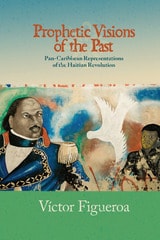
Prophetic Visions of the Past
Pan-Caribbean Representations of the Haitian RevolutionVíctor Figueroa
The Ohio State University Press, 2015
Prophetic Visions of the Past includes chapters on literary texts from a wide array of languages, histories, and perspectives. Figueroa addresses work by Alejo Carpentier (Cuba), C. L. R. James (Trinidad), Luis Palés Matos (Puerto Rico), Aimé Césaire (Martinique), Derek Walcott (Saint Lucia), Edouard Glissant (Martinique), and Manuel Zapata Olivella (Colombia). While underscoring each writer’s unique position, Figueroa also addresses their shared geographical, historical, and sociopolitical preoccupations, which are closely linked to the region’s prolonged experience of colonial interventions. Ultimately, these analyses probe how, for the larger Caribbean region, the Haitian Revolution continues to reflect the tension between inspiring revolutionary hopes and an awareness of ongoing colonial objectification and exploitation.
Punctuations
How the Arts Think the PoliticalMichael J. Shapiro
Duke University Press, 2019
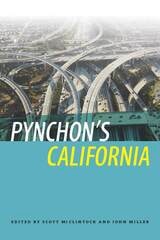
Pynchon's California
Scott McClintock and John Miller
University of Iowa Press, 2014
Contributors explore such topics as the relationship of the “California novels” to Pynchon’s more historical and encyclopedic works; the significance of California's beaches, deserts, forests, freeways, and “hieroglyphic” suburban sprawl; the California-inspired noir tradition; and the surprising connections to be uncovered between drug use and realism, melodrama and real estate, private detection and the sacred. The authors bring insights to bear from an array of critical, social, and historical discourses, offering new ways of looking not only at Pynchon’s California novels, but at his entire oeuvre. They explore both how the history, geography, and culture of California have informed Pynchon’s work and how Pynchon’s ever-skeptical critical eye has been turned on the state that has been, in many ways, the flagship for postmodern American culture.
CONTRIBUTORS: Hanjo Berressem, Christopher Coffman, Stephen Hock, Margaret Lynd, Scott MacLeod, Scott McClintock, Bill Millard, John Miller, Henry Veggian