174 books match the query 'Indigenous peoples' and 12 start with p
cover of Paleoindian or Paleoarchaic?: Great Basin Human Ecology at the Pleistocene-Holocene Transition

Paleoindian or Paleoarchaic?

Great Basin Human Ecology at the Pleistocene-Holocene Transition

Kelly E Graf

University of Utah Press, 2008

Were the earliest inhabitants of the Great Basin 'Paleoindians' in the traditional sense? Were they highly mobile foragers? Did they hunt large, now extinct animals like mammoth, horse, and camel?
 
Great Basin archaeologists have argued that the earliest inhabitants possessed an organization strategy of mixed 'Paleoindian' and 'Archaic' lifeways, referring to them as 'Paleoarchaic.'
 
Recent excavations of rock shelters and caves, coupled with innovative studies of the surface archaeological record have increased our understanding of human organization in the Great Basin during the late Pleistocene and early Holocene. When did humans first inhabit the Great Basin? How do we interpret projectile point variability from late Pleistocene and early Holocene contexts? What land-use and foraging strategies characterized the early inhabitants? Did these hunter-gatherers possess a Paleoindian or Paleoarchaic lifeway?
 
This volume offers an updated perspective of human ecology and organization during the Pleistocene-Holocene transition in the Great Basin, 13,000–8,000 years ago.
[more]
cover of Pathways of Reconciliation: Indigenous and Settler Approaches to Implementing the TRC's Calls to Action

Pathways of Reconciliation

Indigenous and Settler Approaches to Implementing the TRC's Calls to Action

Aimée Craft

University of Manitoba Press, 2020
[more]
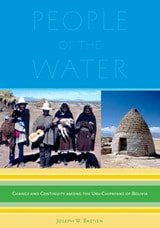
cover of People of the Water: Change and Continuity among the Uru-Chipayans of Bolivia

People of the Water

Change and Continuity among the Uru-Chipayans of Bolivia

Joseph Bastien

University of Utah Press, 2012

People of the Water is an ethnographic analysis of the cultural practices of the Uru-Chipayans—how they have maintained their culture and how they have changed. The Chipayans are an Andean people whose culture predates the time of the Incas (c. AD 1400), but they were almost wiped out by 1940, when only around 400 remained. Yet their population has quadrupled in the last 60 years. Joseph Bastien has spent decades living with and studying the Chipayans, and here for the first time he discusses the dynamics between traditional, social, and religious practices and the impending forces of modernity upon them. With the support of more than 100 illustrations he documents how, in spite of challenges, the Chipayans maintain ecological sustainability through an ecosystem approach that is holistic and symbolically embedded in rituals and customs.

Chipayans have a resilient and innovative culture, maintaining dress, language, hairstyle, rituals, and behavior while also re-­creating their culture from a dialectic between themselves and the world around them. Bastien provides the reader with a series of experienced observations and intimate details of a group of people who strive to maintain their ancient traditions while adapting to modern society. This ethnographic study offers insightful, surprising, and thoughtful conclusions applicable to interpreting the world around us.
[more]
cover of Peoples on Parade: Exhibitions, Empire, and Anthropology in Nineteenth-Century Britain

Peoples on Parade

Exhibitions, Empire, and Anthropology in Nineteenth-Century Britain

Sadiah Qureshi

University of Chicago Press, 2011
In May 1853, Charles Dickens paid a visit to the “savages at Hyde Park Corner,” an exhibition of thirteen imported Zulus performing cultural rites ranging from songs and dances to a “witch-hunt” and marriage ceremony. Dickens was not the only Londoner intrigued by these “living curiosities”: displayed foreign peoples provided some of the most popular public entertainments of their day. At first, such shows tended to be small-scale entrepreneurial speculations of just a single person or a small group. By the end of the century, performers were being imported by the hundreds and housed in purpose-built “native” villages for months at a time, delighting the crowds and allowing scientists and journalists the opportunity to reflect on racial difference, foreign policy, slavery, missionary work, and empire.
 
Peoples on Parade provides the first substantial overview of these human exhibitions in nineteenth-century Britain. Sadiah Qureshi considers these shows in their entirety—their production, promotion, management, and performance—to understand why they proved so commercially successful, how they shaped performers’ lives, how they were interpreted by their audiences, and what kinds of lasting influence they may have had on notions of race and empire. Qureshi supports her analysis with diverse visual materials, including promotional ephemera, travel paintings, theatrical scenery, art prints, and photography, and thus contributes to the wider understanding of the relationship between science and visual culture in the nineteenth century.
 
Through Qureshi’s vibrant telling and stunning images, readers will see how human exhibitions have left behind a lasting legacy both in the formation of early anthropological inquiry and in the creation of broader public attitudes toward racial difference.
[more]
cover of Playing with Fish and Other Lessons from the North

Playing with Fish and Other Lessons from the North

Robert J. Wolfe

University of Arizona Press, 2006

According to the Yup’ik Eskimo of Alaska, fish are not to be played with. It’s an adage instilled in children that’s as basic as looking both ways before crossing the street, but at its heart lies a concern for nature. Yup’ik traditions are tested each generation by this people’s struggle for survival, the admonition not to play with fish has been further tested by the arrival of sport fishing from the south. Worlds are colliding—whose will emerge unscathed? Robert J. Wolfe, a cultural anthropologist from California, spent twenty years in Alaska documenting the traditional hunting and fishing practices of Alaska Natives. During that northern sojourn he discovered much about sustainable relationships between people and nature and about the basis of meaningful communities. In Playing with Fish he has crafted a series of thought-provoking essays on nature, culture, and the human condition that convey unsuspected lessons from the North. In contrasting California and Alaska—worlds far apart yet connected by peoples, cultural traditions, and ecology—Wolfe not only draws distinctions between compass points, he also conveys memorable stories about nature and life. He depicts bears and humans as both neighbors and ancient adversaries, and how cultural views about bears can destroy or preserve those relationships. He shows us Alaskan villages where security is found not in locks but in neighbors, unlike electronically sealed suburban California homes, their lawns studded with security signs. And he describes the peaceful resolution of conflict between California bird hunters and Eskimos of the Bering Sea coast over declining geese numbers, where small humanizing acts tipped the balance in favor of cooperation. Blending insights into subjects as diverse as music and chaos theory, Wolfe challenges readers to reflect on their own personal conduct within nature and within our multicultural world. Playing with Fish is a delightful and insightful collection of modern parables that offer a new way of looking at cultural and ecological issues, reminding us that the road between two worlds is always a two-way street.
[more]
cover of Plundering the North: A History of Settler Colonialism, Corporate Welfare, and Food Insecurity

Plundering the North

A History of Settler Colonialism, Corporate Welfare, and Food Insecurity

Kristin Burnett

University of Manitoba Press, 2023
[more]
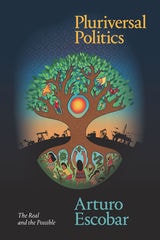
cover of Pluriversal Politics: The Real and the Possible

Pluriversal Politics

The Real and the Possible

Arturo Escobar

Duke University Press, 2020
In Pluriversal Politics Arturo Escobar engages with the politics of the possible and how established notions of what is real and attainable preclude the emergence of radically alternative visions of the future. Reflecting on the experience, philosophy, and practice of indigenous and Afro-descendant activist-intellectuals and on current Latin American theoretical-political debates, Escobar chronicles the social movements mobilizing to defend their territories from large-scale extractive operations in the region. He shows how these movements engage in an ontological politics aimed at bringing about the pluriverse—a world consisting of many worlds, each with its own ontological and epistemic grounding. Such a politics, Escobar contends, is key to crafting myriad world-making stories telling of different possible futures that could bring about the profound social transformations that are needed to address planetary crises. Both a call to action and a theoretical provocation, Pluriversal Politics finds Escobar at his critically incisive best.
[more]
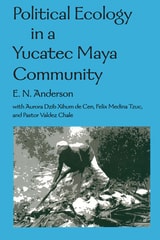
cover of Political Ecology in a Yucatec Maya Community

Political Ecology in a Yucatec Maya Community

E. N. Anderson with Aurora Dzib Xihum de Cen, Felix Medina Tzuc, and Pastor Valdez Chale

University of Arizona Press, 2005

In Chunhuhub, the Conquest is not a done deal.

Unlike many small tropical towns, Chunhuhub in rural Quintana Roo, Mexico, has not been a helpless victim of international forces. Its people are descendants of heroic Mayans who stood off the Spanish invaders. People in Chunhuhub continue to live largely through subsistence farming of maize and vegetables, supplemented by commercial orchard, livestock, and field crop cultivation. They are, however, also self-consciously “modernizing” by seeking better educational and economic opportunities.

Political Ecology in a Yucatec Maya Community tells the story of Chunhuhub at the beginning of the twenty-first century, focusing on the resource management of plants and animals. E. N. Anderson and his Maya co-authors provide a detailed overview of Maya knowledge of and relationships with the environment, describing how these relationships have been maintained over the centuries and are being transformed by modernization. They show that the Quintana Roo Mayas have been working to find ways to continue ancient and sustainable methods of making a living while also introducing modern techniques that can improve that living. For instance, traditional subsistence agriculture is broadly sustainable at current population densities, but hunting is not, and modern mechanized agriculture has an uncertain future.

Bringing the voice of contemporary Mayas to every page, the authors offer an encyclopedic overview of the region: history, environment, agriculture, medicine, social relations, and economy. Whether discussing the fine points of beekeeping or addressing the problem of deforestation, they provide a remarkably detailed account that immerses readers in the landscape.

Maya of the Yucatán Peninsula have had more than their share of successes—and some failures as well—and as a study in political and cultural ecology, Political Ecology in a Yucatec Maya Community has much to tell us about tropical development and about the human condition. Their experience tells us that if we wish to have not only farms but also mahogany, wildlife, and ecotourism, then further efforts are needed.

As Anderson observes, traditional Maya management, with its immense knowledge base, remains the best—indeed, the only—effective system for making a living from the Yucatán’s harsh landscape. Political Ecology in a Yucatec Maya Community is a compelling testament to the daily life practices of modern peasant farmers that can provide us with clues about more efficient management techniques for the conservation of biodiversity worldwide.
[more]
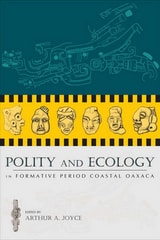
cover of Polity and Ecology in Formative Period Coastal Oaxaca

Polity and Ecology in Formative Period Coastal Oaxaca

Arthur A. Joyce

University Press of Colorado, 2012

Encapsulating two decades of research, Polity and Ecology in Formative Period Coastal Oaxaca is the first major treatment of the lower Río Verde region of Oaxaca, investigating its social, political, and ecological history. Tracing Formative period developments from the earliest known evidence of human presence to the collapse of Río Viejo (the region's first centralized polity), the volume synthesizes the archaeological and paleoecological evidence from the valley.

This period saw the earliest agricultural settlements in the region as well as the origins of sedentism and social complexity, and witnessed major changes in floodplain and coastal environments that expanded the productivity of subsistence resources. The book addresses theoretically significant questions of broad relevance such as the origins and spread of agriculture, the social negotiation of complex political formations, the effects of long-distance trade and interaction, the macroregional effects of landscape change, and prehispanic ideology and political power.

Focusing on questions of interregional interaction, environmental change, and political centralization, Polity and Ecology in Formative Period Coastal Oaxaca provides a comprehensive understanding of the Formative period archaeology of this important and long neglected region of Oaxaca.
[more]
cover of Posterity Is Now: Practicing Museum Anthropology, Collections Care, and Collaborative Research with Indigenous Peoples

Posterity Is Now

Practicing Museum Anthropology, Collections Care, and Collaborative Research with Indigenous Peoples

Jennifer A. Shannon

University of Wyoming Press, 2025

Posterity Is Now is about doing—about how to do—museum anthropology, collections stewardship, and collaborative research based on working in collaboration with Indigenous communities. Guided by values-centered practice, this book shows how following Indigenous communities’ lead, being flexible, and creating a welcoming environment to build essential relationships can reorient museums to support cultural continuity instead of merely preserving objects.
 
In this handbook based on over twenty years of teaching and practice at the intersection of museums, anthropology, and Indigenous peoples, Jennifer A. Shannon covers both the theoretical (i.e., exploring the idea of objects as kin) and the pragmatic (i.e., guidelines for how to design and budget collaborative projects). She advocates for fundamental change in how anthropological research design and practice are done within and beyond the museum and how leadership and staff view the very purpose of the museum. She also demonstrates how collaborative museum anthropology can be a model for the fields of anthropology, public scholarship, and social science research more broadly.
 
Posterity Is Now is a starting point, a “companion to practice,” written in accessible language and equally relevant for use in university classrooms, by qualitative researchers, and by practitioners in museums and cultural centers.
 
[more]
cover of Primitive Normativity: Race, Sexuality, and Temporality in Colonial Kenya

Primitive Normativity

Race, Sexuality, and Temporality in Colonial Kenya

Elizabeth W. Williams

Duke University Press, 2024
In Primitive Normativity Elizabeth W. Williams traces the genealogy of a distinct narrative about African sexuality that British colonial authorities in Kenya used to justify their control over indigenous populations. She identifies a discourse of “primitive normativity” that suggested that Africans were too close to nature to develop sexual neuroses and practices such as hysteria, homosexuality, and prostitution which supposedly were common among Europeans. Primitive normativity framed Kenyan African sexuality as less polluted than that of the more deviant populations of their colonizers. Williams shows that colonial officials and settlers used this narrative to further the goals of white supremacy by arguing that Africans’ sexuality was proof that Kenyan Africans must be protected from the forces of urbanization, Western-style education, and political participation, lest they be exposed to forms of civilized sexual deviance. Challenging the more familiar notion that Europeans universally viewed Africans as hypersexualized, Williams demonstrates how narratives of African sexual normativity rather than deviance reinforced ideas about the evolutionary backwardness of African peoples and their inability to govern themselves.
[more]
cover of Pueblos, Plains, and Province: New Mexico in the Seventeenth Century

Pueblos, Plains, and Province

New Mexico in the Seventeenth Century

Joseph P. Sánchez

University Press of Colorado, 2024

In Pueblos, Plains, and Province Joseph P. Sánchez offers an in-depth examination of sociopolitical conflict in seventeenth-century New Mexico, detailing the effects of Spanish colonial policies on settlers’, missionaries’, and Indigenous peoples’ struggle for economic and cultural control of the region. Sánchez explores the rich archival documentation that provides cultural, linguistic, and legal perspectives of the values of the period.

Spanish dual Indian policies for Pueblo and Plains tribes challenged Indigenous political and social systems to conform to the imperial structure for pacification purposes. Meanwhile, missionary efforts to supplant Indigenous religious beliefs with a Christian worldview resulted, in part, in a syncretism of the two worlds. Indigenous resentment of these policies reflected the contentious disagreements between Spanish clergymen and civil authorities, who feuded over Indigenous labor and encroachment on tribal sovereignties with demands for sworn loyalty to Spanish governance. The little-studied “starvation period” adversely affected Spanish-Pueblo relationships for the remainder of the century and contributed significantly to the battle at Acoma, the Jumano War, and the Pueblo Revolt of 1680.

Pueblos, Plains, and Province shows how history, culture, and tradition in New Mexico shaped the heritage shared by Spain, Mexico, the United States, and Native American tribes and will be of interest to scholars and students of Indigenous, colonial, and borderlands history.

[more]