Results by title
468 books match the query 'Industries' and 22 start with p
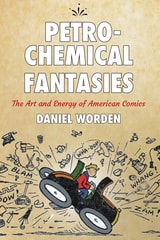
Petrochemical Fantasies
The Art and Energy of American ComicsDaniel Worden
The Ohio State University Press, 2024
Finalist, Comics Studies Society Charles Hatfield Book Prize 2025
Nominee, Eisner Award for Best Academic/Scholarly Work 2025
In Petrochemical Fantasies, Daniel Worden reveals the entwined history of comics and fossil fuels in the United States. From the 1840s to the present, comics have depicted the power, pollution, and rapid expansion of energy systems—especially the explosive growth of coal and oil. In the 1930s, some of the first comic books were the gas station giveaways Gulf Funny Weekly and Standard Oil Comics. And in recent years, comics have become one of the major sites for visualizing life after oil, a striking reversal of the medium’s early boosterism.
Surveying the work of acclaimed artists such as Nell Brinkley, George Herriman, Jack Kirby, Winsor McCay, and R. F. Outcault and recovering little-known works, Worden advances a new history of American comics in the Anthropocene. From late nineteenth- and early twentieth-century editorial cartoons and superhero comics that visualize our modern energy culture to contemporary comics grappling with climate crises, Petrochemical Fantasies places comics, environmental humanities, and energy studies in conversation with each other to unearth the crucial but overlooked history of comics’ place in US energy culture.

Philanthropy and the Business Corporation
Marion R. Fremont-Smith
Russell Sage Foundation, 1972
Phonographic Modernity
The Gramophone Industry and Music Genres in East and Southeast AsiaEdited by Fumitaka Yamauchi and Ying-fen Wang
University of Illinois Press, 2024
A roster of experts on countries from Japan to Indonesia explores the complicated relationship between the gramophone industry and music genres in East and Southeast Asia. Extending the boundaries of their research across multiple disciplines, the contributors connect the gramophone industry to theories surrounding phonography and modernity. Their focus on phonography combines an interest in discs with an interest in the sounds contributing to the recent sonic-auditory turn in sound studies.
Ambitious and expansive, Phonographic Modernity examines the bloc of East and Southeast Asia within the larger global history of sound recording.
Pioneering Minds Worldwide
On the Entrepreneurial Principles of the Cultural and Creative IndustriesEdited by Giep Hagoort, Aukje Thomassen, and Rene Kooyman
Eburon Academic Publishers, 2012
Pioneers for Profit
Foreign Entrepreneurship and Russian Industrialization, 1885-1913John P. McKay
University of Chicago Press, 1970
Playing the Percentages
How Film Distribution Made the Hollywood Studio SystemDerek Long
University of Texas Press, 2024
A history of film distribution in the United States from the 1910s to the 1930s, concentrating on booking, circuiting, and packaging marketing practices.
Told not as a “golden age” narrative of films, stars, or individual studios but as an economic history of the industry’s film distribution practices, Playing the Percentages is the story of how Hollywood’s vertically integrated studio system came to be. Studying the history of distribution during the growth of Hollywood, Derek Long makes a case for the domination of the studio system as the result of struggles over distribution practices.
Through a combination of archival research, critical surveys of the film industry trade press, and economic analysis, Long uncovers a complex and ever-shifting system of wrangling between distributors and exhibitors. Challenging the overemphasis within scholarship on “block booking” as a monolithic distribution mode, and attending to distribution practices beyond simple circulation, Long highlights the crucial changes in film distribution brought about by live theater, the rise of features, and the transition to sound. Playing the Percentages is a comprehensive history of film distribution in the United States during the silent era that illustrates the importance of power struggles between distributors and exhibitors over booking, pricing, and playing time.

Playing with History
American Identities and Children’s Consumer CultureMolly Rosner
Rutgers University Press, 2021

Poggio Civitate (Murlo)
By Anthony Tuck
University of Texas Press, 2021
Poggio Civitate in Murlo, Tuscany, is home to one of the best-preserved Etruscan communities of the eighth through the sixth centuries BCE. In this book, Anthony Tuck, the director of excavations, provides a broad synthesis of decades of data from the site.
The results of many years of excavation at Poggio Civitate tell a story of growth, urbanization, ancient industrialization, and dissolution. The site preserves traces of aristocratic domestic buildings, including some of the most evocative and enigmatic architectural sculpture in the region, along with remnants of non-elite domestic spaces, enabling illuminating comparisons across social strata. The settlement also features evidence of large-scale production systems, including tools and other objects that reflect the daily experiences of laborers. Finally, the site contains the story of its own destruction. Tuck finds in the data clear indications that Poggio Civitate was methodically dismantled, and he posits hypotheses concerning the circumstances around this violent social and political act.

Point of Sale
Analyzing Media RetailDaniel Herbert
Rutgers University Press, 2020

Policy Reform in American Agriculture
Analysis and PrognosisDavid Orden, Robert Paarlberg, and Terry Roe
University of Chicago Press, 1999
This work analyzes the mixed performance of past agricultural support programs, reviews the current debate concerning farm policies, and critically assesses the often staunch political resistance to much-needed policy reforms. Casting a keen eye toward the most recent developments on both national and international fronts, the authors consider the ramifications of the 1996 Federal Agriculture Improvement and Reform (FAIR) Act as well as multilateral efforts to gain agricultural reform during the Uruguay Round of GATT. Their prognosis hinges upon both the continued growth and competitiveness of the world market and, perhaps more importantly, the ongoing commitment of congressional reform advocates.
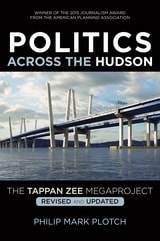
Politics Across the Hudson
The Tappan Zee MegaprojectPhilip Mark Plotch
Rutgers University Press, 2015
The State of New York built one of the world’s longest, widest, and most expensive bridges—the new Tappan Zee Bridge—stretching more than three miles across the Hudson River, approximately thirteen miles north of New York City. In Politics Across the Hudson, urban planner Philip Plotch offers a behind-the-scenes look at three decades of contentious planning and politics centered around this bridge, recently renamed for Governor Mario M. Cuomo, the state's governor from 1983 to 1994. He reveals valuable lessons for those trying to tackle complex public policies while also confirming our worst fears about government dysfunction.

Port Newark and the Origins of Container Shipping
Angus Kress Gillespie
Rutgers University Press, 2023
This fascinating study traces the birth of containerization to Port Newark, New Jersey, in 1956 when trucker Malcom McLean thought of a brilliant new way to transport cargo. It tells the story of how Port Newark grew rapidly as McLean’s idea was backed by both New York banks and the US military, who used containerization to ship supplies to troops in Vietnam. Angus Gillespie takes us behind the scenes of today’s active container shipping operations in Port Newark, talking to the pilots who guide the ships into port, the Coast Guard personnel who help manage the massive shipping traffic, the crews who unload the containers, and even the chaplains who counsel and support the mariners. Port Newark shines a spotlight on the unsung men and women who help this complex global shipping operation run smoothly.
Since McLean's innovation, Port Newark has expanded with the addition of the nearby Elizabeth Marine Terminal. This New Jersey complex now makes up the busiest seaport on the East Coast of the United States. Some have even called it “America’s Front Door.” The book tells the story of the rapid growth of worldwide containerization, and how Port Newark has adapted to bigger ships with deeper channels and a raised bridge. In the end, there is speculation of the future of this port with ever-increasing automation, artificial intelligence, and automation.

Portals
A Treatise on Internet-Distributed TelevisionAmanda D. Lotz
Michigan Publishing Services, 2017
Portals: A Treatise on Internet-Distributed Television pushes understandings of the business of television to keep pace with the considerable technological change of the last decade. It explains why shows such as Orange is the New Black or Transparent are indeed television despite coming to screens over internet connection and in exchange for a monthly fee. It explores how internet-distributed television is able to do new things – particularly, allow different people to watch different shows chosen from a library of possibilities. This technological ability allows new audience behaviors and new norms in making television.
Portals are the “channels” of internet-distributed television, and Portals identifies how the task of curating a library of shows differs from channels’ task of building a schedule. It explores the business model—subscriber funding—that supports many portals, and identifies the key differences from advertiser or direct purchase. Portals considers what we know about the future of television, even though we remain early in a process of transformative change.
Power Struggles
Hydro Development and First Nations in Manitoba and QuebecThibault Martin
University of Manitoba Press, 2008
Productivity Growth in Japan and the United States
Edited by Charles R. Hulten
University of Chicago Press, 1991
The contributors focus their efforts on the accurate measurement and comparison of Japanese and U.S. economic growth. Assuming that any sustained increase in real GNP must be due either to an increase in the quantity of capital and labor used in production or to the more efficient use of these inputs, the authors analyze the individual contributions of various factors and their importance in the process of output growth.
These essays extend the methodology of growth analysis and offer many insights into the factors leading to the superior performance of the Japanese economy. They demonstrate that growth is a complex process and no single factor can explain the Japanese 'miracle.'

Professionalism and Healthcare Ethics for Kinesiologists
Danny Rosenberg
FiT Publishing, 2024
A first-of-its-kind text for students entering a career in kinesiology, Professionalism and Healthcare Ethics for Kinesiologists provides a thorough explanation of professionalism and ethical theories, a method and many examples for making ethical decisions in kinesiology workplaces, and an exploration into accountability, governance topics, and the scope of professional misconduct in kinesiology, as well as the possible future of professional kinesiology education and ethics.

Prologue to a Farce
Communication and Democracy in AmericaMark Lloyd
University of Illinois Press, 2006
Mark Lloyd has crafted a complex and powerful assessment of the relationship between communication and democracy in the United States. In Prologue to a Farce, he argues that citizens’ political capabilities depend on broad public access to media technologies, but that the U.S. communications environment has become unfairly dominated by corporate interests.
Drawing on a wealth of historical sources, Lloyd demonstrates that despite the persistent hope that a new technology (from the telegraph to the Internet) will rise to serve the needs of the republic, none has solved the fundamental problems created by corporate domination. After examining failed alternatives to the strong publicly owned communications model, such as antitrust regulation, the public trustee rules of the Federal Communications Commission, and the underfunded public broadcasting service, Lloyd argues that we must re-create a modern version of the Founder’s communications environment, and offers concrete strategies aimed at empowering citizens.

Public Indians, Private Cherokees
Tourism and Tradition on Tribal GroundChristina Taylor Beard-Moose
University of Alabama Press, 2008
A major economic industry among American Indian tribes is the public promotion and display of aspects of their cultural heritage in a wide range of tourist venues. Few do it better than the Eastern Band of the Cherokee, whose homeland is the Qualla Boundary of North Carolina. Through extensive research into the work of other scholars dating back to the late 1800s, and interviews with a wide range of contemporary Cherokees, Beard-Moose presents the two faces of the Cherokee people. One is the public face that populates the powwows, dramatic presentations, museums, and myriad roadside craft locations. The other is the private face whose homecoming, Indian fairs, traditions, belief system, community strength, and cultural heritage are threatened by the very activities that put food on their tables. Constructing an ethnohistory of tourism and comparing the experiences of the Cherokee with the Florida Seminoles and Southwestern tribes, this work brings into sharp focus the fine line between promoting and selling Indian culture.

Pure Adulteration
Cheating on Nature in the Age of Manufactured FoodBenjamin R. Cohen
University of Chicago Press, 2019
In the latter nineteenth century, extraordinary changes in food and agriculture gave rise to new tensions in the ways people understood, obtained, trusted, and ate their food. This was the Era of Adulteration, and its concerns have carried forward to today: How could you tell the food you bought was the food you thought you bought? Could something manufactured still be pure? Is it okay to manipulate nature far enough to produce new foods but not so far that you question its safety and health? How do you know where the line is? And who decides?
In Pure Adulteration, Benjamin R. Cohen uses the pure food crusades to provide a captivating window onto the origins of manufactured foods and the perceived problems they wrought. Cohen follows farmers, manufacturers, grocers, hucksters, housewives, politicians, and scientific analysts as they struggled to demarcate and patrol the ever-contingent, always contested border between purity and adulteration, and as, at the end of the nineteenth century, the very notion of a pure food changed.
In the end, there is (and was) no natural, prehuman distinction between pure and adulterated to uncover and enforce; we have to decide. Today’s world is different from that of our nineteenth-century forebears in many ways, but the challenge of policing the difference between acceptable and unacceptable practices remains central to daily decisions about the foods we eat, how we produce them, and what choices we make when buying them.

Purple on the Inside
How J.B. Hunt Transport Set Itself Apart in a Field Full of Brown CowsKirk Thompson
Epic Books, 2019
J.B. Hunt’s triumphs and struggles provide a fascinating case study of how business theory, leadership, culture, and organizational best-practices have combined to create one of the most successful companies in American history. Kirk Thompson, with more than forty years of experience inside the company, gives a CEO’s account of the company’s evolution, while Matt Waller connects the leadership decisions to business theories that are transferrable to other leaders and industries.
Purple on the Inside is more than a corporate history or business management primer. It’s a practical case study that illustrates what Seth Godin described in Purple Cow, his best-selling book that considers what characteristics make for a remarkable business. It’s the story of leaders and team members who tap into their founder’s spirit for innovation while maintaining the focus and high level of performance needed to grow. It’s a story about developing partnerships, technologies, and expertise that others can’t easily duplicate. And it’s a story of overcoming disheartening setbacks and cultivating the purple cows that have allowed J.B. Hunt Transport to do what many experts said was impossible—stand out from its competition in an industry full of brown cows.

Pushing Cool
Big Tobacco, Racial Marketing, and the Untold Story of the Menthol CigaretteKeith Wailoo
University of Chicago Press, 2021
Police put Eric Garner in a fatal chokehold for selling cigarettes on a New York City street corner. George Floyd was killed by police outside a store in Minneapolis known as “the best place to buy menthols.” Black smokers overwhelmingly prefer menthol brands such as Kool, Salem, and Newport. All of this is no coincidence. The disproportionate Black deaths and cries of “I can’t breathe” that ring out in our era—because of police violence, COVID-19, or menthol smoking—are intimately connected to a post-1960s history of race and exploitation.
In Pushing Cool, Keith Wailoo tells the intricate and poignant story of menthol cigarettes for the first time. He pulls back the curtain to reveal the hidden persuaders who shaped menthol buying habits and racial markets across America: the world of tobacco marketers, consultants, psychologists, and social scientists, as well as Black lawmakers and civic groups including the NAACP. Today most Black smokers buy menthols, and calls to prohibit their circulation hinge on a history of the industry’s targeted racial marketing. In 2009, when Congress banned flavored cigarettes as criminal enticements to encourage youth smoking, menthol cigarettes were also slated to be banned. Through a detailed study of internal tobacco industry documents, Wailoo exposes why they weren’t and how they remain so popular with Black smokers.
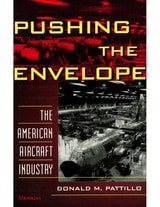
Pushing the Envelope
The American Aircraft IndustryDonald M. Pattillo
University of Michigan Press, 2001