71 books match the query 'Inequality' and 5 start with p

cover of Poison in the Ivy: Race Relations and the Reproduction of Inequality on Elite College Campuses

Poison in the Ivy

Race Relations and the Reproduction of Inequality on Elite College Campuses

Byrd, W. Carson

Rutgers University Press, 2017

The world of elite campuses is one of rarified social circles, as well as prestigious educational opportunities. W. Carson Byrd studied twenty-eight of the most selective colleges and universities in the United States to see whether elite students’ social interactions with each other might influence their racial beliefs in a positive way, since many of these graduates will eventually hold leadership positions in society. He found that students at these universities believed in the success of the ‘best and the brightest,’ leading them to situate differences in race and status around issues of merit and individual effort.

Poison in the Ivy challenges popular beliefs about the importance of cross-racial interactions as an antidote to racism in the increasingly diverse United States. He shows that it is the context and framing of such interactions on college campuses that plays an important role in shaping students’ beliefs about race and inequality in everyday life for the future political and professional leaders of the nation. Poison in the Ivy is an eye-opening look at race on elite college campuses, and offers lessons for anyone involved in modern American higher education.  
 
[more]
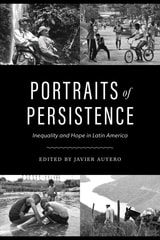
cover of Portraits of Persistence: Inequality and Hope in Latin America

Portraits of Persistence

Inequality and Hope in Latin America

Javier Auyero

University of Texas Press, 2024

Profiles of triumph and hardship amid massive inequality in Latin America.

Each chapter of Portraits of Persistence, a project of the University of Texas Urban Ethnography Lab, offers an intimate portrait of one or two individual lives. The subjects are a diverse group of individuals from across the continent: grassroots activists and political brokers, private security entrepreneurs, female drug dealers, shantytown dwellers, and rural farmers, as well as migrants finding routes into and out of the region. Through these accounts, the writers explore issues that are common throughout today's world: precarious work situations, gender oppression, housing displacement, experiences navigating the bureaucracy for asylum seekers, state violence, environmental devastation, and access to good and affordable health care. Carefully situating these experiences within the sociohistorical context of their specific local regions or countries, editor Javier Auyero and his colleagues consider how people make sense of the paths their lives have taken, the triumphs and hardships they have experienced, and the aspirations they hold for the future. Ultimately, these twelve compelling profiles offer unique and personal windows into the region’s complex and multilayered reality.
[more]
cover of Poverty, Inequality, and the Future of Social Policy: Western States in the New World Order

Poverty, Inequality, and the Future of Social Policy

Western States in the New World Order

Katherine McFate

Russell Sage Foundation, 1995
"Extremely coherent and useful, this much needed volume is concerned with the current status of the poor in Western industrial states. Its closely linked essays allow comparisons between case studies and are often themselves cross-national comparisons....The essays also comment on the meaning of globalization for social policy." —Choice "Excellent and tightly integrated articles by a group of prominent international scholars....A timely and important book, which will surely become the basic reference point for all future research on inequality and social policy." —Contemporary Sociology The social safety net is under strain in all Western nations, as social and economic change has created problems that traditional welfare systems were not designed to handle. Poverty, Inequality, and the Future of Social Policy provides a definitive analysis of the conditions that are fraying the social fabric and the reasons why some countries have been more successful than others in addressing these trends. In the United States, where the poverty rate in the 1980s was twice that of any advanced nation in Europe, the social protection system—and public support for it—has eroded alarmingly. In Europe, the welfare system more effectively buffered the disadvantaged, but social expenditures have been indicted by many as the principal cause of high unemployment. Concluding chapters review the progress and goals of social welfare programs, assess their viability in the face of creeping economic, racial, and social fragmentation, and define the challenges that face those concerned with social cohesion and economic prosperity in the new global economy. This volume illuminates the disparate effects of government intervention on the incidence and duration of poverty in Western countries. Poverty, Inequality, and the Future of Social Policy is full of lessons for anyone who would look beyond the limitations of the welfare debate in the United States.
[more]
cover of Prismatic Metropolis: Inequality in Los Angeles

Prismatic Metropolis

Inequality in Los Angeles

Lawrence D. Bobo

Russell Sage Foundation, 2000
This book cuts through the powerful mythology surrounding Los Angeles to reveal the causes of inequality in a city that has weathered rapid population change, economic restructuring, and fractious ethnic relations. The sources of disadvantage and the means of getting ahead differ greatly among the city's myriad ethnic groups. The demand for unskilled labor is stronger here than in other cities, allowing Los Angeles's large population of immigrant workers with little education to find work in light manufacturing and low-paid service jobs. A less beneficial result of this trend is the increased marginalization of the city's low-skilled black workers, who do not enjoy the extended ethnic networks of many of the new immigrant groups and who must contend with persistent negative racial stereotypes. Patterns of residential segregation are also more diffuse in Los Angeles, with many once-black neighborhoods now split evenly between blacks, Hispanics, Asians, and other minorities. Inequality in Los Angeles cannot be reduced to a simple black-white divide. Nonetheless, in this thoroughly multicultural city, race remains a crucial factor shaping economic fortunes. A Volume in the Multi-City Study of Urban Inequality
[more]
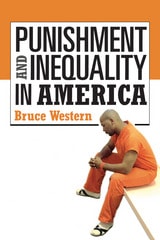
cover of Punishment and Inequality in America

Punishment and Inequality in America

Bruce Western

Russell Sage Foundation, 2006

Over the last thirty years, the prison population in the United States has increased more than seven-fold to over two million people, including vastly disproportionate numbers of minorities and people with little education. For some racial and educational groups, incarceration has become a depressingly regular experience, and prison culture and influence pervade their communities. Almost 60 percent of black male high school drop-outs in their early thirties have spent time in prison. In Punishment and Inequality in America, sociologist Bruce Western explores the recent era of mass incarceration and the serious social and economic consequences it has wrought. Punishment and Inequality in America dispels many of the myths about the relationships among crime, imprisonment, and inequality. While many people support the increase in incarceration because of recent reductions in crime, Western shows that the decrease in crime rates in the 1990s was mostly fueled by growth in city police forces and the pacification of the drug trade. Getting "tough on crime" with longer sentences only explains about 10 percent of the fall in crime, but has come at a significant cost. Punishment and Inequality in America reveals a strong relationship between incarceration and severely dampened economic prospects for former inmates. Western finds that because of their involvement in the penal system, young black men hardly benefited from the economic boom of the 1990s. Those who spent time in prison had much lower wages and employment rates than did similar men without criminal records. The losses from mass incarceration spread to the social sphere as well, leaving one out of ten young black children with a father behind bars by the end of the 1990s, thereby helping perpetuate the damaging cycle of broken families, poverty, and crime. The recent explosion of imprisonment is exacting heavy costs on American society and exacerbating inequality. Whereas college or the military were once the formative institutions in young men's lives, prison has increasingly usurped that role in many communities. Punishment and Inequality in America profiles how the growth in incarceration came about and the toll it is taking on the social and economic fabric of many American communities.
[more]