Results by title
4030 books match the query 'Language Arts & Disciplines' and 204 start with p
PARS in Charge
Resources and Strategies for Online Writing Program LeadersJessie Borgman
University Press of Colorado, 2023
PARS in Practice
More Resources and Strategies for Online Writing InstructorsJessie Borgman
University Press of Colorado, 2021
Together, Borgman and McArdle are creators of The Online Writing Instruction Community, a website and social media group dedicated to collecting and sharing online writing instruction resources. They coauthored a book which was released in the fall of 2019 titled Personal, Accessible, Responsive, Strategic: Resources and Strategies for Online Writing Instructors, which is based on their PARS approach to online writing instruction. They host professional development workshops on online writing instruction and the PARS approach.
Pacific Citizens
Larry and Guyo Tajiri and Japanese American Journalism in the World War II EraEdited, with and Introduction and Notes, by Greg Robinson: Foreword by Harry Honda
University of Illinois Press, 2012
Painting Publics
Transnational Legal Graffiti Scenes as Spaces for EncounterCaitlin Frances Bruce
Temple University Press, 2019
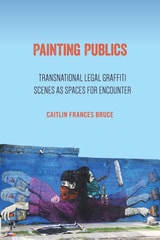
Public art is a form of communication that enables spaces for encounters across difference. These encounters may be routine, repeated, or rare, but all take place in urban spaces infused with emotion, creativity, and experimentation. In Painting Publics, Caitlin Bruce explores how various legal graffiti scenes across the United States, Mexico, and Europe provide diverse ways for artists to navigate their changing relationships with publics, institutions, and commercial entities.
Painting Publics draws on a combination of interviews with more than 100 graffiti writers as well as participant observation, and uses critical and rhetorical theory to argue that graffiti should be seen as more than counter-cultural resistance. Bruce claims it offers resources for imagining a more democratic city, one that builds and grows from personal relations, abandoned or under-used spaces, commercial sponsorship, and tacit community resources. In the case of Mexico, Germany, and France, there is even some state support for the production and maintenance of civic education through visual culture.
In her examination of graffiti culture and its spaces of inscription, Bruce allows us to see moments where practitioners actively reckon with possibility.

Pairing STEAM with Stories
46 Hands-On Activities for ChildrenElizabeth M. McChesney
American Library Association, 2020
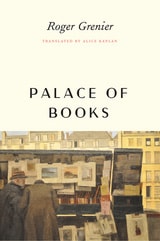
Palace of Books
Roger Grenier
University of Chicago Press, 2014
With Palace of Books, he invites us to explore the domain of literature, its sweeping vistas and hidden recesses. Engaging such fundamental questions as why people feel the need to write, or what is involved in putting one’s self on the page, or how a writer knows she’s written her last sentence, Grenier marshals apposite passages from his favorite writers: Chekhov, Baudelaire, Proust, James, Kafka, Mansfield and many others. Those writers mingle companionably with tales from Grenier’s half-century as an editor and friend to countless legendary figures, including Albert Camus, Romain Gary, Milan Kundera, and Brassai,.
Grenier offers here a series of observations and quotations that feel as spontaneous as good conversation, yet carry the lasting insights of a lifetime of reading and thinking. Palace of Books is rich with pleasures and surprises, the perfect accompaniment to old literary favorites, and the perfect introduction to new ones.
Pandemic Crossings
Digital Technology, Everyday Experience, and Governance in the COVID-19 CrisisGuobin Yang
Michigan State University Press, 2024
Paninian Studies
Professor S. D. Joshi Felicitation VolumeMadhav Deshpande and Saroja Bhate, Editors
University of Michigan Press, 1991
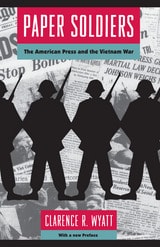
Paper Soldiers
The American Press and the Vietnam WarClarence R. Wyatt
University of Chicago Press, 1994
"Wyatt makes the Diem period in Saigon come to life—the primitive communications, the police crackdowns, the quarrels within the news organizations between the pessimists in Saigon and the optimists in Washington and New York."—Peter Braestrup, Washington Times
"An important, readable study of the Vietnam press corps—the most maligned group of journalists in modern American history. Clarence Wyatt's insights and assessments are particularly valuable now that the media is rapidly growing in its influence on domestic and international affairs."—Peter Arnett, CNN foreign correspondent
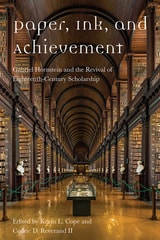
Paper, Ink, and Achievement
Gabriel Hornstein and the Revival of Eighteenth-Century ScholarshipKevin L. Cope
Bucknell University Press, 2021
Published by Bucknell University Press. Distributed worldwide by Rutgers University Press.
Papers of the Fiftieth Algonquian Conference
Monica Macaulay
Michigan State University Press, 2021
Papers of the Fifty-Fifth Algonquian Conference
Actes du Cinquante-Cinquième Congrès des AlgonquinistesInge Genee
Michigan State University Press, 2026
Papers of the Algonquian Conference is a collection of peer-reviewed scholarship from an annual international forum that focuses on topics related to the languages and cultures of Algonquian peoples. This series touches on a variety of subject areas, including anthropology, archaeology, education, ethnography, history, Indigenous studies, language studies, literature, music, political science, psychology, religion, and sociology. Contributors often cite never-before-published data in their research, giving the reader a fresh and unique insight into the Algonquian peoples and rendering these papers essential reading for those interested in studying Algonquian society
Papers of the Fifty-First Algonquian Conference
Monica Macaulay
Michigan State University Press, 2022
Papers of the Fifty-Fourth Algonquian Conference
Actes du cinquante-quatrième Congrès des AlgonquinistesInge Genee
Michigan State University Press, 2025
Papers of the Fifty-Second Algonquian Conference
Monica Macaulay
Michigan State University Press, 2023
Papers of the Fifty-Sixth Algonquian Conference / Actes du Cinquante-sixième Congrès des Algonquinistes
Inge Genee
Michigan State University Press, 2027
Papers of the Algonquian Conference is a collection of peer-reviewed scholarship from an annual international forum that focuses on topics related to the languages and cultures of Algonquian peoples. This series touches on a variety of subject areas, including anthropology, archaeology, education, ethnography, history, Indigenous studies, language studies, literature, music, political science, psychology, religion, and sociology. Contributors often cite never-before-published data in their research, giving the reader a fresh and unique insight into the Algonquian peoples and rendering these papers essential reading for those interested in studying Algonquian society.
Papers of the Forty-Eighth Algonquian Conference
Monica Macaulay
Michigan State University Press, 2019
Papers of the Forty-Fifth Algonquian Conference
Monica Macaulay
Michigan State University Press, 2017
Papers of the Forty-Ninth Algonquian Conference
Monica Macaulay
Michigan State University Press, 2020
Papers of the Forty-Seventh Algonquian Conference
Monica Macaulay
Michigan State University Press, 2018
Papers of the Forty-Sixth Algonquian Conference
Monica Macaulay
Michigan State University Press, 2017
Papers of the Michigan Academy of Science, Arts and Letters
containing papers submitted at the annual meeting in 1922Edited by Paul S. Welch and Eugene S. McCartney
University of Michigan Press, 1923
Papers of the Michigan Academy of Science, Arts and Letters
containing papers submitted at the annual meeting in 1943Edited by Eugene S. McCartney and Henry Van Der Schalie
University of Michigan Press, 1944
Papers of the Michigan Academy of Science, Arts, and Letters
Volume XLIXEdited by Ralph A. Loomis
University of Michigan Press, 1964
Papers of the Michigan Academy of Science, Arts, and Letters
Volume XLVIIEdited by Hubert M. English, Jr.
University of Michigan Press, 1962
Parchment, Paper, Pixels
Law and the Technologies of CommunicationPeter M. Tiersma
University of Chicago Press, 2010
Technological revolutions have had an unquestionable, if still debatable, impact on culture and society—perhaps none more so than the written word. In the legal realm, the rise of literacy and print culture made possible the governing of large empires, the memorializing of private legal transactions, and the broad distribution of judicial precedents and legislation. Yet each of these technologies has its shadow side: written or printed texts easily become static and the textual practices of the legal profession can frustrate ordinary citizens, who may be bound by documents whose implications they scarcely understand.
Parchment, Paper, Pixels offers an engaging exploration of the impact of three technological revolutions on the law. Beginning with the invention of writing, continuing with the mass production of identical copies of legal texts brought about by the printing press, and ending with a discussion of computers and the Internet, Peter M. Tiersma traces the journey of contracts, wills, statutes, judicial opinions, and other legal texts through the past and into the future.
Though the ultimate effects of modern technologies on our legal system remain to be seen, Parchment, Paper, Pixels offers readers an insightful guide as to how our shifting forms of technological literacy have shaped and continue to shape the practice of law today.
Participatory Composition
Video Culture, Writing, and ElectracySarah J. Arroyo
Southern Illinois University Press, 2013
Like. Share. Comment. Subscribe. Embed. Upload. Check in. The commands of the modern online world relentlessly prompt participation and encourage collaboration, connecting people in ways not possible even five years ago. This connectedness no doubt influences college writing courses in both form and content, creating possibilities for investigating new forms of writing and student participation. In this innovative volume, Sarah J. Arroyo argues for a “participatory composition,” inspired by the culture of online video sharing and framed by theorist Gregory Ulmer’s concept of electracy.
Electracy, according to Ulmer, “is to digital media what literacy is to alphabetic writing.” Although electracy can be compared to digital literacy, it is not something shut on and off with the power buttons on computers or mobile devices. Rather, electracy encompasses the cultural, institutional, pedagogical, and ideological implications inherent in the transition from a culture of print literacy to a culture saturated with electronic media, regardless of the presence of actual machines.
Arroyo explores the apparatus of electracy in many of its manifestations while focusing on the participatory practices found in online video culture, particularly on YouTube. Chapters are devoted to questions of subjectivity, definition, authorship, and pedagogy. Utilizing theory and incorporating practical examples from YouTube, classrooms, and other social sites, Arroyo presents accessible and practical approaches for writing instruction. Additionally, she outlines the concept of participatory composition by highlighting how it manifests in online video culture, offers student examples of engagement with the concept, and advocates participatory approaches throughout the book.
Arroyo presents accessible and practical possibilities for teaching and learning that will benefit scholars of rhetoric and composition, media studies, and anyone interested in the cultural and instructional implications of the digital age.
Passions Pedagogies and 21st Century Technologies
edited by Gail E. Hawisher & Cynthia L. Selfe
Utah State University Press, 1999
Gail Hawisher and Cynthia Selfe created a volume that set the agenda in the field of computers and composition scholarship for a decade. The technology changes that scholars of composition studies faced as the new century opened couldn't have been more deserving of passionate study. While we have always used technologies (e.g., the pencil) to communicate with each other, the electronic technologies we now use have changed the world in ways that we have yet to identify or appreciate fully. Likewise, the study of language and literate exchange, even our understanding of terms like literacy, text, and visual, has changed beyond recognition, challenging even our capacity to articulate them.
As Hawisher, Selfe, and their contributors engage these challenges and explore their importance, they "find themselves engaged in the messy, contradictory, and fascinating work of understanding how to live in a new world and a new century." The result is a broad, deep, and rewarding anthology of work still among the standard works of computers and composition study.

Past Imperfect
Essays on History, Libraries, and the HumanitiesLawrence W. Towner
University of Chicago Press, 1993
Towner's essays and talks cover a broad range of topics of continuing relevance to scholarship and the humanities. His writings gathered in Past Imperfect are concerned with such issues as the role of independent research libraries and the politics of funding. A section of historical essays on the common people of New England reveal his concern with neglected fields of history, a theme that guided his career as a librarian. Spanning the range of his experience and expertise, this volume expresses Towner's coherent vision of the place of humanities, libraries, and scholarship in American life.
Lawrence W. Towner (1921-92) taught history at M.I.T., the College of William and Mary, and Northwestern University. In 1962 he was appointed librarian of the Newberry Library and directed the library for the next twenty-four years.

Past Or Portal? Enhancing Undergraduate Learning Through
Eleanor Mitchell
Assoc of College & Research Libraries, 2012
Past or Portal
Enhancing Undergraduate Learning through Special Collections and ArchivesEleanor Mitchell
Assoc of College & Research Libraries, 2012
Patient Sense
Rhetorical Body Work in the Age of TechnologyLillian Campbell
The Ohio State University Press, 2025
In Patient Sense, Lillian Campbell introduces a theory of rhetorical body work and applies it to three distinct healthcare contexts: clinical nursing simulations, physical therapy labs, and tele-observation in a virtual intensive care unit. Drawing on sociological frameworks, she defines rhetorical body work as paid physical, emotional, or discursive labor performed at the material or technological interface of worker–client bodies. Such work is devalued within social and institutional systems and often gendered and racialized. Campbell captures the value of providers’ intuitive patient sense in the face of increasingly technology-mediated healthcare and intervenes in conversations about the future of healthcare training. Ultimately, she demonstrates that we will always need responsive healthcare providers whose rhetorical body work and patient sense cannot be replaced by technicians or algorithms.
Paul Ricoeur
Tradition and Innovation in Rhetorical TheoryAndreea Deciu Ritivoi
Southern Illinois University Press, 2006
Pearl from the Dragon’s Mouth
Evocation of Scene and Feeling in Chinese PoetryCecile C. C. Sun
University of Michigan Press, 1995
Peer Response in Second Language Writing Classrooms
Jun Liu and Jette G. Hansen
University of Michigan Press, 2002
Peer Response in Second Language Writing Classrooms, Second Edition
Jun Liu and Jette G. Hansen Edwards
University of Michigan Press, 2018
Now that classes are as likely to be online as held in physical classrooms and now that a new generation of digital natives can routinely read and respond to what others write via laptops, tablets, and phones, peer response as pedagogical practice is not just more easily implemented, but it is more likely to feel natural to L2 learners.
The Second Edition is a highly accessible guide to how the world is using peer response and serves as a motivator and facilitator for those who want to try it for the first time or want to increase the effectiveness of the activities—whether via CMC or not. The volume includes 11 forms useful in training students to provide good peer feedback, including a final checklist to ensure teachers have taken all the necessary steps to achieve a successful peer feedback activity.
Peer Review
Reform and Renewal in Scientific PublishingAdam Etkin, Thomas Gaston, and Jason Roberts
Against the Grain, LLC, 2017
The Charleston Briefings are written by authorities who provide an effective, readable overview of their topics—not an academic monograph. The intended audience is busy nonspecialist readers who want to be informed concerning important issues in our industry in an accessible and timely manner.
Peer review is an essential aspect of scientific publishing. Yet, how familiar are most of us with the process of peer review? How long has peer review been considered a cornerstone of scientific publishing and what is it meant to accomplish? With so many changes in the realm of scholarly communication in the last twenty years, has the status of peer review also been challenged? Is peer review obsolete? These questions are fundamental to Peer Review: Reform and Renewal in Scientific Publishing. Publishers, researchers, librarians, vendors in the information sphere, and those who are passionate about science will all find much to interest them in this work.
Pen and Sword
American War Correspondents, 1898-1975Mary S. Mander
University of Illinois Press, 2010
Performing Afro-Cuba
Image, Voice, Spectacle in the Making of Race and HistoryKristina Wirtz
University of Chicago Press, 2014
Wirtz analyzes a variety of performances and the ways they construct Cuban racial and historical imaginations. She offers a sophisticated view of performance as enacting diverse revolutionary ideals, religious notions, and racial identity politics, and she outlines how these concepts play out in the ongoing institutionalization of folklore as an official, even state-sponsored, category. Employing Bakhtin’s concept of “chronotopes”—the semiotic construction of space-time—she examines the roles of voice, temporality, embodiment, imagery, and memory in the racializing process. The result is a deftly balanced study that marries racial studies, performance studies, anthropology, and semiotics to explore the nature of race as a cultural sign, one that is always in process, always shifting.
Performing Antiracist Pedagogy in Rhetoric, Writing, and Communication
Frankie Condon
University Press of Colorado, 2017
In Performing Antiracist Pedagogy, Frankie Condon and Vershawn Ashanti Young seek to help create openings to address race and racism not only in course readings and class discussion in writing, rhetoric, and communication courses but also in wider public settings. The contributors to this collection, drawn from a wide range of disciplines, urge readers to renew their commitment to intelligently and publicly deliberate race and to counteract the effects of racism. The book is both theoretically rigorous and practical, providing readers with insightful analyses of race and racism and useful classroom suggestions and examples.
Contributors: Chiara Bacigalupa, Sophia Bell, Susan Leigh Brooks, Frankie Condon, Rasha Diab, John Dean, Thomas Ferrell, Beth Godbee, Dae-Joong Kim, Timothy Lensmire, Calvin M. Logue, Aja Y. Martinez, Rebecca Nathan, Bobbi Olson, Jessica Parker, Charise Pimentel, Octavio Pimentel, Mya Poe, Neil Simpkins, Nathan Snaza, Deatra Sullivan, Vershawn Ashanti Young
Performing Prose
The Study and Practice of Style in CompositionChris Holcomb and M. Jimmie Killingsworth
Southern Illinois University Press, 2010
In Performing Prose, authors Chris Holcomb and M. Jimmie Killingsworth breathe new life into traditional concepts of style. Drawing on numerous examples from a wide range of authors and genres, Holcomb and Killingsworth demonstrate the use of style as a vehicle for performance, a way for writers to project themselves onto the page while managing their engagement with the reader. By addressing style and rhetoric not as an editorial afterthought, but as a means of social interaction, they equip students with the vocabulary and tools to analyze the styles of others in fresh ways, as well as create their own.
Whereas most writing texts focus exclusively on analysis or techniques to improve writing, Holcomb and Killingsworth blend these two schools of thought to provide a singular process of thinking about writing. They discuss not only the benefits of conventional methods, but also the use of deviation from tradition; the strategies authors use to vary their style; and the use of such vehicles as images, tropes, and schemes. The goal of the authors is to provide writers with stylistic “footing”: an understanding of the ways writers use style to orchestrate their relationships with readers, subject matter, and rhetorical situations.
Packed with useful tips and insights, this comprehensive volume investigates every aspect of style and its use to present an indispensable resource for both students and scholars. Performing Prose moves beyond customary studies to provide a refreshing and informative approach to the concepts and strategies of writing.
Performing the News
Identity, Authority, and the Myth of NeutralityElia Powers
Rutgers University Press, 2024
Performing the News: Identity, Authority, and the Myth of Neutrality explores how journalists from historically marginalized groups have long felt pressure to conform when performing for audiences. Many speak with a flat, “neutral” accent, modify their delivery to hide distinctive vocal attributes, dress conventionally to appeal to the “average” viewer, and maintain a consistent appearance to avoid unwanted attention. Their aim is what author Elia Powers refers to as performance neutrality—presentation that is deemed unobjectionable, reveals little about journalists’ social identity, and supposedly does not detract from their message. Increasingly, journalists are challenging restrictive, purportedly neutral forms of self-presentation. This book argues that performance neutrality is a myth that reinforces the status quo, limits on-air diversity, and hinders efforts to make newsrooms more inclusive. Through in-depth interviews with journalists in broadcasting and podcasting, and those who shape their performance, the author suggests ways to make journalism more inclusive and representative of diverse audiences.
Peripheral Visions for Writing Centers
Jackie Grutsch McKinney
Utah State University Press, 2013
McKinney argues that this grand narrative neglects the extent to which writing center work is theoretically and pedagogically complex, with ever-changing work and conditions, and results in a straitjacket for writing center scholars, practitioners, students, and outsiders alike. Peripheral Visions for Writing Centers makes the case for a broader narrative of writing center work that recognizes and theorizes the various spaces of writing center labor, allows for professionalization of administrators, and sees tutoring as just one way to perform writing center work.
McKinney explores possibilities that lie outside the grand narrative, allowing scholars and practitioners to open the field to a fuller, richer, and more realistic representation of their material labor and intellectual work.
Persist and Publish
Helpful Hints for Academic Writing and PublishingRalph Matkin
University Press of Colorado, 2002
Person-Centered Management in Academic Libraries
Edited by Dani Brecher Cook, Maoria J. Kirker, and Diann Smothers
American Library Association, 2024
A recent study published in the Journal of Library Administration draws a sobering conclusion: the accelerated exodus of library workers from the profession in the last several years is partially due to strained relationships between staff and their managers. Often, administrators and managers operate within structures that may encourage or enable poor managerial practices. This volume shines a light on a different path forward for the field, one that focuses on the people who work in libraries and how their managers can support them with empathy and skill. Stemming from insights presented at the Conference on Academic Library Management (CALM), the contributors illustrate what person-centered management looks like in practice and point the way toward implementing this approach at readers’ institutions. This book
- incorporates a variety of institutional perspectives, including community colleges, technical and special colleges, liberal arts institutions, and large research universities;
- defines the concept of person-centered management in the context of libraries and explains why it offers such a valuable framework for improving workplace conditions;
- demonstrates why lack of workplace satisfaction and the low morale experience of library staff is often tied to the culture created by management;
- discusses building person-centered systems, interacting with student employees, setting healthy boundaries, and practicing reflection and self-care;
- shares positive, proactive management practices that create space for criticism, sharing of lived experiences, and a willingness to investigate and, if needed, make changes to the status quo; and
- explores such key topics as communication, working virtually, mentorship, intellectual humility, shared leadership, and many others.
Personal Effects
edited by Deborah H. Holdstein & David Bleich
Utah State University Press, 2002
With this volume, then, these scholars move us to explore the intersections of the social with subjectivity, with voice, ideology, and culture, and to consider the roles of these in the work of academics who study writing and literature. Taken together, the essays in this collection carry forward the idea that the personal, the candidly subjective and intersubjective, must be part of the subject of study in humanities scholarship. They propose an understanding of the personal in scholarship that is more helpful because more clearly anchored in human experience.
Personal Librarian
From Resources to RelationshipsRichard Moniz
American Library Association, 2014
Personal, Accessible, Responsive, Strategic
Resources and Strategies for Online Writing InstructorsJessie Borgman
University Press of Colorado, 2020
Personally Speaking
Experience as Evidence in Academic DiscourseCandace Spigelman
Southern Illinois University Press, 2004
Responding to contemporary discussion about using personal accounts in academic writing, Personally Speaking: Experience as Evidence in Academic Discourse draws on classical and current rhetorical theory, feminist theory, and relevant examples from both published writers and first-year writing students to illustrate the advantages of blending experiential and academic perspectives.
Candace Spigelman examines how merging personal and scholarly worldviews produces useful contradictions and contributes to a more a complex understanding in academic writing. This rhetorical move allows for greater insights than the reading or writing of experiential or academic modes separately does. Personally Speaking foregrounds the semi-fictitious nature of personal stories and the rhetorical possibilities of evidence as Spigelman provides strategies for writing instructors who want to teach personal academic argument while supplying practical mechanisms for evaluating experiential claims.
The volume seeks to complicate and intensify disciplinary debates about how compositionists should write for publication and what kinds of writing should be taught to composition students. Spigelman not only supplies evidence as to why the personal can count as evidence but also relates how to use it effectively by including student samples that reflect particular features of personal writing. Finally, she lays the groundwork to move narrative from its current site as confessional writing to the domain of academic discourse.
Persons of the Market
Conservatism, Corporate Personhood, and Economic TheologyKevin Musgrave
Michigan State University Press, 2022
light on their seemingly odd marriage in contemporary American politics. Author Kevin Musgrave highlights the ways that theories of corporate and human personhood have long been and remain bound together by examining four case studies: the U.S. Supreme Court’s 1886 Santa Clara decision, the role of early twentieth-century advertisers in endowing corporations with souls, Justice Lewis Powell Jr.’s eponymous memo of 1971, and the arc of the conservative movement from Ronald Reagan to Donald Trump. Tracing this rhetorical history of the extension and attribution of personhood to the corporate form illustrates how the corporation has for many increasingly become a normative model or ideal to which human persons should aspire. In closing, the book offers preliminary ideas about how we might fashion a more democratic and humane understanding of what it means to be a person.