Results by title
88 books match the query 'Lawyers' and 7 start with p
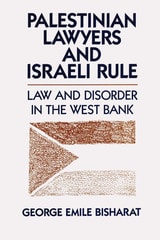
Palestinian Lawyers and Israeli Rule
Law and Disorder in the West BankBy George Emile Bisharat
University of Texas Press, 1989
As frequent intermediaries between Israeli military authorities and Palestinian citizens, Palestinian lawyers stand close to the fault line dividing Israeli and Palestinian societies. The conflicts and tensions they experience in their profession mirror the larger conflicts between the two societies. Thus, as George Bisharat reveals in Palestinian Lawyers and Israeli Rule, a careful study of the work and lives of Palestinian lawyers ultimately helps to illuminate the causes of the intifada, or uprising, that began in December 1987.
The study revolves around the central question of why the Palestinian legal profession declined during twenty years of Israeli occupation when, in other Third World countries, the legal profession has often reached its peak during a period of Western colonization. Bisharat answers this question with a wide-ranging inquiry into the historical origins of the legal profession and court system in Palestine, the tenuous grounding of these institutions in Palestinian society and culture, and the structure, style, and policies of the late-twentieth-century Israeli military government in the West Bank.
For general readers interested in the Palestinian-Israeli conflict, as well as specialists in such fields as legal anthropology, sociology of the professions, Third World law and development, and Middle Eastern studies, Palestinian Lawyers and Israeli Rule will be required reading.
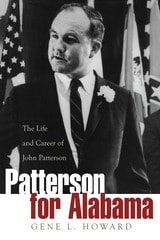
Patterson for Alabama
The Life and Career of John PattersonGene Howard
University of Alabama Press, 2013
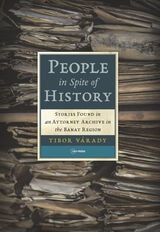
People in Spite of History
Stories Found in an Attorney Archive in the Banat RegionRichard Buxbaum
Central European University Press, 2021
Three generations of a family of lawyers have run a firm founded in 1893 in the small city of Becskerek (today in Serbian Zrenjanin), first part of the Austro-Hungarian Habsburg monarchy, then Hungary, then Yugoslavia, then for a while under German occupation, then again part of Yugoslavia and finally Serbia. In the Banat district of the province of Vojvodina, the multiplicity of languages and religions and changes of place-names was a matter of course.
What is practically unprecedented, all files, folders and documents of the law office have survived. They concern marriages, divorces, births and testaments, as well as expulsions, emigrations, incarcerations and releases of these largely rural and small-town dwellers. Mundane cases reflect times through war, peace, revolution and counter-revolution, through serfdom and freedom, through comfort and poverty. The files also show everyday lives shaped in spite of history. Tibor Várady transforms them into affecting and vivid vignettes, selecting and commenting without sentimentality but with empathy. The law office of the three generations of the Várady family demonstrates that the legal profession permits and in difficult times even requires its members to defend the ordinary men and women against the powers of state and society.
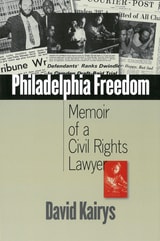
Philadelphia Freedom
Memoir of a Civil Rights LawyerDavid Kairys
University of Michigan Press, 2008
"David Kairys is one of the grand long-distance runners in the struggle for justice in America. His brilliant legal mind and superb lawyerly skills are legendary. This marvelous book is his gift to us!"
---Cornel West, Professor of Religion and African American Studies, Princeton University, and award-winning author of Race Matters
Philadelphia Freedom is the spellbinding tale of an idealistic young lawyer coming of age in the political cauldron of the 1960s and 1970s. From his immersion in the civil rights movement to his determined court battles to quell criminal violence by Philadelphia police, Kairys recounts how he helped make history in the city of brotherly love."
---William K. Marimow, Editor and Executive Vice President, Philadelphia Inquirer, and recipient of two Pulitzer Prizes
"In the current climate of political deception and the trampling of our civil rights, Kairys's compelling book is a clenched fist, a prayer for social justice and a call to conscience."
---Steve Lopez, Los Angeles Times columnist and former Philadelphia Inquirer columnist
"With engaging, insider stories of innovative legal strategies of a truly creative lawyer, this book evokes the ebullient spirit of progressive social change launched in the 1960s and should be read by aspiring and practicing lawyers as well as anyone interested in American social history. Philadelphia Freedom reads like a suspense novel and reveals how novel legal and political thinking can and does make a real difference to individuals and to the quality of justice."
---Martha L. Minow, Jeremiah Smith, Jr. Professor of Law, Harvard University
"David Kairys's compelling book properly explains the vital role that civil rights attorneys play in our system of justice."
---Judge John E. Jones III, United States District Court for the Middle District of Pennsylvania, and presiding judge in the landmark Kitzmiller v. Dover Area School District case
A memoir that is also a compelling page-turner, Philadelphia Freedom is the poignant, informative, often inspiring account of renowned civil-rights lawyer David Kairys's personal quest for achieving social justice during the turbulent 1960s and 70s.
Philadelphia Freedom brings us intimately and directly into Kairys's burgeoning law career and the struggles of the 60s as his professional and private life navigated the turmoil and promise of the civil rights and antiwar movements.
Many of the cases Kairys took on involved discrimination and equal protection, freedom of speech, and government malfeasance. Kairys is perhaps most well known for his victory in the Camden 28 draft board case, in which the FBI set up a sting of the Catholic anti-war left at the behest of the highest levels of government.
The stories and cases range from nationally important and recognizable---the family of the scientist the CIA unwittingly gave LSD in the 1950s; the leading race discrimination case against the FBI; Dr. Benjamin Spock's First Amendment case before the Supreme Court; the city handgun lawsuits Kairys conceived---to those he encountered in his early work as a public defender. The characters include public figures such as FBI Directors J. Edgar Hoover and Louis Freeh; CIA Director William Colby; Pennsylvania Senator Arlen Specter; New York Attorney General Eliot Spitzer; U.S. Attorneys General Edward Levi and John Mitchell; Georgia Governor Lester Maddox; Pennsylvania Governor, former Philadelphia Mayor, and Democratic National Committee chair Ed Rendell; Philadelphia Mayor and Police Commissioner Frank Rizzo. But some of the most memorable are not well known, involving regular people caught up in the often heartless machinery of the courts and legal system.
Though it reads like a novel, with all the elements of character, plot, and suspense, Philadelphia Freedom also has historical significance as a firsthand account of the 1960s and 70s and contains social commentary about race as well as insights and major perspectives on the nature and social role of law.
David Kairys is Professor of Law at Beasley School of Law, Temple University. He was a full-time civil rights lawyer from 1968 to 1990.
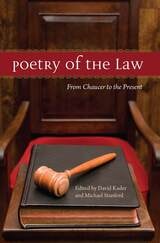
Poetry of the Law
From Chaucer to the PresentDavid Kader
University of Iowa Press, 2010
Since the time of Blackstone's "Farewell," poetry has been seen as celestial, pastoral, solitary, and mellifluous; law as venerable, social, urban, and cacophonous. This perception has persisted even to the present, with the bourgeoning field of law and literature focusing almost exclusively on fiction and drama. Poetry of the Law, however, reveals the richness of poetry about the law.
Poetry of the Law is the first serious anthology of law-related poetry ever published in the United States. As the editors make clear, though, serious need not imply solemn. Instead, David Kader and Michael Stanford have assembled a surprisingly capacious collection of 100 poems from the 1300s to the present.
Set in courtrooms, lawyers’ offices, law-school classrooms, and judges’ chambers; peopled with attorneys, the imprisoned (both innocent and guilty), judges, jurors, witnesses, and law-enforcement officers; based on real events (think “Scottsboro”) or exploring the complexity of abstract legal ideas; the poems celebrate justice or decry the lack of it, ranging in tone from witty to wry, sad to celebratory, funny to infuriating. Poetry of the Law is destined to become an authoritative source for years to come.
Contributors Include:
W. H. Auden
Robert Burns
Lewis Carroll
John Ciardi
Daniel Defoe
Emily Dickinson
John Donne
Rita Dove
Ralph Waldo Emerson
Martín Espada
Thomas Hardy
Seamus Heaney
A. E. Housman
Langston Hughes
Ben Jonson
X. J. Kennedy
Yusef Komunyakaa
Ted Kooser
D. H. Lawrence
Edgar Lee Masters
W. S. Merwin
Edna St. Vincent Millay
Sir Walter Raleigh
Muriel Rukeyser
Carl Sandburg
William Shakespeare
Jonathan Swift
Mona Van Duyn
Oscar Wilde
William Carlos Williams
from “The Hanging Judge” by Eavan Boland
Come to the country where justice is seen to be done,
Done daily. Come to the country where
Sentence is passed by word of mouth and raw
Boys split like infinitives. Look, here
We hanged our son, our only son
And hang him still and still we call it law.

Poor People's Lawyers in Transition
Katz, Jack
Rutgers University Press, 1982
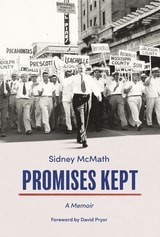
Promises Kept
A MemoirSidney S. McMath
University of Arkansas Press, 2003
Winner of the 2006 Booker Worthen Literary Prize and the 2004 Ragsdale Award
A dominating spirit of public service animated the life of Sidney Sanders McMath (1912–2003), the thirty-fourth governor of Arkansas. Promises Kept, completed and published when McMath was in his nineties, tells his story in his own words—from the piney hills of South Arkansas to the battlefields of World War II; through the human dramas of the courtroom to the marbled corridors of the State Capitol.
In Promises Kept, McMath recounts a rural upbringing that grounded him in the concerns of everyday Arkansans. He tells his life story through key milestones, including distinguished military service and a dramatic political rise to governor of Arkansas. During his four years in office, he pursued reform and modernization by expanding roads and electricity to rural areas, fighting the poll tax, building the state’s first medical center, opening Democratic primaries to Black voters, and standing with President Harry Truman in resisting the segregationist Dixiecrats. McMath’s political career ended amid unproven allegations tied to the highway program—charges he addresses directly here—and concludes with his return to the law, where landmark cases earned him honors.
Throughout, McMath reveals the excitement and the hard choices of real democracy, offering compelling human stories and a crucial perspective of a pivotal time in Arkansas history.