Results by title
178 books match the query 'Media' and 15 start with p
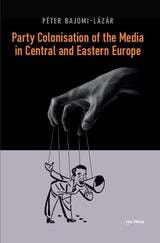
Party Colonisation of the Media in Central and Eastern Europe
Péter Bajomi-Lázár
Central European University Press, 2014
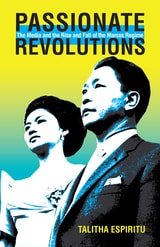
Passionate Revolutions
The Media and the Rise and Fall of the Marcos RegimeTalitha Espiritu
Ohio University Press, 2017
In the last three decades, the dictatorship of Ferdinand Marcos has commanded the close scrutiny of scholars. These studies have focused on the political repression, human rights abuses, debt-driven growth model, and crony capitalism that defined Marcos’ so-called Democratic Revolution in the Philippines. But the relationship between the media and the regime’s public culture remains underexplored.
In Passionate Revolutions, Talitha Espiritu evaluates the role of political emotions in the rise and fall of the Marcos government. Focusing on the sentimental narratives and melodramatic cultural politics of the press and the cinema from 1965 to 1986, she examines how aesthetics and messaging based on heightened feeling helped secure the dictator’s control while also galvanizing the popular struggles that culminated in “people power” and government overthrow in 1986.
In analyzing news articles, feature films, cultural policy documents, and propaganda films as national allegories imbued with revolutionary power, Espiritu expands the critical discussion of dictatorships in general and Marcos’s in particular by placing Filipino popular media and the regime’s public culture in dialogue. Espiritu’s interdisciplinary approach in this illuminating case study of how melodrama and sentimentality shape political action breaks new ground in media studies, affect studies, and Southeast Asian studies.
Performance and Media
Taxonomies for a Changing FieldSarah Bay-Cheng, Jennifer Parker-Starbuck, and David Saltz
University of Michigan Press, 2015
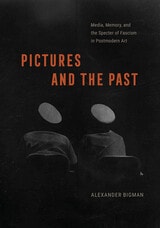
Pictures and the Past
Media, Memory, and the Specter of Fascism in Postmodern ArtAlexander Bigman
University of Chicago Press, 2024
A fresh take on the group of artists known as the Pictures Generation, reinterpreting their work as haunted by the history of fascism, the threat of its return, and the effects of its recurring representation in postwar American culture.
The artists of the Pictures Generation, converging on New York City in the late 1970s, indelibly changed the shape of American art. Rebelling against abstraction, they borrowed liberally from the aesthetics of mass media and sometimes the work of other artists. It has long been thought that the group’s main contribution was to upend received conceptions of authorial originality. In Pictures and the Past, however, art critic and historian Alexander Bigman shows that there is more to this moment than just the advent of appropriation art. He presents us with a bold new interpretation of the Pictures group’s most significant work, in particular its recurring evocations of fascist iconography.
In the wake of the original Pictures show, curated by Douglas Crimp in 1977, artists such as Sarah Charlesworth, Jack Goldstein, Troy Brauntuch, Robert Longo, and Gretchen Bender raised pressing questions about what it means to perceive the world historically in a society saturated by images. Bigman argues that their references to past cataclysms—to the violence wrought by authoritarianism and totalitarianism—represent not only a coded form of political commentary about the 1980s but also a piercing reflection on the nature of collective memory. Throughout, Bigman situates their work within a larger cultural context including parallel trends in music, fashion, cinema, and literature. Pictures and the Past probes the shifting relationships between art, popular culture, memory, and politics in the 1970s and ’80s, examining how the specter of fascism loomed for artists then—and the ways it still looms for us today.
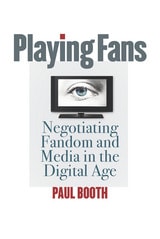
Playing Fans
Negotiating Fandom and Media in the Digital AgePaul Booth
University of Iowa Press, 2015
In Playing Fans, Paul Booth argues that the more attention entertainment businesses pay to fans, the more mainstream fans have become popularized. But such mainstreaming ignores important creative fan work and tries to channel fandom into activities lucrative for the companies. Offering a new approach to the longstanding debate about the balance between manipulation and subversion in popular culture, the author argues that we can understand the current moment best through the concepts of pastiche and parody. This sophisticated alternative to conceiving of fans as either dupes of the media industry or rebels against it takes the discussion of “transformative” and “affirmative” fandom in a productive new direction.
With nuanced analyses of the Doctor Who Experience in Cardiff, the representations of fans in TV shows like Community and films like Fanboys, SuperWhoLock fans’ use of gifs, and the similarities in discussions of slash fandom and pornographic parody films, this book reveals how fans borrow media techniques and media industries mimic fan activities. Just as the entertainment industry needs fans to succeed, so too do fans need—and desire—the media, and they represent their love through gif fics, crowdfunding, and digital cosplay. Everyone who wants to understand how consumers are making themselves at home in the brave new world being built by the contemporary media should read this book.
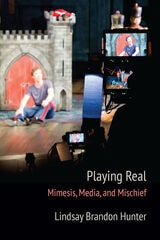
Playing Real
Mimesis, Media, and MischiefLindsay Brandon Hunter
Northwestern University Press, 2021
Playing Real: Mimesis, Media, and Mischief explores the integration and interaction of mimetic theatricality and representational media in twentieth- and twenty‑first-century performance. It brings together carefully chosen sites of performance—including live broadcasts of theatrical productions, reality television, and alternate-reality gaming—in which mediatization and mimesis compete and collude to represent the real to audiences. Lindsay Brandon Hunter reads such performances as forcing confrontation between notions of authenticity, sincerity, and spontaneity and their various others: the fake, the feigned, the staged, or the rehearsed.
Each site examined in Playing Real purports to show audiences something real—real theater, real housewives, real alternative scenarios—which is simultaneously visible as overtly constructed, adulterated by artifice and artificiality. The integration of mediatization and theatricality in these performances, Hunter argues, exploits the proclivities of both to conjure the real even as they risk corrupting the perception of authenticity by imbricating it with artifice and overt manipulation.
Although the performances analyzed obscure boundaries separating actual from virtual, genuine from artificial, and truth from fiction, Hunter rejects the notion that these productions imperil the “real.” She insists on uncertainty as a fertile site for productive and pleasurable mischief—including relationships to realness and authenticity among both audience and participants.
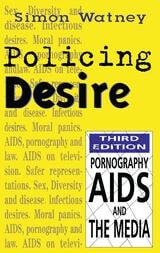
Policing Desire
Pornography, AIDS and the MediaSimon Watney
University of Minnesota Press, 1997
An updated edition of this essential work.
Since its initial publication, Policing Desire has proved to be an unparalleled analysis of “the cacophony of voices which sounds through every institution of our society on the subject of AIDS.” For the third edition Simon Watney has provided a new preface, a compelling new concluding essay, and a directory for AIDS information that includes electronic resources.
“A far-reaching analysis of images of AIDS and homosexuality in the media. . . . In Policing Desire, Simon Watney called the media on its own game, and the media actually changed its coverage of AIDS and queer issues.” Voice Literary Supplement“Simon Watney’s Policing Desire is essential reading for anyone who wants to press the question of how the media represents AIDS . . . it will stand as a great work of criticism written from the trenches.” New York Native“A landmark work in AIDS analysis because of the combination of emotional urgency and analytical insight that it manifests.” American Book ReviewWinner of the Gustavus Myers Prize for the Study of Human RightsISBN 0-8166-3024-0 Cloth $39.95xx CUSAISBN 0-8166-3025-9 Paper $16.95x CUSA000 pages 0 x 0 MarchMedia Studies/Social TheoryPolicing DesirePornography, AIDS and the MediaThird EditionSimon WatneyAn updated edition of this essential work. Since its initial publication, Policing Desire has proved to be an unparalleled analysis of “the cacophony of voices which sounds through every institution of our society on the subject of AIDS.” For the third edition Simon Watney has provided a new preface, a compelling new concluding essay, and a directory for AIDS information that includes electronic resources.“A far-reaching analysis of images of AIDS and homosexuality in the media. . . . In Policing Desire, Simon Watney called the media on its own game, and the media actually changed its coverage of AIDS and queer issues.” Voice Literary Supplement“Simon Watney’s Policing Desire is essential reading for anyone who wants to press the question of how the media represents AIDS . . . it will stand as a great work of criticism written from the trenches.” New York Native“A landmark work in AIDS analysis because of the combination of emotional urgency and analytical insight that it manifests.” American Book ReviewSimon Watney is the director of the Red Hot AIDS Charitable Trust, which distributes funds internationally for HIV/AIDS prevention and education. Watney lives in London, England.
Polygamy in Primetime
Media, Gender, and Politics in Mormon FundamentalismJanet Bennion
Brandeis University Press, 2011

Power Beyond Scrutiny
Media, Justice and AccountabilityJustin Schlosberg
Pluto Press, 2013
Power Beyond Scrutiny uncovers the forces which distort and limit public debate in the media. From the misuse of politicians' expenses to recent phone hacking scandals, establishment corruption has never been more in the headlines. Yet amidst the din there have been seismic silences.
Justin Schlosberg interrogates these silences - why did a plea bargain which allowed Britain’s biggest arms company to escape bribery prosecution go almost entirely unchallenged in television news? Why did journalists routinely endorse the official explanation of how intelligence analyst David Kelly died, whilst all but ignoring mounting evidence which undermined it? Why, in 2010, did broadcasters offer an unchallenged platform to critics of Wikileaks but not its supporters?
These are some of the questions and imbalances that Schlosberg seeks to address as he explains the nature of public debate in the digital age. In doing so he uncovers a range of news blockages that are more than just accidents of a fragmented, chaotic mediascape. They are ultimately ideological forces which ensure that contestability and dissent remain within definable limits.
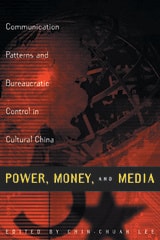
Power, Money, and Media
Communication Patterns and Bureaucratic Control in Cultural ChinaChin-Chuan Lee
Northwestern University Press, 2000
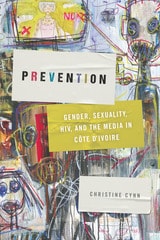
Prevention
Gender, Sexuality, HIV, and the Media in Côte d'IvoireChristine Cynn
The Ohio State University Press, 2018
More specifically, Cynn argues that through the bolstering of normative conceptions of gendered sexualities and families, HIV prevention media campaigns seek to actively create proper subjects, a goal corresponding with nation-building projects and reproducing their terms of belonging. During periods of increasingly virulent political and economic struggles in Côte d’Ivoire, such HIV prevention messages have lent support to lender- and state-mandated structural adjustment policies and to the exclusionary logic that casts some—such as those suffering from AIDS-related illnesses, those labeled as “homosexual,” sex workers, intravenous drug users, and the HIV-positive child—as implicitly unassimilable to the community and nation. Deeply interdisciplinary, Prevention brings to light new forms of exclusion and expands scholarship on gender and sexual normativities as it intersects with that on public health, neoliberalism, and film and media.
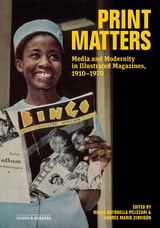
Print Matters
Media and Modernity in Illustrated Magazines, 1910–1970Maria Antonella Pelizzari
J. Paul Getty Trust, The, 2025
In the early to mid-twentieth century, the vast majority of printed photographs appeared in the pages of illustrated magazines. Publications such as Life, China Pictorial, Drum, Picture Post, and Ebony did more than showcase photographs; they crafted visual narratives by combining images, text, and graphics into influential cultural artifacts. These periodicals shaped public perception and mass media consensus like the Internet does today, bringing a shared visual experience to homes and newsstands around the world.
The essays in this volume delve into the technologies and visual strategies behind these publications, showing how their layouts were affected by political, commercial, editorial, and artistic factors leading up to World War II. The commentaries also explore how democracy, dictatorships, colonization, and modernity at large gave rise to experimental magazine designs, turning avant-garde art and lifestyle reporting into popular formats. Featuring over 150 images, Print Matters traces how illustrated magazines evolved across countries and continents, offering new insights into their history and enduring impact on culture and society.
Print, Manuscript, and Performance
THE CHANGING RELATIONS OF THE MEDIA IN EARLY MODERN ENGLANDArthur F. Marotti and Michael D. Bristol
The Ohio State University Press, 2000
Although canonical literary writers such as Shakespeare, Jonson, and Rochester are discussed, the field of writing examined is a broad one, embracing political speeches, coterie manuscript poetry, popular pamphlets, parochially targeted martyrdom accounts, and news reports. Setting writers, audiences, and texts in their specific historical context, the contributors focus on a period in early modern England, from the late sixteenth through the late seventeenth century, when the shift from orality and manuscript communication to print was part of large-scale cultural change. Arthur F. Marotti’s and Michael D. Bristol’s introduction analyzes some of the sociocultural issues implicit in the collection and relates the essays to contemporary work in textual studies, bibliography, and publication history.
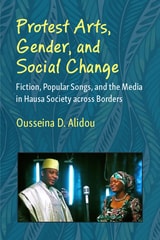
Protest Arts, Gender, and Social Change
Fiction, Popular Songs, and the Media in Hausa Society across BordersOusseina D. Alidou
University of Michigan Press, 2024
While there is an abundance of social science studies giving voice to the dominant actors of hegemonic violence in Hausa society, there is a dearth of works that center the voices of the afflicted, unprivileged, and marginalized class, among whom are women and youth. One aim of this book is to examine the ways popular songs and fiction fill up the humanistic urgency to capture the dignity of the life of those dehumanized by local, national, and international hegemonic religious and secular forces. The book focuses on the resistance narratives of one female novelist and six song composers and performers that generate alternative counterhegemonic responses to dominant patriarchal discourses produced by cultural, religious, and political elites, thus reaching out to marginalized local and national communities and global audiences. Alidou interweaves the social, political, and biomedical epidemics with the concept of “Hausa interiority” to create a unique perspective on contemporary Hausa culture and politics through the lens of artistic productions.

Punk Identities, Punk Utopias
Global Punk and MediaEdited by Russ Bestley, Mike Dines, Matt Grimes, Paula Guerra
Intellect Books, 2021
Punk Identities, Punk Utopias unpacks punk and the factors that shape its increasingly complex and indefinable social, political, and economic setting. The third offering in Intellect’s Global Punk series, produced in collaboration with the Punk Scholars Network, this volume examines the broader social, political, and technological concerns that affect punk scenes around the world, from digital technology and new media to gender, ethnicity, identity, and representation.
Drawing on scholarship in cultural studies, musicology, and social sciences, this interdisciplinary collection will add to the academic discussion of contemporary popular culture, particularly in relation to punk and the critical understanding of transnational and cross-cultural dialogue.