Results by title
1106 books match the query 'Memoirs' and 32 start with p

Pacific Airman
The World War II Journal of a B-24 Liberator NavigatorEdward S. Goode, edited by Robert A. Taylor
University of Alabama Press, 2026
A World War II bomber navigator’s diary, documenting perilous missions, survival, sacrifice, and the legendary 90th Bomb Group
Pacific Airman: The World War II Journal of a B-24 Liberator Navigator presents the hand-written pocket diary of US Army Air Forces bomber navigator Edward S. Goode of West Virginia. Goode was a member of the 400th Bomber Squadron (the “Black Pirates”), part of the legendary 90th Bomb Group the “Jolly Rogers.” With approximately seventy-four combat missions to his credit and an Air Medal with six Oak Leaf clusters, Goode experienced the war close-up, with group losses and the horror of grisly deaths in and out of combat.
The journal details costly bombing raids against Japanese targets, as well as the dangers of the Southwest Pacific area with its wild and unpredictable weather and terrain. Editor Robert A. Taylor also documents Goode’s failed postwar attempt to receive the Distinguished Flying Cross for heroism for the Peleliu bombing mission in 1944.
Taylor offers detailed historical and other context to the journal. Three appendixes comprise a guide for B-24 navigators’ duties and responsibilities, Goode’s own record of 90th Bomb Group losses for 1944–1945, and a hometown newspaper clipping announcing his return home. This book will appeal to readers interested in World War II history, military aviation, the Pacific theater, and firsthand wartime narratives.
Pandemonium Logs
Sioux Falls, South Dakota, 2020–2022Ben Miller
Rutgers University Press, 2025
Balcones Prize Winner in Nonfiction
In 2015, Ben Miller and the poet Anne Pierson Wiese moved from New York City to Sioux Falls, South Dakota, to explore their midwestern roots and to focus on their writing careers. Working a day job in a hospital, Miller had a front-row seat to the COVID-19 pandemic as it moved from the coasts to the urban Midwest. Pandemonium Logs casts an unflinching eye on the state of the worker in the US health-care system during a global pandemic, giving voice to the doctors, nurses, support staff, patients, and families caught in the complex swirl of daily dilemmas and crucial choices.
In unsparing yet sympathetic prose, Ben Miller creates an intimate portrait of the impact of COVID on the diverse people of South Dakota. Through a wide range of characters—from understandably confused patients to quietly competent nurses—he explores the human complexities of the crisis: a doctor based in Mumbai who treats critically ill patients in the Dakotas via a tenuous hodgepodge of telehealth apparatus, a Hydra of six workplace trainers who together cannot train one employee to do one job, a vice president of corporate hospitality who lives to rip down safety signs as fast as nurses post them, a ninety-year-old hospital volunteer who pushes wheelchairs containing patients half his age.
In Pandemonium Logs, Miller provides precise and moving observations of ordinary people doing extraordinary things.
Papa, PhD
Essays on Fatherhood by Men in the AcademyMarotte, Mary Ruth
Rutgers University Press, 2010
In Papa, PhD, Mary Ruth Marotte, Paige Martin Reynolds, and Ralph James Savarese bring together a group contributors from a variety of backgrounds and disciplines. They are white, black, South Asian, Asian, and Arab. They are gay and straight, married and divorced. They are tenured and untenured, at research-one universities and at community colleges. Some write at the beginning of their careers, others at the end. But, perhaps most important they do not look back-they look forward to new parental and professional synergies as they reflect on what it means to be a father in the academy.
The fathers writing in Papa, PhD seek to expand their children's horizons, giving them the gifts of better topic sentences and a cosmopolitan sensibility. They seriously consider the implications of gender theory and queer theory-even Marxist theory-and make relevant theoretical connections between their work and the less abstract, more pragmatic, world of fathering. What resonates is the astonishing range of forms that fatherhood can take as these dads challenge traditional norms by actively questioning the status quo.
Passed On
African American Mourning Stories, A MemorialKarla FC Holloway
Duke University Press, 2002
With a focus on the “death-care” industry—black funeral homes and morticians, the history of the profession and its practices—Holloway examines all facets of the burial business, from physicians, hospital chaplains, and hospice administrators, to embalming- chemical salesmen, casket makers, and funeral directors, to grieving relatives. She uses narrative, photographs, and images to summon a painful history of lynchings, white rage and riot, medical malpractice and neglect, executions, and neighborhood violence. Specialized caskets sold to African Americans, formal burial photos of infants, and deathbed stories, unveil a glimpse of the graveyards and burial sites of African America, along with burial rituals and funeral ceremonies.
Revealing both unexpected humor and anticipated tragedy, Holloway tells a story of the experiences of black folk in the funeral profession and its clientele. She also reluctantly shares the story of her son and the way his death moved her research from page to person.
In the conclusion, which follows a sermon delivered by Maurice O. Wallace at the funeral for the author’s son, Bem, Holloway strives to commemorate—through observation, ceremony, and the calling of others to remembrance and celebration.
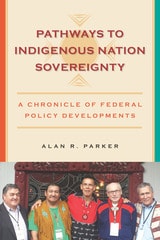
Pathways to Indigenous Nation Sovereignty
A Chronicle of Federal Policy DevelopmentsAlan R Parker
Michigan State University Press, 2018
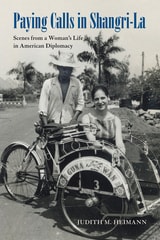
Paying Calls in Shangri-La
Scenes from a Woman’s Life in American DiplomacyJudith M. Heimann
Ohio University Press, 2016
Judith M. Heimann entered the diplomatic life in 1958 to join her husband, John, in Jakarta, Indonesia, at his American Embassy post. This, her first time out of the United States, would set her on a path across the continents as she mastered the fine points of diplomatic culture. She did so first as a spouse, then as a diplomat herself, thus becoming part of one of the Foreign Service’s first tandem couples.
Heimann’s lively recollections of her life in Africa, Asia, and Europe show us that when it comes to reconciling our government’s requirements with the other government’s wants, shuttle diplomacy, Skype, and email cannot match on-the-ground interaction. The ability to gauge and finesse gesture, tone of voice, and unspoken assumptions became her stock-in-trade as she navigated, time and again, remarkably delicate situations.
This insightful and witty memoir gives us a behind-the-scenes look at a rarely explored experience: that of one of the very first married female diplomats, who played an unsung but significant role in some of the important international events of the past fifty years. To those who know something of today’s world of diplomacy, Paying Calls in Shangri-La will be an enlightening tour through the way it used to be—and for aspiring Foreign Service officers and students, it will be an inspiration.
Published in association with ADST-DACOR Diplomats and Diplomacy Series
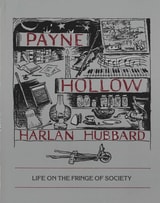
Payne Hollow
Life on the Fringe of SocietyHarlan Hubbard
Ohio University Press, 1997
Originally published in 1974, this second edition was published by Gnomon Press in 1997.Payne Hollow is a reflective and poetic memoir that details the simple, self-sufficient life Harlan Hubbard and his wife, Anna, led along the banks of the Ohio River in the 1950s–80s. After living on a shantyboat for eight years, the Hubbards crafted a custom home and studio at Payne Hollow, in Trimble County, Kentucky, where they lived off the land and embraced a lifestyle focused on nature, art, and solitude. The book, illustrated with Harlan’s own ink drawings, captures the couple’s philosophy of living in harmony with the natural world, free from the distractions and demands of modern society. Hubbard eloquently describes in words and images their daily routines, the changing seasons, and the deep satisfaction he and Anna found in their way of life. Through his writing, Hubbard rejoices in the return to simplicity and creates an appreciation for the living world, making Payne Hollow not just a memoir, but a model for building a deliberate, mindful life in tune with nature.

Penny Loafers & Bobby Pins
Tales and Tips from Growing Up in the ’50s and ’60sSusan Sanvidge
Wisconsin Historical Society Press, 2010
“In the fifties, sleek Mixmasters were replacing rusty eggbeaters, and new pressure-cookers blew their tops in kitchens all over town. There were kids everywhere, and new ‘ranch-style’ houses filled vacant lots. . . . Turquoise Studebakers and dusty-rose Chevy BelAirs with flamboyant fins and lots of chrome replaced dark pre-war cars. Cameras took color snapshots instead of black-and-white. We wore red canvas tennis shoes and lemon yellow shorts, and bright blue popsicles melted down our chins.” —from the Introduction
Perennial Ceremony
Lessons and Gifts from a Dakota GardenTeresa Peterson
University of Minnesota Press, 2024
Travel through a garden’s seasons toward healing, reclamation, and wholeness—for us, and for our beloved relative, the Earth
In this rich collection of prose, poetry, and recipes, Teresa Peterson shares how she found refuge from the struggle to reconcile her Christianity and Dakota spirituality, discovering solace and ceremony in communing with the earth. Observing and embracing the cycles of her garden, she awakens to the constant affirmation that healing and wellness can be attained through a deep relationship with land, plants, and waters. Dakota people call this way of seeing and being in the world mitakuye owasin: all my relations. Perennial Ceremony brings us into this relationship, as Peterson guides us through the Dakota seasons to impart lessons from her life as a gardener, gatherer, and lover of the land.
We see the awakening of Wetu (spring), a transitional time when nature comes alive and sweet sap flows from maples, and the imperfect splendor of Bdoketu (summer), when rain becomes a needed and nourishing gift. We share in the harvesting wisdom of Ptaŋyetu (fall), a time to savor daylight and reap the garden’s abundance, and the restorative solitude of Waniyetu (winter), when snow blankets the landscape and sharpens every sound. Through it all, Peterson walks with us along the path that both divides and joins Christian doctrine, everyday spiritual experience, and the healing powers of Indigenous wisdom and spirituality.
In this intimate seasonal cycle, we learn how the garden becomes a healing balm. Peterson teaches us how ceremony may be found there: how in the vegetables and flowers, the woods, the hillsides, the river valley—even in the feeding of friends and family—we can reclaim and honor our relationship with Mother Earth. She encourages us to bring perennial ceremony into our own lives, inviting us on a journey that brings us full circle to makoce kiŋ mitakuye: the land is my relative.
Perfect Dirt
And Other Things I've Gotten WrongKeegan Lester
West Virginia University Press, 2021
Words have meaning and meaning evolves over time. In Perfect Dirt, Keegan Lester drags us through his failure to grasp the meaning that always seems to be just beyond his fingertips. These lyrical vignettes depict a lifelong search for home, identity, and the language to say the things we wish we could tell people in the moment.
Born in Southern California to parents who had migrated from West Virginia and South Florida, Lester spent summers with his grandparents in Morgantown, which instilled a deep anchor of place that continued to call to him, an Appalachian at heart even while living in New York City as a poet. As small successes started to come his way—a book and numerous tours—so did crises. Lester’s father, meanwhile, experiencing his own life crisis, embarked on a journey to sail the Caribbean. Both end up lost.
Part memoir, part tour diary, part homage to the places and people who have made him who he is, Perfect Dirt digs into the sometimes painful, sometimes jubilant questions of identity and success. This is a book searching to better understand the world and our place in it, the family we’re born into, and the family we make along the way.
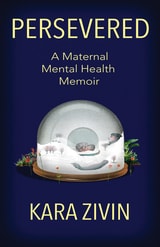
Persevered
A Maternal Mental Health MemoirKara Zivin
Ohio University Press, 0
If you think you know what mental health during and after pregnancy looks like, Persevered: A Maternal Mental Health Memoir will make you reconsider. Dr. Kara Zivin offers a rare, unfiltered look at what happened when a respected mental health researcher faced her own grave battle with depression and anxiety during and after pregnancy. This book is a raw personal account of surviving the darkest moments of new motherhood while juggling high expectations at home and at work.
Zivin takes the reader on an intimate and eye-opening journey that weaves together her perinatal medical records, journal entries, research, and imperfect memories. The story unfolds across hospital rooms, the author’s home, and the university where she works, highlighting the complexity of holding on to one’s identity when everything feels uncertain. Zivin writes with striking honesty about the confusion, guilt, and isolation that so many mothers experience alone but rarely admit to others. Her willingness to lay bare her struggles and her gradual journey toward hope and recovery makes every page feel authentic and deeply relatable.
Persevered moves beyond one woman’s survival, breaking the silence that still surrounds maternal mental health. Zivin’s story reminds us that reaching out, sharing our experiences, and demanding better support can make a difference, not just for mothers but for families and communities. This memoir is for anyone who has ever felt overwhelmed, anyone who has supported a loved one through challenging times, or anyone who believes that honest storytelling can spark real change.
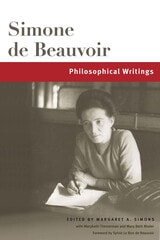
Philosophical Writings
Simone de Beauvoir; Edited by Margaret A. Simons with Marybeth Timmermann and Mary Beth Mader;Foreword by Sylvie Le Bon de Beauvoir
University of Illinois Press, 2021
Beauvoir's philosophical work suffers from a lack of English-language translation or, worse, mistranslation into heavily condensed popular versions. Philosophical Writings provides an unprecedented collection of complete, scholarly editions of philosophical texts that cover the first twenty-three years of Beauvoir's career, including a number of recently discovered works. Ranging from metaphysical literature to existentialist ethics, Philosophical Writings brings together diverse elements of Beauvoir's work while highlighting continuities in the development of her thought. Each of the translations features detailed notes and a scholarly introduction explaining its larger significance.
Revelatory and long overdue, Philosophical Writings adds to the ongoing resurgence of interest in Beauvoir's thought and to her growing influence on today's philosophical curriculum.
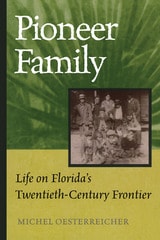
Pioneer Family
Life on Florida's Twentieth-Century FrontierMichel Oesterreicher
University of Alabama Press, 1996
Tracing the roots of resilience on the American frontier.
Pioneer Family is based on the recollections of Hugie and Oleta Oesterreicher, who lived in rural northeast Florida in the early decades of the twentieth century. Northeast Florida was still frontier country then, and Hugie and Oleta were pioneers. Although the time and setting of their story are particular, the theme of survival during hard times is universal. Born in a cypress cabin on the edge of the great Durbin Swamp located midway between St. Augustine and Jacksonville, Hugie knew every alligator hole, every bog, every creek; he could dry venison so it lasted without refrigeration for months, could build a potato bank that kept potatoes warm all winter, and put down a well without machinery. He knew how to cope with rattlesnakes and moccasins. Early one morning in 1925, Hugie fell in love with a tall, brown-eyed girl as he passed her place on a cattle drive. He courted this girl, Oleta Brown, with no success at first, but finally they were married in 1927.
Their daughter retells their story from vivid accounts they gave of their childhood, courtship, early years of marriage, and struggles during the Great Depression. In an age bereft of heroes, the story of their courage, their faith, and their commitment provides a fascinating empathy with a time that has passed; a place that has disappeared.
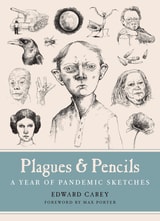
Plagues and Pencils
A Year of Pandemic SketchesEdward Carey, with a foreword by Max Porter
University of Texas Press, 2022
Honorable Mention, 2022 Nonfiction Prize, Writers' League of Texas
A remarkable collection of words and illustrations documenting the first year of the pandemic.
In March 2020, as lockdowns were imposed around the world, author and illustrator Edward Carey raced home to Austin, Texas. The next day, he published on social media a sketch of “A Very Determined Young Man.” The day after, he posted another drawing. One year and one hundred and fifty Tombow B pencil stubs later, he was still drawing.
Carey’s pencil fills the page with the marvelous and intriguing, picturing people, characters, animals, monsters, and his favorite bird to draw, the grackle. He reaches into history and fiction to escape grim reality through flights of vivid imagination—until events demand the drawings “look straight on.”
Breonna Taylor, the Brontë sisters, John Lewis, King Lear, and even the portraits that mark the progress of the year for the Very Determined Young Man combine into a remarkable document of the pandemic and its politics. For Carey, though, trapped inside a home he loves, these portraits are something more, a way to chart time, an artist’s way of creating connection in isolation. With an introduction by Max Porter, this exceptional collection from the acclaimed author of Little marks a year of a man trapped with his pencil, determined to find solace amid uncertainty.
Plain
A Memoir of Mennonite GirlhoodMary Alice Hostetter
University of Wisconsin Press, 2022
This quietly powerful memoir of longing and acceptance casts a humanizing eye on a little-understood American religious tradition and a woman’s striving to grow within and beyond it.
Plaintext
EssaysNancy Mairs
University of Arizona Press, 1986

Playing Hearts
Dan Kois
Duke University Press, 2027
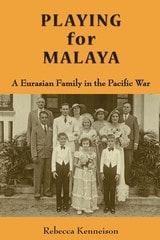
Playing for Malaya
A Eurasian Family in the Pacific WarRebecca Kenneison
National University of Singapore Press, 2011
So begins a stunning personal account of a Eurasian family living in Malaya. One of the many gaps in Reggie's account of his family was that his mother was Eurasian. When Rebecca Kenneison discovered this omission after his death, she set out to learn more about her extended family on the other side of the world. Her voyage of discovery is compelling in itself, but Playing for Malaya has a much larger purpose. Set in the 1930s and 1940s, it recounts the experiences of an extended Eurasian family during the invasion and occupation of Malaya by the Japanese. Colonial society considered Eurasians insufficiently European to be treated as British, but they seemed all too European to the Japanese, who subjected the Eurasian community to discrimination and considerable violence. Because many Eurasians, including members of the Kenneison family, supported the Allied cause, their wartime experiences are an extraordinary account of tragedy, heroism and endurance, presented here with great consequence and clarity.
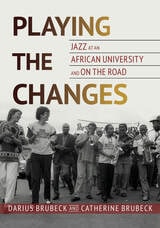
Playing the Changes
Jazz at an African University and on the RoadDarius Brubeck and Catherine Brubeck
University of Illinois Press, 2024
Catherine and Darius Brubeck’s 1983 move to South Africa launched them on a journey that helped transform jazz education. Blending biography with storytelling, the pair recount their time at the University of KwaZulu-Natal, where they built a pioneering academic program in jazz music and managed and organized bands, concerts, and tours around the world.
The Brubecks and the musicians faced innumerable obstacles, from the intensification of apartheid and a lack of resources to the hardscrabble lives that forced even the most talented artists to the margins. Building a program grounded in multi-culturalism, Catherine and Darius encouraged black and white musicians to explore and expand the landscape of South African jazz together Their story details the sometimes wily, sometimes hilarious problem-solving necessary to move the institution forward while offering insightful portraits of South African jazz players at work, on stage, and providing a soundtrack to the freedom struggle and its aftermath.
Frank and richly detailed, Playing the Changes provides insiders’ accounts of how jazz intertwined with struggle and both expressed and resisted the bitter unfairness of apartheid-era South Africa.
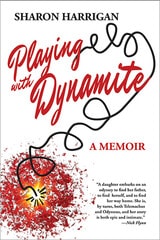
Playing with Dynamite
Sharon Harrigan
University of Wisconsin Press, 2017
Playing with Dynamite is about the family secrets that can distance us from each other and the honesty that can bring us closer. It’s about a daughter who goes looking for her father but finds her mother instead. It’s about memory and truth, grieving and growing, and what it means to go home again.
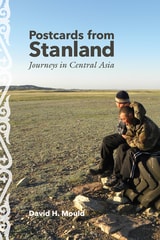
Postcards from Stanland
Journeys in Central AsiaDavid H. Mould
Ohio University Press, 2015
Central Asia has long stood at the crossroads of history. It was the staging ground for the armies of the Mongol Empire, for the nineteenth-century struggle between the Russian and British empires, and for the NATO campaign in Afghanistan. Today, multinationals and nations compete for the oil and gas reserves of the Caspian Sea and for control of the pipelines. Yet “Stanland” is still, to many, a terra incognita, a geographical blank.
Beginning in the mid-1990s, academic and journalist David Mould’s career took him to the region on Fulbright Fellowships and contracts as a media trainer and consultant for UNESCO and USAID, among others. In Postcards from Stanland, he takes readers along with him on his encounters with the people, landscapes, and customs of the diverse countries—Kazakhstan, Kyrgyzstan, Tajikistan, and Uzbekistan—he came to love. He talks with teachers, students, politicians, environmental activists, bloggers, cab drivers, merchants, Peace Corps volunteers, and more.
Until now, few books for a nonspecialist readership have been written on the region, and while Mould brings his own considerable expertise to bear on his account—for example, he is one of the few scholars to have conducted research on post-Soviet media in the region—the book is above all a tapestry of place and a valuable contribution to our understanding of the post-Soviet world.
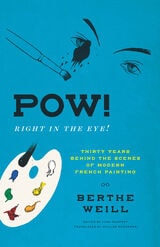
Pow! Right in the Eye!
Thirty Years behind the Scenes of Modern French PaintingBerthe Weill
University of Chicago Press, 2022
Berthe Weill, a formidable Parisian dealer, was born into a Jewish family of very modest means. One of the first female gallerists in the business, she first opened the Galerie B. Weill in the heart of Paris’s art gallery district in 1901, holding innumerable exhibitions over nearly forty years. Written out of art history for decades, Weill has only recently regained the recognition she deserves.
Under five feet tall and bespectacled, Weill was beloved by the artists she supported, and she rejected the exploitative business practices common among art dealers. Despite being a self-proclaimed “terrible businesswoman,” Weill kept her gallery open for four decades, defying the rising tide of antisemitism before Germany’s occupation of France. By the time of her death in 1951, Weill had promoted more than three hundred artists—including Henri Matisse, Pablo Picasso, Amedeo Modigliani, Diego Rivera, and Suzanne Valadon—many of whom were women and nearly all young and unknown when she first exhibited them.
Pow! Right in the Eye! makes Weill’s provocative 1933 memoir finally available to English readers, offering rare insights into the Parisian avant-garde and a lively inside account of the development of the modern art market.
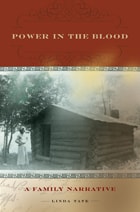
Power in the Blood
A Family NarrativeLinda Tate
Ohio University Press, 2009
Power in the Blood: A Family Narrative traces Linda Tate’s journey to rediscover the Cherokee-Appalachian branch of her family and provides an unflinching examination of the poverty, discrimination, and family violence that marked their lives. In her search for the truth of her own past, Tate scoured archives, libraries, and courthouses throughout Kentucky, Tennessee, Alabama, Illinois, and Missouri, visited numerous cemeteries, and combed through census records, marriage records, court cases, local histories, old maps, and photographs. As she began to locate distant relatives — fifth, sixth, seventh cousins, all descended from her great-greatgrandmother Louisiana — they gathered in kitchens and living rooms, held family reunions, and swapped stories. A past that had long been buried slowly came to light as family members shared the pieces of the family’s tale that had been passed along to them.
Power in the Blood is a dramatic family history that reads like a novel, as Tate’s compelling narrative reveals one mystery after another. Innovative and groundbreaking in its approach to research and storytelling, Power in the Blood shows that exploring a family story can enhance understanding of history, life, and culture and that honest examination of the past can lead to healing and liberation in the present.
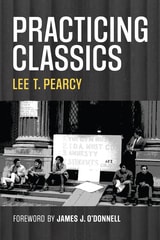
Practicing Classics
A MemoirLee T. Pearcy
University of Michigan Press, 2026
Practicing Classics is a memoir about education in America between the end of WWII and the early 21st century. Not only does it consider memory, its truths, and its deceptions, but it also unravels the complexities of class, race, gender, and social positioning in education. Lee Pearcy’s story begins with the 1957 desegregation crisis at Little Rock Central High School and its aftermath, describing how growing up in this environment shaped his academic and personal life.
As he came to study Latin and then Classics, Pearcy’s education intersected with the student disturbances at Columbia University in 1968 and a feminist revolution that brought significant numbers of women into the classical professoriate. He gives a first-hand account of a scandalous episode in the toxic administrative culture that characterized the classics department at the University of Texas in the 1980s. Against the background of these events, he unfolds his own education as a classicist and his development from apprentice to journeyman to confident teacher of Latin and Greek. Practicing Classics will engage readers who care about American education, classical studies, or the ways that choices, chances, and contingencies shaped one man’s life.
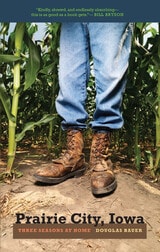
Prairie City, Iowa
Three Seasons at HomeDouglas Bauer
University of Iowa Press, 1979
Bauer grew up "awkward with soil and with machines" in a small town east of Des Moines, As a teenager, he left the farm for college life twenty miles away and, after graduation, took a job with Better Homes and Gardens in Des Moines, writing in the junk-mail fictional persona of "Barbara Joyce,"asking millions of people to subscribe. After a few years he moved to Chicago to work as an editor and writer for Playboy and eventually as a freelance journalist. In the summer of 1975, he returned home to attend his grandmother's funeral and by autumn he moved back to Prairie City, where he stayed for the next three seasons.
Bauer's book is neither a wistful nostalgia about returning to a simpler time and place nor a patronizing look at those who never leave the town in which they were born. What emerges is an unsentimental yet loving account of life in the Midwest. Not just a portrait of Prairie City, Iowa, but of everyone's small town, everywhere.

Prairie Reunion
Barbara J. Scot
University of Iowa Press, 2000
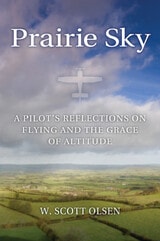
Prairie Sky
A Pilot's Reflections on Flying and the Grace of AltitudeW. Scott Olsen
University of Missouri Press, 2013
“It’s almost like ballet. Preflight. Starting. Warm-up. The voices from the control tower—the instructions. Taxiing. The rush down the runway. Airborne. There are names for every move. The run-up. Position and hold. Every move needs to be learned, practiced, made so familiar you feel the patterns in every other thing you do. It’s technical, yes. But there is a grace to getting metal and bone into the sky.”
Prairie Sky is a celebration of curiosity and a book for explorers. In this collection of contemplative essays, Scott Olsen invites readers to view the world from a pilot’s seat, demonstrating how, with just a little bit of altitude, the world changes, new relationships become visible, and new questions seem to rise up from the ground.
Whether searching for the still-evident shores of ancient lakes, the dustbowl-era shelterbelt supposed to run the length of the country, or the even more elusive understandings of physics and theology, Olsen shares the unique perspective and insight allowed to pilots.
Prairie Sky explores the reality as well as the metaphor of flight: notions of ceaseless time and boundless space, personal interior and exterior vision, social history, meteorology, and geology. Olsen takes readers along as he chases a new way of looking at the physical world and wonders aloud about how the whole planet moves in interconnected ways not visible from the ground. While the northern prairie may call to mind images of golden harvests and summer twilight such images do not define the region. The land bears marks left by gut-shaking thunderstorms, hard-frozen rivers, sweeping floods, and hurricane-size storms. Olsen takes to the midwestern sky to confront the ordinary world and reveals the magic--the wondrous and unique sights visible from the pilot’s seat of a Cessna.
Like Antoine de Saint-Exupery’s classic work Wind, Sand and Stars, Olsen’s Prairie Sky reveals the heart of what it means to fly. In the grand romantic tradition of the travel essay, it opens the dramatic paradoxes of self and collective, linear and circular, the heart and the border.
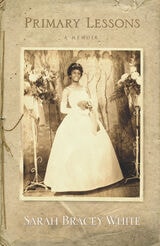
Primary Lessons
Sarah Bracey White
CavanKerry Press, 2013
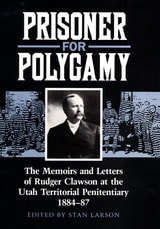
Prisoner for Polygamy
The Memoirs and Letters of Rudger Clawson at the Utah Territorial Penitentiary, 1884-87Edited by Stan Larson
University of Illinois Press, 1993
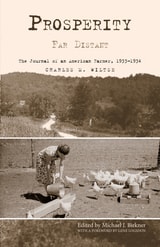
Prosperity Far Distant
The Journal of an American Farmer, 1933–1934Charles M. Wiltse
Ohio University Press, 2012
Fresh from receiving a doctorate from Cornell University in 1933, but unable to find work, Charles M. Wiltse joined his parents on the small farm they had recently purchased in southern Ohio. There, the Wiltses scratched out a living selling eggs, corn, and other farm goods at prices that were barely enough to keep the farm intact.
In wry and often affecting prose, Wiltse recorded a year in the life of this quintessentially American place during the Great Depression. He describes the family’s daily routine, occasional light moments, and their ongoing frustrations, small and large—from a neighbor’s hog that continually broke into the cornfields to the ongoing struggle with their finances. Franklin Roosevelt’s New Deal had little to offer small farmers, and despite repeated requests, the family could not secure loans from local banks to help them through the hard economic times. Wiltse spoke the bitter truth when he told his diary, “We are not a lucky family.” In this he represented millions of others caught in the maw of a national disaster.
The diary is introduced and edited by Michael J. Birkner, Wiltse’s former colleague at the Papers of Daniel Webster Project at Dartmouth College, and coeditor, with Wiltse, of the final volume of Webster’s correspondence.
Pumpkin Seed Point
Being Within The HopiFrank Waters
Ohio University Press, 1973
Frank Waters lived for three years among the Hopi people of Arizona and was quickly drawn into their culture. Pumpkin Seed Point is a beautifully written personal account of Waters’s inner and outer experiences among the Hopi.
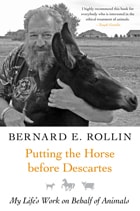
Putting the Horse before Descartes
My Life's Work on Behalf of AnimalsAuthored by Bernard Rollin
Temple University Press, 2011
When philosopher Bernard Rollin was six years old, he visited an animal shelter and was told about unwanted dogs being put to sleep. The event shaped his moral outlook and initiated his concern for how animals were treated. In his irreverent memoir, Putting the Horse before Descartes, Rollin provides an account of how he came to educate himself and others about the ethical treatment of animals and work toward improvements in animal welfare.
Rollin describes, in witty, often disarming detail, how he became an outspoken critic of how animals were being treated in veterinary and medical schools as well as in research labs. Putting the Horse before Descartes showcases the passionate animal advocate at his best. He recalls teaching veterinary students about ethical issues. He also recalls face-offs with ranchers and cowboys about branding methods and roping competitions in rodeos. In addition, he describes his work to legally mandate more humane conditions for agricultural and laboratory animals. As public concern about animal welfare and the safety of the food supply heighten, Rollin carries on this work all over the world—in classrooms, lecture halls and legislatures, meetings of agricultural associations and industrial settings, as well as in print.
Putting the Horse before Descartes, ultimately, is more than a memoir. Rollin offers a wide-ranging discussion of ethical issues in many settings and he testifies to the myriad ways that people of good conscience accept their ethical responsibility in regard to animals.