Results by title
153 books match the query 'Metaphysics' and 7 start with p
Peirce's Scientific Metaphysics
The Philosophy of Chance, Law, and EvolutionAndrew Reynolds
Vanderbilt University Press, 2002
Person and Psyche
Kenneth L. Schmitz
Catholic University of America Press, 2009
Person, Being, and History
Michael Baur
Catholic University of America Press, 2011
Politics, Metaphysics, and Death
Essays on Giorgio Agamben's Homo SaceAndrew Norris, ed.
Duke University Press, 2005
The contributors analyze Agamben’s thought from the perspectives of political theory, philosophy, jurisprudence, and the history of law. They consider his work not only in relation to that of his major interlocutors—Hannah Arendt, Michel Foucault, Carl Schmitt, Walter Benjamin, and Martin Heidegger—but also in relation to the thought of Plato, Pindar, Heraclitus, Descartes, Kafka, Bataille, and Derrida. The essayists’ approaches are varied, as are their ultimate evaluations of the cogency and accuracy of Agamben’s arguments. This volume also includes an original essay by Agamben in which he considers the relation of Benjamin’s “Critique of Violence” to Schmitt’s Political Theology. Politics, Metaphysics, and Death is a necessary, multifaceted exposition and evaluation of the thought of one of today’s most important political theorists.
Contributors: Giorgio Agamben, Andrew Benjamin, Peter Fitzpatrick, Anselm Haverkamp, Paul Hegarty, Andreas Kalyvas, Rainer Maria Kiesow , Catherine Mills, Andrew Norris, Adam Thurschwell, Erik Vogt, Thomas Carl Wall
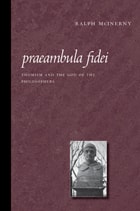
Praeambula Fidei
Thomism and the God of the PhilosophersRalph McInerny
Catholic University of America Press, 2006

Principles Of Interpretation
Continental Thought Series, V5Edward Goodwin Ballard
Ohio University Press, 1983
This is a major phenomenological work in which real learning works in graceful tandem with genuine and important insight. Yet this is not a work of scholarship; it is a work of philosophy, a work that succeeds both in the careful, descriptive massing of detail and in the power of its analysis of the conditions that underlie the possibility of such things as description, interpretation, perception, and meaning.
Principles of Interpretation formulates answers to these questions: How does the interpretative process proceed? What are its fundamentals? What assurance have we that our interpretations are in principal faithful to that which is to be interpreted? What conclusions are indicated concerning the past phases of our history and its present tendencies?
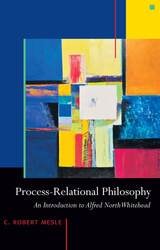
Process-Relational Philosophy
An Introduction to Alfred North WhiteheadC. Robert Mesle
Templeton Press, 2008
Process thought is the foundation for studies in many areas of contemporary philosophy, theology, political theory, educational theory, and the religion-science dialogue. It is derived from Alfred North Whitehead's philosophy, known as process theology, which lays a groundwork for integrating evolutionary biology, physics, philosophy of mind, theology, environmental ethics, religious pluralism, education, economics, and more.
In Process-Relational Philosophy, C. Robert Mesle breaks down Whitehead's complex writings, providing a simple but accurate introduction to the vision that underlies much of contemporary process philosophy and theology. In doing so, he points to a "way beyond both reductive materialism and the traps of Cartesian dualism by showing reality as a relational process in which minds arise from bodies, in which freedom and creativity are foundational to process, in which the relational power of persuasion is more basic than the unilateral power of coercion."
Because process-relational philosophy addresses the deep intuitions of a relational world basic to environmental and global thinking, it is being incorporated into undergraduate and graduate courses in philosophy, educational theory and practice, environmental ethics, and science and values, among others. Process-Relational Philosophy: A Basic Introduction makes Whitehead's creative vision accessible to all students and general readers.