Results by title
98 books match the query 'Migrations' and 4 start with p
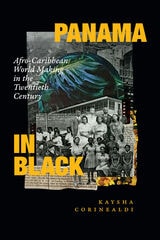
Panama in Black
Afro-Caribbean World Making in the Twentieth CenturyKaysha Corinealdi
Duke University Press, 2022
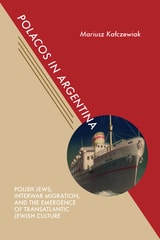
Polacos in Argentina
Polish Jews, Interwar Migration, and the Emergence of Transatlantic Jewish CultureMariusz Kalczewiak
University of Alabama Press, 2020
An examination of the social and cultural repercussions of Jewish emigration from Poland to Argentina in the 1920s and 1930s
Between the 1890s and 1930s, Argentina, following the United States and Palestine, became the main destination for Eastern European Ashkenazi Jews seeking safety, civil rights, and better economic prospects. In the period between 1918 and 1939, sixty thousand Polish Jews established new homes in Argentina. They formed a strong ethnic community that quickly embraced Argentine culture while still maintaining their unique Jewish-Polish character. This mass migration caused the transformation of cultural, social, and political milieus in both Poland and Argentina, forever shaping the cultural landscape of both lands.
In Polacos in Argentina: Polish Jews, Interwar Migration, and the Emergence of Transatlantic Jewish Culture, Mariusz Kałczewiak has constructed a multifaceted and in-depth narrative that sheds light on marginalized aspects of Jewish migration and enriches the dialogue between Latin American Jewish studies and Polish Jewish Studies. Based on archival research, Yiddish travelogues on Argentina, and the Yiddish and Spanish-language press, this study recreates a mosaic of entanglements that Jewish migration wove between Poland and Argentina.
Most studies on mass migration fail to acknowledge the role of the country of origin, but this innovative work approaches Jewish migration to Argentina as a continuous process that took place on both sides of the Atlantic. Taken as a whole, Polacos in Argentina enlightens the heterogeneous and complex issue of immigrant commitments, belongings, and expectations. Jewish emigration from Poland to Argentina serves as a case study of how ethnicity evolves among migrants and their children, and the dynamics that emerge between putting down roots in a new country and maintaining commitments to the country of origin.
Population Circulation and the Transformation of Ancient Zuni Communities
Gregson Schachner
University of Arizona Press, 2012
Because nearly all aspects of culture depend on the movement of bodies, objects, and ideas, mobility has been a primary topic during the past forty years of archaeological research on small-scale societies. Most studies have concentrated either on local moves related to subsistence within geographically bounded communities or on migrations between regions resulting from pan-regional social and environmental changes. Gregson Schachner, however, contends that a critical aspect of mobility is the transfer of people, goods, and information within regions. This type of movement, which geographers term "population circulation," is vitally important in defining how both regional social systems and local communities are constituted, maintained, and—most important—changed.
Schachner analyzes a population shift in the Zuni region of west-central New Mexico during the thirteenth century AD that led to the inception of major demographic changes, the founding of numerous settlements in frontier zones, and the initiation of radical transformations of community organization. Schachner argues that intraregional population circulation played a vital role in shaping social transformation in the region and that many notable changes during this period arose directly out of peoples' attempts to create new social mechanisms for coping with frequent and geographically extensive residential mobility. By examining multiple aspects of population circulation and comparing areas that were newly settled in the thirteenth century to some that had been continuously occupied for hundreds of years, Schachner illustrates the role of population circulation in the formation of social groups and the creation of contexts conducive to social change.
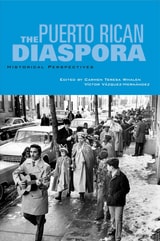
Puerto Rican Diaspora
Historical PerspectivesCarmen Teresa Whalen
Temple University Press, 2005