Results by title
1947 books match the query 'Music' and 83 start with p
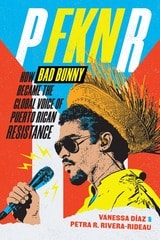
P FKN R
How Bad Bunny Became the Global Voice of Puerto Rican ResistanceVanessa Díaz and Petra R. Rivera-Rideau
Duke University Press, 2026
Global superstar Bad Bunny, born Benito Antonio Martínez Ocasio, like many other Puerto Ricans, has lived a life marked by public crises—blackouts, hurricanes, political corruption and oppression, among others—that have exposed the ongoing impacts of colonialism in Puerto Rico. Offering a portrait of the past and future of Puerto Rican resistance through one of its loudest and proudest voices, P FKN R draws on interviews with musicians, politicians, and journalists as well as ethnographic research to set Bad Bunny and Puerto Rican resistance in a historical, political, and cultural context. Authors Vanessa Díaz and Petra Rivera-Rideau—creators of the “Bad Bunny Syllabus”—demonstrate Bad Bunny’s place in a long tradition of infusing both joy and protest into music and honor the many evolving forms of daily resistance to oppression and colonialism that are part of Puerto Rican life.
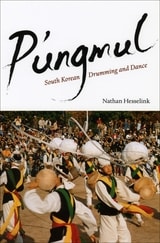
P'ungmul
South Korean Drumming and DanceNathan Hesselink
University of Chicago Press, 2006
The first book to introduce Korean drumming and dance to the English-speaking world, Nathan Hesselink’s P’ungmul offers detailed descriptions of its instrumentation, dance formations, costuming, actors, teaching lineages, and the complexities of training. Hesselink also evaluates how this tradition has taken on new roles and meanings in the twentieth and early-twenty-first centuries, investigating the interrelated yet contested spheres of history, memory, government policy, grassroots politics, opportunities for musical transmission, and performance practices and aesthetics.
P’ungmul offers those interested in ethnomusicology, world music, anthropology, sociology, and Asian studies a special glimpse into the inner workings of a historically rich, artistically complex, and aesthetically and aurally beautiful Korean musical and dance tradition.

PUNK! Las Américas Edition
Edited by Olga Rodríguez-Ulloa, Rodrigo Quijano, and Shane Greene
Intellect Books, 2022
This book interrogates the dominant vision of punk—particularly its white masculine protagonists and deep Anglocentrism—by analyzing punk as a critical lens into the disputed territories of “America,” a term that hides the heterogeneous struggles, global histories, hopes, and despairs of late twentieth- and early twenty-first-century experience. Compiling academic essays and punk paraphernalia (including interviews, zines, poetry, and visual segments) into a single volume, the book explores punk life through its multiple registers: vivid musical dialogues, excessive visual displays, and underground literary expression.

Palestinian Arab Music
A Maqam Tradition in PracticeDalia Cohen and Ruth Katz
University of Chicago Press, 2005
Working initially with their own 1957 invention, the Cohen-Katz Melograph, and later with computers, Dalia Cohen and Ruth Katz recorded and digitized several hundred Palestinian music performances. The authors analyzed the musical tradition in light of its main variables. These include musical parameters, modal frameworks, the form and structure of the music, its poetic texts, and aspects of the social functions of the tradition. As a result of their study, the vexed aspect of intonation in practice is revealed to exist in a special relationship with the scale systems or maqamat, which are in turn of great importance to organizing the music and determining its modal systems.
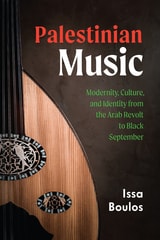
Palestinian Music
Modernity, Culture, and Identity from the Arab Revolt to Black SeptemberIssa Boulos
University of Texas Press, 2027
An exploration of how Palestinian music—from village songs to urban broadcasts—adapted to political upheaval, colonial pressure, and diaspora life, serving as both a cultural anchor and a vehicle for regional identity during the mid-twentieth century.
Palestinian music has long been embedded in everyday life, shaping and reflecting social, cultural, and political identities. It has served as a means of storytelling and news-sharing, a part of ritual and community life, and a connection to the broader musical traditions of the Near East. As displacement scattered Palestinians across Lebanon, Syria, Jordan, and beyond, musicians carried folk and urban musical traditions into new political and cultural contexts, blending them with various modernities and transforming the process of music-making. In the decades that followed, music and dance were increasingly folklorized and mobilized as symbols of Palestinian identity.
Palestinian Music traces these transformations from the British Mandate through the rise of the Palestine Liberation Organization in the 1970s. Drawing on rare recordings, oral histories, archival materials, and original musical transcriptions, ethnomusicologist Issa Boulos examines two dozen artists across five countries and follows the composers, producers, and performers whose innovations helped shape the musical scene of the entire region. Palestinian music emerges as a dynamic medium through which Palestinians continually negotiated identity, solidarity, and hope—balancing preservation and innovation, rootedness and displacement.
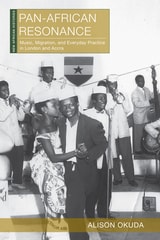
Pan-African Resonance
Music, Migration, and Everyday Practice in London and AccraAlison Okuda
Ohio University Press, 2026
As African and Caribbean nations gained independence from Britain in the 1950s and 1960s, many young musicians, students, and professionals crossed the Atlantic in search of new opportunities and built vibrant communities. Pan-African Resonance: Music, Migration, and Everyday Practice in London and Accra traces these journeys from Ghana, Trinidad and Tobago, Jamaica, Saint Lucia, Barbados, and Guyana, exploring how migrants practiced pan-Africanism through music across continents and generations. Drawing on musical recordings, newspapers, oral histories, and government documents from six countries, Alison Okuda demonstrates that pan-African solidarity thrived through the everyday creation and enjoyment of popular music. The book unfolds in two parts. Starting in the 1950s, it examines how Ghanaian highlife and Trinidadian calypso brought together musicians and young members of the independence generation, first in London and later in Accra. Even amid cultural tensions, Ghanaian and Caribbean communities expressed aspirations for freedom and unity in nightclubs, recording studios, private homes, and public streets. Before Ghana’s 1966 coup d’état, Ghanaians and diasporic Africans collaborated to shape an independent African-Atlantic world. Although the coup disrupted formal Pan-Africanist organizing, in the second part of the book Okuda shows that in the 1970s a new generation sustained dynamic networks of solidarity through highlife, reggae, and other popular styles—heard in recordings, radio broadcasts, live performances, and community events. Influenced by generational change and musical fluidity, African diasporic unity has remained central to popular music, migration, and politics in Ghana and the wider African-Atlantic world into the twenty-first century. Offering a rich interdisciplinary approach, Pan-African Resonance will appeal to readers interested in popular culture, transnational history, diaspora studies, and modern African history.
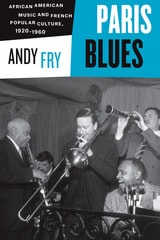
Paris Blues
African American Music and French Popular Culture, 1920-1960Andy Fry
University of Chicago Press, 2014
In Paris Blues, Andy Fry provides an alternative history of African American music and musicians in France, one that looks beyond familiar personalities and well-rehearsed stories. He pinpoints key issues of race and nation in France’s complicated jazz history from the 1920s through the 1950s. While he deals with many of the traditional icons—such as Josephine Baker, Django Reinhardt, and Sidney Bechet, among others—what he asks is how they came to be so iconic, and what their stories hide as well as what they preserve. Fry focuses throughout on early jazz and swing but includes its re-creation—reinvention—in the 1950s. Along the way, he pays tribute to forgotten traditions such as black musical theater, white show bands, and French wartime swing. Paris Blues provides a nuanced account of the French reception of African Americans and their music and contributes greatly to a growing literature on jazz, race, and nation in France.

Parodies of Ownership
Hip-Hop Aesthetics and Intellectual Property LawRichard L. Schur
University of Michigan Press, 2009
"Richard Schur offers a provocative view of contemporary African American cultural politics and the relationship between African American cultural production and intellectual property law."
---Mark Anthony Neal, Duke University
"Whites used to own blacks. Now, they accomplish much the same thing by insisting that they 'own' ownership. Blacks shouldn't let them. A culture that makes all artists play by its rules will end up controlling new ideas and stifling change. Richard Schur's fine book explains why."
---Richard Delgado, Seattle University
What is the relationship between hip-hop and African American culture in the post--Civil Rights era? Does hip-hop share a criticism of American culture or stand as an isolated and unique phenomenon? How have African American texts responded to the increasing role intellectual property law plays in regulating images, sounds, words, and logos? Parodies of Ownership examines how contemporary African American writers, artists, and musicians have developed an artistic form that Schur terms "hip-hop aesthetics." This book offers an in-depth examination of a wide range of contemporary African American painters and writers, including Anna Deavere Smith, Toni Morrison, Adrian Piper, Colson Whitehead, Michael Ray Charles, Alice Randall, and Fred Wilson. Their absence from conversations about African American culture has caused a misunderstanding about the nature of contemporary cultural issues and resulted in neglect of their innovative responses to the post--Civil Rights era. By considering their work as a cross-disciplinary and specifically African American cultural movement, Schur shows how a new paradigm for artistic creation has developed.
Parodies of Ownership offers a broad analysis of post--Civil Rights era culture and provides the necessary context for understanding contemporary debates within American studies, African American studies, intellectual property law, African American literature, art history, and hip-hop studies. Weaving together law, literature, art, and music, Schur deftly clarifies the conceptual issues that unify contemporary African American culture, empowering this generation of artists, writers, and musicians to criticize how racism continues to affect our country.
Richard L. Schur is Director, Interdisciplinary Studies Center, and Associate Professor of Interdisciplinary Studies at Drury University. Visit the author's website: http://www2.drury.edu/rschur/index.htm.

Party in the U.S.A.
A Song by Miley CyrusMike Barthel
Duke University Press, 2027
Pascal Programming for Music Research
Alexander R. Brinkman
University of Chicago Press, 1990
Among its useful features are:
-complete programs, from simple illustrations to substantial applications;
-beginning programming through such advanced topics as linked data structures, recursive algorithms, DARMS translation, score processing;
-bibliographic references at the end of each chapter to pertinent sources in music theory, computer science, and computer applications in music;
-exercises which explore and extend topics discussed in the text;
-appendices which include a DARMS translator and a library of procedures for building and manipulating a linked representation of scores;
-most algorithms and techniques that are given in Pascal programming translate easily to other computer languages.
Beginning, as well as advanced, programmers and anyone interested in programming music applications will find this book to be an invaluable resource.
Passamaquoddy Ceremonial Songs
Aesthetics and SurvivalAnn Morrison Spinney
University of Massachusetts Press, 2010
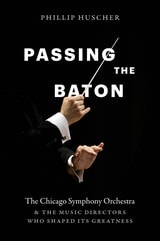
Passing the Baton
The Chicago Symphony Orchestra and the Music Directors Who Shaped Its GreatnessPhillip Huscher
University of Chicago Press, 2026
The untold story of how the Chicago Symphony Orchestra forged its place among the world’s foremost performing arts institutions through 135 years of change.
The Chicago Symphony Orchestra boasts a tradition and staying power that few cultural institutions can rival—a legacy that is tested each time one music director passes the conductor’s baton to another. In this first narrative account of the orchestra’s 135-year history, music critic and historian Phillip Huscher delivers a passionate description of how an upstart ensemble rose to international prominence and established itself as the premier symphony orchestra in the United States.
With a scholar’s care for detail and a novelist’s attention to drama, Huscher invites us into the tangled machinations behind the success or failure of each chapter in the orchestra’s storied past. We see how legendary directors such as Fritz Reiner, Sir Georg Solti, and Riccardo Muti carried the orchestra to new heights of technical perfection and sonic brilliance, but also how others provoked public outcry, caved to insider hostility, or fell to cruel press. The result is a vivid portrait of an orchestra fighting to sustain its identity amid the constant contest between past and present, supporters and critics, and artistic and financial vision.
Woven into this saga are personal stories drawn from newly uncovered documents and interviews with players, conductors, and policymakers about the burden of inheritance, the price of ambition, and the yearning to forge a legacy. Taken together, this is a tale about the power of music—how it can help us navigate our lives and leave a lasting impact on the world around us.
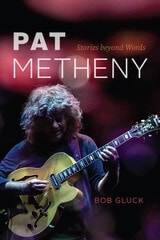
Pat Metheny
Stories beyond WordsBob Gluck
University of Chicago Press, 2024
Guitarist and composer Pat Metheny, among the most acclaimed, visionary musicians of our time, has for five decades toured with his many creative musical projects, most prominently the Pat Metheny Group, while collaborating with celebrated artists, including Charlie Haden, Ron Carter, Herbie Hancock, Ornette Coleman, and Steve Reich.
Bob Gluck, whose perspective as pianist, composer, and educator has illuminated the music of Herbie Hancock and Miles Davis in his two previous books, now focuses his lens on the music of Metheny. Neither a biography nor chronological record of Metheny’s musical output, Pat Metheny: Stories beyond Words instead captures Metheny’s self-conception as a musician and the threads that unite and distinguish his creative process. Drawing upon a wealth of new interviews and close readings of musical examples, Gluck offers a bird’s-eye view of Metheny’s musical ideas. Among these are the metaphor of storytelling, the complementarity of simplicity and complexity, and the integrated roles of composer, performer, and band leader. Much like Metheny’s signature style, this book is accessible to a wide range of readers, presenting new clarity, musical insight, and historical perspective about the legacy of Metheny’s groundbreaking music.
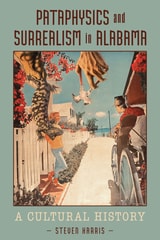
Pataphysics and Surrealism in Alabama
A Cultural HistorySteven Harris
University of Alabama Press, 2026
An exploration of the surrealist artists, musicians, and performers who forged a unique experimental arts community in Alabama
Pataphysics and Surrealism in Alabama: A Cultural History is the first book to uncover a remarkable chapter in American experimental art, music, dance and writing, tracing the activities of a creative group known as Raudelunas, the music collective Transcendprovisation, and the surrealist association initially called Glass Veal: a series of interrelated artistic and cultural movements that originated in Tuscaloosa and Birmingham, Alabama, during the 1970s. Drawing on extensive archival research and firsthand accounts, including interviews with twenty-six participants in these groups, sound recordings, publications, and other primary sources, Steven Harris traces the history of a vibrant creative community that began when three University of Alabama students started improvising music together and encouraged others to join them.
From these sessions emerged a dynamic network of performers and artists whose work challenged conventional boundaries between disciplines. Inspired by musical improvisation, surrealism, and pataphysics, participants embraced spontaneity and absurdity as they developed a positive expression of creativity that was both uniquely Southern and sharply distinctive from the dominant culture that surrounded them.
Harris situates these movements within broader histories of Alabama, Dada, pataphysics, surrealism, and improvised music and dance while charting their lasting influence on the artists who participated in them. Featuring a timeline of major events, biographies of key members, and an anthology of representative writings, Pataphysics and Surrealism in Alabama is an essential contribution to the history of American experimental culture.
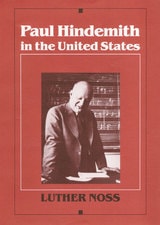
Paul Hindemith in the United States
Luther Noss
University of Illinois Press, 1989
Concentrating upon the composer's first three US concert tours and his thirteen years at Yale, Luther Noss brings to life a observant, energetic, stubborn, and wry personality. Hindemith's journals offer detailed commentary on his experiences at Tanglewood while Noss draws on archives to describe the composer's groundbreaking Collegium concerts, classes, controversial plans to reorganize the School of Music, and other activities. Noss also delves into professional activity that included a huge number of commissions, writing four theory textbooks, an expansion of his Charles Eliot Norton Lectures, and numerous world premieres and other events.
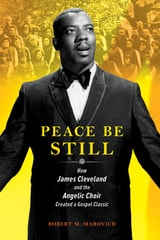
Peace Be Still
How James Cleveland and the Angelic Choir Created a Gospel ClassicRobert M. Marovich
University of Illinois Press, 2021
In September of 1963, Reverend Lawrence Roberts and the Angelic Choir of the First Baptist Church of Nutley, New Jersey, teamed with rising gospel star James Cleveland to record Peace Be Still. The LP and its haunting title track became a phenomenon. Robert M. Marovich draws on extensive oral interviews and archival research to chart the history of Peace Be Still and the people who created it. Emerging from an established gospel music milieu, Peace Be Still spent several years as the bestselling gospel album of all time. As such, it forged a template for live recordings of services that transformed the gospel music business and Black worship. Marovich also delves into the music's connection to fans and churchgoers, its enormous popularity then and now, and the influence of the Civil Rights Movement on the music's message and reception.
The first in-depth history of a foundational recording, Peace Be Still shines a spotlight on the people and times that created a gospel music touchstone.
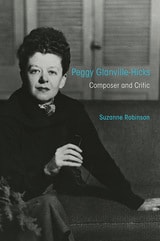
Peggy Glanville-Hicks
Composer and CriticSuzanne Robinson
University of Illinois Press, 2019
Drawing on interviews, archival research, and fifty-four years of extraordinary pocket diaries, Suzanne Robinson places Glanville-Hicks within the history of American music and composers. "P.G.H." forged alliances with power brokers and artists that gained her entrance to core American cultural entities such as the League of Composers, New York Herald Tribune, and the Harkness Ballet. Yet her impeccably cultivated public image concealed a private life marked by unhappy love affairs, stubborn poverty, and the painstaking creation of her artistic works.
Evocative and intricate, Peggy Glanville-Hicks clears away decades of myth and storytelling to provide a portrait of a remarkable figure and her times.

Peggy Seeger
A Life of Music, Love, and PoliticsJean R. Freedman
University of Illinois Press, 2020

Peking Opera and Politics in Taiwan
Nancy Guy
University of Illinois Press, 2005
When Chiang Kai-shek's Nationalist government and military retreated to Taiwan in 1949, they brought along numerous Peking opera performers. Expecting that this symbolically important art would strengthen regime legitimacy and authority, they generously supported Peking opera's perpetuation in exile. Valuing mainland Chinese culture above Taiwanese culture, the Nationalists generously supported Peking opera to the virtual exclusion of local performing traditions, despite their wider popularity. Later, as Taiwan turned toward democracy, the island's own "indigenous" products became more highly valued and Peking opera found itself on a tenuous footing. Finally, in 1995, all of its opera troupes and schools (formerly supported by the Ministry of Defense) were dismantled.
People Get Ready
The Future of Jazz Is Now!Ajay Heble and Rob Wallace, eds.
Duke University Press, 2013
Contributors. Tamar Barzel, John Brackett, Douglas Ewart, Ajay Heble, Vijay Iyer, Thomas King, Tracy McMullen, Paul D. Miller/DJ Spooky, Nicole Mitchell, Roscoe Mitchell, Famoudou Don Moye, Aldon Lynn Nielsen, Eric Porter, Marc Ribot, Matana Roberts, Jaribu Shahid, Julie Dawn Smith, Wadada Leo Smith, Alan Stanbridge, John Szwed, Greg Tate, Scott Thomson, Rob Wallace, Ellen Waterman, Corey Wilkes
Percussion
Drumming, Beating, StrikingJohn Mowitt
Duke University Press, 2002
For Mowitt, percussion is both an experience of embodiment—making contact in and on the skin—and a provocation for critical theory itself. In delimiting the percussive field, he plays drumming off against the musicological account of the beat, the sociological account of shock and the psychoanalytical account of fantasy. In the process he touches on such topics as the separation of slaves and drums in the era of the slave trade, the migration of rural blacks to urban centers of the North, the practice and politics of "rough music," the links between interpellation and possession, the general strike, beating fantasies, and the concept of the "skin ego."
Percussion makes a fresh and provocative contribution to cultural studies, new musicology, the history of the body and critical race theory. It will be of interest to students of cultural studies and critical theory as well as readers with a serious interest in the history of music, rock-and-roll and drumming.
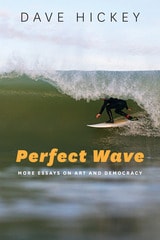
Perfect Wave
More Essays on Art and DemocracyDave Hickey
University of Chicago Press, 2017
When Dave Hickey was twelve, he rode the surfer’s dream: the perfect wave. And, like so many things in life we long for, it didn’t quite turn out—he shot the pier and dashed himself against the rocks of Sunset Cliffs in Ocean Beach, which nearly killed him.
Hickey went on to develop a career as one of America’s foremost critical iconoclasts, a trusted no-nonsense voice commenting on the worlds of art and culture. Perfect Wave brings together essays on a wide range of subjects from throughout Hickey’s career, displaying his breadth of interest and powerful insight into what makes art work, or not, and why we care. With Hickey as our guide, we travel to Disneyland and Vegas, London and Venice. We discover the genius of Karen Carpenter and Waylon Jennings, learn why Robert Mitchum matters more than Jimmy Stewart, and see how the stillness of Antonioni speaks to us today. Never slow to judge—or to surprise us in doing so—Hickey relates his wincing disappointment in the later career of his early hero Susan Sontag and shows us the appeal to our commonality that we’ve been missing in Norman Rockwell.
Bookended by previously unpublished personal essays that offer a new glimpse into Hickey’s own life—including the aforementioned conclusion to his surfing career—Perfect Wave is a welcome addition to the Hickey canon.
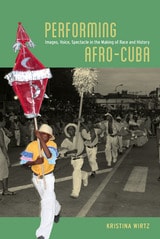
Performing Afro-Cuba
Image, Voice, Spectacle in the Making of Race and HistoryKristina Wirtz
University of Chicago Press, 2014
Wirtz analyzes a variety of performances and the ways they construct Cuban racial and historical imaginations. She offers a sophisticated view of performance as enacting diverse revolutionary ideals, religious notions, and racial identity politics, and she outlines how these concepts play out in the ongoing institutionalization of folklore as an official, even state-sponsored, category. Employing Bakhtin’s concept of “chronotopes”—the semiotic construction of space-time—she examines the roles of voice, temporality, embodiment, imagery, and memory in the racializing process. The result is a deftly balanced study that marries racial studies, performance studies, anthropology, and semiotics to explore the nature of race as a cultural sign, one that is always in process, always shifting.
Performing Commemoration
Musical Reenactment and the Politics of TraumaAnnegret Fauser and Michael A. Figueroa, editors
University of Michigan Press, 2020
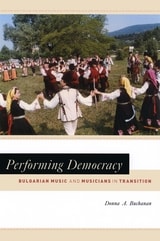
Performing Democracy
Bulgarian Music and Musicians in TransitionDonna A. Buchanan
University of Chicago Press, 2005
Based on fieldwork conducted between 1988 and 1996 with professional Bulgarian folk musicians, Donna A. Buchanan's PerformingDemocracy argues that the performances of traditional music groups may be interpreted not only as harbingers but as agents of Bulgaria's political transition. Many of the musicians in socialist Bulgaria's state folk ensembles served as official cultural emissaries for several decades. Through their reminiscences and repertoires, Buchanan reveals the evolution of Bulgarian musical life as it responded to and informed the political process. By modifying their art to accommodate changing political ideologies, these musicians literally played out regime change on the world's stages, performing their country's democratization musically at home and abroad.
Performing Democracy and its accompanying CD-ROM, featuring traditional Bulgarian music, lyrics, notation, and photos, will fascinate any reader interested in the many ways art echoes and influences politics.
Performing Environmentalisms
Expressive Culture and Ecological ChangeEdited by John Holmes McDowell, Katherine Borland, Rebecca Dirksen, and Sue Tuohy
University of Illinois Press, 2021
Interdisciplinary in approach and wide-ranging in scope, Performing Environmentalisms is an engaging look at the merger of cultural expression and environmental action on the front lines of today's global emergency.
Contributors: Aaron S. Allen, Eduardo S. Brondizio, Assefa Tefera Dibaba, Rebecca Dirksen, Mary Hufford, John Holmes McDowell, Mark Pedelty, Jennifer C. Post, Chie Sakakibara, Jeff Todd Titon, Rory Turner, Lois Wilcken
Performing Glam Rock
Gender and Theatricality in Popular MusicPhilip Auslander
University of Michigan Press, 2006
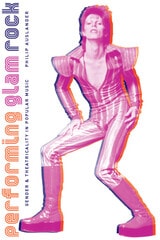
Yet glam was as much about substance as style, and Performing Glam Rock delves into the many ways glam paved the way for new explorations of identity in terms of gender, sexuality, and performance. Philip Auslander positions glam historically and examines it as a set of performance strategies, exploring the ways in which glam rock-while celebrating the showmanship of 1950s rock and roll-began to undermine rock's adherence to the ideology of authenticity in the late 1960s.
In this important study of a too-often-overlooked phenomenon, Auslander takes a fresh look at the genius of the glam movement and introduces glam to a new generation of performance enthusiasts and scholars alike.
Philip Auslander is Professor in the School of Literature, Communication, and Culture at the Georgia Institute of Technology and author of numerous books, including Liveness: Performance in a Mediatized Culture and Presence and Resistance: Postmodernism and Cultural Politics in Contemporary American Performance. He is editor of the major reference work Performance: Critical Concepts and coeditor, with Carrie Sandahl, of Bodies in Commotion: Disability and Performance.
Performing Politics
Music and Theater in Berlin Around 1800Katherine Hambridge
University of Chicago Press, 2027
A new account of the emergence of modern cultural politics through a study of music and theater in Berlin around 1800.
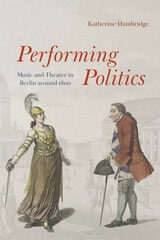
Berlin around 1800 has been seen—at the time and since—as somewhat behind other major European cities in terms of its musical culture, peripheral to the momentous developments attributed to the period. By contrast, early nineteenth-century Berlin has been exhaustively studied as the site of a nascent German-national movement and the Prussian Reforms. In Performing Politics, Katherine Hambridge examines the confluence of music and politics in Berlin around 1800, engaging directly with the themes of being behind/ahead, central/peripheral, in order to tell new stories about nineteenth-century German history, musical and otherwise.
Performing Politics emphasizes events as much as repertoires, and non-canonical repertoires over the more familiar music of this period: dynastic birthday celebrations, the music of historical dramas, political song and communal singing, popular music theater. By focusing our attention on the unfamiliar specificity of Berlin Nationaltheater, Hambridge reenergizes our understanding of 1800–1815 as a key period in the development of musical and political modernity. Using sources largely unexploited by musicologists, and phenomena neglected by historians, she reveals the quotidian aesthetics, values, and practices that shaped both the sociopolitical narratives and musical developments of the time. Performing Politics is thus not only a history of music and theater in Berlin at a critical moment, but a music history of modern cultural politics.
Performing the Nation
Swahili Music and Cultural Politics in TanzaniaKelly Askew
University of Chicago Press, 2002
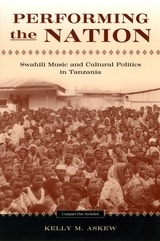
As Askew shows, the genres of ngoma (traditional dance), dansi (urban jazz), and taarab (sung Swahili poetry) have played prominent parts in official articulations of "Tanzanian National Culture" over the years. Drawing on over a decade of research, including extensive experience as a taarab and dansi performer, Askew explores the intimate relations among musical practice, political ideology, and economic change. She reveals the processes and agents involved in the creation of Tanzania's national culture, from government elites to local musicians, poets, wedding participants, and traffic police. Throughout, Askew focuses on performance itself—musical and otherwise—as key to understanding both nation-building and interpersonal power dynamics.
Petrushka
Sources and ContextsAndrew Baruch Wachtel
Northwestern University Press, 1998
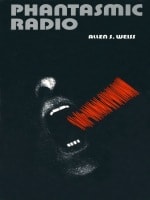
Phantasmic Radio
Allen S. Weiss
Duke University Press, 1995
Phantasmic Radio presents a new perspective on the avant-garde radio experiments of Antonin Artaud and John Cage, and brings to light fascinating, lesser-known work by, among others, Valère Novarina, Gregory Whitehead, and Christof Migone. Weiss shows how Artaud’s "body without organs" establishes the closure of the flesh after the death of God; how Cage’s "imaginary landscapes" proffer the indissociability of techne and psyche; how Novarina reinvents the body through the word in his "theater of the ears." Going beyond the art historical context of these experiments, Weiss describes how, with their emphasis on montage and networks of transmission, they marked out the coordinates of modernism and prefigured what we now recognize as the postmodern.
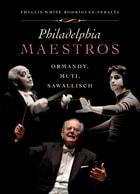
Philadelphia Maestros
Ormandy, Muti, SawallischPhyllis Rodriquez-Peralta
Temple University Press, 2006
Philosophy of New Music
Theodor W. Adorno
University of Minnesota Press, 2019
An indispensable key to Adorno’s influential oeuvre—now in paperback
In 1949, Theodor W. Adorno’s Philosophy of New Music was published, coinciding with the prominent philosopher’s return to a devastated Europe after his exile in the United States. Intensely polemical from its first publication, every aspect of this work was met with extreme reactions, from stark dismissal to outrage. Even Arnold Schoenberg reviled it.
Despite the controversy, Philosophy of New Music became highly regarded and widely read among musicians, scholars, and social philosophers. Marking a major turning point in his musicological philosophy, Adorno located a critique of musical reproduction as internal to composition, rather than a matter of musical performance. Consisting of two distinct essays, “Schoenberg and Progress” and “Stravinsky and Reaction,” Philosophy of New Music poses the musical extremes in which Adorno perceived the struggle for the cultural future of Europe: between human emancipation and barbarism, between the compositional techniques and achievements of Schoenberg and Stravinsky.
In this translation, which is accompanied by an extensive introduction by distinguished translator Robert Hullot-Kentor, Philosophy of New Music emerges as an essential guide to the whole of Adorno's oeuvre.

Phonetics and Diction in Singing
Italian, French, Spanish, GermanKurt Adler
University of Minnesota Press, 1967
Phonetics and Diction in Singing was first published in 1967. Minnesota Archive Editions uses digital technology to make long-unavailable books once again accessible, and are published unaltered from the original University of Minnesota Press editions.
This book provides rules and illustrative examples for the study of songs and operas in the leading foreign languages of musical literature. The author is conductor and chorus master of the Metropolitan Opera. He has drawn the material from his larger book, The Art of Accompanying and Coaching,to provide a handbook or textbook especially suitable for use by voice teachers, singers, students in high schools, colleges, and schools of music, and members of choruses, church choirs, and opera workshops and their directors. Following a general discussion of phonetics and diction in singing there are separate chapters on Italian, French, Spanish, and German phonetics and diction. The text is illustrated with drawings and diagrams of vocal techniques and musical examples.
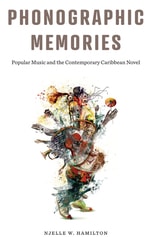
Phonographic Memories
Popular Music and the Contemporary Caribbean NovelNjelle W. Hamilton
Rutgers University Press, 2019
Njelle W. Hamilton's Spotify playlist to accompany Phonographic Memories: https://spoti.fi/2tCQRm8
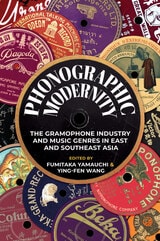
Phonographic Modernity
The Gramophone Industry and Music Genres in East and Southeast AsiaEdited by Fumitaka Yamauchi and Ying-fen Wang
University of Illinois Press, 2024
A roster of experts on countries from Japan to Indonesia explores the complicated relationship between the gramophone industry and music genres in East and Southeast Asia. Extending the boundaries of their research across multiple disciplines, the contributors connect the gramophone industry to theories surrounding phonography and modernity. Their focus on phonography combines an interest in discs with an interest in the sounds contributing to the recent sonic-auditory turn in sound studies.
Ambitious and expansive, Phonographic Modernity examines the bloc of East and Southeast Asia within the larger global history of sound recording.
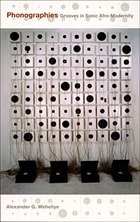
Phonographies
Grooves in Sonic Afro-ModernityAlexander G. Weheliye
Duke University Press, 2005
Weheliye surveys literature, film, and music to focus on engagements with recorded sound. He offers substantial new readings of canonical texts by W. E. B. Du Bois and Ralph Ellison, establishing dialogues between these writers and popular music and film ranging from Louis Armstrong’s voice to DJ mixing techniques to Darnell Martin’s 1994 movie I Like It Like That. Looking at how questions of diasporic belonging are articulated in contemporary black musical practices, Weheliye analyzes three contemporary Afro-diasporic musical acts: the Haitian and African American rap group the Fugees, the Afro- and Italian-German rap collective Advanced Chemistry, and black British artist Tricky and his partner Martina. Phonographies imagines the African diaspora as a virtual sounding space, one that is marked, in the twentieth century and twenty-first, by the circulation of culture via technological reproductions—records and tapes, dubbing and mixing, and more.
Physical Expression and the Performing Artist
Moving Beyond the PlateauJerald Schwiebert
University of Michigan Press, 2011
All performers know that "tuning up the body" is necessary to maximize performance. A person's mannerisms, habitual patterns of movement, and posture can block the capacity for expression, often without the performer even noticing. Physical Expression and the Performing Artist offers an organized approach to movement for actors, conductors, dancers, singers, musicians---for performers of any kind.
Capturing the energy of the popular workshops presented by master movement teacher Jerald Schwiebert, the book draws from the wisdom of hatha yoga, tai chi, and Pilates as well as from the teachings of Stanislavski, Structural Integration (Rolfing), Alexander, Feldenkrais, and Laban to provide a fresh and accessible approach to movement. More than 300 anatomical drawings help readers pinpoint specific muscles, joints, and actions as they explore the capacity of the performer's physical instrument, the components of dynamic movement, and the anatomy of expression. The book's many detailed exercises bring awareness of habitual and inefficient movement and introduce the steps necessary for more efficient movement patterns in all parts of the body. This book will prove indispensable in movement courses and as a resource guide for professionals seeking to take their performances to the next level.
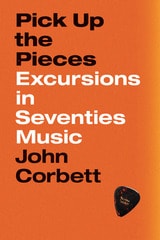
Pick Up the Pieces
Excursions in Seventies MusicJohn Corbett
University of Chicago Press, 2019
Rock. Disco. Pop. Soul. Jazz. Folk. Funk. The music scene of the 1970s was as varied as it was exhilarating, but the decade’s diversity of sound has never been captured in one book before now. Pick Up the Pieces gives a panoramic view of the era’s music and culture through seventy-eight essays that allow readers to dip in and out of the decade at random or immerse themselves completely in Corbett’s chronological journey.
An inviting mix of skilled music criticism and cultural observation, Pick Up the Pieces is also a coming-of-age story, tracking the author’s absorption in music as he grows from age seven to seventeen. Along with entertaining personal observations and stories, Corbett includes little-known insights into musicians from Pink Floyd, Joni Mitchell, James Brown, and Fleetwood Mac to the Residents, Devo, Gal Costa, and Julius Hemphill.
A master DJ on the page, Corbett takes us through the curated playlist that is Pick Up the Pieces with captivating melody of language and powerful enthusiasm for the era. This funny, energetic book will have readers longing nostalgically for a decade long past.
Pilgrimage to Dollywood
A Country Music Road Trip through TennesseeHelen Morales
University of Chicago Press, 2014
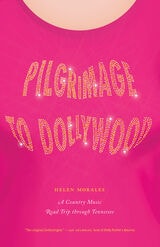
In Pilgrimage to Dollywood, Morales sets out to discover Parton’s Tennessee. Her travels begin at the top celebrity pilgrimage site of Elvis Presley’s Graceland, then take her to Loretta Lynn’s ranch in Hurricane Mills; the Country Music Hall of Fame and the Grand Ole Opry in Nashville; to Sevierville, Gatlinburg, and the Great Smoky Mountains National Park; and finally to Pigeon Forge, home of the “Dolly Homecoming Parade,” featuring the star herself as grand marshall. Morales’s adventure allows her to compare the imaginary Tennessee of Parton’s lyrics with the real Tennessee where the singer grew up, looking at essential connections between country music, the land, and a way of life. It’s also a personal pilgrimage for Morales. Accompanied by her partner, Tony, and their nine-year-old daughter, Athena (who respectively prefer Mozart and Miley Cyrus), Morales, a recent transplant from England, seeks to understand America and American values through the celebrity sites and attractions of Tennessee.
This celebration of Dolly and Americana is for anyone with an old country soul who relies on music to help understand the world, and it is guaranteed to make a Dolly Parton fan of anyone who has not yet fallen for her music or charisma.

Pinery Boys
Songs and Songcatching in the Lumberjack EraEdited by Franz Rickaby with Gretchen Dykstra and James P. Leary
University of Wisconsin Press, 2017
Pinery Boys now incorporates, commemorates, contextualizes, and complements Rickaby's early work. It includes an introduction and annotations throughout by eminent folklore scholar James P. Leary and an engaging, impressively researched biography by Rickaby's granddaughter Gretchen Dykstra. Central to this edition are Rickaby's own introduction and the original fifty-one songs that he published—including "Jack Haggerty's Flat River Girl," "The Little Brown Bulls," "Ole from Norway," "The Red Iron Ore," and "Morrissey and the Russian Sailor"—plus fourteen additional songs selected to represent the varied collecting Rickaby did beyond the lumber camps.
Supplemented by historical photographs, Pinery Boys fully reveals Franz Rickaby as a visionary artist and scholar and provides glimpses into the past lives of woods poets and singers.
Pink Noises
Women on Electronic Music and SoundTara Rodgers
Duke University Press, 2010
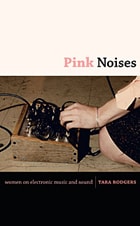
Contemporary electronic music practices are illuminated through the stories of women artists of different generations and cultural backgrounds. They include the creators of ambient soundscapes, “performance novels,” sound sculptures, and custom software, as well as the developer of the Deep Listening philosophy and the founders of the Liquid Sound Lounge radio show and the monthly Basement Bhangra parties in New York. These and many other artists open up about topics such as their conflicted relationships to formal music training and mainstream media representations of women in electronic music. They discuss using sound to work creatively with structures of time and space, and voice and language; challenge distinctions of nature and culture; question norms of technological practice; and balance their needs for productive solitude with collaboration and community. Whether designing and building modular synthesizers with analog circuits or performing with a wearable apparatus that translates muscle movements into electronic sound, these artists expand notions of who and what counts in matters of invention, production, and noisemaking. Pink Noises is a powerful testimony to the presence and vitality of women in electronic music cultures, and to the relevance of sound to feminist concerns.
Interviewees: Maria Chavez, Beth Coleman (M. Singe), Antye Greie (AGF), Jeannie Hopper, Bevin Kelley (Blevin Blectum), Christina Kubisch, Le Tigre, Annea Lockwood, Giulia Loli (DJ Mutamassik), Rekha Malhotra (DJ Rekha), Riz Maslen (Neotropic), Kaffe Matthews, Susan Morabito, Ikue Mori, Pauline Oliveros, Pamela Z, Chantal Passamonte (Mira Calix), Maggi Payne, Eliane Radigue, Jessica Rylan, Carla Scaletti, Laetitia Sonami, Bev Stanton (Arthur Loves Plastic), Keiko Uenishi (o.blaat)
Pioneers of the Blues Revival
Steve Cushing
University of Illinois Press, 2014
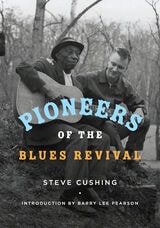
Opinionated and territorial, the American, British, and French interviewees provide fascinating first-hand accounts of the era and movement. Experts including Paul Oliver, Gayle Dean Wardlow, Sam Charters, Ray Flerledge, Paul Oliver, Richard K. Spottswood, and Pete Whelan chronicle in their own words their obsessive early efforts at cataloging blues recordings and retrace lifetimes spent loving, finding, collecting, reissuing, and producing records. They and nearly a dozen others recount relationships with blues musicians, including the discoveries of prewar bluesmen Mississippi John Hurt, Son House, Skip James, and Bukka White, and the reintroduction of these musicians and many others to new generations of listeners. The accounts describe fieldwork in the South, renew lively debates, and tell of rehearsals in Muddy Waters's basement and randomly finding Lightning Hopkins's guitar in a pawn shop.
Blues scholar Barry Lee Pearson provides a critical and historical framework for the interviews in an introduction.
Pioneers of the Blues Revival
Steve Cushing
University of Illinois Press, 2018

Pistol Packin' Mama
Aunt Molly Jackson and the Politics of FolksongShelly Romalis
University of Illinois Press, 1999
A coal miner's daughter, Jackson grew up in eastern Kentucky, married a miner, and became a midwife, labor activist, and songwriter. Fusing hard experience with the rich Appalachian musical tradition, her songs became weapons of struggle. In 1931, at age fifty, she was "discovered" and brought north. There, she was sponsored and befriended by an illustrious circle of left-wing intellectuals and musicians that included Theodore Dreiser, Alan Lomax, and Charles and Pete Seeger. Along with Sarah Ogan Gunning, Jim Garland (two of Aunt Molly's half-siblings), Woody Guthrie, Leadbelly, and other folk musicians, Jackson served as a cultural broker who linked the rural working poor to big-city, left-wing activism.
Shelly Romalis combines interviews with archival materials to construct an unforgettable portrait of an Appalachian woman who remained radical, raucous, proud, poetic, offensive, self-involved, and in spirit the "real" pistol packin' mama of the song.
Places and Purposes of Popular Music Education
Perspectives from the FieldEdited by Bryan Powell and Gareth Dylan Smith
Intellect Books, 2022
This book provides a variety of perspectives on popular music education. With a mixture of rants, manifestos, and punchy position pieces, the volume moves from scholarly essays replete with citations and references to descriptions of practice and straight-talking polemics. The writing is approachable in tone, and the chapters are intended to whet appetites, prime pumps, open eyes, and keep cogs turning for academics of all ages and stages.
The book will appeal to those working in popular music studies, communication studies, and education research. It also holds relevance for researchers of the music industry and music ecosystems around the world. International in reach and scope and edited by recognized voices at the vanguard of progressive music education, this is an eye-opening exploration of education in and through the widespread cultural phenomenon of popular music.

Play Like a Man
My Life in Poster ChildrenRose Marshack
University of Illinois Press, 2023
An inside look at a scene and a career, Play Like a Man is the evocative and humorous tale of one woman’s life in the trenches and online.
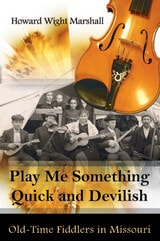
Play Me Something Quick and Devilish
Old-Time Fiddlers in MissouriHoward Wight Marshall
University of Missouri Press, 2012
Beginning with the French villages on the Mississippi River, Marshall leads us chronologically through the settlement of the state and how these communities established our cultural heritage. Other core populations include the “Old Stock Americans” (primarily Scotch-Irish from Kentucky, Tennessee, North Carolina, and Virginia), African Americans, German-speaking immigrants, people with American Indian ancestry (focusing on Cherokee families dating from the Trail of Tears in the 1830s), and Irish railroad workers in the post–Civil War period. These are the primary communities whose fiddle and dance traditions came together on the Missouri frontier to cultivate the bounty of old-time fiddling enjoyed today.
Marshall also examines regional styles in Missouri fiddling and comments on the future of this time-honored, and changing, tradition. Documentary in nature, this social history draws on various academic disciplines and oral histories recorded in Marshall’s forty-some years of research and field experience. Historians, music aficionados, and lay people interested in Missouri folk heritage—as well as fiddlers, of course—will find Play Me Something Quick and Devilish an entertaining and enlightening read.
With 39 tunes, the enclosed Voyager Records companion CD includes a historic sampler of Missouri fiddlers and styles from 1955 to 2012.
Played Out on the Strip
The Rise and Fall of Las Vegas Casino BandsJanis L. McKay
University of Nevada Press, 2016
From 1940 to 1989, nearly every hotel on the Las Vegas Strip employed a full-time band or orchestra. After the late 1980s, when control of the casinos changed hands from independent owners to corporations, almost all of these musicians found themselves unemployed. Played Out on the Strip traces this major shift in the music industry through extensive interviews with former musicians.
In 1989, these soon-to-be unemployed musicians went on strike. Janis McKay charts the factors behind this strike, which was precipitated by several corporate hotel owners moving to replace live musicians with synthesizers and taped music, a strategic decision made in order to save money. The results of this transitional period in Las Vegas history were both long-lasting and far-reaching for the entertainment industry. With its numerous oral history interviews and personal perspectives from the era, this book will appeal to readers interested in Las Vegas history, music history, and labor issues.
Playing for Keeps
Improvisation in the AftermathDaniel Fischlin and Eric Porter
Duke University Press, 2020
Contributors. Randy DuBurke, Rana El Kadi, Kevin Fellezs, Daniel Fischlin, Kate Galloway, Reem Abdul Hadi, Vijay Iyer, Mark Lomanno, Moshe Morad, Eric Porter, Sara Ramshaw, Matana Roberts, Darci Sprengel, Paul Stapleton, Odeh Turjman, Stephanie Vos