67 books match the query 'Painting' and 18 start with p
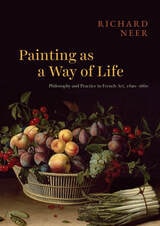
cover of Painting as a Way of Life: Philosophy and Practice in French Art, 1620–1660

Painting as a Way of Life

Philosophy and Practice in French Art, 1620–1660

Richard Neer

University of Chicago Press, 2025

Neer uncovers a key moment in the history of early modern art, when painting was understood to be a tool for self-transformation and for living a philosophical life. 
 
In this wide-ranging study, Richard Neer shows how French painters of the seventeenth century developed radically new ways to connect art, perception, and ethics. Cutting across traditional boundaries of classicism and realism, Neer addresses four case studies: Nicolas Poussin, renowned for marrying ancient philosophy and narrative painting; Louise Moillon, who pioneered French still life in the 1630s; Georges de La Tour, a painter of intense and introspective nocturnes; and the Brothers Le Nain, specialists in genre and portraiture who inspired Courbet, Manet, and other painters of modern life. Setting these artists in dialogue with Montaigne, Descartes, Pascal, and others, ranging from the studios of Rome to the streets of Paris, this book provides fresh accounts of essential artworks—some well-known, others neglected—and new ways to approach the relation of art, theory, and daily life. 

 
[more]
cover of Painting in Excess: Kyiv's Art Revival, 1985-1993

Painting in Excess

Kyiv's Art Revival, 1985-1993

Olena Martynyuk

Rutgers University Press, 2022
The upheavals of glasnost and perestroika followed by the collapse of the Soviet Union remarkably transformed the art scene in Kyiv, launching Ukrainian contemporary art as a global phenomenon. The previously calm waters of the culturally provincial capital of the Ukrainian Soviet Republic became radically stirred with new and daring art made publicly visible for the first time since the avant-garde period of the early twentieth century. As artists were freed from the dictates of the fading Communist ideology and the constraints of late socialist realism, an explosion of styles emerged, creating an effect of baroque excess. This exhibition catalogue traces and documents the diverse artistic manifestations of these transitional and exhilarating years in Kyiv while providing some historical artworks for context. Published in partnership with the Zimmerli Museum.
[more]
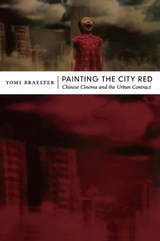
cover of Painting the City Red: Chinese Cinema and the Urban Contract

Painting the City Red

Chinese Cinema and the Urban Contract

Yomi Braester

Duke University Press, 2010

Painting the City Red illuminates the dynamic relationship between the visual media, particularly film and theater, and the planning and development of cities in China and Taiwan, from the emergence of the People’s Republic in 1949 to the staging of the Beijing Olympics in 2008. Yomi Braester argues that the transformation of Chinese cities in recent decades is a result not only of China’s abandonment of Maoist economic planning in favor of capitalist globalization but also of a shift in visual practices. Rather than simply reflect urban culture, movies and stage dramas have facilitated the development of new perceptions of space and time, representing the future city variously as an ideal socialist city, a metropolis integrated into the global economy, and a site for preserving cultural heritage.

Drawing on extensive archival research, interviews with leading filmmakers and urban planners, and close readings of scripts and images, Braester describes how films and stage plays have promoted and opposed official urban plans and policies as they have addressed issues such as demolition-and-relocation plans, the preservation of vernacular architecture, and the global real estate market. He shows how the cinematic rewriting of historical narratives has accompanied the spatial reorganization of specific urban sites, including Nanjing Road in Shanghai; veterans’ villages in Taipei; and Tiananmen Square, centuries-old courtyards, and postmodern architectural landmarks in Beijing. In Painting the City Red, Braester reveals the role that film and theater have played in mediating state power, cultural norms, and the struggle for civil society in Chinese cities.
[more]
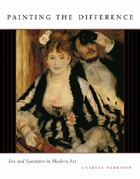
cover of Painting the Difference: Sex and Spectator in Modern Art

Painting the Difference

Sex and Spectator in Modern Art

Charles Harrison

University of Chicago Press, 2005

The picture plane of a painting creates boundaries and perspectives. It governs the relationship of daubs of pigment on a canvas to reality, allowing the viewer to connect with the imagined world of a work of art. Charles Harrison's latest endeavor, Painting the Difference, explores the role of the picture plane in modern painting and the relationships it creates among the artist, the subject, and the spectator. One of the most respected teachers and theorists of modern art, Harrison here offers a bold interpretation of the Modernist canon that uncovers the significance of gender to the functioning of the picture plane.

Arguing that the representation of women in art was crucial to the character of modernity, Harrison traces the history of female subjects as they began to gaze out of the picture to confront and engage their viewers. Combining sweeping conceptual history with telling investigations into the details of particular paintings, Painting the Difference deciphers the implications of sexual difference for the development of nineteenth- and twentieth-century art. Harrison shows how artists, reflecting the underlying anxieties of the time about gender, used female subjects' gazes both to create a sexualized relationship between these subjects and their viewers, and to simultaneously question that relationship. In considering works by artists such as Renoir, Manet, Degas, Cézanne, Picasso, and Matisse, as well as Rothko, Warhol, Cindy Sherman, and many more, Harrison incorporates elements of cultural criticism and social history into his arguments, and generous color illustrations permit the reader to test Harrison's claims against the works on which they are based. Rich with detail and compelling analysis, Painting the Difference offers cutting-edge interpretation grounded in the reality of magnificent works of art.
[more]
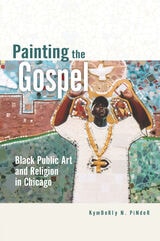
cover of Painting the Gospel: Black Public Art and Religion in Chicago

Painting the Gospel

Black Public Art and Religion in Chicago

Kymberly Pinder

University of Illinois Press, 2016

Innovative and lavishly illustrated, Painting the Gospel offers an indispensable contribution to conversations about African American art, theology, politics, and identity in Chicago. Kymberly N. Pinder escorts readers on an eye-opening odyssey to the murals, stained glass, and sculptures dotting the city's African American churches and neighborhoods. Moving from Chicago's oldest black Christ figure to contemporary religious street art, Pinder explores ideas like blackness in public, art for black communities, and the relationship of Afrocentric art to Black Liberation Theology. She also focuses attention on art excluded from scholarship due to racial or religious particularity. Throughout, she reflects on the myriad ways private black identities assert public and political goals through imagery.
 
Painting the Gospel includes maps and tour itineraries that allow readers to make conceptual, historical, and geographical connections among the works.

 
[more]
cover of Painting the Maya Universe: Royal Ceramics of the Classic Period

Painting the Maya Universe

Royal Ceramics of the Classic Period

Dorie Reents-Budet

Duke University Press, 1994

Lavishly illustrated with nearly 400 color images, Painting the Maya Universe is the most thorough study and brilliant display of Classic Maya ceramic painting yet published. Building on twenty years of research and debate, Dorie Reents-Budet and her collaborators Joseph W. Ball, Ronald L. Bishop, Virginia M. Fields, and Barbara MacLeod bring together many perspectives, including the art historical, archaeological, epigraphical, and ethnohistorical, to examine one of the world’s great but overlooked painting traditions. With an emphasis on sixth- to eighth-century pottery featuring both pictorial and hieroglyphic imagery, Painting the Maya Universe presents an extraordinary exploration of the cultural roles and meanings of these Guatemalan, Belizean, and Mexican elite painted ceramics. Maya pottery is discussed both in aesthetic terms and for the important information it reveals about Maya society, artistry, politics, history, religion, and ritual. The range of ceramic painting styles developed during this period is also presented and defined in detail.
Painting the Maya Universe is the first publication to present a definitive translation of the hieroglyphic texts painted on these objects. With many glyphs deciphered here for the first time, this analysis reveals much about how these vessels were perceived and used by the Maya, their owners’ names, and, in several cases, the names of the artists who created them. This information is combined with archaeological and other data, including nuclear chemical analyses, to correlate painting styles with specific Maya sites.
Published in conjunction with Duke University Museum of Art and an exhibition touring the United States, Painting the Maya Universe presents an astonishing visual record as well as a monumental scholarly achievement. With photographs by Justin Kerr, the foremost photographer of pre-Columbian art, it includes over 90 unique full-color rollout photographs, each showing the entire surface of an object in a single frame. The book also addresses the questions and controversy regarding the loss of information that occurs when objects are removed from their archaeological context to become part of public and private collections.
Painting the Maya Universe will energize discussion of Maya pottery, hieroglyphic texts, and iconography. Its photographs, a lasting resource on this great painting tradition, will stimulate and delight the eye. It is a breakthrough in art history and Latin American scholarship that will enrich general readers and scholars alike.
[more]
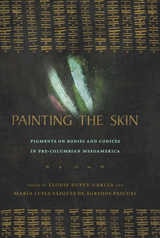
cover of Painting the Skin: Pigments on Bodies and Codices in Pre-Columbian Mesoamerica

Painting the Skin

Pigments on Bodies and Codices in Pre-Columbian Mesoamerica

Edited by Élodie Dupey García and María Luisa Vázquez de Ágredos Pascual

University of Arizona Press, 2018

Mesoamerican communities past and present are characterized by their strong inclination toward color and their expert use of the natural environment to create dyes and paints. In pre-Hispanic times, skin was among the preferred surfaces on which to apply coloring materials. Archaeological research and historical and iconographic evidence show that, in Mesoamerica, the human body—alive or dead—received various treatments and procedures for coloring it.

Painting the Skin brings together exciting research on painted skins in Mesoamerica. Chapters explore the materiality, uses, and cultural meanings of the colors applied to a multitude of skins, including bodies, codices made of hide and vegetal paper, and even building “skins.” Contributors offer physicochemical analysis and compare compositions, manufactures, and attached meanings of pigments and colorants across various social and symbolic contexts and registers. They also compare these Mesoamerican colors with those used in other ancient cultures from both the Old and New Worlds. This cross-cultural perspective reveals crucial similarities and differences in the way cultures have painted on skins of all types.

Examining color in Mesoamerica broadens understandings of Native religious systems and world views. Tracing the path of color use and meaning from pre-Columbian times to the present allows for the study of the preparation, meanings, social uses, and thousand-year origins of the coloring materials used by today’s Indigenous peoples.

Contributors:

María Isabel Álvarez Icaza Longoria
Christine Andraud
Bruno Giovanni Brunetti
David Buti
Davide Domenici
Élodie Dupey García
Tatiana Falcón Álvarez
Anne Genachte-Le Bail
Fabrice Goubard
Aymeric Histace
Patricia Horcajada Campos
Stephen Houston
Olivia Kindl
Bertrand Lavédrine
Linda R. Manzanilla Naim
Anne Michelin
Costanza Miliani
Virgina E. Miller
Sélim Natahi
Fabien Pottier
Patricia Quintana Owen
Franco D. Rossi
Antonio Sgamellotti
Vera Tiesler
Aurélie Tournié
María Luisa Vázquez de Ágredos Pascual
Cristina Vidal Lorenzo
[more]
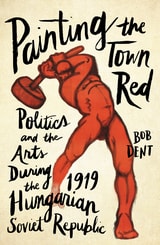
cover of Painting the Town Red: Politics and the Arts During the 1919 Hungarian Soviet Republic

Painting the Town Red

Politics and the Arts During the 1919 Hungarian Soviet Republic

Bob Dent

Pluto Press, 2018

In 1919, in the wake of World War I, for a brief period Hungary was a Soviet Republic. The republic didn’t last, but the incredible effusion of art, music, film, theater, and literature that it generated did. Painting the Town Red offers an in-depth exploration of the incredible artistic flourishing brought about by the 1919 republic, showing how art and politics were intertwined—and how, for a brief time, artists saw themselves as playing a crucial part in the establishment of a new way of living and governing. Through close analyses of the works of a number of creators and a careful recounting of the history and politics of the 1919 republic, Bob Dent brings a largely forgotten moment back to life, with all its glory and, ultimately, disillusion.
 
[more]
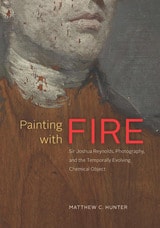
cover of Painting with Fire: Sir Joshua Reynolds, Photography, and the Temporally Evolving Chemical Object

Painting with Fire

Sir Joshua Reynolds, Photography, and the Temporally Evolving Chemical Object

Matthew C. Hunter

University of Chicago Press, 2019

Painting with Fire shows how experiments with chemicals known to change visibly over the course of time transformed British pictorial arts of the long eighteenth century—and how they can alter our conceptions of photography today. As early as the 1670s, experimental philosophers at the Royal Society of London had studied the visual effects of dynamic combustibles. By the 1770s, chemical volatility became central to the ambitious paintings of Sir Joshua Reynolds, premier portraitist and first president of Britain’s Royal Academy of Arts. Valued by some critics for changing in time (and thus, for prompting intellectual reflection on the nature of time), Reynolds’s unstable chemistry also prompted new techniques of chemical replication among Matthew Boulton, James Watt, and other leading industrialists. In turn, those replicas of chemically decaying academic paintings were rediscovered in the mid-nineteenth century and claimed as origin points in the history of photography.

Tracing the long arc of chemically produced and reproduced art from the 1670s through the 1860s, the book reconsiders early photography by situating it in relationship to Reynolds’s replicated paintings and the literal engines of British industry. By following the chemicals, Painting with Fire remaps familiar stories about academic painting and pictorial experiment amid the industrialization of chemical knowledge.
 
[more]
cover of Painting, History and Meaning: Sites of Time

Painting, History and Meaning

Sites of Time

Craig Staff

Intellect Books, 2020

This compelling new study considers contemporary painting’s relationship with time and with events, ideas, and paintings from the past. Following French philosopher Jean-François Lyotard’s determination of painting as entailing a series of temporal sites, Painting, History and Meaning examines works that tendentiously engage with aspects and events derived from the past. Craig Staff explores art that has encompassed strategies of excavation, anachronism, and memorialization, examining key works by artists including Dana Schutz, Tomma Abts, Gerhard Richter, Marlene Dumas, Johannes Phokela, and Taus Makhacheva. A scholarly examination of contemporary painting through an innovative interdisciplinary research methodology, this fascinating study illuminates the complex relationship between art and history. 

[more]
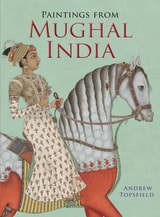
cover of Paintings from Mughal India

Paintings from Mughal India

Andrew Topsfield

Bodleian Library Publishing, 2008

One of the great kingdoms of human history, the Mughal empire is now lost to the relentless sweep of time. But the wealth of art treasures the Mughals left behind is nonetheless a lasting testament to the sumptuousness of their culture. Among the most notable vestiges of their art are the lush miniature paintings of Mughal imperial life, and Andrew Topsfield explores a rich array of these painted works in Paintings from Mughal India.

            Between the sixteenth and eighteenth centuries, the Mughal emperors presided over a flourishing cultural renaissance, and these miniature paintings vividly depict the splendor of this period. Topsfield examines the paintings’ unique blend of Indian, Islamic, and Persian styles and analyzes their varied subjects—ranging from hunting, royal banquets, and other scenes of imperial life to legendary tales, mythic deities, and battles. Among the paintings featured in the book’s vibrant reproductions are works created between the reign of Akbar and the fall of Shah Jehanan—an era considered to be the height of Mughal painting—and illustrations from the celebrated Baharistan manuscript of 1595. A fascinating and gorgeously illustrated study, Paintings from Mughal India will be an invaluable resource for all art scholars and anyone interested in the legacy of the Mughal Empire.
[more]
cover of Paintings from Mughal India

Paintings from Mughal India

Andrew Topsfield

Bodleian Library Publishing, 2008

One of the great kingdoms of human history, the Mughal Empire is now lost to the relentless sweep of time. But the wealth of treasures left behind offers a lasting testament to the sumptuousness of its culture. Among the most notable of these treasures are the lush miniature paintings showing the splendor of Mughal imperial life.

Andrew Topsfield examines these paintings that bear the influence of Indian, Islamic, and Persian styles and portray a variety of subjects, from hunting, royal banquets, and other scenes of imperial life to legends, battles, and mythic deities. Among the paintings featured in the book’s vibrant reproductions are illustrations from the celebrated Baharistan manuscript of 1595 and works created between the reign of Akbar and the fall of Shah Jahan in 1658—an era considered to be the height of Mughal art. For this new edition, Topsfield has made corrections and revisions reflecting new research.
A fascinating and gorgeously illustrated study, Paintings from Mughal India will be an invaluable resource for all art scholars and anyone interested in the legacy of the Mughal Empire.

[more]
cover of Panthéon De La Guerre: Reconfiguring a Panorama of the Great War

Panthéon De La Guerre

Reconfiguring a Panorama of the Great War

Mark Levitch

University of Missouri Press, 2006
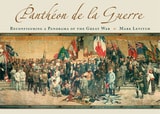
In its day it was, quite simply, the world’s largest painting.
            The Panthéon de la Guerre was a cyclorama the size of a football field, featuring 5,000 full-length portraits of prominent figures from World War I—a painting that blatantly sought to arouse patriotic fervor in its viewers. This book traces that work’s shifting fortunes during its unlikely journey from Great War Paris to cold war Kansas City and examines the continuing journeys of its fragments in the world’s art markets.
Mark Levitch has written the first history and analysis of the Panthéon, capturing its social life in a story full of surprising twists and turns and as epic as the painting itself. Created in Paris as an artist-generated propaganda project while the war raged, the Panthéonwas celebrated there as a solemn and nostalgic work after the war, then was promoted as a circuslike spectacle on a postwar tour of the United States when it was “updated” to appeal to Americans’ more celebratory view of the conflict. Consigned to storage and all but forgotten after World War II, the Panthéon was eventually procured for Kansas City’s Liberty Memorial in 1956, where less than 7 percent of the work was reconfigured into a smaller U.S.-centric mural—some of the unused fragments eventually surfacing in Paris flea markets and on eBay.
Levitch looks at the Panthéon as both painting and artifact, combining cultural history, art history, and material culture studies to trace the changing reception of traditional art in the new age of mechanical media. He assesses the changing values attached to the Panthéon and argues that the panorama’s status and frequent reshaping have both informed and been informed by the experience and memory of the First World War in France and the United States—and also reflects on how it has promoted a politically and culturally conservative agenda.
            Brimming with facts and insights that will amaze anyone who has known the painting in any of its incarnations, Levitch’s handsomely illustrated book provides a unique lens through which to view a conflict and its commemoration. And as people continue to place importance on commemorative projects, it is a powerful reminder of how ephemeral such grand undertakings can be.
[more]
cover of Patron to Painter: Elizabethan Programs for Five Allegorical Paintings

Patron to Painter

Elizabethan Programs for Five Allegorical Paintings

David Evett

Arizona Center for Medieval and Renaissance Studies, 2020
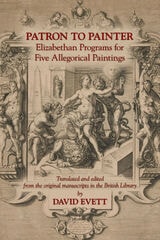
For more than two centuries the group of early modern English manuscripts presented in this volume sat mostly ignored on the shelves of the British Library, known only to the librarians who catalogued them. Six of them, for four different elaborate allegorical paintings, appear in the manuscript catalog of the Sloane Collection as “Instructions to painters.” A seventh, from the Harley collection in the same library, has more recently been added to the group. On art historical, iconographic, and historical grounds the manuscripts add significantly to our knowledge of Elizabethan visual allegory, and reveal a provocative new contribution to the evolution of English political thought. And the development across three of the programs of a warm personal relationship between the patron and the artist opens a unique window into early modern relationships of this kind. Unlike most other surviving artistic programs, this one reveals its author’s personality and interests in a rich and beguiling way, and although as a writer he is no Sidney or Nashe, the naïve yet widely informed enthusiasm with which he addresses his readers has considerable force and charm.
[more]
cover of Pictorial Nominalism: On Marcel Duchamp’s Passage from Painting to the Readymade

Pictorial Nominalism

On Marcel Duchamp’s Passage from Painting to the Readymade

Thierry De Duve

University of Minnesota Press, 2005

Beginning with the instance in 1912 when Marcel Duchamp wrote in a note to himself, "No more painting, get a job," Thierry de Duve reviews in Pictorial Nominalism the implications of the readymade for art and representation. Arguing that the readymade belongs to that moment in the history of painting when both figuration and the practice of painting become "impossible," de Duve presents a psychoanalytically informed account of the birth of abstraction.Differing considerably from such thinkers as Clement Greenberg and Peter Burger, de Duve demonstrates that the readymade is the link between painting in particular and art at large.
[more]
cover of Pictures of Romance: Form against Context in Painting and Literature

Pictures of Romance

Form against Context in Painting and Literature

Wendy Steiner

University of Chicago Press, 1988

How do pictures tell stories? Why does the literary romance so often refer to paintings and other visual art objects? Beginning with these two seemingly unrelated questions, Wendy Steiner reveals an intricate exchange between the visual arts and the literary romance.

Romances violate the casual, temporal, and logical cohesiveness of realist novels, and they do so in part by depicting love as a state of suspension, a condition outside of time. Steiner argues that because Renaissance and post-Renaissance painting also represents a suspended moment of perception with "unnatural" clarity and compression of meaning, it readily serves the romance as a symbol of antirealism. Yet the atemporality of stopped-action painting was actually an attempt to achieve pictorial realism—the way things "really" look. It is this paradox that interests Steiner: to signal their departure from realism, romances evoke the symbol of "realistic" visual artwork. Steiner explores this problem through analyses of Keats, Hawthorne, Joyce, and Picasso. She then examines a return to narrative conventions in visual art in the twentieth century, in the work of Lichtenstein and Warhol, and speculates on the fate of pictorial storytelling and the romance in postmodern art. An aesthetic fantasia of sorts, this study combines theory and analysis to illuminate an unexpected interconnection between literature and the visual arts.
[more]
cover of Portraits of Remembrance: Painting, Memory, and the First World War

Portraits of Remembrance

Painting, Memory, and the First World War

Edited by Margaret Hutchison and Steven Trout

University of Alabama Press, 2020

Interdisciplinary collection of essays on fine art painting as it relates to the First World War and commemoration of the conflict
 
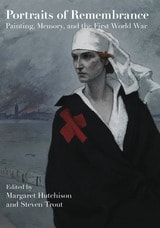
Although photography and moving pictures achieved ubiquity during the First World War as technological means of recording history, the far more traditional medium of paint­ing played a vital role in the visual culture of combatant nations. The public’s appetite for the kind of up-close frontline action that snapshots and film footage could not yet pro­vide resulted in a robust market for drawn or painted battle scenes.
 
Painting also figured significantly in the formation of collective war memory after the armistice. Paintings became sites of memory in two ways: first, many governments and communities invested in freestanding pan­oramas or cycloramas that depicted the war or featured murals as components of even larger commemorative projects, and second, certain paintings, whether created by official artists or simply by those moved to do so, emerged over time as visual touchstones in the public’s understanding of the war.
 
Portraits of Remembrance: Painting, Memory, and the First World War examines the relationship between war painting and collective memory in Australia, Austria, Belgium, Canada, Croatia, France, Germany, Great Britain, New Zealand, Russia, Serbia, Turkey, and the United States. The paintings discussed vary tremendously, ranging from public murals and panoramas to works on a far more intimate scale, including modernist masterpieces and crowd-pleasing expressions of sentimentality or spiritualism. Contribu­tors raise a host of topics in connection with the volume’s overarching focus on memory, including national identity, constructions of gender, historical accuracy, issues of aesthetic taste, and connections between painting and literature, as well as other cultural forms.
 
[more]
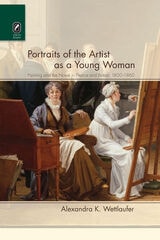
cover of Portraits of the Artist as a Young Woman: Painting and the Novel in France and Britain, 1800–1860

Portraits of the Artist as a Young Woman

Painting and the Novel in France and Britain, 1800–1860

Alexandra K. Wettlaufer

The Ohio State University Press, 2011

As women entered the field of cultural production in unprecedented numbers in nineteenth-century France and Britain, they gradually forged a place for themselves, however tenuous, in artistic movements and exhibitions, in academies and salons, and finally in the public imagination. Portraits of the Artist as a Young Woman: Painting and the Novel in France and Britain, 1800–1860 focuses on a decisive period in that process of professional self-invention and maps out the concrete and symbolic roles played by women painters, real and fictional, in the construction of female artistic identity in the aesthetic and the public spheres. Alexandra K. Wettlaufer examines the diverse and complex ways canonical and non-canonical women painters and novelists—including Anne Brontë, Sydney Owenson, Margaret Gillies, Marceline Desbordes-Valmore, George Sand, and Hortense Haudebourt-Lescot—figured and brought forth the radical image of a female subject representing the world.
 
Wettlaufer brings to light a rich and nearly forgotten culture of women’s artistic production, allowing us to understand the nineteenth-century in more complex and nuanced ways across the borders of gender, genre, and nation. In her close readings of paintings by women and novels about women painting, she charts the political and cultural resonances of this artistic self-representation, tracing its evolution through themes of “The Studio” (Part I), “Cosmopolitan Visions” (Part II), and “The Portrait” (Part III). By pairing painting and literature in a single study that also considers works from two distinct but closely related cultures, Portraits of the Artist as a Young Woman locates the interpretation of these works in the dialogic context in which they were created and consumed, highlighting aesthetic and political intersections between nineteenth-century British and French art, literature, and feminism that are too often elided by the disciplinary boundaries of scholarship.
[more]