Results by title
179 books match the query 'Past' and 21 start with p

Past Or Portal? Enhancing Undergraduate Learning Through
Eleanor Mitchell
Assoc of College & Research Libraries, 2012
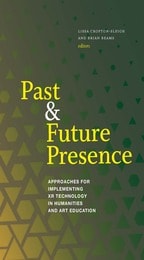
Past and Future Presence
Approaches for Implementing XR Technology in Humanities and Art EducationLissa Crofton-Sleigh and Brian Beams, editors
Amherst College Press, 2024
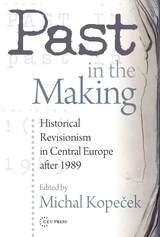
Past in the Making
Historical Revisionism in Central Europe After 1989Michal Kopecek
Central European University Press, 2008
Past or Portal
Enhancing Undergraduate Learning through Special Collections and ArchivesEleanor Mitchell
Assoc of College & Research Libraries, 2012
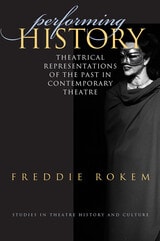
Performing History
Theatrical Representations of the Past in Conetmporary TheatreFreddie Rokem
University of Iowa Press, 2000

Periodization
Cutting Up the Past, Volume 62Marshall Brown, ed.
Duke University Press, 0
This special issue of MLQ covers examples of periodization from the early modern to the present, including a range from the individual year to the longue durée and incorporates a variety of methods from close empirical study to global concern. In the lead essay, Russell A. Berman argues that periodization saves us from the dangers of both anachronism and presentism. Srinivas Aravamudan, updating Vico, reminds usthat we lose the past if we simply leave it unexamined. In “Perioddity” Timothy J. Reiss reflects on the crossings of chronology with geology in long-range and global perspectives.
This collection strives to turn discomfort with periodization into a constructive discourse.
Contributors. Srinivas Aravamudan, Russell Berman, Marshall Brown, Margreta de Grazia, Robert J. Griffin, Anne K. Mellor, Michael North, Timothy J. Reiss
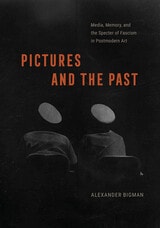
Pictures and the Past
Media, Memory, and the Specter of Fascism in Postmodern ArtAlexander Bigman
University of Chicago Press, 2024
A fresh take on the group of artists known as the Pictures Generation, reinterpreting their work as haunted by the history of fascism, the threat of its return, and the effects of its recurring representation in postwar American culture.
The artists of the Pictures Generation, converging on New York City in the late 1970s, indelibly changed the shape of American art. Rebelling against abstraction, they borrowed liberally from the aesthetics of mass media and sometimes the work of other artists. It has long been thought that the group’s main contribution was to upend received conceptions of authorial originality. In Pictures and the Past, however, art critic and historian Alexander Bigman shows that there is more to this moment than just the advent of appropriation art. He presents us with a bold new interpretation of the Pictures group’s most significant work, in particular its recurring evocations of fascist iconography.
In the wake of the original Pictures show, curated by Douglas Crimp in 1977, artists such as Sarah Charlesworth, Jack Goldstein, Troy Brauntuch, Robert Longo, and Gretchen Bender raised pressing questions about what it means to perceive the world historically in a society saturated by images. Bigman argues that their references to past cataclysms—to the violence wrought by authoritarianism and totalitarianism—represent not only a coded form of political commentary about the 1980s but also a piercing reflection on the nature of collective memory. Throughout, Bigman situates their work within a larger cultural context including parallel trends in music, fashion, cinema, and literature. Pictures and the Past probes the shifting relationships between art, popular culture, memory, and politics in the 1970s and ’80s, examining how the specter of fascism loomed for artists then—and the ways it still looms for us today.
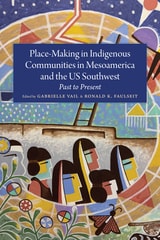
Place-Making in Indigenous Communities in Mesoamerica and the US Southwest
Past to PresentGabrielle Vail
University Press of Colorado, 2027
Place-Making in Indigenous Communities in Mesoamerica and the US Southwest explores shared Indigenous place-making concepts and practices across culturally diverse regions of Mesoamerica and the US Southwest from both historical and contemporary perspectives. Drawing on multidisciplinary research approaches, the volume demonstrates how Indigenous communities create and maintain deep connections to landscapes through stories, rituals, and reciprocal relationships, stressing the dynamic nature of the place-making process.
Contributors emphasize themes that crosscut Mesoamerican and Southwestern Indigenous cultures, including place-making through the (re)activation of primordial time, how people and spiritual energies embodied in geographical features of the land co-define time and space, the role of nonlocal materials and beings in establishing new—and often prestigious—place-based connections, and the impact of colonialism and neocolonialism on place-making and identity. Integrating archaeological evidence with contemporary ethnographic work, contributors explore the significance of places like Chichen Itzá's Balankanche cave as manifestations of primordial emergence sites. They also examine Hopi pilgrimages to ancestral shrines and how places such as Mirador Mountain in Chiapas, Cerro Danush in Oaxaca, and Black Mesa near San Ildefonso Pueblo continue to serve as focal points for ritual processions and community belonging.
Organized into sections emphasizing deep-time perspectives and contemporary heritage issues, Place-Making in Indigenous Communities in Mesoamerica and the US Southwest advocates for collaborative research approaches that center Indigenous voices and knowledge systems. By highlighting the deep connections between Indigenous communities and their sacred landscapes, this work brings a new perspective to ongoing conversations centered on land—one that urges engagement with Indigenous communities in a spirit of openness, collaboration, and respect.
Plants from the Past
Works Of Leonard W. Blake & Hugh C. CutlerLeonard W. Blake and Hugh C. Cutler; With an Introduction by Gayle J. Fritz and Patty Jo Watson
University of Alabama Press, 2001
Plants from the Past is a fascinating, comprehensive record of the work of two dedicated plant scientists who were instrumental in the establishment of archaeobotany and paleoethnobotany as vigorous subdisciplines within American archaeology. Hugh Carson Cutler and Leonard Watson Blake worked together for many decades at the Missouri Botanical Garden in St. Louis, identifying and interpreting plant remains from archaeological sites all over North America.
Covering a period of 30 years and tracing the development of the study of plant remains from archaeological sites, the volume will give archaeologists access to previously unavailable data and interpretations. It features the much-sought-after extensive inventory "Plants from Archaeological Sites East of the Rockies," which serves as a reference to archaeobotanical collections curated at the Illinois State Museum. The chapters dealing with protohistory and early historic foodways and trade in the upper Midwest are especially relevant at this time of increasing attention to early Indian-white interactions.
The editors' introduction provides coherence and historical context for the papers and points to the book's potential as a resource for future research. Graced by Dr. Blake's brief introductions to each chapter, Plants from the Past neatly compiles the earliest research in archaeobotany by two originators of the science.
Playing the Past
History and Nostalgia in Video GamesZach Whalen
Vanderbilt University Press, 2008
Politics without a Past
The Absence of History in Postcommunist NationalismShari J. Cohen
Duke University Press, 1999
common characterizations of postcommunist politics as either a resurgence of
aggressive nationalism or an evolution toward Western-style democracy. Cohen
draws upon extensive field research to paint a picture of postcommunist
political life in which ideological labels are meaningless and exchangeable
at will, political parties appear and disappear regularly, and citizens
remain unengaged in the political process.
In contrast to the conventional wisdom, which locates the roots of widespread intranational strife in deeply rooted national identities from the past, Cohen argues that a profound ideological vacuum has fueled destructive tension throughout postcommunist Europe and the former Soviet Union. She uses Slovakia as a case study to reveal that communist regimes bequeathed an insidious form of historical amnesia to the majority of the political elite and the societies they govern. Slovakia was particularly vulnerable to communist intervention since its precommunist national consciousness was so weak and its only period of statehood prior to 1993 was as a Nazi puppet-state. To demonstrate her argument, Cohen focuses on Slovakia’s failure to forge a collective memory of the World War II experience. She shows how communist socialization prevented Slovaks from tying their individual family stories—of the Jewish deportations, of the anti-Nazi resistance, or of serving in the wartime government—to a larger historical narrative shared with others, leaving them bereft of historical or moral bearings.
Politics without a Past develops an analytical framework that will be important for future research in Eastern Europe, the former Soviet Union, and beyond. Scholars in political science, history, East European and post-Soviet studies will find Cohen’s methodology and conclusions enlightening. For policymakers, diplomats, and journalists who deal with the region, she offers valuable insights into the elusive nature of postcommunist societies.
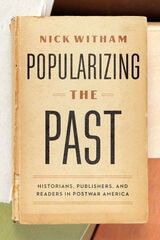
Popularizing the Past
Historians, Publishers, and Readers in Postwar AmericaNick Witham
University of Chicago Press, 2023
What’s the matter with history? For decades, critics of the discipline have argued that the historical profession is dominated by scholars unable, or perhaps even unwilling, to write for the public. In Popularizing the Past, Nick Witham challenges this interpretation by telling the stories of five historians—Richard Hofstadter, Daniel Boorstin, John Hope Franklin, Howard Zinn, and Gerda Lerner—who, in the decades after World War II, published widely read books of national history.
Witham compellingly argues that we should understand historians’ efforts to engage with the reading public as a vital part of their postwar identity and mission. He shows how the lives and writings of these five authors were fundamentally shaped by their desire to write histories that captivated both scholars and the elusive general reader. He also reveals how these authors’ efforts could not have succeeded without a publishing industry and a reading public hungry to engage with the cutting-edge ideas then emerging from American universities. As Witham’s book makes clear, before we can properly understand the heated controversies about American history so prominent in today’s political culture, we must first understand the postwar effort to popularize the past.
Popularizing the Past
Historians, Publishers, and Readers in Postwar AmericaNick Witham
University of Chicago Press, 2023
This is an auto-narrated audiobook edition of this book.
Popularizing the Past tells the stories of five postwar historians who changed the way ordinary Americans thought about their nation’s history.
What’s the matter with history? For decades, critics of the discipline have argued that the historical profession is dominated by scholars unable, or perhaps even unwilling, to write for the public. In Popularizing the Past, Nick Witham challenges this interpretation by telling the stories of five historians—Richard Hofstadter, Daniel Boorstin, John Hope Franklin, Howard Zinn, and Gerda Lerner—who, in the decades after World War II, published widely read books of national history.
Witham compellingly argues that we should understand historians’ efforts to engage with the reading public as a vital part of their postwar identity and mission. He shows how the lives and writings of these five authors were fundamentally shaped by their desire to write histories that captivated both scholars and the elusive general reader. He also reveals how these authors’ efforts could not have succeeded without a publishing industry and a reading public hungry to engage with the cutting-edge ideas then emerging from American universities. As Witham’s book makes clear, before we can properly understand the heated controversies about American history so prominent in today’s political culture, we must first understand the postwar effort to popularize the past.
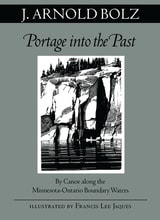
Portage Into The Past
J. Arnold Bolz
University of Minnesota Press, 1999
A Minnesota canoe enthusiast retraces the routes of the voyageurs.
The wilderness of the Boundary Waters is as rich in history as it is in natural beauty. Almost three hundred years ago, French Canadian voyageurs traveled through this area, which straddles the border of the United States and Canada, paddling birch-bark canoes along the St. Lawrence-Superior route to northwestern Canada. In this work of travel and adventure, Bolz recounts a journey he took in 1958, retracing the voyageurs’ route from Grand Portage on Lake Superior through the Quetico-Superior country to Rainy Lake. His canoe and paddle served as a time machine as he re-created a trip first taken centuries ago.
Beautifully illustrated by Francis Lee Jaques, Portage into the Past draws from the journals and maps of the early explorers of the region. Today’s adventurers of the north country will treasure this classic, an ideal guidebook to the region’s remarkable past. “At times, the transition is so smooth that it is with a start that we realize we have suddenly been carried two hundred years into the past.” Canoeing ISBN 0-8166-0919-5 Paper £00.00 $14.95192 Pages 6 x 8 1/4 AprilFesler-Lampert Minnesota Heritage Book SeriesTranslation inquiries: University of Minnesota PressPostcolonialism and the Past, Volume 65
Barbara Fuchs and David J. Baker
Duke University Press, 0
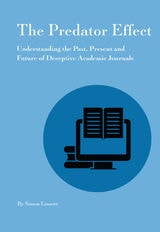
Predator Effect
Understanding the Past, Present and Future of Deceptive Academic JournalsSimon Linacre
Against the Grain, LLC, 2022
The Predator Effect concerns predatory publishing — it is the first to chart both the rise and impact of deceptive publishing. The author — a scientific communications expert with 20 years’ experience — looks at how predatory journals had become an accepted part of scholarly publishing, reviewing in turn the history, development and impact of predatory journals. The book also puts their rise in context of wider issues such as Open Access and publication ethics. Other issues it addresses include: defining predatory journals, the history of predatory publishing practices, Beall’s List, authors’ motivations and the future of predatory publishing practices.
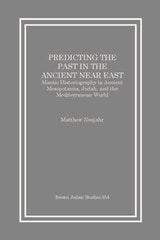
Predicting the Past in the Ancient Near East
Mantic Historiography in Ancient Mesopotamia, Judah, and the Mediterranean WorldMatthew Neujahr
SBL Press, 2012
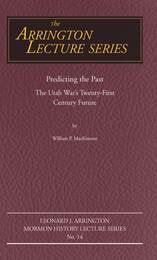
Predicting the Past
The Utah War's Twenty-First Century FutureWilliam Mackinnon
Utah State University Press, 2009

Presenting the Past
Essays on History and the PublicRoy Rosenzweig
Temple University Press, 1986
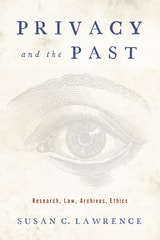
Privacy and the Past
Research, Law, Archives, EthicsLawrence, Susan C
Rutgers University Press, 2016
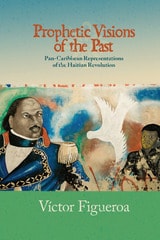
Prophetic Visions of the Past
Pan-Caribbean Representations of the Haitian RevolutionVíctor Figueroa
The Ohio State University Press, 2015
Prophetic Visions of the Past includes chapters on literary texts from a wide array of languages, histories, and perspectives. Figueroa addresses work by Alejo Carpentier (Cuba), C. L. R. James (Trinidad), Luis Palés Matos (Puerto Rico), Aimé Césaire (Martinique), Derek Walcott (Saint Lucia), Edouard Glissant (Martinique), and Manuel Zapata Olivella (Colombia). While underscoring each writer’s unique position, Figueroa also addresses their shared geographical, historical, and sociopolitical preoccupations, which are closely linked to the region’s prolonged experience of colonial interventions. Ultimately, these analyses probe how, for the larger Caribbean region, the Haitian Revolution continues to reflect the tension between inspiring revolutionary hopes and an awareness of ongoing colonial objectification and exploitation.