Results by title
212 books match the query 'Peru' and 22 start with p
Palaces and Power in the Americas
From Peru to the Northwest CoastEdited by Jessica Joyce Christie and Patricia Joan Sarro
University of Texas Press, 2006
Ancient American palaces still captivate those who stand before them. Even in their fallen and ruined condition, the palaces project such power that, according to the editors of this new collection, it must have been deliberately drawn into their formal designs, spatial layouts, and choice of locations. Such messages separated palaces from other elite architecture and reinforced the power and privilege of those residing in them. Indeed, as Christie and Sarro write, "the relation between political power and architecture is a pervasive and intriguing theme in the Americas."
Given the variety of cultures, time periods, and geographical locations examined within, the editors of this book have grouped the articles into four sections. The first looks at palaces in cultures where they have not previously been identified, including the Huaca of Moche Site, the Wari of Peru, and Chaco Canyon in the U.S. Southwest. The second section discusses palaces as "stage sets" that express power, such as those found among the Maya, among the Coast Salish of the Pacific Northwest, and at El Tajín on the Mexican Gulf Coast. The third part of the volume presents cases in which differences in elite residences imply differences in social status, with examples from Pasado de la Amada, the Valley of Oaxaca, Teotihuacan, and the Aztecs. The final section compares architectural strategies between cultures; the models here are Farfán, Peru, under both the Chimú and the Inka, and the separate states of the Maya and the Inka.
Such scope, and the quality of the scholarship, make Palaces and Power in the Americas a must-have work on the subject.
Pampa Grande and the Mochica Culture
By Izumi Shimada
University of Texas Press, 1994
Pampa Grande, the largest and most powerful city of the Mochica (Moche) culture on the north coast of Peru, was built, inhabited, and abandoned during the period A.D. 550-700. It is extremely important archaeologically as one of the few pre-Hispanic cities in South America for which there are enough reliable data to reconstruct a model of pre-Hispanic urbanism.
This book presents a "biography" of Pampa Grande that offers a reconstruction not only of the site itself but also of the sociocultural and economic environment in which it was built and abandoned. Izumi Shimada argues that Pampa Grande was established rapidly and without outside influence at a strategic position at the neck of the Lambayeque Valley that gave it control over intervalley canals and their agricultural potential and allowed it to gain political dominance over local populations. Study of the site itself leads him to posit a large resident population made up of transplanted Mochica and local non-Mochica groups with a social hierarchy of at least three tiers.
Paracas Art and Architecture
Object and Context in South Coastal PeruAnne Paul
University of Iowa Press, 1991
Peasant Cooperation and Capitalist Expansion in Central Peru
Edited by Norman Long and Bryan R. Roberts
University of Texas Press, 1978
This book brings together the research into regional development and social change carried out in highland Peru by a team of British and Latin American social anthropologists and sociologists. The area studied—the Mantaro Valley of central Peru—is one of the most densely populated and economically differentiated of highland zones; it is also notable for its community-based forms of cooperation and its high level of peasant political activity.
The book presents a series of case studies that examine cooperative forms of organization in relation to developments in the regional economy and to changes in national policy. The analysis attempts to avoid interpreting local processes merely as responses to externally initiated change. It stresses instead the need to consider the interplay of local and national forces, because local groups and processes themselves affect the pattern of regional and national development. The case studies cover a range of political and economic topics, from peasant movements to the achievements and shortcomings of government-sponsored agricultural and manufacturing cooperatives. The concluding chapter, by the editors, explores the theoretical implications of these studies.
Peasants on Plantations
Subaltern Strategies of Labor and Resistance in the Pisco Valley, PeruVincent Peloso
Duke University Press, 1999
Grounded in the theoretical perspectives of subaltern studies and drawing on an extremely complete archive of landed estates that includes detailed regular reports by plantation managers on all aspects of farming life, Peasants on Plantations reveals the intricate ways peasants, managers, and owners manipulated each other to benefit their own interests. As Peloso demonstrates, rather than a simple case of domination of the peasants by the owners, both parties realized that negotiation was the key to successful growth, often with the result that peasants cooperated with plantation growth strategies in order to participate in a market economy. Long-term contracts gave tenants and sharecroppers many opportunities to make farming choices, to assert claims on the land, compete among themselves, and participate in plantation expansion. At the same time, owners strove to keep the peasants in debt and well aware of who maintained ultimate control.
Peasants on Plantations offers a largely untold view of the monumental struggle between planters and peasants that was fundamental in shaping the agrarian history of Peru. It will interest those engaged in Latin American studies, anthropology, and peasant and agrarian studies.
People of the Volcano
Andean Counterpoint in the Colca Valley of PeruNoble David Cook, with Alexandra Parma Cook
Duke University Press, 2007
Social structures, the domestic export and economies, and spiritual spheres within native Andean communities are key elements of analysis. Also highlighted is the persistence of duality in the Andean world: perceived dichotomies such as those between the coast and the highlands, Europeans and Indo-Peruvians. Even before the conquest, the Cabana and Collagua communities sharing the Colca Valley were divided according to kinship and location. The Incas, and then the Spanish, capitalized on these divisions, incorporating them into their state structure in order to administer the area more effectively, but Colca Valley peoples resisted total assimilation into either. Colca Valley communities have shown a remarkable tenacity in retaining their social, economic, and cultural practices while accommodating various assimilationist efforts over the centuries. Today’s population maintains similarities with their ancestors of more than five hundred years ago—in language, agricultural practices, daily rituals, familial relationships, and practices of reciprocity. They also retain links to ecological phenomena, including the volcanoes from which they believe they emerged and continue to venerate.
Peruvian Lives across Borders
Power, Exclusion, and HomeM. Cristina Alcalde
University of Illinois Press, 2018
Alcalde draws on interviews, surveys, participant observation, and textual analysis to argue that to belong is to exclude. To that end, transnational Peruvians engage in both subtle and direct policing along the borders of belonging. These acts allow them to claim and maintain the social status they enjoyed in their homeland even as they profess their openness and tolerance. Alcalde details these processes and their origins in Peru's gender, racial, and class hierarchies. As she shows, the idea of return—whether desired or rejected, imagined or physical—spurs constructions of Peruvianness, belonging, and home.
Deeply researched and theoretically daring, Peruvian Lives across Borders answers fascinating questions about an understudied group of migrants.
Peruvian Street Lives
Culture, Power, and Economy among Market Women of CuzcoLinda J. Seligmann
University of Illinois Press, 2004
In Peruvian Street Lives, Seligmann argues that the sometimes invisible and informal economic, social, and political networks market women establish may appear disorderly and chaotic, but in fact often keep dysfunctional economies and corrupt bureaucracies from utterly destroying the ability of citizens to survive from day to day. Seligmann asks why the constructive efforts of market women to make a living provoke such negative social perceptions from some members of Peruvian society, who see them as symbols and actual catalysts of social disorder. At the same time, Seligmann shows how market women eke out a living, combat discrimination, and transgress racial and gender ideologies within the rich and expressive cultural traditions they have developed.
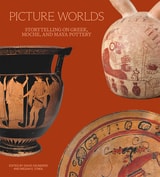
Picture Worlds
Storytelling on Greek, Moche, and Maya PotteryDavid Saunders
J. Paul Getty Trust, The, 2024
Satyrs and sphinxes, violent legumes, and a dancing maize deity figure in the stories painted on the pottery produced by the ancient Greek, Moche, and Maya cultures, respectively. Picture Worlds is the first book to examine the elaborately decorated terracotta vessels of these three distinct civilizations. Although the cultures were separated by space and time, they all employed pottery as a way to tell stories, explain the world, and illustrate core myths and beliefs. Each of these painted pots is a picture world. But why did these communities reach for pottery as a primary method of visual communication? How were the vessels produced and used? In this book, experts offer introductions to the civilizations, exploring these foundational questions and examining the painted imagery. Readers will be rewarded with a better understanding of each of these ancient societies, fascinating insights into their cultural commonalities and differences, and fresh perspectives on image making and storytelling, practices that remain vibrant to this day.
This volume is published to accompany an exhibition on view at the J. Paul Getty Museum at the Getty Villa from April 10 to July 29, 2024, and at the Michael C. Carlos Museum at Emory University from September 14 to December 15, 2024.
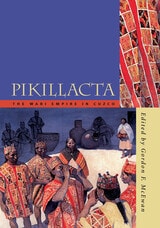
Pikillacta
The Wari Empire in CuzcoMcEwan, Gordon F.
University of Iowa Press, 2005
Plantation Agriculture and Social Control in Northern Peru, 1875–1933
By Michael J. Gonzales
University of Texas Press, 1985
During the late nineteenth and early twentieth centuries, the social, economic, and political landscape of Peru was transformed profoundly. Within a decade of the country’s disastrous defeat by Chile during the War of the Pacific, the export economy was recovering on the strength of a variety of agricultural and mineral products. The sugar industry played a pivotal role in this process and produced wealthy and socially ambitious families who became prominent political leaders on the national level.
This study, based primarily on previously unavailable private records of sugarcane plantations, examines the external and internal dynamics of the sugar industry. It offers new insights into the process of land consolidation, the economics of sugar technology and production, the formation of the coastal elite, and the organization, recruitment, and control of labor. By focusing on the plantation Cayalti within a regional context, Gonzales presents one of the richest descriptions of the modern plantation for any region of Latin America. The book is a vivid social history of laborers from a variety of racial and ethnic backgrounds, from Chinese to Peruvians of Indian, mestizo, and black heritage.

Playing with Things
Engaging the Moche Sex PotsBy Mary Weismantel
University of Texas Press, 2021
Winner, Association for Latin American Art-Arvey Foundation Book Award, 2022
More than a thousand years ago on the north coast of Peru, Indigenous Moche artists created a large and significant corpus of sexually explicit ceramic works of art. They depicted a diversity of sex organs and sex acts, and an array of solitary and interconnected human and nonhuman bodies. To the modern eye, these Moche “sex pots,” as Mary Weismantel calls them, are lively and provocative but also enigmatic creations whose import to their original owners seems impossible to grasp.
In Playing with Things, Weismantel shows that there is much to be learned from these ancient artifacts, not merely as inert objects from a long-dead past but as vibrant Indigenous things, alive in their own inhuman temporality. From a new materialist perspective, she fills the gaps left by other analyses of the sex pots in pre-Columbian studies, where sexuality remains marginalized, and in sexuality studies, where non-Western art is largely absent. Taking a decolonial approach toward an archaeology of sexuality and breaking with long-dominant iconographic traditions, this book explores how the pots "play jokes," "make babies," "give power," and "hold water,” considering the sex pots as actual ceramic bodies that interact with fleshly bodies, now and in the ancient past. A beautifully written study that will be welcomed by students as well as specialists, Playing with Things is a model for archaeological and art historical engagement with the liberating power of queer theory and Indigenous studies.
Politics after Violence
Legacies of the Shining Path Conflict in PeruEdited by Hillel David Soifer and Alberto Vergara
University of Texas Press, 2019
Between 1980 and 1994, Peru endured a bloody internal armed conflict, with some 69,000 people killed in clashes involving two insurgent movements, state forces, and local armed groups. In 2003, a government-sponsored “Truth and Reconciliation Committee” reported that the conflict lasted longer, affected broader swaths of the national territory, and inflicted higher costs in both human and economic terms than any other conflict in Peru’s history. Of those killed, 75 percent were speakers of an indigenous language, and almost 40 percent were among the poorest and most rural members of Peruvian society. These unequal impacts of the violence on the Peruvian people revealed deep and historical disparities within the country.
This collection of original essays by leading international experts on Peruvian politics, society, and institutions explores the political and institutional consequences of Peru’s internal armed conflict in the long 1980s. The essays are grouped into sections that cover the conflict itself in historical, comparative, and theoretical perspectives; its consequences for Peru’s political institutions; its effects on political parties across the ideological spectrum; and its impact on public opinion and civil society. This research provides the first systematic and nuanced investigation of the extent to which recent and contemporary Peruvian politics, civil society, and institutions have been shaped by the country’s 1980s violence.
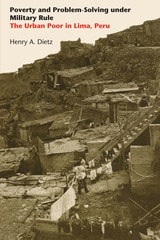
Poverty and Problem-Solving under Military Rule
The Urban Poor in Lima, PeruBy Henry A. Dietz
University of Texas Press, 1980
Power, Institutions, and Leadership in War and Peace
Lessons from Peru and Ecuador, 1995–1998By David R. Mares and David Scott Palmer
University of Texas Press, 2012
In January 1995, fighting broke out between Ecuadorian and Peruvian military forces in a remote section of the Amazon. It took more than three years and the interplay of multiple actors and factors to achieve a definitive peace agreement, thus ending what had been the region's oldest unresolved border dispute. This conflict and its resolution provide insights about other unresolved and/or disputed land and sea boundaries which involve almost every country in the Western Hemisphere.
Drawing on extensive field research at the time of the dispute and during its aftermath, including interviews with high-ranking diplomats and military officials, Power, Institutions, and Leadership in War and Peace is the first book-length study to relate this complex border dispute and its resolution to broader theories of conflict. The findings emphasize an emerging leadership approach in which individuals are not mere captives of power and institutions. In addition, the authors illuminate an overlap in national and international arenas in shaping effective articulation, perception, and selection of policy.
In the “new” democratic Latin America that emerged in the late 1970s through the early 1990s, historical memory remains influential in shaping the context of disputes, in spite of presumed U.S. post–Cold War influence. This study offers important, broader perspectives on a hemisphere still rife with boundary disputes as a rising number of people and products (including arms) pass through these borderlands.
Prehispanic Settlement Patterns in the Upper Mantaro and Tarma Drainages, Junín, Peru
The Tarama-Chinchaycocha Region, Vol. 1, Parts 1 and 2Jeffrey R. Parsons, Charles M. Hastings, Ramiro Matos M.
University of Michigan Press, 2000
Prehispanic Settlement Patterns in the Upper Mantaro and Tarma Drainages, Junín, Peru
Volume 2, The Wanka RegionEdited by Jeffrey R. Parsons, Charles M. Hastings and Ramiro Matos M.
University of Michigan Press, 2000
Prehistory of the Ayacucho Basin, Peru
Volume II: Excavations and ChronologyRichard S. MacNeish, Angel Garcia Cook, Luis G. Lumbreras, Robert K. Vierra, and Antoinette Nelken-Terner
University of Michigan Press, 1982
Prehistory of the Ayacucho Basin, Peru
Volume III: Nonceramic ArtifactsRichard S. MacNeish, Angel Garcia Cook, Luis G. Lumbreras, Robert K. Vierra, and Antoinette Nelken-Terner
University of Michigan Press, 1980
Prehistory of the Ayacucho Basin, Peru
Volume IV: The Preceramic Way of LifeRichard S. MacNeish, Angel Garcia Cook, Luis G. Lumbreras, Robert K. Vierra, and Antoinette Nelken-Terner
University of Michigan Press, 1983
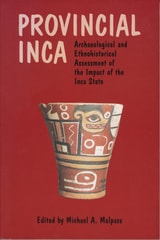
Provincial Inca
Archaeological and Ethnohistorical Assessment of the Impact of the Inca StateMichael A. Malpass
University of Iowa Press, 1993
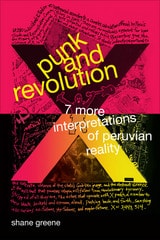
Punk and Revolution
Seven More Interpretations of Peruvian RealityShane Greene
Duke University Press, 2016