230 books match the query 'Physics' and 13 start with p

cover of Parabolic Equation Methods for Electromagnetic Wave Propagation

Parabolic Equation Methods for Electromagnetic Wave Propagation

Mireille Levy

The Institution of Engineering and Technology, 2000
This book is the first to present the application of parabolic equation methods in electromagnetic wave propagation. These powerful numerical techniques have become the dominant tool for assessing clear-air and terrain effects on radiowave propagation and are growing increasingly popular for solving scattering problems.
[more]
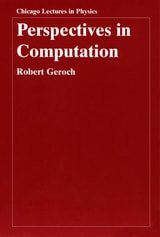
cover of Perspectives in Computation

Perspectives in Computation

Robert Geroch

University of Chicago Press, 2009
Computation is the process of applying a procedure or algorithm to the solution of a mathematical problem. Mathematicians and physicists have been occupied for many decades pondering which problems can be solved by which procedures, and, for those that can be solved, how this can most efficiently be done. In recent years, quantum mechanics has augmented our understanding of the process of computation and of its limitations.

Perspectives in Computation covers three broad topics: the computation process and its limitations, the search for computational efficiency, and the role of quantum mechanics in computation. The emphasis is theoretical; Robert Geroch asks what can be done, and what, in principle, are the limitations on what can be done? Geroch guides readers through these topics by combining general discussions of broader issues with precise mathematical formulations—as well as through examples of how computation works.

Requiring little technical knowledge of mathematics or physics, Perspectives in Computation will serve both advanced undergraduates and graduate students in mathematics and physics, as well as other scientists working in adjacent fields.
[more]
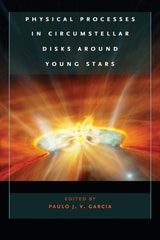
cover of Physical Processes in Circumstellar Disks around Young Stars

Physical Processes in Circumstellar Disks around Young Stars

Edited by Paulo J. V. Garcia

University of Chicago Press, 2011

Circumstellar disks are vast expanses of dust that form around new stars in the earliest stages of their birth. Predicted by astronomers as early as the eighteenth century, they weren’t observed until the late twentieth century, when interstellar imaging technology enabled us to see nascent stars hundreds of light years away. Since then, circumstellar disks have become an area of intense study among astrophysicists, largely because they are thought to be the forerunners of planetary systems like our own—the possible birthplaces of planets.

            
This volume brings together a team of leading experts to distill the most up-to-date knowledge of circumstellar disks into a clear introductory volume. Understanding circumstellar disks requires a broad range of scientific knowledge, including chemical processes, the properties of dust and gases, hydrodynamics and magnetohydrodynamics, radiation transfer, and stellar evolution—all of which are covered in this comprehensive work, which will be indispensable for graduate students, seasoned researchers, or even advanced undergrads setting out on the study of planetary evolution.
[more]
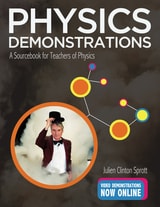
cover of Physics Demonstrations: A Sourcebook for Teachers of Physics

Physics Demonstrations

A Sourcebook for Teachers of Physics

Julien Clinton Sprott

University of Wisconsin Press, 2015

Wow! How? Few techniques are as effective at generating interest in science as dramatic demonstrations. This fully illustrated sourcebook describes eighty-five physics demonstrations suitable for performance both inside and outside classrooms. These demonstrations will fascinate and amaze while teaching the wonders and practical science of physics. Videos for the demonstrations are on our youtube.

Dr. Sprott shares demonstrations tested over many years in his popular public lectures on “The Wonders of Physics,” which appeal to general audiences and to students from grade school to graduate school. Science teachers at all levels will find a wealth of detail showing how to present these demonstrations to students with flair. Science professionals will find indispensable information for creating educational and entertaining public programs. Organized to teach the six major areas of classical physics—motion, heat, sound, electricity, magnetism, and light—Physics Demonstrations includes:

• a brief description of each demonstration
• materials lists, with sources for common materials
• preparation procedures
• discussions of the physics principles demonstrated
• potential safety hazards
• references for further information.
[more]
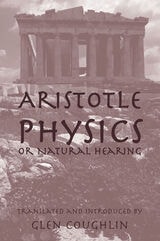
cover of Physics Or Natural Hearing

Physics Or Natural Hearing

Glen Aristotle

St. Augustine's Press, 2005

The William of Moerbeke Translation Series, under the general editorship of Stuart D. Warner, is devoted to publishing translations of important works - ancient, medieval, and modern - regardless of the original language, in every area of scholarly endeavor, including philosophy, political science, theology, literature, history, economics, and law. The aim of the series is to bring the reader as close as possible to the letter and spirit of the original work. Each volume will contain a scholarly introduction and notes. We welcome all inquiries and suggestions. Physics, Or Natural Healing is the first volume of this series.
[more]
cover of Physics and Technology of Heterojunction Devices

Physics and Technology of Heterojunction Devices

D. Vernon Morgan

The Institution of Engineering and Technology, 1991
Physics and Technology of Heterojunction Devices brings together the physics of engineering aspects of heterojunction semiconductor devices in one volume.
[more]
cover of Physics in the Nineteenth Century

Physics in the Nineteenth Century

Purrington, Robert

Rutgers University Press, 1997
Putting physics into the historical context of the Industrial Revolution and the European nation-state, Purrington traces the main figures, including Faraday, Maxwell, Kelvin, and Helmholtz, as well as their interactions, experiments, discoveries, and debates. The success of nineteenth-century physics laid the foundation for quantum theory and relativity in the twentieth. Robert D. Purrington is a professor of physics at Tulane University and coauthor of Frame of the Universe.
[more]
cover of Physics of Blackness: Beyond the Middle Passage Epistemology

Physics of Blackness

Beyond the Middle Passage Epistemology

Michelle M. Wright

University of Minnesota Press, 2015

What does it mean to be Black? If Blackness is not biological in origin but socially and discursively constructed, does the meaning of Blackness change over time and space? In Physics of Blackness: Beyond the Middle Passage Epistemology, Michelle M. Wright argues that although we often explicitly define Blackness as a “what,” it in fact always operates as a “when” and a “where.”

By putting lay discourses on spacetime from physics into conversation with works on identity from the African Diaspora, Physics of Blackness explores how Middle Passage epistemology subverts racist assumptions about Blackness, yet its linear structure inhibits the kind of inclusive epistemology of Blackness needed in the twenty-first century. Wright then engages with bodies frequently excluded from contemporary mainstream consideration: Black feminists, Black queers, recent Black African immigrants to the West, and Blacks whose histories may weave in and out of the Middle Passage epistemology but do not cohere to it.

Physics of Blackness takes the reader on a journey both known and unfamiliar—from Isaac Newton’s laws of motion and gravity to the contemporary politics of diasporic Blackness in the academy, from James Baldwin’s postwar trope of the Eiffel Tower as the site for diasporic encounters to theoretical particle physics’ theory of multiverses and superpositioning, to the almost erased lives of Black African women during World War II. Accessible in its style, global in its perspective, and rigorous in its logic, Physics of Blackness will change the way you look at Blackness.
[more]
cover of Physics, the Human Adventure: From Copernicus to Einstein and Beyond

Physics, the Human Adventure

From Copernicus to Einstein and Beyond

Brush, Stephen G

Rutgers University Press, 2001

Winner of the 2001 Joseph Hazen Education Prize of the History of Science Society​

Physics, the Human Adventure is the third edition of the classic text Introduction to Concepts and Theories in Physical Science. Authored by Gerald Holton, the text was a landmark in science education. It was the first modern textbook in physics (or in any other science) to make full and effective use of the history and philosophy of science in presenting for both the general and the science-oriented student an account of the nature of physical science. A second edition, prepared by Stephen G. Brush, brought the book up to date by increasing the coverage of topics in modern physics and by taking account of recent scholarly research in the history of science. 

In the new book Physics, The Human Adventure, each of the chapters has been reworked to further clarify the physics concepts and to incorporate recent physical advances and research. The book shows the unifying power of science by bringing in connections to chemistry, astronomy, and geoscience. In short, the aid of the new edition is to teach good physics while presenting physical science as a human adventure that has become a major force in our civilization.

New chapters discuss theories of the origin of the solar system and the expanding universe; fission, fusion, and the Big Bang–Steady State Controversy; and thematic elements and styles in scientific thought. New topics include:

• Theories of vision: does the eye send out rays or receive them?

• Distances in the solar system

• The prediction of the return of Halley’s comet and analysis of deviations from Kepler’s laws

• Angular momentum conservation and Laplace’s nebular hypothesis

• Relation between symmetries and conservation laws: Emmy Noether’s theorem

• First estimates of atomic sizes

• Consequences of the indistinguishability of elementary particles of the same kind

• Applications of quantum mechanics to many-particle systems

• Dirac’s prediction of anti-matter

• The anthropic principle and other controversial issues on the frontiers of research
[more]
cover of Physics: Structure and Meaning

Physics

Structure and Meaning

Leon N. Cooper

Brandeis University Press, 1992
Physics explores the scientific view of the world as it has developed from the earliest theories of Aristotle, Euclid, and Newton to modern theories, such as Einstein’s relativity and quantum mechanics. The classic text’s chief distinction is its time-proven ability to overcome anxieties about science by arousing interest in imaginative ideas. Those curious about physics but lacking science and mathematics backgrounds will find well-told history and countless stimulating examples. The historical approach enables students to examine philosophical questions from many viewpoints and ot see how current theory evolved. Physics has been thoroughly tested and refined by several decades of classroom teaching. A new prologue covers the years since the original 1968 edition. Chapter source notes, review problems, questions and answers, and mathematical appendices are included for those wishing to pursue topics further. The material is supplemented with clear line drawings, illustrations, graphs, charts, and tables.
[more]
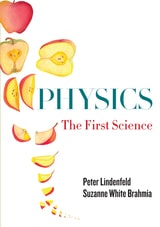
cover of Physics: The First Science

Physics

The First Science

Lindenfeld, Peter

Rutgers University Press, 2011
Today's physics textbooks have become encyclopedic, offering students dry discussions, rote formulas, and exercises with little relation to the real world. Physics: The First Science takes a different approach by offering uniquely accessible, student-friendly explanations, historical and philosophical perspectives and mathematics in easy-to-comprehend dialogue. It emphasizes the unity of physics and its place as the basis for all science. Examples and worked solutions are scattered throughout the narrative to help increase understanding. Students are tested and challenged at the end of each chapter with questions ranging from a guided-review designed to mirror the examples, to problems, reasoning skill building exercises that encourage students to analyze unfamiliar situations, and interactive simulations developed at the University of Colorado. With their experience instructing both students and teachers of physics for decades, Peter Lindenfeld and Suzanne White Brahmia have developed an algebra-based physics book with features to help readers see the physics in their lives. Students will welcome the engaging style, condensed format, and economical price.
[more]
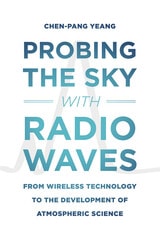
cover of Probing the Sky with Radio Waves: From Wireless Technology to the Development of Atmospheric Science

Probing the Sky with Radio Waves

From Wireless Technology to the Development of Atmospheric Science

Chen-Pang Yeang

University of Chicago Press, 2013

By the late nineteenth century, engineers and experimental scientists generally knew how radio waves behaved, and by 1901 scientists were able to manipulate them to transmit messages across long distances. What no one could understand, however, was why radio waves followed the curvature of the Earth. Theorists puzzled over this for nearly twenty years before physicists confirmed the zig-zag theory, a solution that led to the discovery of a layer in the Earth’s upper atmosphere that bounces radio waves earthward—the ionosphere.
 
In Probing the Sky with Radio Waves, Chen-Pang Yeang documents this monumental discovery and the advances in radio ionospheric propagation research that occurred in its aftermath. Yeang illustrates how the discovery of the ionosphere transformed atmospheric science from what had been primarily an observational endeavor into an experimental science. It also gave researchers a host of new theories, experiments, and instruments with which to better understand the atmosphere’s constitution, the origin of atmospheric electricity, and how the sun and geomagnetism shape the Earth’s atmosphere.  
 
This book will be warmly welcomed by scholars of astronomy, atmospheric science, geoscience, military and institutional history, and the history and philosophy of science and technology, as well as by radio amateurs and electrical engineers interested in historical perspectives on their craft.

[more]
cover of Propagation, Scattering and Diffraction of Electromagnetic Waves

Propagation, Scattering and Diffraction of Electromagnetic Waves

A.S. Ilyinski

The Institution of Engineering and Technology, 1993

This book describes new, highly effective, rigorous analysis methods for electromagnetic wave problems. Examples of their application to the mathematical modelling of micros trip lines, corrugated flexible waveguides, horn antennas, complex-shaped cavity resonators and periodic structures are considered.
[more]