Results by title
77 books match the query 'Pioneers' and 9 start with p

Parson Henry Renfro
Free Thinking on the Texas FrontierBy William C. Griggs
University of Texas Press, 1994
The years following the Texas Revolution held even more turbulent events as diverse droves of pioneers crossed the Sabine and Red Rivers to start new lives in Texas. Early Texas society contended with religious issues, family life in a rugged environment, and the Civil War. This cultural history was clearly reflected in the life of frontier preacher Henry C. Renfro.
Migrating to Texas in 1851, Renfro enrolled in the fledgling Baylor University and became a Baptist preacher. Eventually disillusioned with Baptist orthodoxy, Renfro was disenfranchised on charges of infidelity as he embraced the ideals of the Free Thought Movement, inspired by the writings of men such as Thomas Paine, Spinoza, and Robert Ingersoll.
Renfro's Civil War experience was no less unusual. Serving as both soldier and chaplain, Renfro left a valuable legacy of insight into the conflict, captured in a wealth of correspondence that is in itself significant.
Drawing on a vast body of letters, speeches, sermons, and oral histories that had never before been available, this chronological narrative of "The Parson's" life describes significant changes in Texas from 1850 to 1900, especially the volatile formation and growth of Baptist churches in North Central Texas. William Griggs' study yields numerous new details about the Free Thought Movement and depicts public reaction to sectarian leaders in nineteenth-century Texas.
The author also describes the developing Central Texas region known as the Cross Timbers, including the personal dynamics between a frontier family and its patriarch and encompassing such issues as property conflicts, divorce, and family reconciliation. This work unlocks an enlightening, engaging scene from Texas history.
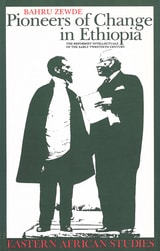
Pioneers Of Change In Ethiopia
The Reformist Intellectuals of the Early Twentieth CenturyBahru Zewde
Ohio University Press, 2002
In this exciting new study, Bahru Zewde, one of the foremost historians of modern Ethiopia, has constructed a collective biography of a remarkable group of men and women in a formative period of their country’s history. Ethiopia’s political independence at the end of the nineteenth century put this new African state in a position to determine its own levels of engagement with the West. Ethiopians went to study in universities around the world. They returned with the skills of their education acquired in Europe and America, and at home began to lay the foundations of a new literature and political philosophy. Pioneers of Change in Ethiopia describes the role of these men and women of ideas in the social and political transformation of the young nation and later in the administration of Haile Selassie.
Pioneers and Caretakers
A Study of Nine American Women NovelistsLouis Auchincloss
University of Minnesota Press, 1965

Pioneers in Popular Culture Studies
Ray B. Browne
University of Wisconsin Press, 1999

Pioneers of Cardiac Surgery
William S. Stoney
Vanderbilt University Press, 2008
The profiles are edited transcripts of interviews videotaped between 1996 and 2004. They tell of the development of new techniques such as the "blue baby operation," the first heart-lung machine, the first artificial heart valve, and the first coronary bypass operation. They also tell the unusual life stories of the surgeons and allude to professional and institutional rivalries. A particularly valuable part of the book is the author's brief history of cardiac surgery, designed to orient the reader for reading the profiles that follow.

Pioneers of Ecological Restoration
The People and Legacy of the University of Wisconsin ArboretumFranklin E. Court
University of Wisconsin Press, 2012
Internationally renowned for its pioneering role in the ecological restoration of tallgrass prairies, savannas, forests, and wetlands, the University of Wisconsin Arboretum contains the world’s oldest and most diverse restored ecological communities. A site for land restoration research, public environmental education, and enjoyment by nature lovers, the arboretum remains a vibrant treasure in the heart of Madison’s urban environment.
Pioneers of Ecological Restoration chronicles the history of the arboretum and the people who created, shaped, and sustained it up to the present. Although the arboretum was established by the University of Wisconsin in 1932, author Franklin E. Court begins his history in 1910 with John Nolen, the famous landscape architect who was invited to create plans for the city of Madison, the university campus, and Wisconsin state parks. Drawing extensive details from archives and interviews, Court follows decades of collaborative work related to the arboretum’s lands, including the early efforts of Madison philanthropists and businessmen Michael Olbrich, Paul E. Stark, and Joseph W. “Bud” Jackson.
With labor from the Civilian Conservation Corps during the 1930s Depression, University of Wisconsin scientists began establishing both a traditional horticultural collection of trees and plants and a completely new, visionary approach to recreate native ecosystems. Hundreds of dedicated scientists and staff have carried forward the arboretum’s mission in the decades since, among them G. William Longenecker, Aldo Leopold, John T. Curtis, Rosemary Fleming, Virginia Kline, and William R. Jordan III.
This archival record of the arboretum’s history provides rare insights into how the mission of healing and restoring the land gradually shaped the arboretum’s future and its global reputation; how philosophical conflicts, campus politics, changing priorities, and the encroaching city have affected the arboretum over the decades; and how early aspirations (some still unrealized) have continued to motivate the work of this extraordinary institution.
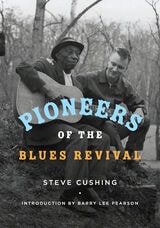
Pioneers of the Blues Revival
Steve Cushing
University of Illinois Press, 2014
Opinionated and territorial, the American, British, and French interviewees provide fascinating first-hand accounts of the era and movement. Experts including Paul Oliver, Gayle Dean Wardlow, Sam Charters, Ray Flerledge, Paul Oliver, Richard K. Spottswood, and Pete Whelan chronicle in their own words their obsessive early efforts at cataloging blues recordings and retrace lifetimes spent loving, finding, collecting, reissuing, and producing records. They and nearly a dozen others recount relationships with blues musicians, including the discoveries of prewar bluesmen Mississippi John Hurt, Son House, Skip James, and Bukka White, and the reintroduction of these musicians and many others to new generations of listeners. The accounts describe fieldwork in the South, renew lively debates, and tell of rehearsals in Muddy Waters's basement and randomly finding Lightning Hopkins's guitar in a pawn shop.
Blues scholar Barry Lee Pearson provides a critical and historical framework for the interviews in an introduction.
Pioneers of the Blues Revival
Steve Cushing
University of Illinois Press, 2018

Pioneers, Peddlers, and Tsadikim
The Story of Jews in ColoradoIda Libert Uchill
University Press of Colorado, 2000