187 books match the query 'Place' and 17 start with p
cover of Particulars of Place

Particulars of Place

Richard O. Moore

Omnidawn, 2015
The last living member of the original circle of Anarcho-pacifist poets at the birth of the San Francisco Renaissance, Richard O. Moore presents his second book, Particulars of Place. The title poem is a meditation on life in the twilight of American Empire, posing the question of how to live in an age of endless warfare. Throughout, Moore’s commitment to social justice mingles with his interest in Wittgenstein’s linguistic philosophy, resulting in a poetic amalgam unique to Moore himself. Reflecting a lifetime of devotion to the art of poetry, Particulars of Place confirms Moore’s paradoxical position as a newly emerging old master.
[more]
cover of Place and Politics in Modern Italy

Place and Politics in Modern Italy

John A. Agnew

University of Chicago Press, 2002

How do the places where people live help structure and restructure their sociopolitical identities and interests? In this book, renowned political geographer John A. Agnew presents a theoretical model that addresses the relation of place to politics and applies it to a series of historicogeographical case studies set in modern Italy.

For Agnew, place is not just a static backdrop against which events occur, but a dynamic component of social, economic, and political processes. He shows, for instance, how the lack of a common "landscape ideal" or physical image of Italy delayed the development of a sense of nationhood among Italians after unification. And Agnew uses the post-1992 victory of the Northern League over the Christian Democrats in many parts of northern Italy to explore how parties are replaced geographically during periods of intense political change.

Providing a fresh new approach to studying the role of space and place in social change, Place and Politics in Modern Italy will interest geographers, political scientists, and social theorists.
[more]
cover of Place and Replace: Essays on Western Canada

Place and Replace

Essays on Western Canada

Adele Perry

University of Manitoba Press, 2013
[more]
cover of Place in American Fiction: Excursions and Explorations

Place in American Fiction

Excursions and Explorations

Edited by H.L. Weatherby & George Core

University of Missouri Press, 2004
This collection of essays devoted to the centrality of place in the short stories and novels of some of the twentieth century’s most famous American writers was conceived as a way to honor the life and career of Walter Sullivan, an author for whom place was central both in his fiction and in his critical writing. The works explored in this volume range from the Middle West realism of Fitzgerald and Powers to the wilderness vision of Faulkner and the historical and political fiction of Warren.

In “Imagination in Place” Wendell Berry describes how place in the context of local geography, local culture, and agriculture influenced his writings. Thomas Bontly’s “Wallace Stegner’s Lyrical Realism”explains the importance not only of a person’s securing his or her place but of an author’s doing so as well.

Eudora Welty is the pivotal figure in this book, and her "Place in Fiction" is considered in this collection time and again by many of the contributors. Both Lewis Simpson and Denis Donoghue choose her story “No Place for You, My Love” to demonstrate place and its effect on the outside world. Donoghue stresses Welty’s imagery emphasizing the occasional and emblematic nature of the local image. In following the logic of his reflections he decides that Welty’s focus on place constitutes a theory of pastoral.

Lewis Simpson also stresses the importance of place as the essential element in the same story and discusses the mysterious relationship between the two unnamed principals, but Simpson goes on to show the importance of time in fiction, especially the novel; and he reveals the linkage that connects time to memory, specifically to what he deems “the culture of memory” in Faulkner and Welty.

Place, as Eudora Welty declares, is “where [the writer] has his roots, place is where he stands; in his experience out of which he writes, it provides the base of reference; in his work, the point of view.” “Fiction,” she continues, “depends for its life on place.” These essays, whose authors include Joseph Blotner, Scott Donaldson, Charles East, George Garrett, Louis D. Rubin, Jr., and Elizabeth Spencer, prove the truth of that dictum.
[more]
cover of Place of Belonging: Five Founding Women of Fairbanks, Alaska

Place of Belonging

Five Founding Women of Fairbanks, Alaska

Phyllis Demuth Movius

University of Alaska Press, 2009

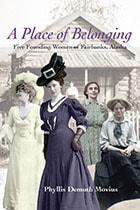
Alaska has always attracted people from varied backgrounds. In A Place of Belonging, Phyllis Movius introduces us to five women who settled in Fairbanks between 1903 and 1923 and who typify the disparate population that has long enriched Alaska. The women’s daily lives and personal stories are woven together in these biographical portraits, drawn from the women’s letters, memoirs, personal papers, club records, their own oral histories and published writings. Enriched by many never-before-published historical photos, Movius’s research gives us a unique inroad into life on the frontier.
[more]
cover of Place the Headstones Where They Belong: Thomas Neibaur, World War 1 Soldier

Place the Headstones Where They Belong

Thomas Neibaur, World War 1 Soldier

Sherman L. Fleek

Utah State University Press, 2008

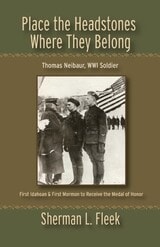
After a long journey from Sugar City, Idaho, to France’s Argonne Forest France during World War I,
young Thomas Neibaur found himself in the core of the American Expeditionary Force’s most important offensive.
After becoming separated in advance of his unit, he, despite serious wounds, single-handedly stopped a German
counterattack at a critical hill known as Côte de Châtillon. For this remarkable feat of valor, he received the Medal of
Honor and other awards, becoming the first Idaho and first Mormon recipient of the nation’s highest combat award.
But after a heroic return and brief celebrity, his life followed a tragic downward arc, culminating in his attempt to return
his medal because, as he put it, it could not feed his family.
[more]
cover of Place, Language, and Identity in Afro-Costa Rican Literature

Place, Language, and Identity in Afro-Costa Rican Literature

Dorothy E. Mosby

University of Missouri Press, 2003

In Place, Language, and Identity in Afro-Costa Rican Literature, Dorothy E. Mosby investigates contemporary black writing from Costa Rica and argues that it reveals the story of a people formed by multiple migrations and cultural transformations. Afro–Costa Rican writers from different historical periods express their relation to place, language, and identity as a “process,” a transformation partly due to sociohistorical circumstances and partly in reaction against the national myths of whiteness in the dominant Hispanic culture. Black writers in Costa Rica have used creative writing as a means to express this change in self-identity—as West Indians, as Costa Ricans, as “Latinos,” and as a contentious union of all these cultural identifications—as well as to combat myths and extrinsic definitions of their culture.
Mosby examines the transformation of identity in works by black writers in Costa Rica of Afro–West Indian descent as particular national identities find common ground in the expression of an Afro–Costa Rican identity. These writers include Alderman Johnson Roden, Dolores Joseph, Eulalia Bernard, Quince Duncan, Shirley Campbell, and Delia McDonald, all of whose works are analyzed for their use of language and their reflections on place and exile. Their works are also read as articulations of generational shifts in the assertion of cultural and national identity. Mosby convincingly argues that Afro–Costa Rican literature emerged out of the African-derived oral traditions of Anglo–West Indian literature. She then goes on to show how second-generation writers included this literary tradition in their work, while fourth-generation poets refer to it only through occasional allusions.
With the current growth of interest in Afro-Hispanic and Afro-Latin American cultural and literary studies, this book will be essential for courses in Latin American and Caribbean literature, comparative studies, Diaspora studies, history, cultural studies, and the literature of migration.
 
[more]
cover of Pluralising Pasts: Heritage, Identity and Place in Multicultural Societies

Pluralising Pasts

Heritage, Identity and Place in Multicultural Societies

Brian Graham, G. J. Ashworth, and J. E. Tunbridge

Pluto Press, 2007
The heritage industry is big business. From museums and the preservation of old buildings to broader questions of community and identity, heritage is now a political issue. This book explores what heritage means and how it is used to encourage people to identify with particular places and 'traditions'. The authors show how contemporary societies use heritage in the creation and management of collective identities and, most especially, the different ways in which it is involved with the questions of multicultural societies. The resources that are poured into heritage mean that questions of identity are widely discussed at a policy level: what does it mean to be American or British, or a minority in any society? This book shows how heritage is used politically and commercially to shape the ways people represent themselves, and are represented, in diverse and hybrid societies.
[more]
cover of Poets On Place

Poets On Place

W. T. Pfefferle

Utah State University Press, 2005

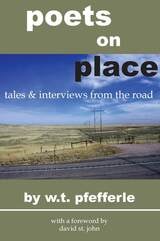
Out to see America and satisfy his travel bug, W. T. Pfefferle resigned from his position as director of the writing program at Johns Hopkins University and hit the road to interview sixty-two poets about the significance of place in their work. The lively conversations that resulted may surprise with the potential meanings of a seemingly simple concept. This gathering of voices and ideas is illustrated with photo and word portraits from the road and represented with suitable poems.

The poets are James Harms, David Citino, Martha Collins, Linda Gregerson, Richard Tillinghast, Orlando Ricardo Menes, Mark Strand, Karen Volkman, Lisa Samuels, Marvin Bell, Michael Dennis Browne, David Allan Evans, David Romtvedt, Sandra Alcosser, Robert Wrigley, Nance Van Winckel, Christopher Howell, Mark Halperin, Jana Harris, Sam Hamill, Barbara Drake, Floyd Skloot, Ralph Angel, Carol Muske-Dukes, David St. John, Sharon Bryan, Donald Revell, Claudia Keelan, Alberto Rios, Richard Shelton, Jane Miller, William Wenthe, Naomi Shihab Nye, Peter Cooley, Miller Williams, Beth Ann Fennelly, Natasha Trethewey, Denise Duhamel, Campbell McGrath, Terrance Hayes, Alan Shapiro, Nikki Giovanni, Charles Wright, Rita Dove, Henry Taylor, Dave Smith, Nicole Cooley, David Lehman, Lucie Brock-Broido, Michael S. Harper, C. D. Wright, Mark Wunderlich, James Cummins, Frederick Smock, Mark Jarman, Carl Phillips, Scott Cairns, Elizabeth Dodd, Jonathan Holden, Bin Ramke, Kenneth Brewer, and Paisley Rekdal.

[more]
cover of Popular Music Ethnographies: Practice, Place and Identity

Popular Music Ethnographies

Practice, Place and Identity

Edited by Sarah Raine, Shane Blackman, Robert McPherson, and Iain A. Taylor

Intellect Books, 2025

An ethnographic approach to global pop music studies.

This edited collection offers evocative ways into an international selection of popular music, from the Ecuadorian indie scene to Chinese rock. In exploring the experiences of musicians, fans, industry professionals, and academics, the rich complexity of popular music is brought to life through ethnography as an immersive approach to both undertaking and communicating research.

Experimenting with ethnography through the joys and tribulations of musical production, fandom, and scholarship, the contributors critically consider what it means to be a popular music ethnographer and what it means to take an ethnographic approach to studying popular music.

In addition to the critical essays, shorter vignettes are provided by musicians, venue owners, music writers, live music photographers, and fans. Altogether, the book explores the practices, places, and identities behind the music.
 
[more]
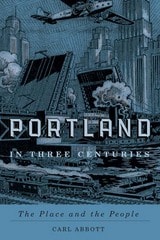
cover of Portland in Three Centuries: The Place and the People

Portland in Three Centuries

The Place and the People

Carl Abbott

Oregon State University Press, 2011
[more]
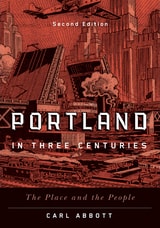
cover of Portland in Three Centuries: The Place and the People

Portland in Three Centuries

The Place and the People

Carl Abbott

Oregon State University Press, 2022

A compact and comprehensive history of Portland from first European contact to the twenty-first century, Portland in Three Centuries introduces the women and men who have shaped Oregon’s largest city. The expected politicians and business leaders appear, but Carl Abbott also highlights workers and immigrants, union members and dissenters, women at work and in the public realm, artists and activists, and other movers and shakers.  
Incorporating social history and contemporary scholarship in his narrative, Abbott examines current metropolitan character and issues, giving close attention to historical background. He explores the context of opportunities and problems that have helped to shape the rich mosaic that is Portland.  
This revised and updated second edition includes greater attention to the Indigenous peoples of the Portland region, Portland’s communities of color, and the challenges of recent years that have thrust Portland into the national spotlight.

A highly readable character study of a city, and enhanced by more than sixty historic and contemporary images, Portland in Three Centuries will appeal to readers interested in Portland, in Oregon, and in Pacific Northwest history.
[more]
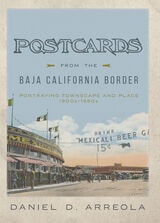
cover of Postcards from the Baja California Border: Portraying Townscape and Place, 1900s–1950s

Postcards from the Baja California Border

Portraying Townscape and Place, 1900s–1950s

Daniel D. Arreola

University of Arizona Press, 2021

Postcards have a magical pull. They allow us to see the past through charming relics that allow us to travel back in time. Daniel D. Arreola’s Postcards from the Baja California Border offers a window into the historical and geographical past of storied Mexican border communities. Once-popular tourist destinations from the 1900s through the 1950s, the border communities explored in Postcards from the Baja California Border used to be filled with revelers, cabarets, curio shops, and more. The postcards in this book show the bright and dynamic past of California’s borderlands while diving deep into the historic and geographic significance of the imagery found on the postcards.

This form of place study calls attention to how we can see a past through a serial view of places, by the nature of repetition, and the photographing of the same place over and over again. Arreola draws our focus to townscapes, or built landscapes, of four border towns—Tijuana, Mexicali, Tecate, and Algodones—during the first half of the twentieth century. With an emphasis on the tourist’s view of these places, this book creates a vivid picture of what life was like for tourists and residents of these towns in the early and mid-twentieth century. Postcards from the Baja California Border is a rich and fascinating experience, one that takes you on a time-travel journey through border town histories and geographies while celebrating the visual intrigue of postcards.
 
[more]
cover of Poverty and Place: Ghettos, Barrios, and the American City

Poverty and Place

Ghettos, Barrios, and the American City

Paul A. Jargowsky

Russell Sage Foundation, 1997
"[An] alarming report, a rigorous study packed with charts, tables, 1990 census data and [Jargowsky's] own extensive field work.... His careful analysis of enterprise zones, job-creation strategies, local economic development schemes and housing and tax policies rounds out an essential handbook for policy makers, a major contribution to public debate over ways to reverse indigence." —Publishers Weekly "A data-rich description and a conceptually innovative explanation of the spread of neighborhood poverty in the United States between 1970 and 1990. Urban scholars and policymakers alike should find Jargowsky's compelling arguments thought-provoking. "—Library Journal "A powerful book that allows us to really understand how ghettos have been changing over time and the forces behind these changes. It should be required reading of anyone who cares about urban poverty." —David Ellwood, Malcolm Wiener Professor of Public Policy, John F. Kennedy School of Government, Harvard University Poverty and Place documents the geographic spread of the nation's ghettos and shows how economic shifts have had a particularly devastating impact on certain regions, particularly in the rust-belt states of the Midwest. Author Paul Jargowsky's thoughtful analysis of the causes of ghetto formation clarifies the importance of widespread urban trends, particularly those changes in the labor and housing markets that have fostered income inequality and segregated the rich from the poor. Jargowsky also examines the sources of employment that do exist for ghetto dwellers, and describes how education and family structure further limit their prospects. Poverty and Place shows how the spread of high poverty neighborhoods has particularly trapped members of poor minorities, who account for nearly four out of five ghetto residents. Poverty and Place sets forth the facts necessary to inform the public understanding of the growth of concentrated poverty, and confronts essential questions about how the spiral of urban decay in our nation's cities can be reversed.
[more]
cover of Power, Culture and Place: Essays on New York City

Power, Culture and Place

Essays on New York City

John H. Mollenkopf

Russell Sage Foundation, 1988
With a population and budget exceeding that of many nations, a central position in the world's cultural and corporate networks, and enormous concentrations off wealth and poverty, New York City intensifies interactions among social forces that elsewhere may be hidden or safely separated. The essays in Power, Culture, and Place represent the first comprehensive program of research on this city in a quarter century. Focusing on three historical transformations—the mercantile, industrial, and postindustrial—several contributors explore economic growth and change and the social conflicts that accompanied them. Other papers suggest how popular culture, public space, and street life served as sources of order amidst conflict and disorder. Essays on politics and pluralism offer further reflections on how social tensions are harnessed in the framework of political participation. By examining the intersection of economics, culture, and politics in a shared spatial context, these multidisciplinary essays not only illuminate the City's fascinating and complex development, but also highlight the significance of a sense of "place" for social research. It has been said that cities gave birth to the social sciences, exemplifying and propagating dramatic social changes and proving ideal laboratories for the study of social patterns and their evolution. As John Mollenkopf and his colleagues argue, New York City remains the quintessential case in point.
[more]
cover of Prehistory, Personality, and Place: Emil W. Haury and the Mogollon Controversy

Prehistory, Personality, and Place

Emil W. Haury and the Mogollon Controversy

Jefferson Reid and Stephanie Whittlesey

University of Arizona Press, 2011

When Emil Haury defined the ancient Mogollon in the 1930s as a culture distinct from their Ancestral Pueblo and Hohokam neighbors, he triggered a major intellectual controversy in the history of southwestern archaeology, centering on whether the Mogollon were truly a different culture or merely a “backwoods variant” of a better-known people. In this book, archaeologists Jefferson Reid and Stephanie Whittlesey tell the story of the remarkable individuals who discovered the Mogollon culture, fought to validate it, and eventually resolved the controversy.

Reid and Whittlesey present the arguments and actions surrounding the Mogollon discovery, definition, and debate. Drawing on extensive interviews conducted with Haury before his death in 1992, they explore facets of the debate that scholars pursued at various times and places and how ultimately the New Archaeology shifted attention from the research questions of cultural affiliation and antiquity that had been at the heart of the controversy. In gathering the facts and anecdotes surrounding the debate, Reid and Whittlesey offer a compelling picture of an academician who was committed to understanding the unwritten past, who believed wholeheartedly in the techniques of scientific archaeology, and who used his influence to assist scholarship rather than to advance his own career.

Prehistory, Personality, and Place depicts a real archaeologist practicing real archaeology, one that fashioned from potsherds and pit houses a true understanding of prehistoric peoples. But more than the chronicle of a controversy, it is a book about places and personalities: the role of place in shaping archaeologists’ intellect and personalities, as well as the unusual intersections of people and places that produced resolutions of some intractable problems in Southwest history.
[more]
cover of Pride of Place: A Contemporary Anthology of Texas Nature Writing

Pride of Place

A Contemporary Anthology of Texas Nature Writing

David Taylor

University of North Texas Press, 2006

[more]