Results by title
336 books match the query 'Political Economy' and 19 start with p
Persons of the Market
Conservatism, Corporate Personhood, and Economic TheologyKevin Musgrave
Michigan State University Press, 2022
light on their seemingly odd marriage in contemporary American politics. Author Kevin Musgrave highlights the ways that theories of corporate and human personhood have long been and remain bound together by examining four case studies: the U.S. Supreme Court’s 1886 Santa Clara decision, the role of early twentieth-century advertisers in endowing corporations with souls, Justice Lewis Powell Jr.’s eponymous memo of 1971, and the arc of the conservative movement from Ronald Reagan to Donald Trump. Tracing this rhetorical history of the extension and attribution of personhood to the corporate form illustrates how the corporation has for many increasingly become a normative model or ideal to which human persons should aspire. In closing, the book offers preliminary ideas about how we might fashion a more democratic and humane understanding of what it means to be a person.
Political Arithmetic
Simon Kuznets and the Empirical Tradition in EconomicsRobert William Fogel, Enid M. Fogel, Mark Guglielmo, and Nathaniel Grotte
University of Chicago Press, 2013
With Political Arithmetic, Nobel Prize–winning economist Robert Fogel and his collaborators tell the story of economist Simon Kuznets, the founding of the National Bureau of Economic Research, and the creation of the concept of GNP, which for the first time enabled us to measure the performance of entire economies. The book weaves together the many strands of political and economic thought and historical pressures that together created the demand for more detailed economic thinking—Progressive-era hopes for activist government, the production demands of World War I, Herbert Hoover’s interest in business cycles as President Harding’s commerce secretary, and the catastrophic economic failures of the Great Depression—and shows how, through trial and error, measurement and analysis, economists such as Kuznets rose to the occasion and in the process built a discipline whose knowledge could be put to practical use in everyday decision-making.
The product of a lifetime of studying the workings of economies and skillfully employing the tools of economics, Political Arithmetic is simultaneously a history of a key period of economic thought and a testament to the power of applied ideas.
Political Economy of Environmental Protection
Analysis and EvidenceRoger D. Congleton, Editor
University of Michigan Press, 1996
Political Economy of U.S. - Taiwan Trade
Robert Baldwin, Tain-Jy Chen, and Douglas Nelson, Editors
University of Michigan Press, 1995

Political Economy of the Urban Ghetto
Daniel R. Fusfeld and Timothy Bates
Southern Illinois University Press, 1984
The income of blacks in most northern industrial states today is lower relative to the income of whites than in 1949.Fusfeld and Bates examine the forces that have led to this state of affairs and find that these economic relationships are the product of a complex pattern of historical development and change in which black-white economic relationships play a major part, along with patterns of industrial, agricultural, and technological change and urban development. They argue that today’s urban racial ghettos are the result of the same forces that created modern America and that one of the by-products of American affluence is a ghettoized racial underclass.
These two themes, they state, are essential for an understanding of the problem and for the formulation of policy. Poverty is not simply the result of poor education, skills, and work habits but one outcome of the structure and functioning of the economy. Solutions require more than policies that seek to change people: they await a recognition that basic economic relationships must be changed.

Political Economy, Rebooted
Old Concepts for a New AgeGreta Krippner, Marion Fourcade, and Sarah Quinn, editors
Duke University Press, 2027

Politicized Property
Network Ties and Renationalization in SerbiaMiloš Resimic
University of Michigan Press, 2027
Politicized Property analyzes the under-researched phenomenon of renationalization—the return of previously privatized firms to state ownership. Highlighting the evolving relationship between political parties and firms, the book demonstrates that renationalization of newly privatized firms is influenced by varying patterns of their embeddedness in political and ownership networks operating within the context of political and institutional uncertainty. These ownership reversals underpin the construction of new political and social orders and have far-reaching consequences for democratic governance. By placing renationalization at the center of postcommunist transformation, Miloš Resimić also links it to contemporary processes of democratic backsliding.
Using Serbia as a case study, Resimić tests the argument with an original administrative dataset tracking political affiliations and ownership structures of 125 strategic Serbian firms privatized through tender sale, complemented by in-depth case studies and interviews with oligarchs, politicians, and bureaucrats. Tracing over a decade of political and ownership ties among strategic Serbian firms, the book uncovers the micro-level foundations of renationalization. To demonstrate that these dynamics are observable across the postcommunist world and beyond, comparative chapters extend the analysis to Hungary under Viktor Orbán, Poland, Montenegro, and Argentina, showing that reversals of privatization are integral to the political economy of postcommunist capitalism.
Politics and Policies in Post-Communist Transition
Primary and Secondary Privatisation in Central Europe and the Former Soviet UnionKároly Attila Soós
Central European University Press, 2011
Population Trends in New Jersey
James W. Hughes
Rutgers University Press, 2022
The authors also highlight key trends that will continue to transform the state: domestic migration out of the state and immigration into it; increasing diversity; slower overall population growth; contracting fertility; the household revolution and changing living arrangements; generational disruptions; and suburbanization versus re-urbanization. All of these factors help place in context the result of the 2020 decennial U.S. Census.
While the book focuses on New Jersey, the Garden State is a template of demographic, economic, social, and other forces characterizing the United States in the twenty-first century.
Postcolonial Developments
Agriculture in the Making of Modern IndiaAkhil Gupta
Duke University Press, 1998
Based on fieldwork done in the village of Alipur in rural north India from the early 1980s through the 1990s, Postcolonial Developments examines development itself as a post–World War II sociopolitical ideological formation, critiques related policies, and explores the various uses of the concept of the “indigenous” in several discursive contexts. Gupta begins with an analysis of the connections and conflicts between the world food economy, transnational capital, and technological innovations in wheat production. He then examines narratives of village politics in Alipur to show how certain discourses influenced governmental policies on the green revolution. Drawing links between village life, national trends, and global forces, Gupta concludes with a discussion of the implications of environmentalism as exemplified by the Rio Earth Summit and an examination of how global environmental treaties may detrimentally affect the lives of subaltern peoples.
With a series of subtle observations on rural politics, nationalism, gender, modernization, and difference, this innovative study capitalizes on many different disciplines: anthropology, sociology, comparative politics, cultural geography, ecology, political science, agricultural economics, and history.
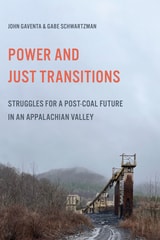
Power and Just Transitions
Struggles for a Post-Coal Future in an Appalachian ValleyJohn Gaventa and Gabe Schwartzman
University of Illinois Press, 2026
Power over Property
The Political Economy of Communist Land Reform in ChinaMatthew Noellert
University of Michigan Press, 2020
Power Over Property argues that in practice, however, the opposite occurred: the redistribution of political power led to a more equal distribution of property. China’s land reform was accomplished not only through the state’s power to define the distribution of resources, but also through village communities prioritizing political entitlements above property rights. Through the systematic analysis of never-before studied micro-level data on practices of land reform in over five hundred villages, Power Over Property demonstrates how land reform primarily involved the removal of former power holders, the mobilization of mass political participation, and the creation of a new social-political hierarchy. Only after accomplishing all of this was it possible to redistribute land. This redistribution, moreover, was determined by political relations to a new structure of power, not just economic relations to the means of production.
The experience of China’s land reform complicates our understanding of the relations between economic, social, and political equality. On the one hand, social equality in China was achieved through political, not economic means. On the other hand, the fundamental solution was a more effective hierarchy of fair entitlements, not equal rights. This book ultimately suggests that focusing on economic equality alone may obscure more important social and political dynamics in the development of the modern world.
Presence and Social Obligation
An Essay on the ShareJames Ferguson
Prickly Paradigm Press, 2021
Priceless Markets
The Political Economy of Credit in Paris, 1660-1870Philip T. Hoffman, Gilles Postel-Vinay, and Jean-Laurent Rosenthal
University of Chicago Press, 2000
The implications for historians and economists are substantial. The role of notaries operating in Paris that Priceless Markets uncovers has never before been recognized. In the wake of this pathbreaking new study, historians will also have to rethink the origins of the French Revolution. As the authors show, the crisis of 1787-88 did not simply ignite revolt; it was intimately bound up in an economic struggle that reached far back into the eighteenth century, and continued well into the 1800s.
Private Virtues, Public Vices
Philanthropy and Democratic EqualityEmma Saunders-Hastings
University of Chicago Press, 2022
Philanthropy plays a huge role in supporting the provision of many public goods in contemporary societies. As a result, decisions that affect public outcomes and people’s diverse interests are often dependent on the preferences and judgments of the rich. Political theorist Emma Saunders-Hastings argues that philanthropy is a deeply political activity. She asks readers to look at how the power wielded by philanthropy impacts democracy and deepens political inequality by enabling the wealthy to exercise outsize influence in public life and by putting in place paternalistic relationships between donors and their intended beneficiaries. If philanthropy is to be made compatible with a democratic society of equals, it must be judged not simply on the benefits it brings but on its wider political consequences. Timely and thought-provoking, Private Virtues, Public Vices will challenge readers’ thoughts on what philanthropy is and how it truly affects us.
Privatization in Eastern Europe
Is the State Withering Away?Roman Frydman
Central European University Press, 1994
Professionalism, the Third Logic
On the Practice of KnowledgeEliot Freidson
University of Chicago Press, 2021
Freidson then appraises the present status of professionalism, exploring how traditional and national variations in state policy and organization are influencing the power and practice of such professions as medicine and law. Widespread attacks by neoclassical economists and populists, he contends, are obscuring the social value of credentialism and monopolies. The institutions that sustain professionalism in our world are simply too useful to both capital and state to dismiss.
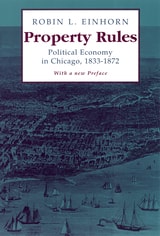
Property Rules
Political Economy in Chicago, 1833-1872Robin L. Einhorn
University of Chicago Press, 1991
A Choice "Outstanding Academic Book"
"[A] masterful study of policy-making in Chicago."—Choice
"[A] major contribution to urban and political history. . . . [A]n excellent book."—Jeffrey S. Adler, American Historical Review
"[A]n enlightening trip. . . . Einhorn's foray helps make sense out of the transition from Jacksonian to Gilded Age politics on the local level. . . . [She] has staked out new ground that others would do well to explore."—Arnold R. Hirsch, American Journal of Legal History
"A well-documented and informative classic on urban politics."—Daniel W. Kwong, Law Books in Review
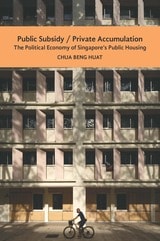
Public Subsidy, Private Accumulation
The Political Economy of Singapore's Public HousingBeng Huat Chua
National University of Singapore Press, 2024
The achievement of Singapore’s national public housing program is impressive by any standard. Within a year of its first election victory in 1959, the People's Action Party began to deliver on its promises. By the 1980s, 85% of the population had been rehoused in modern flats. Now, decades later, the provision of public housing shapes Singapore's environment. The standard accounts of this remarkable transformation leave many questions unanswered, from the historical to urgent matters of current policy. Why was housing such a priority in the 1960s? How did the provision of social welfare via public housing shape Singapore's industrialization and development over the last 50 years? Looking forward, can the HDB continue to be both a source of affordable housing for young families and a mechanism for retirement savings? What will happen when 99-year leases expire?
Public Subsidy, Private Accumulation is a culmination of Chua Beng Huat's study of Singapore's public housing system, its dynamics, and the ways it functions in Singapore's politics. The book will be of interest to citizens and to scholars of the political economy of Asian development, social welfare provision, and Singapore.