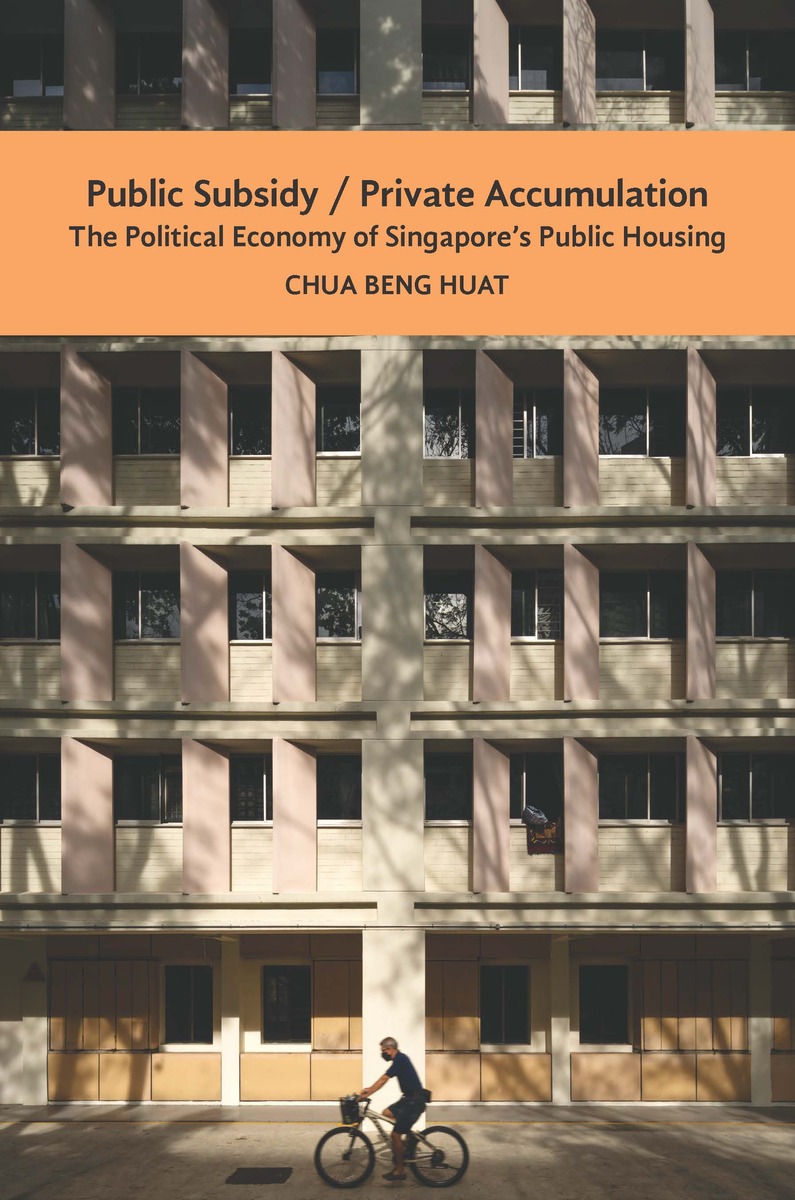
Public Subsidy, Private Accumulation: The Political Economy of Singapore's Public Housing
National University of Singapore Press, 2024
eISBN: 978-981-325-252-3 | Paper: 978-981-325-251-6
See other books on: Chua, Beng Huat | Housing & Urban Development | Law | Political Economy | Public Subsidy
See other titles from National University of Singapore Press
eISBN: 978-981-325-252-3 | Paper: 978-981-325-251-6
ABOUT THIS BOOK | AUTHOR BIOGRAPHY | TOC
ABOUT THIS BOOK
Examines the ways Singapore’s impressive public housing program is central to the political legitimacy of the city-state’s single-party regime, and the growing contradictions of its success.
The achievement of Singapore’s national public housing program is impressive by any standard. Within a year of its first election victory in 1959, the People's Action Party began to deliver on its promises. By the 1980s, 85% of the population had been rehoused in modern flats. Now, decades later, the provision of public housing shapes Singapore's environment. The standard accounts of this remarkable transformation leave many questions unanswered, from the historical to urgent matters of current policy. Why was housing such a priority in the 1960s? How did the provision of social welfare via public housing shape Singapore's industrialization and development over the last 50 years? Looking forward, can the HDB continue to be both a source of affordable housing for young families and a mechanism for retirement savings? What will happen when 99-year leases expire?
Public Subsidy, Private Accumulation is a culmination of Chua Beng Huat's study of Singapore's public housing system, its dynamics, and the ways it functions in Singapore's politics. The book will be of interest to citizens and to scholars of the political economy of Asian development, social welfare provision, and Singapore.
The achievement of Singapore’s national public housing program is impressive by any standard. Within a year of its first election victory in 1959, the People's Action Party began to deliver on its promises. By the 1980s, 85% of the population had been rehoused in modern flats. Now, decades later, the provision of public housing shapes Singapore's environment. The standard accounts of this remarkable transformation leave many questions unanswered, from the historical to urgent matters of current policy. Why was housing such a priority in the 1960s? How did the provision of social welfare via public housing shape Singapore's industrialization and development over the last 50 years? Looking forward, can the HDB continue to be both a source of affordable housing for young families and a mechanism for retirement savings? What will happen when 99-year leases expire?
Public Subsidy, Private Accumulation is a culmination of Chua Beng Huat's study of Singapore's public housing system, its dynamics, and the ways it functions in Singapore's politics. The book will be of interest to citizens and to scholars of the political economy of Asian development, social welfare provision, and Singapore.
See other books on: Chua, Beng Huat | Housing & Urban Development | Law | Political Economy | Public Subsidy
See other titles from National University of Singapore Press