Results by title
8812 books match the query 'Political Science' and 592 start with p
PARTY DISCIPLINE AND PARLIAMENTARY GOVERNMENT
SHAUN BOWLER
The Ohio State University Press, 1999
Parliamentary government is generally taken to mean party government. Party cohesion and discipline are usually seen as central to the maintenance of parliamentary democracy. This overlap, between disciplined parties on the one hand and parliamentary government on the other, is often seen as so complete and so automatic that the question of party discipline is pushed to the sidelines and rarely studied. Yet, if individual legislators remain an undisciplined mob, parliaments could easily become unruly and anarchical.
How and why party discipline arises and is maintained are thus central questions of importance in legislative, and especially parliamentary, studies. Our knowledge of these topics, however, suffers from substantial gaps, especially with regard to the practice of party cohesion outside the relatively familiar Anglo-American setting.
This book marks a step toward filling some of those gaps. The collection of essays presented here provides theoretical background and comparative studies of legislatures in a wide range of settings. Well-developed democracies such as Britain, Finland, Ireland, Italy, The Netherlands, Norway, and Switzerland are covered, as are the more recent democracies of Spain and Hungary, and the unique case of the transnational European Parliament.
POLITICAL CONSULTANTS IN US CONGRESS ELECTIONS
STEPHEN K. MEDVIC
The Ohio State University Press, 2001
Political Consultants in U.S. Congressional Elections answers two simple questions: What do professional political consultants do? and How successful are they? Medvic analyzes the way consultants shape political dialogue and uses empirical data to show the benefits—and limits—of a consultant's involvement in a campaign. He focuses on issues as diverse as vote shares, outcomes, and fundraising. Finally, the author demonstrates how the adversarial nature of campaigns fosters the kind of electioneering advocated by most political consultants and argues that this process may not be as harmful for the country as is often suggested.
PREDICTING POLITICS
Bruce Bueno de Mesquita
The Ohio State University Press, 2002

Pachakutik and the Rise and Decline of the Ecuadorian Indigenous Movement
Kenneth J. Mijeski
Ohio University Press, 2011
The mobilization of militant indigenous politics is one of the most important stories in Latin American studies today. In this critical work, Kenneth J. Mijeski and Scott H. Beck examine the rise and decline of Ecuador’s leading indigenous party, Pachakutik, as it tried to transform the state into a participative democracy.
Using in-depth interviews with political activists, as well as a powerful statistical analysis of election results, the authors show that the political election game failed to advance the causes of Ecuador’s poor or the movement’s own indigenous supporters. Pachakutik and the Rise and Decline of the Ecuadorian Indigenous Movement is an extraordinarily valuable case study of Ecuador’s indigenous movement and the challenges it still faces.
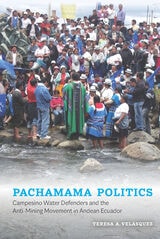
Pachamama Politics
Campesino Water Defenders and the Anti-Mining Movement in Andean EcuadorTeresa A. Velásquez
University of Arizona Press, 2022
Pachamama Politics provides a rich ethnographic account of the tensions that follow from neoextractivism in the southern Ecuadorian Andes, where campesinos mobilized to defend their community-managed watershed from a proposed gold mine. Positioned as an activist-scholar, Teresa A. Velásquez takes the reader inside the movement—alongside marches, road blockades, and river and high-altitude wetlands—to expose the rifts between social movements and the “pink tide” government. When the promise of social change turns to state criminalization of water defenders, Velásquez argues that the contradictions of neoextractivism created the political conditions for campesinos to reconsider their relationship to indigeneity.
The book takes an intersectional approach to the study of anti-mining struggles and explains how campesino communities and their allies identified with and redeployed Indigenous cosmologies to defend their water as a life-sustaining entity. Pachamama Politics shows why progressive change requires a shift away from the extractive model of national development to a plurinational defense of community water systems and Indigenous peoples and their autonomy.
Pack the Court!
A Defense of Supreme Court ExpansionStephen M. Feldman
Temple University Press, 2021
The United States Supreme Court has numbered nine justices for the past 150 years. But that number is not fixed. With the Democrats controlling the House and Senate during the Biden presidency, they could add justices to the Supreme Court. But would court packing destroy the Court as an apolitical judicial institution? This is the crucial question Stephen Feldman addresses in his provocative book, Pack the Court! He uses a historical, analytical, and political argument to justify court-packing in general and Democratic court-packing more specifically.
Republicans and Democrats alike profess to worry that court-packing will destroy the legitimacy of the Supreme Court as a judicial institution by injecting politics into a purely legal adjudicative process. But as Feldman’s insightful book shows, law and politics are forever connected in judicial interpretation and decision making. Pack the Court! insists that court packing is not the threat to the Supreme Court’s institutional legitimacy that many fear. Given this, Feldman argues that Democrats should pack the Court while they have the opportunity. Doing so might even strengthen the American people’s faith in the Court.
Pain, Death, and the Law
Austin Sarat, Editor
University of Michigan Press, 2001
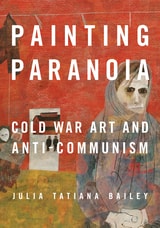
Painting Paranoia
Cold War Art and Anti-CommunismJulia Tatiana Bailey
University of Illinois Press, 2026
Based on extensive archival research conducted in the United States and Russia, this manuscript contributes to the political history of twentieth-century American art and the revisionist history of cultural diplomacy in the Cold War by charting the politicization of myths of Soviet art. It reveals how those with control over the reception of art in the United States built and sustained a strategy of othering towards Socialist Realism, presents the rhetoric of Soviet artistic otherness in the context of debates surrounding the concept of American art, and reclaims the post-war history of American Social Realism.
Palace Politics
How the Ruling Party Brought Crisis to MexicoBy Jonathan Schlefer
University of Texas Press, 2008
Bringing rare interviews and meticulous research to the cloaked world of Mexican politics in the mid-twentieth century, Palace Politics provides a captivating look at the authoritarian Mexican state—one of the longest-lived regimes of its kind in recent history—as well as the origins of political instability itself, with revelations that can be applied to a variety of contemporary political situations around the globe.
Culling a trove of remarkable firsthand accounts from former Mexican presidents, finance ministers, interior ministers, and other high officials from the 1950s through the 1980s, Jonathan Schlefer describes a world in which elite politics planted the seeds of a mammoth socioeconomic crisis. Palace Politics outlines the process by which political infighting among small rival factions of high officials drove Mexico to precarious situations at all levels of government. Schlefer also demonstrates how, earlier on, elite cooperation among these factions had helped sustain one of the most stable growth economies in Latin America, until all-or-nothing struggles began to tear the Mexican ruling party apart in the 1970s.
A vivid, seamlessly narrated history, Palace Politics is essential reading for anyone seeking to better understand not only the nation next door but also the workings of elite politics in general.

Palestine America, Volume 102
Mohammed Bamyeh, ed.
Duke University Press, 0
Bringing together a diverse group of contributors ranging from Roane Carey of the Nation to scholars in Arab, Jewish, and comparative literary studies, this special issue considers Palestinian gender and identity and their relationship to the conflict with Israel as represented in film, literature, and photography. Essays explore the failed peace process, misrepresentations of the Oslo meetings, the devastating effect of continued Israeli occupation of the Palestinian territories, and the growing controversy over the call for U.S. military divestment from Israel.
Contributors. Ammiel Alcalay, Amal Amireh, Mohammed Bamyeh, Roane Carey, Thomas W. Lockwood, Lisa Suhair Majaj, Saree Makdisi, Melani McAlister, Brinda J. Mehta, John Michael, Andrew N. Rubin, Kenneth Surin
Palestine in a Transnational Context, Volume 21
Timothy Mitchell , Gyan Prakash and Ella Shohat, eds.
Duke University Press, 0
This special issue places the Palestine question in a transnational and comparative frame that strives to better depict its historical complexity. The issue also gives special consideration to the different modes of Palestinian resistance both within and outside the state of Israel and the occupied territories.

Palestine on the Air
Karma R. Chavez
University of Illinois Press, 2019

Palestine's Horizon
Toward a Just PeaceRichard Falk
Pluto Press, 2017
Falk explores the intricacies and interconnections within the history and politics of Israel and Palestine, while delving into the complicated relationships the conflict has created within the global community. He refutes the notion that the Palestinian struggle is a lost cause and offers new tactics and possibilities for change. He also puts the ongoing conflict in context, reflecting on the legacy of Edward Said and drawing on the importance of his ideas as a humanist model for peace that is mindful of the formidable difficulties that come with achieving a solution to the long struggle. One of the most established and authoritative voices on the conflict, Falk now presents his most sustained and focused historical overview to date.
Palestinian Refugees
The Right of ReturnEdited by Naseer Aruri
Pluto Press, 2001
With renewed conflict in the Middle East, the prospect of a peaceful resolution looks more unlikely than ever. The Palestinian right of return to their homes has been upheld in international law and through United Nations' resolutions for fifty years. Equally the right of return has been denied by Israel and deferred to a "final status" issue in the Oslo Accords. It is on this right of return that the Palestinians are united. And it is this issue which is so frequently ignored by the international media.
With major contributions from a range of international experts, including Edward W. Said, Noam Chomsky, Ilan Pappe, Alain Gresh and Norman Finkelstein, this volume examines the Palestinians’ right of return. Chapters cover the historical roots of the Palestinian refugee question; the rights of the refugees under international law; the special case of Lebanon; Israeli perceptions of the refugee question; the practical feasibility of the return; the role of the United States and the European Union and the Refugee Question; the value of the refugee property; the principles of compensation; and a programme for an Independent Rights Campaign.
Palestinians in Israel
Segregation, Discrimination and DemocracyBen White
Pluto Press, 2012
Palestinians in Israel considers a key issue ignored by the official 'peace process' and most mainstream commentators: that of the growing Palestinian minority within Israel itself.
What the Israeli right-wing calls 'the demographic problem' Ben White identifies as 'the democratic problem' which goes to the heart of the conflict. Israel defines itself not as a state of its citizens, but as a Jewish state, despite the substantial and increasing Palestinian population. White demonstrates how the consistent emphasis on privileging one ethno-religious group over another cannot be seen as compatible with democratic values and that, unless addressed, will undermine any attempts to find a lasting peace.
Individual case studies are used to complement this deeply informed study into the great, unspoken contradiction of Israeli democracy. It is a pioneering contribution which will spark debate amongst all those concerned with a resolution to the Israel/Palestine conflict.
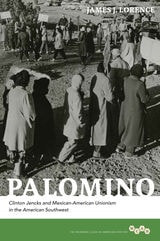
Palomino
Clinton Jencks and Mexican-American Unionism in the American SouthwestJames J. Lorence
University of Illinois Press, 2013

Panama Odyssey
By William J. Jorden
University of Texas Press, 1984
The Panama Canal Treaties of 1977 were the most significant foreign policy achievement of the Carter administration. Most Latin American nations had regarded the 1903 treaty and its later minor modifications as vestiges of "American colonialism" and obstacles to any long-term, stable relationship with the United States. Hence, at a time when conflicts were mushrooming in Central America, the significance of the new Panama treaties cannot be overestimated.
Former Ambassador to Panama William J. Jorden has provided the definitive account of the long and often contentious negotiations that produced those treaties. It is a vividly written reconstruction of the complicated process that began in 1964 and ended with ratification of the new pacts in 1978. Based on his personal involvement behind the scenes in the White House (1972–1974) and in the United States Embassy in Panama (1974–1978), Jorden has produced a unique living history. Access to documents and the personalities of both governments and, equally important, Jorden's personal recollections of participants on both sides make this historical study an incomparable document of U. S. foreign relations.
Beyond the singular story of the treaties themselves—and how diplomats negotiate in the modern world—is the rare description of how the United States deals with a major foreign policy problem. How does a superpower cope with a tiny nation that happens to occupy a strategically critical position? And how does the U. S. Senate face up to its constitutionally assigned power to "advise and consent"? Once treaties are approved, does the House of Representatives help or hinder? Panama Odyssey also deals with another crucial element in the shaping of policy—public opinion: how is it informed or led astray?
In sum, this is a history, a handbook on diplomacy, a course in government, and a revelation of foreign policy in action, all based on a fascinating and controversial episode in the U. S. experience.

Panamanian Militarism
A Historical InterpretationCarlos Guevara Mann
Ohio University Press, 1996
Focusing on the causes that generated nineteenth-century predatory militarism, including political illegitimacy and US support, Guevara Mann analyzes the so-called professionalization of the armed forces — institutionalized militarism — and the polices developed by the 1968-89 military regime.
The author cautions that although Panamanian Defense Forces were abolished after the US invasion of December 1989, and although the state’s security apparatus has been placed under civilian direction, Panama’s stability remains threatened. Lack of legitimacy — the characteristic which informs military involvement in politics — still persists, and militarism could well reappear if the Panamanian polity fails to achieve legitimacy.
Pandemic Crossings
Digital Technology, Everyday Experience, and Governance in the COVID-19 CrisisGuobin Yang
Michigan State University Press, 2024
Pandemic Power
The Covid Response and the Erosion of Democracy - A Liberal CritiqueMuriel Blaive
Central European University Press, 2025

Pandemic Solidarity
Mutual Aid during the Coronavirus CrisisMarina Sitrin
Pluto Press, 2020
“Helps us to rethink and re-imagine an egalitarian society where no one is left behind”—London School of Economics Review of Books
In times of crisis, when institutions of power are laid bare, people turn to one another. Pandemic Solidarity collects firsthand experiences from around the world of people creating their own narratives of solidarity and mutual aid in the time of the global crisis of COVID-19.
The world's media was quick to weave a narrative of selfish individualism, full of empty supermarket shelves and con-men. However, if you scratch the surface, you find a different story of community and self-sacrifice.
Looking at thirteen countries and regions, including India, Rojava, China and the US, the personal accounts in the book weave together to create a larger picture, revealing a universality of experience - a housewife in Istanbul supports her neighbor in the same way as a punk in Portland, and a grandmother in Italy does. Moving beyond the present, these stories reveal what an alternative society could look like, and reflect the skills and relationships we already have to create that society, challenging institutions of power that have already shown their fragility. Chapters include:
*Capitalism Kills, Solidarity Gives Life": A Glimpse of Solidarity Networks from Turkey
*Solidarity Network in Iraq During Covid-19: This Time the Enemy is Invisible
*Sharing Spaces and Crossing Borders: Voices from Taiwan
*Rethinking Minority and Mainstream in India
*Confronting State Authoritarianism: Civil Society and Community-Based Solidarity in Southern Africa
*On Intersectional Solidarity in Portugal
*Solidarity Networks in Greece
*Argentina: Injustices Magnified; Memories of Resistance Reactivated
*On Grassroots Organizing: Excerpts from Brazil
What happens to society when we are not held back by the neoliberal narrative? What can we do, to protect ourselves and one another, when we organize and act collectively? From the stories told here, maybe more than we expect.
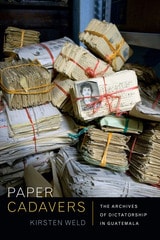
Paper Cadavers
The Archives of Dictatorship in GuatemalaKirsten Weld
Duke University Press, 2014
The unearthing of the archives renewed fierce debates about history, memory, and justice. In Paper Cadavers, Weld explores Guatemala's struggles to manage this avalanche of evidence of past war crimes, providing a firsthand look at how postwar justice activists worked to reconfigure terror archives into implements of social change. Tracing the history of the police files as they were transformed from weapons of counterinsurgency into tools for post-conflict reckoning, Weld sheds light on the country's fraught transition from war to an uneasy peace, reflecting on how societies forget and remember political violence.
Paradigm Lost
State Theory ReconsideredStanley Aronowitz
University of Minnesota Press, 2002
Analyzes the ongoing relevance of a revitalized state theory to today’s political debates.
With increasing globalization, the meaning and role of the nation-state are in flux. At the same time, state theory, which might help to explain such a trend, has fallen victim to the general decline of radical movements, particularly the crisis in Marxism. This volume seeks to enrich and complicate current political debates by bringing state theory back to the fore and assessing its relevance to the social phenomena and thought of our day. Throughout, it becomes clear that, whether confronting the challenges of postmodern and neo-institutionalist theory or the crisis of the welfare state and globalization, state theory still has great analytical and strategic value.
Contributors: Clyde W. Barrow, U of Massachusetts, Dartmouth; Richard A. Cloward; Adriano Nervo Codato, Federal U of Paraná, Brazil; Bob Jessop, Lancaster U, UK; Andreas Kalyvas, U of Michigan; Rhonda F. Levine, Colgate U; Leo Panitch, York U; Renato Monseff Perissinotto, Federal U of Paraná, Brazil; Frances Fox Piven, CUNY; Paul Thomas, U of California, Berkeley; Constantine Tsoukalas, U of Athens.
Paradigms and Conventions
Uncertainty, Decision Making, and EntrepreneurshipYoung Back Choi
University of Michigan Press, 1993
Paradigms and Sand Castles
Theory Building and Research Design in Comparative PoliticsBarbara Geddes
University of Michigan Press, 2003
Barbara Geddes is Professor of Political Science at the University of California, Los Angeles.
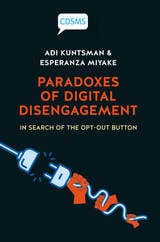
Paradoxes of Digital Disengagement
In Search of the Opt-Out ButtonAdi Kuntsman and Esperanza Miyake
University of Westminster Press, 2022
Listen to authors Adi Kuntsman and Esperanza Miyake discuss collective data justice, the rights, refusals and ethics of digital (dis)engagement in this latest podcast from Lateral, the Journal of the Cultural Studies Association.
“The digital now thoroughly saturates our everyday lives to the point where it seems we are drowning. But is it possible to swim on our terms? This book thoughtfully examines this question, critically teasing apart the structures of power that permeate digital relations and charting pathways to a more just digital world. Essential reading for those who want to move beyond personal digital detoxes to challenge and transform our digital society and economy.” - Professor Rob Kitchin, author of The Data Revolution and Data Lives
“The seductions of tech have ushered in the encroachment of technological solutions into policing, law enforcement and ever-widening systems of social regulation across the UK and Europe. This book marks a critical intervention – by conceptualising our understanding of the ways in which data and digital harms are systemically expended against the powerless. It is a must read for those of us who are concerned to resist the (digital) exclusion of the marginalised, and the (digital) banishment of the vulnerable.” - Dr Patrick Williams, author of Data-Driven Policing: The Hardwiring of Discriminatory Policing Practices Across Europe
“While imaginaries of techno futures constructed by the Digital Lords of contemporary societies become self-fulfilling prophecies, we struggle to imagine a present and future free from digital coercion and exclusion. In their powerful interdisciplinary analysis, Adi Kuntsman and Esperanza Miyake delve into the personal, social, political and environmental costs of compulsory digitality. Rejecting a self-defeating naturalisation of digitality and digital inevitability Paradoxes of Digital Disengagement compellingly shows how collective digital justice is imperative in this future/present where the machine rules and people can become marginalized and excluded. A much-needed scholarly intervention that can inspire our collective thinking, research and praxis.” - Dr Benedetta Brevini, author of Is AI Good for the Planet?
“Kuntsman and Miyake have written an engaging book. It offers a readable critique of enforced digitality and broadens the scope of disconnection studies. The detailed analyses of complicated documents are elegantly structured and thought-provoking.” - https://blogs.lse.ac.uk/lsereviewofbooks/2022/11/16/book-review-paradoxes-of-digital-disengagement-in-search-of-the-opt-out-button-by-adi-kuntsman-and-esperanza-miyake/
Life is increasingly governed and mediated through digital and smart technologies, platforms, big data and algorithms. However, the reasons, practices and impact of how the digital is used by different institutions are often deeply linked to social oppression and injustice. Similarly, the ability to resist these digital impositions is based on inequality and privilege. Challenging the ways in which we are increasingly dependent on the digital, this book raises a set of provocative and urgent questions: in a world of compulsory digitality is there an opt out button? Where, when, how, why and to whom is it available? Answering these questions has become even more relevant since the COVID-19 pandemic. In response, the book puts forward the concept of ‘digital disengagement’ which is explored across six key areas of digitisation: health; citizenship; education; consumer culture; labour; and the environment.
Part I examines the difficulty of opting out of compulsory digitality in a world where most things are digital by default. From health apps, algorithmic decision-making to learning analytics, opting out comes with a set of troubling consequences. Part II turns to several examples of disconnection and disengagement. The chapters reveal how phenomena like digital detoxes, time-management apps and online ‘green’ spaces are co-opted by the very digital systems one is trying to resist.
The book critiques issues relating to digital surveillance, algorithmic discrimination and biased tech, corporatisation and monetisation of data, exploitative digital labour, digitalised self-discipline and destruction of the environment. As an interdisciplinary piece of work, the book will be useful to any scholar and activist in Digital, Internet and Social Media Studies; Digital Sociology and Social Policy; Digital Health; Media, Popular and Communication Studies; Consumer culture; and Environment Studies.
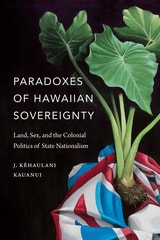
Paradoxes of Hawaiian Sovereignty
Land, Sex, and the Colonial Politics of State NationalismJ. Kehaulani Kauanui
Duke University Press, 2018
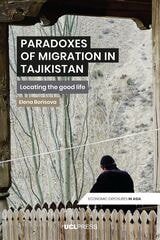
Paradoxes of Migration in Tajikistan
Locating the Good LifeElena Borisova
University College London, 2024
Tajikistan is one of the most remittance-dependent countries in the world. Moving beyond economistic push-pull narratives about post-Soviet migration, Paradoxes of Migration in Tajikistan foregrounds the experiences of those who “stay put” in the sending society and struggle to reproduce their moral communities. In this first book-length ethnography of migration in Tajikistan, Elena Borisova examines the role of mobility through historical and cultural ideas about the good life. She demonstrates how mobility becomes entwined with people’s efforts to become good, moral, and modern subjects. Addressing the complex relationship between the economic, imaginative, and moral aspects of (im)mobility, Borisova shows that mass migration from Tajikistan is as much a project of navigating ethical personhood as it is a quest for economic resources.
This book is a beautifully crafted ethnographic account that reveals how transnational regimes and structures of mobility, citizenship, and histories map out in the intimate spheres of the body, the person, and the family. It is a major contribution to contemporary migration research, which is mostly centered on Europe and North America, and to the field of Central Asian studies. Highly readable, it will be of interest to researchers of migration, (im)mobility and citizenship, and to scholars of all disciplines working on Central Asia.

Paradoxes of Nostalgia
Cold War Triumphalism and Global Disorder since 1989Penny M. Von Eschen
Duke University Press, 2022
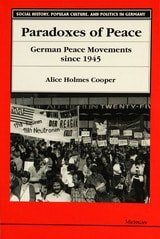
Paradoxes of Peace
German Peace Movements Since 1945Alice Holmes Cooper
University of Michigan Press, 1996
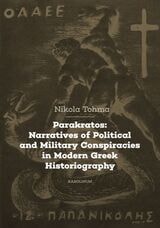
Parakratos
Narratives of Political and Military Conspiracies in Modern Greek HistoriographyNikola Tohma
Karolinum Press, 2025
This book analyzes the conspiratorial concept of parakratos (translated as “deep state” or “parastate”) as a Cold War parallel power mechanism that exerted a profound influence on the political landscape in post-civil war Greece (1949–1967). A well-known phenomenon to the Greek domestic public, the far right parakratos became the usual suspect for political murders, election rigging, and terrorism during this period. Despite its notoriety for numerous outrageous incidents, including the assassination of the left-wing politician Grigoris Lambrakis in Thessaloniki in 1963, the structure of the parakratos has eluded a comprehensive understanding, primarily due to the paucity of reliable sources and the absence of a scholarly consensus regarding its nature. Parakratos endeavors to problematize the current conception of parakratos by underscoring the capacity of the concept to not only represent but also define and transform the Greek domestic Cold War politics and our perception of it. Rather than seeking to explain the presumed conspiracies typically ascribed to the groups and members, the book aims to demonstrate how these events influenced the domestic and international politics of the era and thereby contributed to the establishment of a legacy of conspiracy theories as a means of political struggle. Moreover, it connects the Greek parakratos to the broader debate on parapolitics as well as the concepts of the dual state, the security state, and the deep state in various national contexts.
Parallax Visions
Making Sense of American-East Asian Relations at the End of the CenturyBruce Cumings
Duke University Press, 1999
Using information based on thirty years of research, Cumings offers a new perspective on a wide range of issues that originated with the cold war—with particular focus on the possibly inappropriate collaboration between universities, foundations, and intelligence agencies. Seeking to explode the presuppositions that Americans usually bring to the understanding of our relations with East Asia, the study ranges over much of the history of the twentieth century in East Asian–American relations—Pearl Harbor, Hiroshima and Nagasaki, the Korean War, and more recent difficulties in U.S. relations with China and Japan. Cumings also rebuts U.S. media coverage of North Korea’s nuclear diplomacy in the 1990s and examines how experiences of colonialism and postcolonialism have had varying effects on economic development in each of these countries. Positing that the central defining experience of twentieth-century East Asia has been its entanglement first with British and Japanese imperialism, and then with the United States, Cumings ends with a discussion of how the situation could change over the next century as the economic and political global clout of the United States declines.
Illuminating the sometimes self-deluded ideology of cold war America, Parallax Visions will engage historians, political scientists, and students and scholars of comparative politics and social theory, as well as readers interested in questions of modernity and the role of the United States in shaping the destinies of modernizing societies in Asia.
Paramilitarism and Neoliberalism
Violent Systems of Capital Accumulation in Colombia and BeyondJasmin Hristov
Pluto Press, 2016
The people of Colombia have, for the last fifty years, been subject to a specific form of violence: paramilitarism. An embodiment of the underbelly of global capitalist accumulation, this form of pervasive violence expresses the exacerbation of social inequalities and class formation under capitalism. In Paramilitarism and Neoliberalism, Jasmin Hristov theorises this extreme expression in light of forced displacement, labour repression, subjugation of social movements, decentralisation of violence, drug trafficking and the emergence of a variety of para-institutional armed actors across Latin America.
The activities of paramilitary groups in the postdemobilisation era, their involvement in human rights violations, and their multilevel support networks inside major state institutions are documented, with a particular emphasis on violent dispossession and illegal land appropriation that has benefited agroindustries and mining enterprises. Hristov engages in a Marxist political economy approach, combined with a global sociological perspective, allowing for an expansive and deep-reaching understanding of paramilitarism as a phenomenon with many faces, ultimately illustrating how it is increasingly becoming the coercive counterpart of global capital.

Paranatures in Culinary Culture
An Alimentary EcologyThomas R. Parker
University of Minnesota Press, 2025
Uncovering the intricate cultural threads that inform our dietary practices
Paranatures in Culinary Culture embarks on a gastronomic odyssey, redefining foods we thought we knew and revealing the extraordinary stories of ordinary ingredients and the cultural forces shaping our diets. The book begins with a simple premise: to eat is to assimilate the outer world into the inner body, both physically and mentally. But what happens when this assimilation process goes awry? Thomas R. Parker reveals how culinary staples are not only elements of identity formation but also instruments of cultural disruption when their true nature emerges and challenges our preconceptions.
Parker explores how certain foods—bread, oysters, pigs, cheese, and wine—can both create and destabilize narratives, unsettle assimilation, and decenter Western culinary traditions. Taking inspiration from architectural historian David Gissen’s concept of “subnature” and Michel Serres’s idea of the “parasite,” Parker develops the concept of paranatures: flavors, foods, and practices considered unpalatable by different societies at different times. He reveals how certain ordinary foods live parallel paranatural lives, addressing larger issues of colonial and postcolonial food theory and challenging long-held notions that cuisine was meant to uphold.
Serving up a rich blend of history, culture, and gastronomy, Parker leads readers to perceive food as an adventure, inviting them to taste the untamed side of nature. He offers a thought-provoking invitation to reconceptualize the roles and narratives we assign to the natural world and its produce, allowing us to see food, nature, and ourselves in new ways.
Parcels
Memories of Salvadoran MigrationMike Anastario
Rutgers University Press, 2019
Parity and War
Evaluations and Extensions of The War LedgerJacek Kugler and Douglas Lemke, Editors
University of Michigan Press, 1996

Parliament Buildings
The Architecture of Politics in EuropeEdited by Sophia Psarra, Uta Staiger, and Claudia Sternberg
University College London, 2023
As political polarization undermines confidence in the shared values and established constitutional orders of many nations, it is imperative that we explore how parliaments are to stay relevant and accessible to the citizens whom they serve. The rise of modern democracies is thought to have found physical expression in the staged unity of the parliamentary seating plan. However, the built forms alone cannot give sufficient testimony to the exercise of power in political life.
Parliament Buildings brings together architecture, history, art history, history of political thought, sociology, behavioral psychology, anthropology, and political science to raise a host of challenging questions. How do parliament buildings give physical form to norms and practices, behaviors, rituals, identities, and imaginaries? How are their spatial forms influenced by the political cultures they accommodate? What kinds of histories, politics, and morphologies do the diverse European parliaments share, and how do their political trajectories intersect?
This volume offers an eclectic exploration of the complex nexus between architecture and politics in Europe. Including contributions from architects who have designed or remodeled four parliament buildings in Europe, it provides the first comparative, multi-disciplinary study of parliament buildings across Europe and across history.
Parliaments in the Modern World
Changing InstitutionsGary Copeland and Samuel C. Patterson, Editors
University of Michigan Press, 1994
The editors frame the book in the theoretical questions of how institutionalized bodies accomplish change. They explain the nature of the institutionalizing process and show that as the ability for an organization to fulfill its mission changes (or as the mission itself changes), corresponding adaptation becomes necessary if the institution is to remain viable. The individual case studies amply illustrate how modifications in the governing ideology, the party, the electoral systems, or the character of membership have precipitated change at various times and in various parliaments. Parliaments in the Modern World ultimately demonstrates that it is precisely this ability to change that has kept these organizations vital, responsive, and long-lived.
Participation and Political Equality
A Seven-Nation ComparisonSidney Verba
University of Chicago Press, 1987
Participation in America
Political Democracy and Social EqualitySidney Verba and Norman H. Nie
University of Chicago Press, 1987
Parties and Elections in Greece
The Search for LegitimacyRichard Clogg
Duke University Press, 1987
Parties and Leaders in the Postreform House
David W. Rohde
University of Chicago Press, 1991
Offering a concise and compelling explanation of the causes of this resurgence, David W. Rohde argues that a realignment of electoral forces led to a reduction of sectional divisions within the parties—particularly between the northern and southern Democrats—and to increased divergence between the parties on many important issues. He challenges previous findings by asserting that congressional reform contributed to, rather than restrained, the increase of partisanship. Among the Democrats, reforms siphoned power away from conservative and autocratic committee chairs and put control of those committees in the hands of Democratic committee caucuses, strengthening party leaders and making both party and committee leaders responsible to rank-and-file Democrats. Electoral changes increased the homogeneity of House Democrats while institutional reforms reduced the influence of dissident members on a consensus in the majority party. Rohde's accessible analysis provides a detailed discussion of the goals of the congressional reformers, the increased consensus among Democrats and its reinforcement by their caucus, the Democratic leadership's use of expanded powers to shape the legislative agenda, and the responses of House Republicans. He also addresses the changes in the relationship between the House majority and the president during the Carter and Reagan administrations and analyzes the legislative consequences of the partisan resurgence.
A readable, systematic synthesis of the many complex factors that fueled the recent resurgence of partisanship, Parties and Leaders in the Postreform House is ideal for course use.
Parties and Prejudice
The Normalization of Antiminority Rhetoric in US PoliticsManeesh Arora
University of Chicago Press, 2025
An essential guide to how the interactions between social norms, party politics, and expressions of prejudice are driving contemporary politics.
Antiminority rhetoric in American politics has grown more overt. What were once fringe comments on Stormfront have now become typical campaign appeals from many mainstream politicians. If there was ever a doubt, this is a poignant reminder that the boundaries of what is “acceptable” and “unacceptable” to say and do are fluid and socially enforced.
In Parties and Prejudice, Maneesh Arora offers a broad framework for understanding this new political terrain. Arora argues that the interaction between social norms and party politics determines what the political consequence of prejudicial speech will be. He illuminates this nuanced relationship by showing that norms vary based on the targeted minority group and the intended audience.
Drawing on experiments, survey data, news coverage, and real-world examples, Parties and Prejudice examines the distinctive ways that egalitarian/inegalitarian norms have developed—within each party—for Black, Muslim, and LGBTQ+ Americans. It is essential reading for understanding Donald Trump’s rise to power, the modern conservative agenda (including opposition to critical race theory and transgender rights), and threats to the development of a multiracial democracy.
Parties in Transition
Warren Miller
Russell Sage Foundation, 1986
Parties on the Ground
A Study of Nominations for the House of RepresentativesKathleen Bawn, Knox Brown, Angela X. Ocampo, Shawn Patterson Jr., John L. Ray, and John Zaller
University of Chicago Press, 2026
A close-up examination of the roots of congressional politics in nominations for the House of Representatives.
With most House seats all but guaranteed for one party in general elections, primary elections for party nominees often decide who goes to Congress. Yet primaries are notoriously difficult to study, due in part to both the variety of rules that govern them and the differences in the influence of local leaders. Based on wide-ranging evidence from field interviews to fundraising data to exit polls, Parties on the Ground overcomes these challenges to take readers under the hood for an in-depth look at the nomination process.
Although progressive reformers sought the adoption of primaries to empower voters’ control over nominations, Parties on the Ground finds that most voters pay too little attention to make use of the opportunity. Instead, the most important actors are intense policy demanders—such as interest groups and activist organizations—who supply campaign resources to some candidates and deny them to others. These groups care most about securing an agent for their own interests and values; to this end, they put serious effort into vetting candidates and often coordinate among themselves or with local parties in support of their choices. At the same time, competition between establishment and insurgent groups can be high, especially in the Republican Party. Developing a nuanced account of House nominations in today’s parties, Parties on the Ground offers a host of new insights into this understudied but significant piece of the puzzle of American politics.
Parties under Pressure
The Politics of Factions and Party AdaptationMatthias Dilling
University of Chicago Press, 2024
An illuminating investigation into why some parties evolve with their times while others fall behind.
Around the world, established political parties face mounting pressures: insurgents on the Left and Right, altered media environments, new policy challenges, and the erosion of traditional strongholds, to name just a few. Yet parties have differed enormously in their ability to move with the times and update their offers to voters. This variation matters. While adaptation does not guarantee a party’s electoral success, the failure to modernize can spell its decline, even collapse, and create openings for radical and populist parties that may threaten the future of liberal democracy.
Parties under Pressure examines why some parties adapt meaningfully to social, economic, and political transformations while others flounder, focusing especially on the fate of Western Europe’s Christian democratic parties. Matthias Dilling reveals the under-appreciated importance of party factions. While very high levels of factionalism are counter-productive and create paralysis, more moderate levels of factionalism help parties to adapt by giving visibility to fresh groups and ideas. Dilling draws on extensive archival research in Germany, Italy, and Austria, as well as evidence from France, Japan, and beyond. Taking a comparative-historical approach, Parties under Pressure sheds new light on parties’ varying records of adaptive reforms over more than seventy-five years.
Partisan Gerrymandering and the Construction of American Democracy
Erik J. Engstrom
University of Michigan Press, 2016
Erik J. Engstrom offers a historical perspective on the effects of gerrymandering on elections and party control of the U.S. national legislature. Aside from the requirements that districts be continuous and, after 1842, that each select only one representative, there were few restrictions on congressional districting. Unrestrained, state legislators drew and redrew districts to suit their own partisan agendas. With the rise of the “one-person, one-vote” doctrine and the implementation of the Voting Rights Act of 1965, however, redistricting became subject to court oversight.
Engstrom evaluates the abundant cross-sectional and temporal variation in redistricting plans and their electoral results from all the states, from 1789 through the 1960s, to identify the causes and consequences of partisan redistricting. His analysis reveals that districting practices across states and over time systematically affected the competitiveness of congressional elections, shaped the partisan composition of congressional delegations, and, on occasion, determined party control of the House of Representatives.
Partisan Hostility and American Democracy
Explaining Political Divisions and When They MatterJames N. Druckman, Samara Klar, Yanna Krupnikov, Matthew Levendusky, and John Barry Ryan
University of Chicago Press, 2024
An unflinching examination of the effects and boundaries of partisan animosity.
For generations, experts argued that American politics needed cohesive parties to function effectively. Now many fear that strong partisan views, particularly hostility to the opposing party, are damaging democracy. Is partisanship as dangerous as we fear it is?
To provide an answer, this book offers a nuanced evaluation of when and how partisan animosity matters in today’s highly charged, dynamic political environment, drawing on panel data from some of the most tumultuous years in recent American history, 2019 through 2021. The authors show that partisanship powerfully shapes political behaviors, but its effects are conditional, not constant. Instead, it is most powerful when politicians send clear signals and when an issue is unlikely to bring direct personal consequences. In the absence of these conditions, other factors often dominate decision-making.
The authors argue that while partisan hostility has degraded US politics—for example, politicizing previously non-political issues and undermining compromise—it is not in itself an existential threat. As their research shows, the future of American democracy depends on how politicians, more than ordinary voters, behave.
Partisan Nation
The Dangerous New Logic of American Politics in a Nationalized EraPaul Pierson and Eric Schickler
University of Chicago Press, 2024
A provocative exploration of how America’s democratic crisis is rooted in a dangerous mismatch between our Constitution and today’s nationalized, partisan politics.
The ground beneath American political institutions has moved, with national politics subsuming and transforming the local. As a result, American democracy is in trouble.
In this paradigm-shifting book, political scientists Paul Pierson and Eric Schickler bring a sharp new perspective to today’s challenges. Attentive to the different coalitions, interests, and incentives that define the Democratic and Republican parties, they show how contemporary polarization emerged in a rapidly nationalizing country and how it differs from polarization in past eras. In earlier periods, three key features of the political landscape—state parties, interest groups, and media—varied locally and reinforced the nation’s stark regional diversity. But this began to change in the 1960s as the two parties assumed clearer ideological identities and the power of the national government expanded, raising the stakes of conflict. Together with technological and economic change, these developments have reconfigured state parties, interest groups, and media in self-reinforcing ways. The result is that today’s polarization is self-perpetuating—and intensifying.
Partisan Nation offers a powerful caution. As a result of this polarization, America’s political system is distinctly and acutely vulnerable to an authoritarian movement emerging in the contemporary Republican Party, which has both the motive and the means to exploit America’s unusual Constitutional design. Combining the precision and acuity characteristic of their earlier work, Pierson and Schickler explain what these developments mean for American governance and democracy.
Partisan Ruptures
Self-Management, Market Reform and the Spectre of Socialist YugoslaviaGal Kirn
Pluto Press, 2019