Results by title
192 books match the query 'Popular music' and 13 start with p
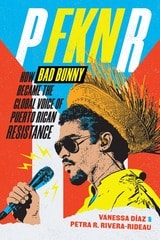
P FKN R
How Bad Bunny Became the Global Voice of Puerto Rican ResistanceVanessa Díaz and Petra R. Rivera-Rideau
Duke University Press, 2026
Global superstar Bad Bunny, born Benito Antonio Martínez Ocasio, like many other Puerto Ricans, has lived a life marked by public crises—blackouts, hurricanes, political corruption and oppression, among others—that have exposed the ongoing impacts of colonialism in Puerto Rico. Offering a portrait of the past and future of Puerto Rican resistance through one of its loudest and proudest voices, P FKN R draws on interviews with musicians, politicians, and journalists as well as ethnographic research to set Bad Bunny and Puerto Rican resistance in a historical, political, and cultural context. Authors Vanessa Díaz and Petra Rivera-Rideau—creators of the “Bad Bunny Syllabus”—demonstrate Bad Bunny’s place in a long tradition of infusing both joy and protest into music and honor the many evolving forms of daily resistance to oppression and colonialism that are part of Puerto Rican life.
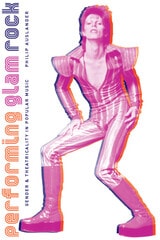
Performing Glam Rock
Gender and Theatricality in Popular MusicPhilip Auslander
University of Michigan Press, 2006
Yet glam was as much about substance as style, and Performing Glam Rock delves into the many ways glam paved the way for new explorations of identity in terms of gender, sexuality, and performance. Philip Auslander positions glam historically and examines it as a set of performance strategies, exploring the ways in which glam rock-while celebrating the showmanship of 1950s rock and roll-began to undermine rock's adherence to the ideology of authenticity in the late 1960s.
In this important study of a too-often-overlooked phenomenon, Auslander takes a fresh look at the genius of the glam movement and introduces glam to a new generation of performance enthusiasts and scholars alike.
Philip Auslander is Professor in the School of Literature, Communication, and Culture at the Georgia Institute of Technology and author of numerous books, including Liveness: Performance in a Mediatized Culture and Presence and Resistance: Postmodernism and Cultural Politics in Contemporary American Performance. He is editor of the major reference work Performance: Critical Concepts and coeditor, with Carrie Sandahl, of Bodies in Commotion: Disability and Performance.
Phonographic Memories
Popular Music and the Contemporary Caribbean NovelNjelle W. Hamilton
Rutgers University Press, 2019
Njelle W. Hamilton's Spotify playlist to accompany Phonographic Memories: https://spoti.fi/2tCQRm8
Phonographies
Grooves in Sonic Afro-ModernityAlexander G. Weheliye
Duke University Press, 2005
Weheliye surveys literature, film, and music to focus on engagements with recorded sound. He offers substantial new readings of canonical texts by W. E. B. Du Bois and Ralph Ellison, establishing dialogues between these writers and popular music and film ranging from Louis Armstrong’s voice to DJ mixing techniques to Darnell Martin’s 1994 movie I Like It Like That. Looking at how questions of diasporic belonging are articulated in contemporary black musical practices, Weheliye analyzes three contemporary Afro-diasporic musical acts: the Haitian and African American rap group the Fugees, the Afro- and Italian-German rap collective Advanced Chemistry, and black British artist Tricky and his partner Martina. Phonographies imagines the African diaspora as a virtual sounding space, one that is marked, in the twentieth century and twenty-first, by the circulation of culture via technological reproductions—records and tapes, dubbing and mixing, and more.
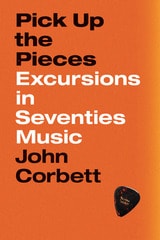
Pick Up the Pieces
Excursions in Seventies MusicJohn Corbett
University of Chicago Press, 2019
Rock. Disco. Pop. Soul. Jazz. Folk. Funk. The music scene of the 1970s was as varied as it was exhilarating, but the decade’s diversity of sound has never been captured in one book before now. Pick Up the Pieces gives a panoramic view of the era’s music and culture through seventy-eight essays that allow readers to dip in and out of the decade at random or immerse themselves completely in Corbett’s chronological journey.
An inviting mix of skilled music criticism and cultural observation, Pick Up the Pieces is also a coming-of-age story, tracking the author’s absorption in music as he grows from age seven to seventeen. Along with entertaining personal observations and stories, Corbett includes little-known insights into musicians from Pink Floyd, Joni Mitchell, James Brown, and Fleetwood Mac to the Residents, Devo, Gal Costa, and Julius Hemphill.
A master DJ on the page, Corbett takes us through the curated playlist that is Pick Up the Pieces with captivating melody of language and powerful enthusiasm for the era. This funny, energetic book will have readers longing nostalgically for a decade long past.
Policing Pop
edited by Martin Cloonan and Reebee Garofalo
Temple University Press, 2002
Pop Music And The Press
Steve Jones
Temple University Press, 2002
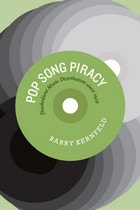
Pop Song Piracy
Disobedient Music Distribution since 1929Barry Kernfeld
University of Chicago Press, 2011
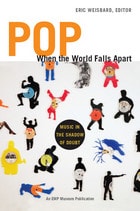
Pop When the World Falls Apart
Music in the Shadow of DoubtEric Weisbard, ed.
Duke University Press, 2012
Drawn from presentations at the annual Experience Music Project Pop Conference—hailed by Robert Christgau as “the best thing that’s ever happened to serious consideration of pop music”—the essays in this book include inquiries into the sonic dimension of war in Iraq; the cultural life of jazz in post-Katrina New Orleans; Isaac Hayes’s reappropriation of a country song, “By the Time I Get to Phoenix,” as a symbol of black nationalism; and punk rock pranks played on record execs looking for the next big thing in central Virginia. Offering a diverse range of voices, perspectives, and approaches, this volume mirrors the eclecticism of pop itself.
Contributors: Larry Blumenfeld , Austin Bunn, Nate Chinen, J. Martin Daughtry, Brian Goedde, Michelle Habell-Pallán, Jonathan Lethem, Eric Lott, Kembrew McLeod, Elena Passarello, Diane Pecknold, David Ritz, Carlo Rotella, Scott Seward, Tom Smucker, Greg Tate, Karen Tongson, Alexandra T. Vazquez, Oliver Wang, Eric Weisbard, Carl Wilson

Popular Music Perspectives
Ideas, Themes, and Patterns in Contemporary LyricsB. Lee Cooper
University of Wisconsin Press, 1991

Popular Music in Leeds
Histories, Heritage, People and PlacesEdited by Brett Lashua, Karl Spracklen, and Kitty Ross
Intellect Books, 2023
This is the first scholarly volume to focus on popular music in Leeds. It delves into the rich musical history of Leeds and its long tradition of vibrant venues, nightclubs, dance halls, pubs, and other sites of musical entertainment. The contributors use the popular music of Leeds to exemplify and inform understandings of broader cultural and urban changes, the social and historical significance of music as mass media; music and migration; music, racialization, and social equity; and industrial decline, deindustrialization, neoliberalism, and the rise of the twenty-four-hour city. Charting moments of stark musical politicization and de-politicization, while also tracing arguments about heritagizing popular music within discussions about music’s place in museums and in the urban economy, this book contributes to debates about why music matters, has mattered, and continues to matter in Leeds and beyond.

Prison Song
Music and Incarceration in the United StatesDavid Metzer
University of Michigan Press, 2026
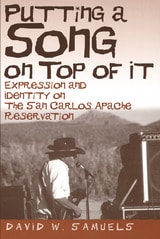
Putting a Song on Top of It
Expression and Identity on the San Carlos Apache ReservationDavid W. Samuels
University of Arizona Press, 2004
For many people on the San Carlos reservation, both the traditional calls of the Mountain Spirits and the hard edge of a country, rock, or reggae song can evoke the feeling of being Apache. Using insights gained from both linguistic and musical practices in the community—as well as from his own experience playing in an Apache country band—David W. Samuels explores the complex expressive lives of these people to offer new ways of thinking about cultural identity.
Samuels analyzes how people on the reservation make productive use of popular culture forms to create and transform contemporary expressions of Apache cultural identity. As Samuels learned, some popular songs—such as those by Bob Marley—are reminiscent of history and bring about an alignment of past and present for the Apache listener. Thinking about Geronimo, for instance, might mean one thing, but “putting a song on top of it” results in a richer meaning. Samuels also proposes that the concept of the pun, as both a cultural practice and a means of analysis, helps us understand the ways in which San Carlos Apaches are able to make cultural symbols point in multiple directions at once. Through these punning, layered expressions, people on the reservation express identities that resonate with the complicated social and political history of the Apache community.
This richly detailed study challenges essentialist notions of Native American tribal and ethnic identity by revealing the turbulent complexity of everyday life on the reservation. Samuels’s work is a multifaceted exploration of the complexities of sound, of language, and of the process of constructing and articulating identity in the twenty-first century.