Results by title
102 books match the query 'Postmodernism' and 22 start with p

Philosophizing the Everyday
Revolutionary Praxis and the Fate of Cultural TheoryJohn Roberts
Pluto Press, 2006
John Roberts argues that this understanding of the everyday downgrades its revolutionary meaning and philosophical implications. Bringing radical political theory back to the centre of the discussion, he shows how notions of cultural democratization have been oversimplified. Asserting that the everyday should not be narrowly identified with the popular, Roberts critiques the way in which the concept is now overly associated with consumption and 'ordinariness'.
Engaging with the work of key thinkers including, Lukács, Arvatov, Benjamin, Lefebvre, Gramsci, Barthes, Vaneigem, and de Certeau, Roberts shows how the concept of the everyday continues to be central to debates on ideology, revolution and praxis. He offers a lucid account of different approaches that developed over the course of the twentieth century, making this an ideal book for anyone looking for a politicised approach to cultural theory.
John Roberts is a Senior Research Fellow in Fine Art at the University of Wolverhampton. He is the author of The Art of Interruption: Realism, Photography and the Everyday (Manchester University Press, 1997) and The Philistine Controversy (Verso, with Dave Beech, 2002), plus other books and numerous articles, in Radical Philosophy and elsewhere.
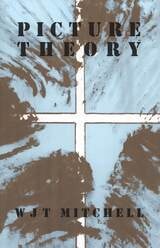
Picture Theory
Essays on Verbal and Visual RepresentationW. J. T. Mitchell
University of Chicago Press, 1994
Post-Anarchism
A ReaderEdited by Duane Rousselle and Sureyyya Evren
Pluto Press, 2011
Post-anarchism has been of considerable importance in the discussions of radical intellectuals across the globe in the last decade. In its most popular form, it demonstrates a desire to blend the most promising aspects of traditional anarchist theory with developments in post-structuralist and post-modernist thought. Post-Anarchism: A Reader includes the most comprehensive collection of essays about this emergent body of thought, making it an essential and accessible resource for academics, intellectuals, activists and anarchists interested in radical philosophy.
Many of the chapters have been formative to the development of a distinctly 'post-anarchist' approach to politics, aesthetics, and philosophy. Others respond to the so-called 'post-anarchist turn' with caution and scepticism. The book also includes original contributions from several of today's 'post-anarchists', inviting further debate and new ways of conceiving post-anarchism across a number of disciplines.
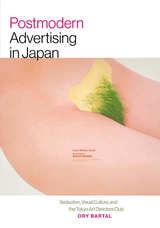
Postmodern Advertising in Japan
Seduction, Visual Culture, and the Tokyo Art Directors ClubOry Bartal
Dartmouth College Press, 2015
Postmodern Animal
Steve Baker
Reaktion Books, 2000
Postmodern Explained
Correspondence 1982-1985Jean-Fracois Lyotard
University of Minnesota Press, 1992
Postmodern Fables
Jean-Francois Lyotard
University of Minnesota Press, 1999
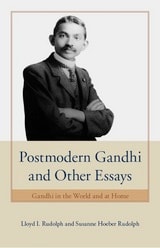
Postmodern Gandhi and Other Essays
Gandhi in the World and at HomeLloyd I. Rudolph and Susanne Hoeber Rudolph
University of Chicago Press, 2006
Gandhi, with his loincloth and walking stick, seems an unlikely advocate of postmodernism. But in Postmodern Gandhi, Lloyd and Susanne Rudolph portray him as just that in eight thought-provoking essays that aim to correct the common association of Gandhi with traditionalism.
Combining core sections of their influential book Gandhi: The Traditional Roots of Charisma with substantial new material, the Rudolphs reveal here that Gandhi was able to revitalize tradition while simultaneously breaking with some of its entrenched values and practices. Exploring his influence both in India and abroad, they tell the story of how in London the young activist was shaped by the antimodern “other West” of Ruskin, Tolstoy, and Thoreau and how, a generation later, a mature Gandhi’s thought and action challenged modernity’s hegemony. Moreover, the Rudolphs argue that Gandhi’s critique of modern civilization in his 1909 book Hind Swaraj was an opening salvo of the postmodern era and that his theory and practice of nonviolent collective action (satyagraha) articulate and exemplify a postmodern understanding of situational truth.
This radical interpretation of Gandhi's life will appeal to anyone who wants to understand Gandhi’s relevance in this century, as well as students and scholars of politics, history, charismatic leadership, and postcolonialism.

Postmodern Platos
Nietzsche, Heidegger, Gadamer, Strauss, DerridaCatherine H. Zuckert
University of Chicago Press, 1996
Postmodern Sophistications
Philosophy, Architecture, and TraditionDavid Kolb
University of Chicago Press, 1990
Postmodernism and China
Arif Dirlik and Xudong Zhang, eds.
Duke University Press, 2000
Collectively, these essays question the implications of specific phenomena, like literature, architecture, rock music, and film, in a postsocialist society. Some essays address China’s complicity in—as well as its resistance to—the culture of global capitalism. Others evaluate the impact of efforts to redefine national culture in terms of enhanced freedoms and expressions of the imagination in everyday life. Still others discuss the general relaxation of political society in post-Mao China, the emergence of the market and its consumer mass culture, and the fashion and discourse of nostalgia. The contributors make a clear case for both the historical uniqueness of Chinese postmodernism and the need to understand its specificity in order to fully grasp the condition of postmodernity worldwide. Although the focus is on mainland China, the volume also includes important observations on social and cultural realities in Hong Kong and Taiwan, whose postmodernity has so far been confined—in both Chinese and English-speaking worlds—to their economic and consumer activities instead of their political and cultural dynamism.
First published as a special issue of boundary 2, Postmodernism and China includes seven new essays. By juxtaposing postmodernism with postsocialism and by analyzing China as a producer and not merely a consumer of the culture of the postmodern, it will contribute to critical discourses on globalism, modernity, and political economics, as well as to cultural and Asian studies.
Contributors. Evans Chan, Arif Dirlik, Dai Jinhua, Liu Kang, Anthony D. King, Jeroen de Kloet, Abidin Kusno, Wendy Larson, Chaoyang Liao, Ping-hui Liao, Sebastian Hsien-hao Liao, Sheldon Hsiao-peng Lu, Wang Ning, Xiaobing Tang, Xiaoying Wang, Chen Xiaoming, Xiaobin Yang, Zhang Yiwu, Xudong Zhang

Postmodernism and China, Volume 24
Arif Dirlik and Zhang Xudong
Duke University Press, 0
Postmodernism and Cultural Identities
Conflicts and CoexistenceVirgil Nemoianu
Catholic University of America Press, 2010
Postmodernism and Japan
Masao Miyoshi and H. D. Harootunian, eds.
Duke University Press, 1989
Postmodernism and Politics
Jonathon Arac
University of Minnesota Press, 1986
In eight essays, the contributors reach out to explore cinema and photography, psychology and ethics, social theory and economic reform. Taken together, the essays provide fresh perspectives on the problem of representation in many areas, from the constitution of the individual subject, through the status of the image, to the formation and transmission of social and moral knowledge.
The contributors: Paul A. Bove, Mary Louise Pratt, Dana Polan, Andrew Parker, Rainer Nagele, John Higgins, Cornel West, and Bruce Robbins.
Postmodernism and a Sociology of the Absurd
Absurd And Other Essays on the "Nouvelle Vague" in American Social ScienceStanford Lyman
University of Arkansas Press, 1997
In the fifth volume in the Studies in American Sociology Series, Stanford M. Lyman offers commentaries on and critiques of postmodernism, poststructuralism, and deconstruction, posing questions concerning theoretical and epistemological problems arising from what appears to be a “nouvelle vague.”
Postmodernism, poststructuralism, and deconstructionism are interrelated aspects of the newest theoretical development in sociology and the social sciences. This new wave of thought challenges virtually all paradigms currently in use. In this, his fifth volume in the Studies in American Sociology Series, Stanford M. Lyman offers commentaries on and critiques of this new perspective, posing questions concerning theoretical and epistemological problems arising from what appears to be a nouvelle vague.
Among the basic themes and issues explored are the allegation that modernity has defaulted on the promise of the Enlightenment; the question of whether the rational basis for knowledge and action is still valid; the controversy over the place of metanarratives and macrosociological outlooks; and newer concerns over race, gender, sexual preferences, the self, and the “Other.”
Professor Lyman provides empirically based and historically specific analyses of the relation of the race question to the problem of otherness and to the legal construction of racial identity in American court proceedings. Focusing on the issues of citizenship affecting European, Middle Eastern, and Asian immigrants; African Americans; and the special cases of the Chinese and Native Americans, he relates major public problems to the modern as well as the postmodern perspectives on justice. The debate over assimilation and multiculturalism, the dynamics of gender-specific emotions as expressed in six decades of Hollywood films, and the postmodern approach to deviance are each examined. He also offers proposals for a social science attuned to, but critical of, postmodernism and poststructuralism. Such a sociology might offer a perspective that treats the drama of social relations in the routine as well as the remarkable aspects of everyday life. Professor Lyman provides not only a new understanding of postmodernism but also a program of how to proceed with respect to its challenges.
Postmodernism and the Other
New Imperialism of Western CultureZiauddin Sardar
Pluto Press, 1997
Postmodernism, or, The Cultural Logic of Late Capitalism
Fredric Jameson
Duke University Press, 1992
Postphenomenology
Essays in the Postmodern ContextDon Ihde
Northwestern University Press, 1995
Postpolitics and the Aesthetic Imagination
Juan Meneses
University of Minnesota Press, 2025
Igniting political power through the lens of art and the imagination
Postpolitics and the Aesthetic Imagination investigates the erosion of meaningful political action in today’s world. Gathering writings from an array of scholars, editor Juan Meneses asks: can an aesthetic theory of postpolitics help us understand and counteract the most insidious processes of depoliticization?
The contributors to this volume explore how the aesthetic imagination can play a crucial role in reenvisioning key political elements, including governance, agency, rights, and responsibility. With a survey of various artistic mediums—film, dance, music, literature, and digital media—the essays illustrate how the aesthetic can reveal ways to breathe new life into the work of emancipatory politics. Reclaiming the arts and humanities as vital to political life, the contributors revisit but also move beyond the social sciences’ central focus on neoliberalism and public administration to address other topics such as tech-capitalism, race, environmental violence, and patriarchy.
Postpolitics and the Aesthetic Imagination argues for a conscious deployment of aesthetics to resist political anesthesia and promote a more just society, underscoring the role of the imagination in political engagement and change.
Contributors: Jacquelyn Arcy, U of Wisconsin–Parkside; Christopher Breu, Illinois State U; Stephen Charbonneau, Florida Atlantic U; Eric Lemmon, Webster U; Robert P. Marzec, Purdue U; Allison Page, Rutgers U–Camden; Matthew Scully, U of Lausanne; Erik Swyngedouw, U of Manchester; Sherryl Vint, U of California, Riverside.
Postsocialism and Cultural Politics
China in the Last Decade of the Twentieth CenturyXudong Zhang
Duke University Press, 2008
Zhang examines the reactions of intellectuals, authors, and filmmakers to the cultural and political conflicts in China during the 1990s. He offers a nuanced assessment of the changing divisions and allegiances within the intellectual landscape, and he analyzes the postsocialist realism of the era through readings of Mo Yan’s fiction and the films of Zhang Yimou. With Postsocialism and Cultural Politics, Zhang applies the same keen insight to China’s long 1990s that he brought to bear on the 1980s in Chinese Modernism in the Era of Reforms.
Presence and Resistance
Postmodernism and Cultural Politics in Contemporary American PerformancePhilip Auslander
University of Michigan Press, 1994