Results by title
74 books match the query 'Psychopathology' and 6 start with p
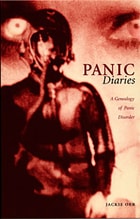
Panic Diaries
A Genealogy of Panic DisorderJackie Orr
Duke University Press, 2006
Orr, who has experienced panic attacks herself, kept a diary of her participation as a research subject in clinical trials for the Upjohn Company’s anti-anxiety drug Xanax. This “panic diary” grounds her study and suggests the complexity of her desire to track the diffusion and regulation of panic in U.S. society. Orr’s historical research, theoretical reflections, and biographical narrative combine in this remarkable and compelling genealogy, which documents the manipulation of panic by the media, the social sciences and psychiatry, the U.S. military and government, and transnational drug companies.
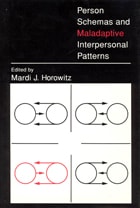
Person Schemas and Maladaptive Interpersonal Patterns
Edited by Mardi J. Horowitz
University of Chicago Press, 1991
behavior and intrapsychic conflict brings together psychoanalytic researchers, social learning
theorists, and cognitive scientists. The contributors show that a fuller conceptualization of
person schemas can begin to close the gap between psychodynamic and cognitive science
research, providing new methods for understanding disorders of personality.
“There are many strengths in this volume beyond the clear presentation of the person schema
as a concept linking cognitive and psychodynamic perspectives. . . . Students will have an
opportunity for comparison of perspectives while those working in the field will have an
opportunity to follow the shift from concept to method to case application to theoretical
context for understanding personality change.”—Bertram J. Cohler, University of Chicago
Contributors are Lorna Smith Benjamin, Paul Crits-Christoph, Randolph L. Cunningham, Roy
D'Andrade, Amy Demorest, Mary Ewert, Scott H. Friedman, Frances J. Friedrich, Jess H.
Ghannam, Dianna Hartley, Mardi J. Horowitz, John F. Kihlstrom, Peter H. Knapp, Lester
Luborsky, David Mark, Thomas V. Merluzzi, Stephen E. Palmer, Carol Popp, Peter Salovey,
Pamela Schaffler, Jerome L. Singer, Charles H. Stinson, and Sandra L. Tunis.

Perturbing the Organism
The Biology of Stressful ExperienceHerbert Weiner
University of Chicago Press, 1992
This authoritative work is the first to analyze critically the entire range of research and theory on stress in animals and humans, from the earliest studies in the 1930s up to the present day. Herbert Weiner not only documents the many empirical and conceptual advances of recent years, but also supplies a new working definition and classification of stressful experience. He describes the integrated, organismic responses to stressful environmental changes, tasks, and challenges in terms of functional adaptation: the failure of these responses results in injury, ill-health, disease, and death. To examine the coordination between behavior and bodily functions, Weiner reviews current knowledge on how stressful experiences also alter biobehavioral rhythms.
Providing a useful, integrative concept of stress rooted in an understanding of the organism as an interactive communication system composed of many subsystems, Perturbing the Organism will interest a wide range of clinicians and researchers throughout the medical and behavioral sciences.
The John D. and Catherine T. MacArthur Foundation Series on Mental Health and Development
Psychopathology and Politics
Harold D. Lasswell
University of Chicago Press, 1986
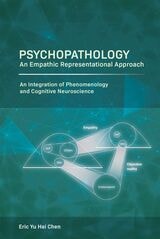
Psychopathology
An Empathic Representational Approach; An Integration of Phenomenology and Cognitive NeuroscienceEric Yu Hai Chen
Hong Kong University Press, 2024
Psychopathology: An Empathic Representational Approach retraces the foundations of classical phenomenological psychopathology and integrates them with modern ideas drawn from anthropology, cognitive neuroscience, computational science, and evolutionary biology to synthesize a comprehensive framework and provide fresh insights. It explores key issues in clinical psychopathology coherently and systematically, illustrates advanced topics in an accessible manner using clinical case examples, metaphors, and clarifying diagrams, and directly links advanced conceptual frameworks with pragmatic skills in the clinical dialogue process.
This volume is aimed at a broad audience of mental health professionals, researchers, and students in psychiatry, psychology, and social work. Its interdisciplinary treatment of the subject will also interest biologists, anthropologists, cognitive psychologists, neuroscientists, and philosophers.
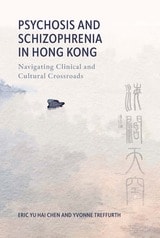
Psychosis and Schizophrenia in Hong Kong
Navigating Clinical and Cultural CrossroadsEric Yu Hai Chen and Yvonne Treffurth
Hong Kong University Press, 2024
Psychosis and Schizophrenia in Hong Kong covers some of the most serious mental health conditions that top the global disease burden and affect three percent of the general population. However, most research on psychotic disorders is undertaken in the West, and few studies have been systematically carried out in Asia despite global interest in regional differences. This work offers a unique and coherent account of these disorders and their treatment in Hong Kong over the last thirty years.
Chen and his research program’s pioneering work has ranged from the impact of early intervention on outcomes and relapse prevention to the renaming of psychosis to reduce stigma. The studies have contributed to wider international debates on the optimal management of the condition. Their investigations in semantics and cognition, as well as cognition-enhancing exercise interventions, have provided novel insights into deficits encountered in the treatment of psychotic disorders and how they might be ameliorated. The research has also explored subjective experiences of psychosis and elicited unique perspectives in patients of Asian origin.
Each topic is divided into three sections: a global background of the challenges encountered; research findings from Hong Kong; and reflections that place the data in scientific and clinical contexts and offer future directions.