109 books match the query 'Radar' and 14 start with p

cover of Passive Radars on Moving Platforms

Passive Radars on Moving Platforms

Diego Cristallini

The Institution of Engineering and Technology, 2023
This book collects, reviews and analyses recent research on passive radars on moving platforms. Due to the nature of the typical radar applications performed by moving platforms and the signals of opportunity typically exploited for passive radar purposes, which are not designed for reception while in motion, the special case of passive radar mounted on moving platforms is highly challenging.
[more]
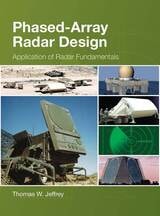
cover of Phased-Array Radar Design: Application of radar fundamentals

Phased-Array Radar Design

Application of radar fundamentals

Thomas W. Jeffrey

The Institution of Engineering and Technology, 2009
Phased-Array Radar Design is a text-reference designed for electrical engineering graduate students in colleges and universities as well as for corporate in-house training programs for radar design engineers, especially systems engineers and analysts who would like to gain hands-on, practical knowledge and skills in radar design fundamentals, advanced radar concepts, trade-offs for radar design and radar performance analysis.
[more]
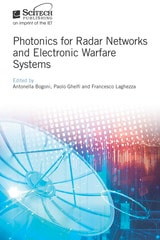
cover of Photonics for Radar Networks and Electronic Warfare Systems

Photonics for Radar Networks and Electronic Warfare Systems

Antonella Bogoni

The Institution of Engineering and Technology, 2019
Microwave photonics is an emerging interdisciplinary area that investigates the deep interactions between microwaves and light waves for efficient generation, distribution, processing, control, and sensing of microwave, millimeter-wave, and terahertz signals. This book outlines the potential for microwave photonics in radar and electronic warfare systems, covering basic concepts and functions, comparing performance with conventional systems, describing its impact on digital signal processing, and exploring integration issues.
[more]
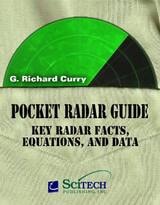
cover of Pocket Radar Guide: Key radar facts, equations, and data

Pocket Radar Guide

Key radar facts, equations, and data

G. Richard Curry

The Institution of Engineering and Technology, 2010

The Pocket Radar Guide is a concise collection of key radar facts and important radar data that provides the reader with necessary radar information when they are away from the office or references. It includes statements and comments on radar design, operation, and performance; equations describing the characteristics and performance of radar systems and their components; and tables with data on radar characteristics and key performance issues. It is intended to supplement other radar information sources by providing a pocket companion to refresh memory and provide details whenever you need them such as in meetings, while traveling, or in the field.
[more]
cover of Polarimetric Radar Signal Processing

Polarimetric Radar Signal Processing

Augusto Aubry

The Institution of Engineering and Technology, 2022
Polarimetric Radar Signal Processing provides an overview of advanced techniques and technologies developed for polarimetric radars to meet challenging performance requirements. It aims to cover some of the most challenging application fields, including: target detection for active and passive surveillance systems, interference suppression, detection of temporal changes in a given scene, environment classification, automatic target recognition, non-cooperative target imaging, polarimetric coding in radar and SAR systems, pol-SAR ambiguities suppression, space-debris detection, tracking, and classification, estimation of biological and behavioural parameters of insects, precipitations localization as well as type and motion parameters estimation via real-life practical polarimetric weather radar.
[more]
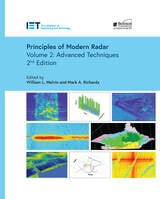
cover of Principles of Modern Radar: Advanced Techniques, Volume 2

Principles of Modern Radar

Advanced Techniques, Volume 2

William L. Melvin

The Institution of Engineering and Technology, 2026
The second edition of Principles of Modern Radar Volume 2: Advanced Techniques is a comprehensive textbook serving as an important technical reference for practicing radar engineers and graduate students alike. The book covers essential topics in modern radar development, including radar waveform design and processing, radar imaging algorithms, multidimensional adaptive antenna processing techniques, target recognition approaches and methods, distributed radar algorithms, and an introduction to artificial intelligence and machine learning for radar.
[more]
cover of Principles of Modern Radar: Advanced techniques, Volume 2

Principles of Modern Radar

Advanced techniques, Volume 2

William L. Melvin

The Institution of Engineering and Technology, 2013

This second of three volumes in the Principles of Modern Radar series offers a much-needed professional reference for practicing radar engineers. It provides the stepping stones under one cover to advanced practice with overview discussions of the most commonly used techniques for radar design, thereby bridging readers to single-topic advanced books, papers, and presentations. It spans a gamut of exciting radar capabilities from exotic waveforms to ultra-high resolution 2D and 3D imaging methods, complex adaptive interference cancellation, multi-target tracking in dense scenarios, multiple-input, multiple-output (MIMO) and much more. All of this material is presented with the same careful balance of quantitative rigor and qualitative insight of Principles of Modern Radar: Basic Principles. Each chapter is likewise authored by recognized subject experts, with the rigorous editing for consistency and suggestions of numerous volunteer reviewers from the radar community applied throughout. Advanced academic and training courses will appreciate the sets of chapter-end problems for students, as well as worked solutions for instructors. Extensive reference lists show the way for further study.
[more]
cover of Principles of Modern Radar: Basic Principles, Volume 1

Principles of Modern Radar

Basic Principles, Volume 1

Mark A. Richards

The Institution of Engineering and Technology, 2022
The second edition of Principles of Modern Radar Volume 1: Basic Principles is a comprehensive textbook for courses on radar systems and technology at the college senior and graduate student level. It is also a professional training and self-study textbook for engineers switching to a career in radar as well as a professional reference for current radar engineers. It is unique in its breadth of coverage, its emphasis on current methods and its careful balance of qualitative explanation and quantitative rigor appropriate to its intended audience.
[more]
cover of Principles of Modern Radar: Basic principles, Volume 1

Principles of Modern Radar

Basic principles, Volume 1

Mark A. Richards

The Institution of Engineering and Technology, 2010
Principles of Modern Radar: Basic Principles is a comprehensive and modern textbook for courses in radar systems and technology at the college senior and graduate student level; a professional training textbook for formal in-house courses for new hires; a reference for ongoing study following a radar short course; and a self-study and professional reference book.
[more]
cover of Principles of Modern Radar: Radar Applications, Volume 3

Principles of Modern Radar

Radar Applications, Volume 3

William L. Melvin

The Institution of Engineering and Technology, 2014

This third and final volume in the Principles of Modern Radar series brings all the fundamentals and advanced techniques of the prior volumes to their logical conclusion by presenting the applications of radar. This unique book provides in-depth discussions of the most important areas in current radar practice, serving primarily radar practitioners and advanced graduate students.
[more]
cover of Principles of Space-Time Adaptive Processing

Principles of Space-Time Adaptive Processing

Richard Klemm

The Institution of Engineering and Technology, 2006
This third edition of Principles of Space-Time Adaptive Processing provides a detailed introduction to the fundamentals of space-time adaptive processing, with emphasis on clutter suppression in airborne or spacebased phased array radar, covering specifically the principles of airborne or spacebased MTI radar for detection of slow moving targets for use in the fields of earth observation, surveillance and reconnaissance, with special attention paid to clutter rejection techniques.
[more]
cover of Principles of Waveform Diversity and Design

Principles of Waveform Diversity and Design

Michael C. Wicks

The Institution of Engineering and Technology, 2011
This is the first book to discuss current and future applications of waveform diversity and design in subjects such as radar and sonar, communications systems, passive sensing, and many other technologies. Waveform diversity allows researchers and system designers to optimize electromagnetic and acoustic systems for sensing, communications, electronic warfare or combinations thereof. This book enables solutions to problems, explaining how each system performs its own particular function, as well as how it is affected by other systems and how those other systems may likewise be affected. It is an excellent standalone introduction to waveform diversity and design, which takes a high potential technology area and makes it visible to other researchers, as well as young engineers.
[more]
cover of Pulse Doppler Radar: Principles, technology, applications

Pulse Doppler Radar

Principles, technology, applications

Clive Alabaster

The Institution of Engineering and Technology, 2012

This book is a practitioner's guide to all aspects of pulse Doppler radar. It concentrates on airborne military radar systems since they are the most used, most complex, and most interesting of the pulse Doppler radars; however, ground-based and non-military systems are also included.
[more]