201 books match the query 'Regional Studies' and 7 start with p
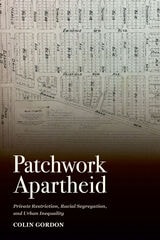
cover of Patchwork Apartheid: Private Restriction, Racial Segregation, and Urban Inequality

Patchwork Apartheid

Private Restriction, Racial Segregation, and Urban Inequality

Colin Gordon

Russell Sage Foundation, 2023

For the first half of the twentieth century, private agreements to impose racial restrictions on who could occupy property decisively shaped the development of American cities and the distribution of people within them. Racial restrictions on the right to buy, sell, or occupy property also effectively truncated the political, social, and economic citizenship of those targeted for exclusion. In Patchwork Apartheid, historian Colin Gordon examines the history of such restrictions and how their consequences reverberate today. Drawing on a unique record of property restrictions excavated from local property records in five Midwestern counties, Gordon documents the prevalence of private property restriction in the era before zoning and building codes were widely employed and before federal redlining sanctioned the segregation of American cities and suburbs. This record of private restriction—documented and mapped to the parcel level in Greater Minneapolis, Greater St. Louis, and two Iowa counties—reveals the racial segregation process both on the ground, in the strategic deployment of restrictions throughout transitional central city neighborhoods and suburbs, and in the broader social and legal construction of racial categories and racial boundaries.
 
Gordon also explores the role of other policies and practices in sustaining segregation. Enforcement of private racial restrictions was held unconstitutional in 1948, and such agreements were prohibited outright in 1968. But their premises and assumptions, and the segregation they had accomplished, were accommodated by local zoning and federal housing policies. Explicit racial restrictions were replaced by the deceptive business practices of real estate agents and developers, who characterized certain neighborhoods as white and desirable and others as black and undesirable, thereby hiding segregation behind the promotion of sound property investments, safe neighborhoods, and good schools. These practices were in turn replaced by local zoning, which systematically protected white neighborhoods while targeting “blighted” black neighborhoods for commercial and industrial redevelopment, and by a tangle of federal policies that reliably deferred to local and private interests with deep investments in local segregation. Private race restriction was thus a key element in the original segregation of American cities and a source of durable inequalities in housing wealth, housing opportunity, and economic mobility.

Patchwork Apartheid exhaustively documents the history of private restriction in urban settings and demonstrates its crucial role in the ideas and assumptions that have sustained racial segregation in the United States into the twenty-first century.
[more]
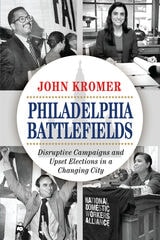
cover of Philadelphia Battlefields: Disruptive Campaigns and Upset Elections in a Changing City

Philadelphia Battlefields

Disruptive Campaigns and Upset Elections in a Changing City

John Kromer

Temple University Press, 2020

Should the surprisingly successful outcomes achieved by outsider candidates in Philadelphia elections be interpreted as representing fundamental changes in the local political environment, or simply as one-off victories, based largely on serendipitous circumstances that advanced individual political careers? John Kromer’s insightful Philadelphia Battlefields considers key local campaigns undertaken from 1951 to 2019 that were extraordinarily successful despite the opposition of the city’s political establishment. 

Kromer draws on election data and data-mapping tools that explain these upset elections as well as the social, economic, and demographic trends that influenced them to tell the story of why these campaign strategies were successful. He deftly analyzes urban political dynamics through case studies of newcomer Rebecca Rhynhart’s landslide victory over a veteran incumbent for Philadelphia City Controller; activist Chaka Fattah’s effective use of grassroots organizing skills to win a seat in Congress; and Maria Quiñones-Sánchez’s hard-fought struggle to become the first Hispanic woman to win a City Council seat, among others. 

Philadelphia Battlefields shows how these candidates’ efforts to increase civic engagement, improve municipal governance, and become part of a new generation of political leadership at the local and state level were critical to their successes.
[more]
cover of Places in Need: The Changing Geography of Poverty

Places in Need

The Changing Geography of Poverty

Scott W. Allard

Russell Sage Foundation, 2017

Americans think of suburbs as prosperous areas that are relatively free from poverty and unemployment. Yet, today more poor people live in the suburbs than in cities themselves. In Places in Need, social policy expert Scott W. Allard tracks how the number of poor people living in suburbs has more than doubled over the last 25 years, with little attention from either academics or policymakers. Rising suburban poverty has not coincided with a decrease in urban poverty, meaning that solutions for reducing poverty must work in both cities and suburbs. Allard notes that because the suburban social safety net is less-developed than the urban safety net, a better understanding of suburban communities is critical for understanding and alleviating poverty in metropolitan areas.
 
Using census data, administrative data from safety net programs, and interviews with nonprofit leaders in the Chicago, Los Angeles, and Washington, D.C. metropolitan areas, Allard shows that poor suburban households resemble their urban counterparts in terms of labor force participation, family structure, and educational attainment. In the last few decades, suburbs have seen increases in single-parent households, decreases in the number of college graduates, and higher unemployment rates. As a result, suburban demand for safety net assistance has increased. Concerning is evidence suburban social service providers­—which serve clients spread out over large geographical areas, and often lack the political and philanthropic support that urban nonprofit organizations can command—do not have sufficient resources to meet the demand.
 
To strengthen local safety nets, Allard argues for expanding funding and eligibility to federal programs such as SNAP and the Earned Income Tax Credit, which have proven effective in urban and suburban communities alike.  He also proposes to increase the capabilities of community-based service providers through a mix of new funding and capacity-building efforts.
 
Places in Need demonstrates why researchers, policymakers, and nonprofit leaders should focus more on the shared fate of poor urban and suburban communities. This account of suburban vulnerability amidst persistent urban poverty provides a valuable foundation for developing more effective antipoverty strategies.
 
[more]
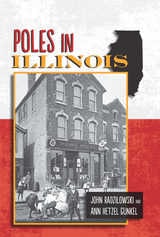
cover of Poles in Illinois

Poles in Illinois

John Radzilowski and Ann Hetzel Gunkel

Southern Illinois University Press, 2020

Illinois boasts one of the most visible concentrations of Poles in the United States. Chicago is home to one of the largest Polish ethnic communities outside Poland itself. Yet no one has told the full story of our state’s large and varied Polish community—until now. Poles in Illinois is the first comprehensive history to trace the abundance and diversity of this ethnic group throughout the state from the 1800s to the present.
 
Authors John Radzilowski and Ann Hetzel Gunkel look at family life among Polish immigrants, their role in the economic development of the state, the working conditions they experienced, and the development of their labor activism. Close-knit Polish American communities were often centered on parish churches but also focused on fraternal and social groups and cultural organizations. Polish Americans, including waves of political refugees during World War II and the Cold War, helped shape the history and culture of not only Chicago, the “capital” of Polish America, but also the rest of Illinois with their music, theater, literature, food.
 
With forty-seven photographs and an ample number of extensive excerpts from first-person accounts and Polish newspaper articles, this captivating, highly readable book illustrates important and often overlooked stories of this ethnic group in Illinois and the changing nature of Polish ethnicity in the state over the past two hundred years. Illinoisans and Midwesterners celebrating their connections to Poland will treasure this rich and important part of the state’s history.
 
[more]
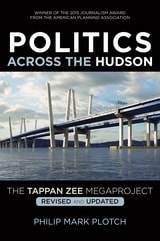
cover of Politics Across the Hudson: The Tappan Zee Megaproject

Politics Across the Hudson

The Tappan Zee Megaproject

Philip Mark Plotch

Rutgers University Press, 2015

Winner of the 2015 American Planning Association New York Metro Chapter Journalism Award

The State of New York built one of the world’s longest, widest, and most expensive bridges—the new Tappan Zee Bridge—stretching more than three miles across the Hudson River, approximately thirteen miles north of New York City. In Politics Across the Hudson, urban planner Philip Plotch offers a behind-the-scenes look at three decades of contentious planning and politics centered around this bridge, recently renamed for Governor Mario M. Cuomo, the state's governor from 1983 to 1994. He reveals valuable lessons for those trying to tackle complex public policies while also confirming our worst fears about government dysfunction.
 
Drawing on his extensive experience planning megaprojects, interviews with more than a hundred key figures—including governors, agency heads, engineers, civic advocates, and business leaders—and extraordinary access to internal government records, Plotch tells a compelling story of high-stakes battles between powerful players in the public, private, and civic sectors. He reveals how state officials abandoned viable options, squandered hundreds of millions of dollars, forfeited more than three billion dollars in federal funds, and missed out on important opportunities. Faced with the public’s unrealistic expectations, no one could identify a practical solution to a vexing problem, a dilemma that led three governors to study various alternatives rather than disappoint key constituencies. 
 
This revised and updated edition includes a new epilogue and more photographs, and continues where Robert Caro’s The Power Broker left off and illuminates the power struggles involved in building New York’s first major new bridge since the Robert Moses era. Plotch describes how one governor, Andrew Cuomo, shrewdly overcame the seemingly insurmountable obstacles of onerous environmental regulations, vehement community opposition, insufficient funding, interagency battles, and overly optimistic expectations...
 
 
[more]
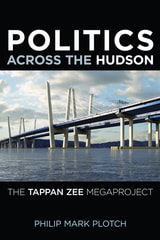
cover of Politics Across the Hudson: The Tappan Zee Megaproject

Politics Across the Hudson

The Tappan Zee Megaproject

Philip Mark Plotch

Rutgers University Press, 2015

The State of New York is now building one of the world’s longest, widest, and most expensive bridges—the new Tappan Zee Bridge—stretching more than three miles across the Hudson River, approximately thirteen miles north of New York City. In Politics Across the Hudson, urban planner Philip Plotch offers a behind-the-scenes look at three decades of contentious planning and politics centered around this bridge, recently renamed for Governor Mario M. Cuomo, the state's governor from 1983 to 1994. He reveals valuable lessons for those trying to tackle complex public policies while also confirming our worst fears about government dysfunction.
 
Drawing on his extensive experience planning megaprojects, interviews with more than a hundred key figures—including governors, agency heads, engineers, civic advocates, and business leaders—and extraordinary access to internal government records, Plotch tells a compelling story of high-stakes battles between powerful players in the public, private, and civic sectors. He reveals how state officials abandoned viable options, squandered hundreds of millions of dollars, forfeited more than three billion dollars in federal funds, and missed out on important opportunities. Faced with the public’s unrealistic expectations, no one could identify a practical solution to a vexing problem, a dilemma that led three governors to study various alternatives rather than disappoint key constituencies. 
 
Politics Across the Hudson continues where Robert Caro’s The Power Broker left off and illuminates the power struggles involved in building New York’s first major new bridge since the Robert Moses era. Plotch describes how one governor, Andrew Cuomo, shrewdly overcame the seemingly insurmountable obstacles of onerous environmental regulations, vehement community opposition, insufficient funding, interagency battles, and overly optimistic expectations. 
 
 
[more]
cover of Protecting Heritage in the Caribbean

Protecting Heritage in the Caribbean

Peter E. Siegel

University of Alabama Press, 2011

Heritage preservation is a broad term that can include the protection of a wide range of human-mediated material and cultural processes ranging from specific artifacts, ancient rock art, and features of the built environment and modified landscapes. As a region of multiple independent nations and colonial territories, the Caribbean shares a common heritage at some levels, yet at the same time there are vast historical and cultural differences. Likewise, approaches to Caribbean heritage preservation are similarly diverse in range and scope.
 
This volume addresses the problem of how Caribbean nations deal with the challenges of protecting their cultural heritages or patrimonies within the context of pressing economic development concerns. Is there formal legislation that requires cultural patrimony to be considered prior to the approval of development projects? Does legislation apply only to government-funded projects or to private ones as well? Are there levels of legislation: local, regional, national? Are heritage preservation laws enforced? For whom is the heritage protected and what public outreach is implemented to disseminate the information acquired and retained?
 
In this volume, practitioners of heritage management on the frontline of their own islands address the current state of affairs across the Caribbean to present a comprehensive overview of Caribbean heritage preservation challenges. Considerable variability is seen in how determined and serious different nations are in approaching the responsibilities of heritage preservation. Packaging these diverse scenarios into a single volume is a critical step in raising awareness of the importance of protecting and judiciously managing an ever-diminishing fund of Caribbean heritage for all.
 
Contributors
Todd M. Ahlman / Benoît Bérard / Milton Eric Branford / Richard T. Callaghan / Kevin Farmer / R. Grant Gilmore III / Jay B. Haviser / Ainsley C. Henriques / William F. Keegan / Bruce J. Larson / Paul E. Lewis / Vel Lewis / Reg Murphy / Michael P. Pateman / Winston F. Phulgence / Esteban Prieto Vicioso / Basil A. Reid / Andrea Richards / Elizabeth Righter / Kelley Scudder-Temple / Peter E. Siegel / Christian Stouvenot / Daniel Torres Etayo
[more]