Results by title
76 books match the query 'Representation' and 2 start with p
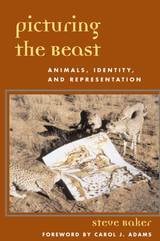
Picturing the Beast
Animals, Identity, and RepresentationSteve Baker
University of Illinois Press, 1993
From Mickey Mouse to the teddy bear, from the Republican elephant to the use of "jackass" as an all-purpose insult, images of animals play a central role in politics, entertainment, and social interactions. In this penetrating look at how Western culture pictures the beast, Steve Baker examines how such images--sometimes affectionate, sometimes derogatory, always distorting--affect how real animals are perceived and treated.
Baker provides an animated discussion of how animals enter into the iconography of power through wartime depictions of the enemy, political cartoons, and sports symbolism. He examines a phenomenon he calls the "disnification" of animals, meaning a reduction of the animal to the trivial and stupid, and shows how books featuring talking animals underscore human superiority. He also discusses how his findings might inform the strategies of animal rights advocates seeking to call public attention to animal suffering and abuse. Until animals are extricated from the baggage of imposed images, Baker maintains, neither they nor their predicaments can be clearly seen.
For this edition, Baker provides a new introduction, specifically addressing an American audience, that touches on such topics as the Cow Parade, animal imagery in the presidential race, and animatronic animals in recent films.
[more]
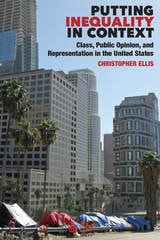
Putting Inequality in Context
Class, Public Opinion, and Representation in the United StatesChristopher Ellis
University of Michigan Press, 2017
Rising income inequality is highlighted as one of the largest challenges facing the United States, affecting civic participation and political representation. Although the wealthy often can and do exert more political influence, this is not always the case. To fix political inequality, it is important to understand exactly how class divisions manifest themselves in political outcomes, and what factors serve to enhance, or depress, inequalities in political voice.
Christopher Ellis argues citizens’—and legislators’—views of class politics are driven by lived experience in particular communities. While some experience is formally political, on an informal basis citizens learn a great deal about their position in the broader socioeconomic spectrum and the social norms governing how class intersects with day-to-day life. These factors are important for policymakers, since most legislators do not represent “the public” at large, but specific constituencies.
Focusing on U.S. congressional districts as the contextual unit of interest, Ellis argues individuals’ political behavior cannot be separated from their environment, and shows how income’s role in political processes is affected by the contexts in which citizens and legislators interact. Political inequality exists in the aggregate, but it does not exist everywhere. It is, rather, a function of specific arrangements that depress the political influence of the poor. Identifying and understanding these factors is a crucial step in thinking about what reforms might be especially helpful in enhancing equality of political voice.
[more]