Results by title
4127 books match the query 'Science' and 223 start with p
PCBs
Human and Environmental Disposition and ToxicologyEdited by Larry G. Hansen and Larry W. Robertson
University of Illinois Press, 2007
Though polychlorinated biphenyls (PCBs) have been banned in the United States for more than thirty years, the toxic effects of their presence in local environments continue to be a significant public health concern. PCBs: Human and Environmental Disposition and Toxicology brings together more than fifty established specialists on PCB toxicity to discuss recent trends and specialized investigations of PCB influences on the environment and on humans. Renowned scientists including Paul S. Cooke, Takeshi Nakano, Tomas Trnovec, Deborah C. Rice, Linda S. Birnbaum, and Charles S. Wong present cutting-edge research on Hudson River PCBs, human contamination, homologue profiles, high PCB exposure in Slovakia, and PCB effects on the thyroid hormone, nutrition, and estrogen levels in humans and animals. Focusing on the detection, movement, metabolism, toxicity, remediation, and risk assessment of PCB contamination, this multi-disciplinary study is a valuable resource for regulatory agencies and scientists working with PCBs.
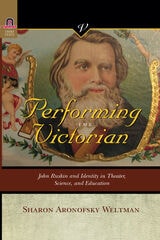
PERFORMING THE VICTORIAN
JOHN RUSKIN AND IDENTITY IN THEATER, SCIENCE, AND EDUCATIONSHARON ARONOFSKY WELTMAN
The Ohio State University Press, 2007
Packrat Middens
The Last 40,000 Years of Biotic ChangeEdited by Julio L. Betancourt, Thomas R. Van Devender, and Paul S. Martin
University of Arizona Press, 1990
This book brings together the findings and views of many of the researchers investigating fossil middens in the United States, Mexico, Africa, the Middle East, and Australia. The contributions serve to open a forum for methodological concerns, update the fossil record of various geographic regions, introduce new applications, and display the vast potential for fossil midden analysis in arid regions worldwide. The findings presented here will serve to foster regional research and to promote general studies devoted to global climate change. Included in the text are more than two hundred charts, photographs, and maps.
Pain, Pleasure, and the Greater Good
From the Panopticon to the Skinner Box and BeyondCathy Gere
University of Chicago Press, 2017
These are questions that have bedeviled scientists, doctors, and ethicists for decades, and in Pain, Pleasure, and the Greater Good, Cathy Gere presents the gripping story of how we have addressed them over time. Today, we are horrified at the idea that a medical experiment could be performed on someone without consent. But, as Gere shows, that represents a relatively recent shift: for more than two centuries, from the birth of utilitarianism in the eighteenth century, the doctrine of the greater good held sway. If a researcher believed his work would benefit humanity, then inflicting pain, or even death, on unwitting or captive subjects was considered ethically acceptable. It was only in the wake of World War II, and the revelations of Nazi medical atrocities, that public and medical opinion began to change, culminating in the National Research Act of 1974, which mandated informed consent. Showing that utilitarianism is based in the idea that humans are motivated only by pain and pleasure, Gere cautions that that greater good thinking is on the upswing again today and that the lesson of history is in imminent danger of being lost.
Rooted in the experiences of real people, and with major consequences for how we think about ourselves and our rights, Pain, Pleasure, and the Greater Good is a dazzling, ambitious history.

Pairing STEAM with Stories
46 Hands-On Activities for ChildrenElizabeth M. McChesney
American Library Association, 2020
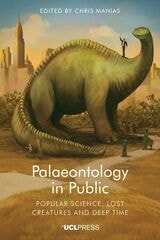
Palaeontology in Public
Popular Science, Lost Creatures and Deep TimeEdited by Chris Manias
University College London, 2025
From towering dinosaurs to early human ancestors, paleontology has long captured the public imagination, yet its scientific standing has often been precarious. Palaeontology in Public studies how paleontology’s public presence has shaped both the field itself and broader cultural understandings of science and nature. Through case studies spanning two centuries, this book explores the deep entanglement between vertebrate paleontology and popular culture, from early fossil discoveries to modern cinematic depictions.
Dinosaurs naturally take center stage, taking Spinosaurus, Jurassic Park, and Winsor McCay’s Gertie the Dinosaur, for instance. However, equally important are the stories of Glyptodons, Mesozoic mammals, and early human fossils like Neanderthals and Australopithecus. The book draws from history, art, literature, archaeology, and science communication to depict how public fascination has fueled scientific discovery while also shaping our collective vision of life’s ancient past.
A compelling read for historians of science, paleontologists, and those with a special interest in prehistoric creatures, Palaeontology in Public highlights the enduring power of fossils also as cultural icons that continue to inspire and spark debate.

Paleoenvironments in the Namib Desert
The Lower Tumas Basin in the Late CenozoicM. Justin Wilkinson
University of Chicago Press, 1990
Paleontology
A Brief History of LifeIan Tattersall
Templeton Press, 2010
"Endlessly absorbing and informative. It would be hard to imagine a better introduction to this most important and fascinating field.”—Bill Bryson, author of A Short History of Nearly Everything
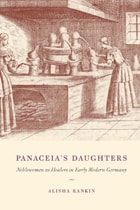
Panaceia's Daughters
Noblewomen as Healers in Early Modern GermanyAlisha Rankin
University of Chicago Press, 2013

Pandora's Locks
The Opening of the Great Lakes-St. Lawrence SeawayJeff Alexander
Michigan State University Press, 2009
The St. Lawrence Seaway was considered one of the world's greatest engineering achievements when it opened in 1959. The $1 billion project-a series of locks, canals, and dams that tamed the ferocious St. Lawrence River-opened the Great Lakes to the global shipping industry.
Linking ports on lakes Superior, Michigan, Huron, Erie, and Ontario to shipping hubs on the world's seven seas increased global trade in the Great Lakes region. But it came at an extraordinarily high price. Foreign species that immigrated into the lakes in ocean freighters' ballast water tanks unleashed a biological shift that reconfigured the world's largest freshwater ecosystems.
Pandora's Locks is the story of politicians and engineers who, driven by hubris and handicapped by ignorance, demanded that the Seaway be built at any cost. It is the tragic tale of government agencies that could have prevented ocean freighters from laying waste to the Great Lakes ecosystems, but failed to act until it was too late. Blending science with compelling personal accounts, this book is the first comprehensive account of how inviting transoceanic freighters into North America's freshwater seas transformed these wondrous lakes.
Papers of the Michigan Academy of Science, Arts and Letters
containing papers submitted at the annual meeting in 1921Edited by Paul S. Welch and Eugene S. McCartney
University of Michigan Press, 1923

Parabolic Equation Methods for Electromagnetic Wave Propagation
Mireille Levy
The Institution of Engineering and Technology, 2000
Paradigms and Barriers
How Habits of Mind Govern Scientific BeliefsHoward Margolis
University of Chicago Press, 1993
innovative interpretation of Thomas S. Kuhn's landmark idea
of "paradigm shifts," applying insights from cognitive
psychology to the history and philosophy of science.
Building upon the arguments in his acclaimed Patterns,
Thinking, and Cognition, Margolis suggests that the
breaking down of particular habits of mind—of critical
"barriers"—is key to understanding the processes through
which one model or concept is supplanted by another.
Margolis focuses on those revolutionary paradigm shifts—
such as the switch from a Ptolemaic to a Copernican
worldview—where challenges to entrenched habits of mind
are marked by incomprehension or indifference to a new
paradigm. Margolis argues that the critical problem for a
revolutionary shift in thinking lies in the robustness of the
habits of mind that reject the new ideas, relative to the
habits of mind that accept the new ideas.
Margolis applies his theory to famous cases in the history of
science, offering detailed explanations for the transition
from Ptolemaic to cosmological astronomy, the emergence of
probability, the overthrow of phlogiston, and the emergence
of the central role of experiment in the seventeenth century.
He in turn uses these historical examples to address larger
issues, especially the nature of belief formation and
contemporary debates about the nature of science and the
evolution of scientific ideas.
Howard Margolis is a professor in the Harris Graduate School
of Public Policy Studies and in the College at the University
of Chicago. He is the author of Selfishness, Altruism,
and Rationality and Patterns, Thinking, and
Cognition, both published by the University of Chicago
Press.
Parascientific Revolutions
The Science and Culture of the ParanormalDerek Lee
University of Minnesota Press, 2025
Unraveling the hidden influence of the paranormal on science, literature, and belief
Telepathy, clairvoyance, precognition, and telekinesis: these attributes of the paranormal mind are widely dismissed as nonsense, but what can an exploration of such pseudoscientific phenomena tell us about accepted scientific and cultural thought? In Parascientific Revolutions, Derek Lee traces the evolution of psi epistemologies across the twentieth and twenty-first centuries to uncover how these ideas have migrated into scientific fields such as quantum physics and neurology, as well as diverse literary genres including science fiction, ethnic literature, and even government training manuals.
Lee introduces the groundbreaking concept of “parascience,” a dynamic cultural space where ideas rejected by the scientific establishment blend with alternative strains of literary, mythic, and philosophical thought to regenerate and return to mainstream discourse. From early modernist works by James Joyce to postwar speculative fiction by Philip K. Dick to ethnofuturist narratives by Ruth Ozeki, Parascientific Revolutions demonstrates how cultural and intellectual currents reshape paranormal ideas over time. Examining psychic surveillance programs like Project Stargate and bizarre particles of extrasensory perception such as the psitron, Lee illustrates the ways paranormal concepts persist and evolve to influence culture.
Presenting pseudoscience as an inevitable by-product of the scientific process, Parascientific Revolutions offers fresh insight into how the paranormal mind continually challenges our understanding of knowledge and belief. It invites readers to reconsider the boundaries between science and the unknown, revealing a world where speculative thought and empirical investigation are deeply intertwined.
Retail e-book files for this title are screen-reader friendly with images accompanied by short alt text and/or extended descriptions.
Parasitism
The Ecology and Evolution of Intimate InteractionsClaude Combes
University of Chicago Press, 2001
Parish Boundaries
The Catholic Encounter with Race in the Twentieth-Century Urban NorthJohn T. McGreevy
University of Chicago Press, 1996
"Parish Boundaries can take its place in the front ranks of the literature of urban race relations."—Jonathan Dorfman, Washington Post Book Review
"A prodigiously researched, gracefully written book distinguished especially by its seamless treatment of social and intellectual history."—Robert Orsi, American Historical Review
"Parish Boundaries will fascinate historians and anyone interested in the historic connection between parish and race."—Ed Marciniak, Chicago Tribune
"The history that remains to be written will rest on the firm foundation of Mr. McGreevy's remarkable book."—Richard Wightman Fox, New York Times Book Review
Participatory Planning for Climate Compatible Development in Maputo, Mozambique
Edited by Vanesa Castán Broto, Jonathan Ensor, Emily Boyd, Charlotte Allen, Carlos Seventine, and Domingos Augusto Macucule
University College London, 2015
Partitioning Palestine
British Policymaking at the End of EmpirePenny Sinanoglou
University of Chicago Press, 2019
Partners in Science
Foundations and Natural Scientists, 1900-1945Robert E. Kohler
University of Chicago Press, 1991
"This book is a rich historical tapestry of people, institutions and scientific ideas. It will stand for a long time as a source of precise and detailed information about an important aspect of the scientific enterprise. . .It also contains many valuable lessons for the coming years."—John Ziman, Times Higher Education Supplement
Past Climates
Tree Thermometers, Commodities, and PeopleBy Leona Marshall Libby
University of Texas Press, 1983
Leona Marshall Libby was a pioneer in modern climatic research, a field that gained great impetus in the late twentieth century because of the promise it holds for predicting future climatic trends. Libby’s work led to remarkable new procedures for investigating long-term changes in precipitation and temperature and thereby greatly expanding our knowledge of past climates.
As Professor Rainer Berger writes in his foreword:
“In recent years, tree ring–based temperature data have been collected which go far beyond the records available to historians. These data can be analyzed by Fourier transforms which identify certain periodicities. . . . Climatic changes detected by tree rings have been checked against historic records. . . . The correspondence is astonishing. . . .
“At present weather forecasting is becoming more accurate for periods on the order of days, weeks, and months. Climatic prognoses have also been attempted for very long times of tens of thousands of years. But the intermediate range in the decades and centuries has so far been an enigma. It is here where tree ring thermometry plays its trump cards.
“. . . Its potential is enormous in assessing worldwide crop yields, water inventory, heating requirements, stockpiling policies, and construction planning as well as political and military prospects.”
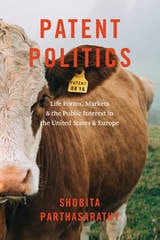
Patent Politics
Life Forms, Markets, and the Public Interest in the United States and EuropeShobita Parthasarathy
University of Chicago Press, 2017
To demonstrate this, Parthasarathy takes readers through a particularly fierce and prolonged set of controversies over patents on life forms linked to important advances in biology and agriculture and potentially life-saving medicines. Comparing battles over patents on animals, human embryonic stem cells, human genes, and plants in the United States and Europe, she shows how political culture, ideology, and history shape patent system politics. Clashes over whose voices and which values matter in the patent system, as well as what counts as knowledge and whose expertise is important, look quite different in these two places. And through these debates, the United States and Europe are developing very different approaches to patent and innovation governance. Not just the first comprehensive look at the controversies swirling around biotechnology patents, Patent Politics is also the first in-depth analysis of the political underpinnings and implications of modern patent systems, and provides a timely analysis of how we can reform these systems around the world to maximize the public interest.
Patterns in Nature
The Analysis of Species Co-OccurrencesJames G. Sanderson and Stuart L. Pimm
University of Chicago Press, 2015
Travel from island to island and the species change. Travel along any gradient—up a mountain, from forest into desert, from low tide to high tide on a shoreline —and again the species change, sometimes abruptly. What explains the patterns of these distributions? Some patterns might be as random as a coin toss. But as with a coin toss, can ecologists differentiate associations caused by a multiplicity of complex, idiosyncratic factors from those structured by some unidentified but simple mechanisms? Can simple mechanisms that structure communities be inferred from observations of which species associations naturally occur? For decades, community ecologists have debated about whether the patterns are random or show the geographically pervasive effect of competition between species. Bringing this vigorous debate up to date, this book undertakes the identification and interpretation of nature’s large-scale patterns of species co-occurrence to offer insight into how nature truly works.
Patterns in Nature explains the computing and conceptual advances that allow us to explore these issues. It forces us to reexamine assumptions about species distribution patterns and will be of vital importance to ecologists and conservationists alike.
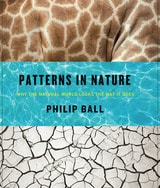
Patterns in Nature
Why the Natural World Looks the Way It DoesPhilip Ball
University of Chicago Press, 2016
Unlike the patterns we create in technology, architecture, and art, natural patterns are formed spontaneously from the forces that act in the physical world. Very often the same types of pattern and form – spirals, stripes, branches, and fractals, say—recur in places that seem to have nothing in common, as when the markings of a zebra mimic the ripples in windblown sand. That’s because, as Patterns in Nature shows, at the most basic level these patterns can often be described using the same mathematical and physical principles: there is a surprising underlying unity in the kaleidoscope of the natural world. Richly illustrated with 250 color photographs and anchored by accessible and insightful chapters by esteemed science writer Philip Ball, Patterns in Nature reveals the organization at work in vast and ancient forests, powerful rivers, massing clouds, and coastlines carved out by the sea.
By exploring similarities such as those between a snail shell and the swirling stars of a galaxy, or the branches of a tree and those of a river network, this spectacular visual tour conveys the wonder, beauty, and richness of natural pattern formation.
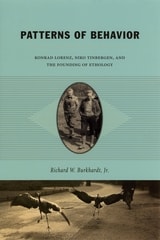
Patterns of Behavior
Konrad Lorenz, Niko Tinbergen, and the Founding of EthologyRichard W. Burkhardt, Jr.
University of Chicago Press, 2005
In Patterns of Behavior, Richard W. Burkhardt Jr. traces the scientific theories, practices, subjects, and settings integral to the construction of a discipline pivotal to our understanding of the diversity of life. Central to this tale are Konrad Lorenz and Niko Tinbergen, 1973 Nobel laureates whose research helped legitimize the field of ethology and bring international attention to the culture of behavioral research. Demonstrating how matters of practice, politics, and place all shaped "ethology's ecologies," Burkhardt's book offers a sensitive reading of the complex interplay of the field's celebrated pioneers and a richly textured reconstruction of ethology's transformation from a quiet backwater of natural history to the forefront of the biological sciences.
Patterns, Thinking, and Cognition
A Theory of JudgmentHoward Margolis
University of Chicago Press, 1988
Illusions of judgment—standard anomalies where people consistently misjudge or misperceive what is logically implied or really present—are often used in cognitive science to explore the workings of the cognitive process. The explanations given for these anomalous results have generally explained only the anomaly under study and nothing more. Margolis provides a provocative and systematic analysis of these illusions, which explains why such anomalies exist and recur.
Offering empirical applications of his theory, Margolis turns to historical cases to show how an individual's cognitive repertoire—the available cognitive patterns and their relation to cues—changes or resists changes over time. Here he focuses on the change in worldview occasioned by the Copernican discovery: not only how an individual might come to see things in a radically new way, but how it is possible for that new view to spread and become the dominant one. A reanalysis of the trial of Galileo focuses on social cognition and its interactions with politics.
In challenging the prevailing paradigm for understanding how the human mind works, Patterns, Thinking, and Cognition is certain to stimulate fruitful debate.
Peak Oil
Apocalyptic Environmentalism and Libertarian Political CultureMatthew Schneider-Mayerson
University of Chicago Press, 2015
In Peak Oil, Matthew Schneider-Mayerson takes readers deep inside the world of “peakists,” showing how their hopes and fears about the postcarbon future led them to prepare for the social breakdown they foresee—all of which are fervently discussed and debated via websites, online forums, videos, and novels. By exploring the worldview of peakists, and the unexpected way that the fear of peak oil and climate change transformed many members of this left-leaning group into survivalists, Schneider-Mayerson builds a larger analysis of the rise of libertarianism, the role of oil in modern life, the political impact of digital technologies, the racial and gender dynamics of post-apocalyptic fantasies, and the social organization of environmental denial.

Pellegrino's Clinical Bioethics
A CompendiumEdmund Pellegrino
Catholic University of America Press, 2023
Penguins in the Desert
Eric Wagner
Oregon State University Press, 2018
Eric Wagner joined her team for six months in 2008, and in Penguins in the Desert, he chronicles that season in the remarkable lives of both the Magellanic penguins of Punta Tombo and the scientists who track their every move. For Boersma, the penguins are ecosystem sentinels. At the colony’s peak, more than a million birds bred there, but now less than half as many do. In confronting this fact, Boersma tackles some of the most urgent issues facing penguins and people today. What is the best way to manage our growing appetite for fish? How do we stop catastrophic oil spills from coating birds? How will we address the looming effects of climate change?
As Wagner spends more and more time with the penguins and the scientists in the field, other equally pressing questions come to mind. What is it like to be beaten by a penguin? Or bitten by one? How can a person be so dirty for so many months on end? In a tale that is as much about life in the field as it is about one of the most charismatic creatures on earth, Wagner brings humor, warmth, and hard-won insight as he tries to find the answer to what turns out to be the most pressing question of all: What does it mean to know an animal and to grapple with the consequences of that knowing?
People and Plants in Ancient Eastern North America
Edited by Paul E. Minnis
University of Arizona Press, 2003
The most comprehensive overview in more than half a century about the interconnectedness of prehistoric Native Americans and their botanical world, this book and its forthcoming companion volume, People and Plants in Ancient Western North America, present the latest information on three major topics: the use of native plants, the history of crops and their uses, and how humans affected their environment. In this volume, expert scholars summarize the prehistoric ethnobotany of four regions: the Eastern Woodlands (W. Cowan, K. Gremillion, M. Scarry, B. Smith, and G. Wagner), Northeast (G. Crawford and D. Smith), Plains (M. Adair), and Caribbean (L. Newsom and D. Pearsall).
This volume contributes significantly to our understanding of the lives of prehistoric people as well as the forces that influenced their communities, their ingenuity, and their ecological impact. It also serves as a guide for designing environmentally sustainable lives today.
People and Plants in Ancient Western North America
Edited by Paul E. Minnis
University of Arizona Press, 2004
The most comprehensive overview in more than half a century on the interconnectedness of people and plants, this book and its companion volume, People and Plants in Ancient Eastern North America, present the latest information on three major topics: the uses of native plants, the history of crops and their uses, and the impact of humans on their environment. They not only contribute to our understanding of the lives of prehistoric people but also serve as guides for designing sustainable living today.

People in Control
Human factors in control room designJan Noyes
The Institution of Engineering and Technology, 2001
People of the Desert and Sea
Ethnobotany of the Seri IndiansRichard Stephen Felger, Mary Beck Moser
University of Arizona Press, 1985
"To read and gaze through this elegantly illustrated book is to be exposed, as if through a work of science fiction, to an astonishing and unknown cultural world."—North Dakota Quarterly
People, Plants, and Landscapes
Studies in PaleoethnobotanyKristen J. Gremillion
University of Alabama Press, 1997
Discover how ancient peoples and plants shaped one another across generations and landscapes.
People, Plants, and Landscapes showcases the potential of modern paleoethnobotany, an interdisciplinary field that explores the interactions between human beings and plants by examining archaeological evidence. Using different methods and theoretical approaches, the essays in this work apply botanical knowledge to studies of archaeological plant remains and apply paleoethnobotany to nonarchaeological sources of evidence. The resulting techniques often lie beyond the traditional boundaries of either archaeology or botany.
With this ground-breaking work, the technically and methodologically enhanced paleoethnobotany of the 1990s has joined forces with ecological and evolutionary theory to forge explanations of changing relationships between human and plant populations.
Perception, Theory, and Commitment
The New Philosophy of ScienceHarold I. Brown
University of Chicago Press, 1979
empiricist tradition and then the more historical and process-oriented
approach he calls the “new philosophy of science.” Examining the two
together, he describes the very transition between them as an example
of the kind of change in historical tradition with which the new
philosophy of science concerns itself.
“I would recommend it to every historian of science and to every
philosopher of science. . . . I found it clear, readable, accurate,
cogent, insightful, perceptive, judicious, and full of original
ideas.”
—Maurice A. Finocchiaro, Isis
“The best and most original aspect of the book is its overall
conception.”
—Thomas S. Kuhn
Harold I. Brown is professor of philosophy at Northern Illinois
University.

Perfect Motherhood
Science and Childrearing in AmericaApple, Rima
Rutgers University Press, 2006
Parenting today is virtually synonymous with worry. We want to ensure that our children are healthy, that they get a good education, and that they grow up to be able to cope with the challenges of modern life. In our anxiety, we are keenly aware of our inability to know what is best for our children. When should we toilet train? What is the best way to encourage a fussy child to eat? How should we protect our children from disease and injury?
Before the nineteenth century, maternal instinct—a mother’s “natural know-how”—was considered the only tool necessary for effective childrearing. Over the past two hundred years, however, science has entered the realm of motherhood in increasingly significant ways. In Perfect Motherhood, Rima D. Apple shows how the growing belief that mothers need to be savvy about the latest scientific directives has shifted the role of expert away from the mother and toward the professional establishment. Apple, however, argues that most women today are finding ways to negotiate among the abundance of scientific recommendations, their own knowledge, and the reality of their daily lives.
Performance All the Way Down
Genes, Development, and Sexual DifferenceRichard O. Prum
University of Chicago Press, 2023
The idea that gender is a performance—a tenet of queer feminist theory since the nineties—has spread from college classrooms to popular culture. This transformative concept has sparked reappraisals of social expectations as well as debate over not just gender, but sex: what it is, what it means, and how we know it. Most scientific and biomedical research over the past seventy years has assumed and reinforced a binary concept of biological sex, though some scientists point out that male and female are just two outcomes in a world rich in sexual diversity.
In Performance All the Way Down, MacArthur Fellow and Pulitzer Prize finalist Richard O. Prum brings feminist thought into conversation with biology, arguing that the sexual binary is not essential to human genes, chromosomes, or embryos. Our genomes are not blueprints, algorithms, or recipes for the physical representation of our individual sexual essences or fates. In accessible language, Prum shows that when we look closely at the science, we see that gene expression is a material action in the world, a performance through which the individual regulates and achieves its own becoming. A fertilized zygote matures into an organism with tissues and organs, neurological control, immune defenses, psychological mechanisms, and gender and sexual behavior through a performative continuum. This complex hierarchy of self-enactment reflects the evolved agency of individual genes, molecules, cells, and tissues.
Rejecting the notion of an intractable divide between the humanities and the sciences, Prum proves that the contributions of queer and feminist theorists can help scientists understand the human body in new ways, yielding key insights into genetics, developmental biology, physiology. Sure to inspire discussion, Performance All the Way Down is a book about biology for feminists, a book about feminist theory for biologists, and a book for anyone curious about how our sexual bodies grow.
Perfumed
The Story of Fragrance in the Ancient MediterraneanAnnette Giesecke
J. Paul Getty Trust, The, 0
A heady look at the fascinating world of perfumes, incense, and other aromatics in the ancient Mediterranean and their vibrant and sometimes violent history.
Perfumed invites you to breathe deeply and inhale the incense burning on the altars of the Greeks, perfumes sprinkled on spectators in Roman amphitheaters or wafting from the robes of Persian kings, and unguents filling Egyptian tombs. Though we don’t know who first burned a fragrant branch to perfume their dwelling or rubbed an aromatic petal against their skin, evidence demonstrates that such practices were ubiquitous by the Bronze Age.
- Opens with a richly illustrated overview of aromatics in Mesopotamia, Persia, Egypt, Greece, and Roman Italy.
- Explores the role fragrance played in all aspects of daily life and details major ingredients, including balsam, frankincense, rose, myrrh, saffron, and more.
- Features vivid passages from ancient sources, including perfume recipes and intriguing anecdotes such as the historian Herodotus’s account of winged serpents guarding frankincense trees in Arabia or Pliny the Elder’s claim that the emperor Nero burned a year’s harvest of frankincense for his wife’s funeral (after likely murdering her).
- Contains over 80 images drawn from a diverse range of ancient sources and archaeological evidence.
Experience the ancient world through its most evocative sense. Best-selling author Annette Giesecke’s Perfumed is essential reading for anyone with an interest in plants, perfumes, and other aromatics, as well as the rich, interrelated cultures of the Mediterranean.
Peril in the Ponds
Deformed Frogs, Politics, and a Biologist's QuestJudy Helgen
University of Massachusetts Press, 2012
By the 1990s, wetlands across the United States were endangered from pollution and decades of drainage to convert them into farmland and urban developments. But when deformed frogs—many with missing legs or eyes, footless stumps, or misshapen jaws—began to emerge from Minnesota wetlands, alarm bells went off. What caused such deformities? Pollution? Ultraviolet rays? Biological agents? And could the mysterious cause also pose a threat to humans?
Judy Helgen writes with passionate concern about vulnerable frogs and wetlands as she navigates through a maze of inquisitive media and a reluctant government agency. She reports on the complexity of a growing catastrophe for frogs and broadens the issue as she researches and meets with scientists from around the world. She affirms the importance of examining aquatic life to understand pollution and the need to rescue our remaining wetlands. She also shares the fears expressed by the teachers, students, and other citizens who found these creatures, sensed a problem, and looked to her for answers. Ultimately, this is a story about the biological beauty of wetlands and our need to pay attention to the environment around us.
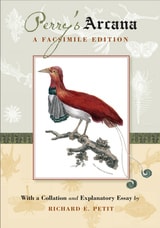
Perry's Arcana
A Facsimile EditionRichard E. Petit
Temple University Press, 2009
Now at last this neglected gem has been revived for scientists, students, and aficionados of natural history. New scholarship is combined with modern digital reproduction techniques to do full justice to the beautiful plates. An up-to-date account of all the species is given, along with a full collation and extensive notes, by the eminent natural historian Richard E. Petit.
The Arcana is technically interesting too, as its glowing plates were printed with variously colored inks to suppress their outlines. Its appeal will extend not only to academic libraries and scholars specializing in various branches of natural history and the history of science, but also to collectors of beautiful natural history books and enthusiasts of Regency Britain.
Personal Knowledge
Towards a Post-Critical PhilosophyMichael Polanyi
University of Chicago Press, 1974
The tendency to make knowledge impersonal in our culture has split fact from value, science from humanity. Polanyi wishes to substitute for the objective, impersonal ideal of scientific detachment an alternative ideal which gives attention to the personal involvement of the knower in all acts of understanding. His book should help to restore science to its rightful place in an integrated culture, as part of the whole person's continuing endeavor to make sense of the totality of his experience. In honor of this work and his The Study of Man Polanyi was presented with the Lecomte de Noüy Award for 1959.
Personal Knowledge
Towards a Post-Critical PhilosophyMichael Polanyi
University of Chicago Press, 2015
Perspectives in Computation
Robert Geroch
University of Chicago Press, 2009
Perspectives on the Human Genome Project and Genomics
Christopher R. Donohue
University of Minnesota Press, 2026
Interdisciplinary voices reflect on some of the most complex and consequential scientific undertakings of our time
Perspectives on the Human Genome Project and Genomics is a groundbreaking volume that examines the pivotal roles of the National Institutes of Health (NIH) and the National Human Genome Research Institute (NHGRI) in the Human Genome Project (HGP) and the development of other major genomics projects. Drawing on newly uncovered archival materials and oral histories from NHGRI, this volume offers a multifaceted narrative of transformative scientific achievements of the twentieth and twenty-first centuries.
Coeditors Christopher R. Donohue and Alan C. Love bring together a range of perspectives on the HGP’s progress and legacy, as well as other major genomics projects, to explore not only their scientific achievements but also their social and political dimensions. Presenting reflections from historians, philosophers, and sociologists alongside those of key NHGRI scientists like Eric Green, Mark Guyer, and Elise Feingold; experts like Nature editor-in-chief Magdalena Skipper and geneticist Eric Vilain; and scholars of the ethical, legal, and social implications of genomics like Jean McEwan and Joy Boyer, Perspectives on the Human Genome Project and Genomics highlights the international, interdisciplinary collaborations and collective long view that underpinned these genomics initiatives aimed at a better understanding of our basic biology and genetic diseases.
From genomic variation and sequencing technologies to the integration of big data and the influence of ancestry and gender, this book is an essential resource for deepening the discussion of the scientific, historical, and ethical impacts of genomics and a fascinating collection of insights into coordinated science in the making.
Contributors: Rina Bliss, Joy Boyer, Lisa D. Brooks, Michel Dubois, Elise A. Feingold, Adam Felsenfeld, Miguel García-Sancho, Eric D. Green, Catherine Guaspare, Chris Gunter, Stephan Guttinger, Mark Guyer, Elke Jordan, Jonathan E. LoTempio Jr., Jean McEwen, Jane Peterson, Anya Plutynski, Ramya M. Rajagopalan, Emanuele Ratti, Sahotra Sarkar, Jeffery A. Schloss, Magdalena Skipper, Alexandra Soulier, Thomas Stoeger, Eric Vilain, Kris A. Wetterstrand.
Retail e-book files for this title are screen-reader friendly with images accompanied by short alt text and/or extended descriptions.
Peyote
The Divine CactusEdward F. Anderson
University of Arizona Press, 1996
What is it in peyote that causes such unusual effects? Can modern medical science learn anything from Native Americans’ use of peyote in curing a wide variety of ailments? What is the Native American Church, and how do its members use peyote? Does anyone have the legal right to use drugs or controlled substances in religious ceremonies?
Within this volume are answers to these and dozens of other questions surrounding the controversial and remarkable cactus. Greatly expanded and brought up-to-date from the 1980 edition, these pages describe peyote ceremonies and the users’ experiences, and also cover the many scientific and legal aspects of using the plant. Well written, informative, comprehensive, and enlightening, the book will be welcomed by counselors, anthropologists, historians, physicians, chemists, lawyers, and observers of the contemporary drug scene, as well as by interested general readers.

Phantoms of the Prairie
The Return of Cougars to the MidwestJohn W. Laundré
University of Wisconsin Press, 2012
Last seen in the 1880s, cougars (also known as pumas or mountain lions) are making a return to the plains regions of the Midwest. Their comeback, heralded by wildlife enthusiasts, has brought concern and questions to many. Will the people of the region make room for cougars? Can they survive the highly altered landscape of the Midwest? Is there a future for these intrepid pioneers if they head even farther east?
Using GIS technology, and historical data, among many other methods, Phantoms of the Prairie takes readers on a virtual journey, showing how the cougar might move over the landscape with minimal human contact. Drawing on his years of research on cougars, John W. Laundré offers an overview of what has been, what is, and what might be regarding the return of cougars to their ancestral prairie homeland.
Pharmocracy
Value, Politics, and Knowledge in Global BiomedicineKaushik Sunder Rajan
Duke University Press, 2017
Phenomena
Doppelmayr's Celestial AtlasGiles Sparrow
University of Chicago Press, 2022
The expansive and intricate Atlas Coelestis, created by Johann Doppelmayr in 1742, set out to record everything known about astronomy at the time, covering constellations, planets, moons, comets, and more, all rendered in exquisite detail. Through stunning illustrations, historical notes, and scientific explanations, Phenomena contextualizes Doppelmayr’s atlas and creates a spectacular handbook to the heavens.
Phenomena begins by introducing Doppelmayr’s life and work, placing his extraordinary cosmic atlas in the context of discoveries made in the Renaissance and Enlightenment and highlighting the significance of its publication. This oversized book presents thirty beautifully illustrated and richly annotated plates, covering all the fundamentals of astronomy—from the dimensions of the solar system to the phases of the moon and the courses of comets. Each plate is accompanied by expert analysis from astronomer Giles Sparrow, who deftly presents Doppelmayr’s references and cosmological work to a modern audience. Each plate is carefully deconstructed, isolating key stars, planets, orbits, and moons for in-depth exploration. A conclusion reflects on the development of astronomy since the publication of the Atlas and traces the course of the science up to the present day. Following the conclusion is a timeline of key discoveries from ancient times onward along with short biographies of the key players in this history.
Phenomenology and Theory of Science
Aron Gurwitsch
Northwestern University Press, 1974
Philadelphia and the Development of Americanist Archaeology
Edited by Don Fowler and David R. Wilcox
University of Alabama Press, 2003
For two and a half centuries, Philadelphians have been actively involved in archaeological research. In particular, three vital and venerable cultural institutions—the American Philosophical Society (founded 1743), the Academy of Natural Sciences (founded 1812), and the University Museum of the University of Pennsylvania (founded 1893)—have nurtured the "systematic study of antiquities."
The ten essays in this volume focus on Philadelphians who were concerned with Americanist archaeology, or the "archaeology of the New World." As Europeans, and later, Euroamericans, spread across North, Central, and South America in the 16th through the 19th centuries, they encountered a bewildering variety of native peoples, customs, and languages, as well as tens of thousands of ancient ruins attesting to a long endemic culture history of obvious complexity.
The essays examine most of the key players in the development of the methods to study these phenomena. Enlightenment scholars such as Benjamin Smith Barton, Peter S. Duponceau, Thomas Jefferson, Daniel Garrison Brinton, John Wesley Powell, and Benjamin Rush all contributed to the surge of scientific study of America's prehistoric cultures. So did two pioneering women who have received scant attention to date—Sara Yorke Stevenson and Lucy W. Wilson—but whose work is well treated in this study. Other essays detail the varied contributions of C. C. Abbott, Frank Hamilton Cushing, Clarence B. Moore, Edgar Lee Hewett, and John L. Cotter. This volume should stimulate continued interest in the origins and history of archaeology and the relationship of Philadelphia patrons and institutions to scientific inquiry.
Philosophical Instruments
Minds and Tools at WorkDaniel Rothbart. Foreword by Rom Harré
University of Illinois Press, 2006
The surprising roles of instruments and experimentation in acquiring knowledge
In Philosophical Instruments Daniel Rothbart argues that our tools are not just neutral intermediaries between humans and the natural world, but are devices that demand new ideas about reality. Just as a hunter's new spear can change their knowledge of the environment, so can the development of modern scientific equipment alter our view of the world.
Working at the intersections of science, technology, and philosophy, Rothbart examines the revolution in knowledge brought on by recent advances in scientific instruments. Full of examples from historical and contemporary science, including electron scanning microscopes, sixteenth-century philosophical instruments, and diffraction devices used by biochemical researchers, Rothbart explores the ways in which instrumentation advances a philosophical stance about an instrument's power, an experimenter's skills, and a specimen's properties. Through a close reading of engineering of instruments, he introduces a philosophy from (rather than of) design, contending that philosophical ideas are channeled from design plans to models and from model into the use of the devices.