Results by title
140 books match the query 'Science Fiction & Fantasy' and 4 start with p
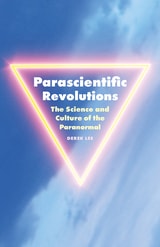
Parascientific Revolutions
The Science and Culture of the ParanormalDerek Lee
University of Minnesota Press, 2025
Unraveling the hidden influence of the paranormal on science, literature, and belief
Telepathy, clairvoyance, precognition, and telekinesis: these attributes of the paranormal mind are widely dismissed as nonsense, but what can an exploration of such pseudoscientific phenomena tell us about accepted scientific and cultural thought? In Parascientific Revolutions, Derek Lee traces the evolution of psi epistemologies across the twentieth and twenty-first centuries to uncover how these ideas have migrated into scientific fields such as quantum physics and neurology, as well as diverse literary genres including science fiction, ethnic literature, and even government training manuals.
Lee introduces the groundbreaking concept of “parascience,” a dynamic cultural space where ideas rejected by the scientific establishment blend with alternative strains of literary, mythic, and philosophical thought to regenerate and return to mainstream discourse. From early modernist works by James Joyce to postwar speculative fiction by Philip K. Dick to ethnofuturist narratives by Ruth Ozeki, Parascientific Revolutions demonstrates how cultural and intellectual currents reshape paranormal ideas over time. Examining psychic surveillance programs like Project Stargate and bizarre particles of extrasensory perception such as the psitron, Lee illustrates the ways paranormal concepts persist and evolve to influence culture.
Presenting pseudoscience as an inevitable by-product of the scientific process, Parascientific Revolutions offers fresh insight into how the paranormal mind continually challenges our understanding of knowledge and belief. It invites readers to reconsider the boundaries between science and the unknown, revealing a world where speculative thought and empirical investigation are deeply intertwined.
Retail e-book files for this title are screen-reader friendly with images accompanied by short alt text and/or extended descriptions.
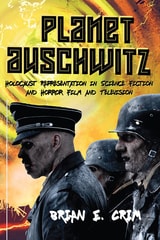
Planet Auschwitz
Holocaust Representation in Science Fiction and Horror Film and TelevisionBrian E. Crim
Rutgers University Press, 2020
Planet Auschwitz website (https://planetauschwitz.com)
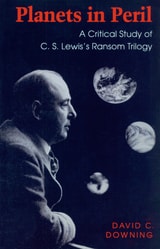
Planets in Peril
A Critical Study of C. S. Lewis's Ransom TrilogyDavid C. Downing
University of Massachusetts Press, 1992
A critical study of C.S. Lewis's “Ransom Trilogy” which analyses Lewis's methods and meanings, concentrating on this trilogy but also including relevant secondary work. Lewis's literary scholarship and display of Christian values are incorporated into this discussion.
Post-Totalitarian Spanish Fiction
Robert C. Spires
University of Missouri Press, 1996
Focusing on post-Franco Spanish fiction from 1975 to 1989, Robert C. Spires applies the concepts of episteme and discursive field to the ways in which language from multiple sources determines how reality is defined at a given moment and how it influences ideas, attitudes, and feelings. Spires identifies bonds connecting disparate academic disciplines and sociopolitical events by exploring how the world of fiction serves as a register of the nonfictional world.
In 1989 the Soviet bloc, along with other totalitarian regimes in South America and Africa, disappeared from the global geopolitical map. Spain set the precedent for this decentralizing revolution when, in 1975, its longtime dictator, Francisco Franco, died; democratic elections followed two years later. This study records an epistemic shift away from logocentric and totalizing approaches to reality by analyzing the links between the novelistic strategies used by Spanish writers from 1975 to 1989 and recent international events and theoretical trends in science, mathematics, communication studies, and art. Highlighting worldwide processes of fragmentation, decentralization, and pluralism, Spires foregrounds ways in which literary and scientific approaches to and concepts of reality coincide, with fiction serving as one more register of how reality is conceived at a particular point in time.
Post-Totalitarian Spanish Fiction makes a major contribution in the field of Spanish literature and will enhance the esteem that contemporary Spanish literature is beginning to achieve internationally. In addition, this "epistemocritical" project will serve as a model for literary critics who wish to accommodate the increasingly popular approach labeled "cultural studies" without surrendering the primacy of the literary text.