102 books match the query 'Security (National & International)' and 6 start with p
cover of Palestine America, Volume 102

Palestine America, Volume 102

Mohammed Bamyeh, ed.

Duke University Press, 0

In the many decades of the Palestinian-Israeli conflict, the full complexity of that strife has seldom been heard. This special issue of SAQ seeks to intervene by offering a critique of the Palestinian experience. Mapping the complicated relationship among Palestine, the United States, and Israel, this issue includes critical essays on the politics, culture, literature, and history of the Palestinian people.

Bringing together a diverse group of contributors ranging from Roane Carey of the Nation to scholars in Arab, Jewish, and comparative literary studies, this special issue considers Palestinian gender and identity and their relationship to the conflict with Israel as represented in film, literature, and photography. Essays explore the failed peace process, misrepresentations of the Oslo meetings, the devastating effect of continued Israeli occupation of the Palestinian territories, and the growing controversy over the call for U.S. military divestment from Israel.

Contributors. Ammiel Alcalay, Amal Amireh, Mohammed Bamyeh, Roane Carey, Thomas W. Lockwood, Lisa Suhair Majaj, Saree Makdisi, Melani McAlister, Brinda J. Mehta, John Michael, Andrew N. Rubin, Kenneth Surin
[more]
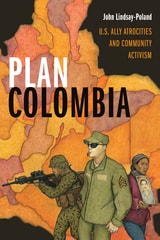
cover of Plan Colombia: U.S. Ally Atrocities and Community Activism

Plan Colombia

U.S. Ally Atrocities and Community Activism

John Lindsay-Poland

Duke University Press, 2018

For more than fifty years, the United States supported the Colombian military in a war that cost over 200,000 lives. During a single period of heightened U.S. assistance known as Plan Colombia, the Colombian military killed more than 5,000 civilians. In Plan Colombia John Lindsay-Poland narrates a 2005 massacre in the San José de Apartadó Peace Community and the subsequent investigation, official cover-up, and response from the international community. He examines how the multibillion-dollar U.S. military aid and official indifference contributed to the Colombian military's atrocities. Drawing on his human rights activism and interviews with military officers, community members, and human rights defenders, Lindsay-Poland describes grassroots initiatives in Colombia and the United States that resisted militarized policy and created alternatives to war. Although they had few resources, these initiatives offered models for constructing just and peaceful relationships between the United States and other nations. Yet, despite the civilian death toll and documented atrocities, Washington, DC, considered Plan Colombia's counterinsurgency campaign to be so successful that it became the dominant blueprint for U.S. military intervention around the world.
[more]
cover of Political Policing: The United States and Latin America

Political Policing

The United States and Latin America

Martha K. Huggins

Duke University Press, 1998

Reconstructing eighty years of history, Political Policing examines the nature and consequences of U.S. police training in Brazil and other Latin American countries. With data from a wide range of primary sources, including previously classified U.S. and Brazilian government documents, Martha K. Huggins uncovers how U.S. strategies to gain political control through police assistance—in the name of hemispheric and national security—has spawned torture, murder, and death squads in Latin America.

After a historical review of policing in the United States and Europe over the past century, Huggins reveals how the United States, in order to protect and strengthen its position in the world system, has used police assistance to establish intelligence and other social control infrastructures in foreign countries. The U.S.-encouraged centralization of Latin American internal security systems, Huggins claims, has led to the militarization of the police and, in turn, to an increase in state-sanctioned violence. Furthermore, Political Policing shows how a domestic police force—when trained by another government—can lose its power over legitimate crime as it becomes a tool for the international interests of the nation that trains it.

Pointing to U.S. responsibility for violations of human rights by foreign security forces, Political Policing will provoke discussion among those interested in international relations, criminal justice, human rights, and the sociology of policing.
[more]
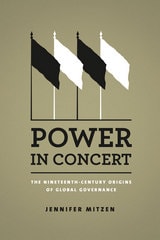
cover of Power in Concert: The Nineteenth-Century Origins of Global Governance

Power in Concert

The Nineteenth-Century Origins of Global Governance

Jennifer Mitzen

University of Chicago Press, 2013
How states cooperate in the absence of a sovereign power is a perennial question in international relations. With Power in Concert, Jennifer Mitzen argues that global governance is more than just the cooperation of states under anarchy: it is the formation and maintenance of collective intentions, or joint commitments among states to address problems together. The key mechanism through which these intentions are sustained is face-to-face diplomacy, which keeps states’ obligations to one another salient and helps them solve problems on a day-to-day basis.

Mitzen argues that the origins of this practice lie in the Concert of Europe, an informal agreement among five European states in the wake of the Napoleonic wars to reduce the possibility of recurrence, which first institutionalized the practice of jointly managing the balance of power. Through the Concert’s many successes, she shows that the words and actions of state leaders in public forums contributed to collective self-restraint and a commitment to problem solving—and at a time when communication was considerably more difficult than it is today. Despite the Concert’s eventual breakdown, the practice it introduced—of face to face diplomacy as a mode of joint problem solving—survived and is the basis of global governance today.

[more]
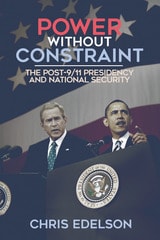
cover of Power without Constraint: The Post-9/11 Presidency and National Security

Power without Constraint

The Post-9/11 Presidency and National Security

Chris Edelson

University of Wisconsin Press, 2016

As a presidential candidate, Barack Obama criticized the George W. Bush administration for its unrestrained actions in matters of national security. In secret Justice Department memos, President Bush’s officials had claimed for the executive branch total authority to use military force in response to threats of terrorism. They set aside laws made by Congress, even criminal laws prohibiting torture and warrantless surveillance. Candidate Obama promised to restore the rule of law and make a clean break with the Bush approach. President Obama has not done so. Why?
            In a thorough comparison of the Bush and Obama administrations’ national security policies, Chris Edelson demonstrates that President Obama and his officials have used softer rhetoric and toned-down legal arguments, but in key areas—military action, surveillance, and state secrets—they have simply found new ways to assert power without meaningful constitutional or statutory constraints.
            Edelson contends that this legacy of the two immediately post-9/11 presidencies raises crucial questions for future presidents, Congress, the courts, and American citizens. Where is the political will to restore a balance of powers among branches of government and adherence to the rule of law? What are the limits of authority regarding presidential national security power? Have national security concerns created a permanent shift to unconstrained presidential power?
[more]
cover of Predators and Parasites: Persistent Agents of Transnational Harm and Great Power Authority

Predators and Parasites

Persistent Agents of Transnational Harm and Great Power Authority

Oded Löwenheim

University of Michigan Press, 2007

What explains variance in the policy of Great Powers toward drug traffickers, pirates, and terrorists? Does counterharm policy depend just on the degree of material harm caused to a powerful state by such nonstate actors, or do normative, moral, and emotional factors also play a role? Why did the U.S., for example, harshly punish al Qaeda after 9/11 but avoid taking similar forceful measures against foreign drug traffickers who enable the deaths of thousands of Americans each year by selling highly illegal and harmful narcotics? Oded Löwenheim argues that the answers to these questions lie in the social construction of agents of harm.
 
 
"Predators and Parasites shows, with impressive scholarship, that world politics is characterized by a cartel-like structure that gives states monopolies of legitimate violence. Sovereignty and a global structure of authority are not mutually exclusive. In a sense, anarchy is in the eye of the beholder."
—Robert O. Keohane, Princeton University

"An invaluable contribution to the growing body of constructivist literature in international relations and should be read by anyone interested in the use of force in contemporary global politics . . . Goes a long way toward explaining America's War on Terror against al Qaeda and the Taliban and the widespread global support for this policy, as well as the highly negative global reaction to America's own intervention in Iraq and its norm-threatening doctrine of preemption."
—Richard W. Mansbach, Iowa State University
"Prepare to be boarded! Löwenheim delivers an essential constructivist tutorial on Great Power sovereignty and authority. An intellectual swashbuckler!"
—Rodney Bruce Hall, Oxford University

"Rejecting preventive war for moral consistency and just conduct, a fascinating discussion of pirates, terrorists, and revenge."
—Jon Mercer, University of Washington

Oded Löwenheim is Lecturer in the Department of International Relations at the Hebrew University of Jerusalem.
[more]