Results by title
584 books match the query 'Short Stories (single author)' and 24 start with p

Pattern of a Man and Other Stories
James Still
Ohio University Press, 0
Published in 2001 by Gnomon Press
This reissue of a 1976 collection, featuring a new afterword by Wendell Berry, showcases James Still’s enduring mastery of the short story form. Set in the Appalachian region, these twelve stories reflect the rhythms, dialects, and deep-rooted traditions of mountain life, rendered with quiet power and poetic precision.
Still’s characters—rural craftsmen, widows, children, and wanderers—navigate the complexities of isolation, kinship, and survival. Stories like “The Nest,” “The Scrape,” and “Maybird Upshaw” reveal a landscape both stark and tender, where the natural world and human spirit intertwine. With language shaped by the unique dialect of eastern Kentucky, Still’s prose honors the dignity of his subjects without sentimentality or condescension.
This collection affirms Still’s place among the great chroniclers of American regional life, offering readers a poignant and authentic portrait of a vanishing world.
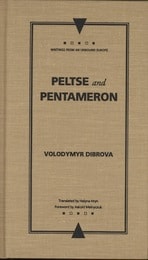
Peltse and Pentameron
Volodymyr Dibrova
Northwestern University Press, 1996
Peltse portrays the formation of an average apparatchik. Both funny and alarming, it provides a psychological portrait of an individual trapped in a system he simultaneously dislikes and depends upon for survival. Pentameron tells the story of one day in the life of five colleagues at a Soviet research institute. Each is dissatisfied, yet all are trapped in and by a system that has taken away their ability to act decisively.

Perfection in Bad Axe
StoriesStories by Craig Bernthal
University of Missouri Press, 2003
You could find out anything at Jim's, and Larry and I liked to be in the know. Information (not gossip) was passed back and forth constantly. Did you hear about the four couples engaged in "wife- swapping" in town? The mechanics and gas pumpers at Jim's could fill you in. Were you interested in the last time the Baptist minister beat his wife? Who your cute French teacher slept with a couple nights ago? Jim's had the answers. The place held another attraction for me: if you were under twenty-one and wanting some liquor for Friday night, Jim's son, Jimmy the Bomb, just out of the Marine Corps, had no problem picking up a bottle or two for you at the liquor store on the east side of town.
Set mainly in the Midwest, these tales are inhabited by ordinary, decent people who, often to their surprise, find joy and meaning under difficult circumstances. Many of the stories depict isolated moments of perfection in a world that routinely forces its imperfections on us. A teenager wrestles with guilt over an accident he caused in “Perfection in Bad Axe.” In “A Knight Pursued,” a young prosecuting attorney confronts on the same day his first autopsy and his wife’s unexpected desire to have a baby. A devout, hardworking business owner is drawn into a lawsuit that threatens his marriage and leads him to question his most deeply felt principles. “Center of Gravity” finds a middle-aged law professor overcome by his chaotic life and searching for a degree of peace. These are the finely developed characters of Bernthal’s stories—people we recognize, but who never seem overly familiar. Interesting, substantial, and utterly engrossing, each one could be just like any one of us, an ordinary Jane or Joe, trying to maintain or find order in a life sometimes filled with disorder.
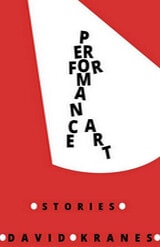
Performance Art
StoriesDavid Kranes
University of Nevada Press, 2021
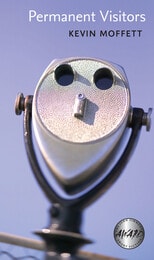
Permanent Visitors
Kevin Moffett
University of Iowa Press, 2006
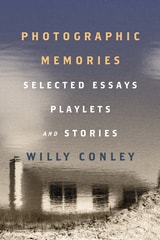
Photographic Memories
Selected Essays, Playlets, and StoriesWilly Conley
Gallaudet University Press, 2023
Original photographs taken by the author accompany his writings and invite the reader to contemplate the often-blurred lines between reality and memory.
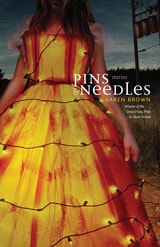
Pins and Needles
StoriesKaren Brown
University of Massachusetts Press, 2007
In "She Fell to Her Knees," Nell inherits the neglected house in which her mother died years before, and begins an affair with the neighbor. The narrator of "Apparitions," who has recently returned the blind grandson she was raising to the care of his mother, invites a confused young man into her home. In "The Ropewalk," a bartender haunted by her abandonment of her own child aids a customer in a struggle for custody of her daughters. A pregnant teenager in "Unction" comes to accept the reality of her situation while working a summer job counting parts in a bookbinding machine shop. Annie, the young mother with a tragic past in "Pins and Needles," leaves her infant daughter to go on an errand in a snowstorm, and picks up a boy she doesn't know.
What remains a constant in these stories is the tangible presence of the natural world. Each story moves toward the moment in which its characters, navigating loss, learn acceptance. Like the single mother in "Destiny," they see their lives happen—"all around, just then, forever.
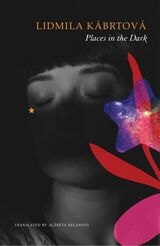
Places in the Dark
Short StoriesLidmila Kábrtová
Seagull Books, 2025
Following her divorce, Tereza shuts off emotionally and flits from one faceless lover to the next, until an unexpected visitor shakes her existence to the core. Klara is a bird trapped in a golden cage slowly suffocating her. Eva has sacrificed herself for her children and family. Life is one big party for Karla—or is it? Alice is doing everything she can not to be a crybaby like her mother. Petra has finally had enough and takes drastic measures. Magdalena’s true yearnings bubble up to the surface.
The stories of these six characters may be different, but these women’s paths converge throughout Places in the Dark, weaving a vivid tapestry of interconnected lives. Czech author Lidmila Kábrtová is a master of writing stories of astonishing clarity. Echoing the brilliance of Alice Munro, Kábrtová’s words act as translucent veils, allowing the essential truths to shimmer through. Moments move about on tectonic plates somewhere beneath the surface of the everyday, and nothing will be as it used to be. Yet, in this kaleidoscope of narratives, the question lingers: Was it ever truly as it seemed?
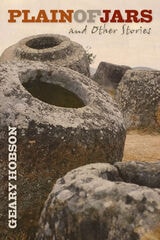
Plain of Jars
and Other StoriesGeary Hobson
Michigan State University Press, 2011
In the opening story of Geary Hobson’s riveting new collection, Plain of Jars, a young private confides to his friend that he’s trying to leave the Marine Corps. “I am not doing this just because I find the Marine Corps too tough,” Warren Needham says, but because violence is contradictory to his faith. The story’s surprising climax, however, reveals a different side of Needham’s contradictory nature. It’s this acute understanding of conflict that characterizes Plain of Jars, a book populated by bullies, men in combat, abusive spouses, and Native Americans seeking a sense of personal identity in an environment where conformity is law. The U.S. Marine Corps sets the stage for a number of these stories, whose protagonists combat racism, post-traumatic stress syndrome, and the looming reality of the Vietnam War. With pitch perfect dialogue and a sense of the unexpected, Plain of Jars tests the depths of complex lives.
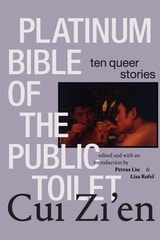
Platinum Bible of the Public Toilet
Ten Queer StoriesCui Zi'en. Edited and with an introduction by Petrus Liu and Lisa Rofel
Duke University Press, 2024

Poems from Captured Documents
A Bilingual EditionThanh T. Nguyen
University of Massachusetts Press, 1994
Written in journals and notebooks by ordinary soldiers who fought against American forces in Vietnam, the poems collected in this volume fill a longstanding void in the literature of that war. In addition to offering a revealing window into another culture – a culture that prizes poetry as an integral part of social life – the pieces provide a rare look at the conflict from the perspective of those who served in the National Liberation Front, the People’s Armed Forces, and the People’s Army of Vietnam.
The format of this edition is bilingual, to enable both Vietnamese and American readers to share and appreciate these poignant and deeply personal documents, which were often written under fire and always in the face of death.
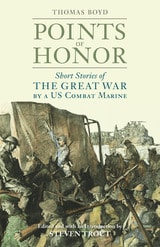
Points of Honor
Short Stories of the Great War by a US Combat MarineThomas Boyd, Edited and with an Introduction by Steven Trout
University of Alabama Press, 2018
Points of Honor: Short Stories of the Great War by a US Combat Marine is based on author Thomas Alexander Boyd’s personal experiences as an enlisted Marine. First published in 1925 and long out of print, this edition rescues from obscurity a vivid, kaleidoscopic vision of American soldiers, US Marines mostly, serving in a global conflict a century ago. It is a true forgotten masterpiece of World War I literature.
The stories in Points of Honor deal almost entirely with Marines in the midst of battle—or faced with the consequences of military violence. The eleven stories in this collection offer a panoramic view of war experience and its aftermath, what Boyd described as “a mass of more human happenings.” The themes are often antiheroic: dehumanization, pettiness, betrayal by loved ones at home, and the cruelty of military justice. But Boyd’s vision also accommodates courage and loyalty. Like all great works of war literature, this collection underscores the central paradox of armed conflict—its ability to bring out both the best and worst in human beings.
This reissue of Points of Honor is edited, annotated, and introduced by Steven Trout. Trout provides an overview of Thomas Boyd’s war experience and writing career and situates the stories within the broader context of World War I American literature.
Points of Honor received strong reviews at the time of its initial publication and remains an overwhelming reading experience today. While each of the stories is a freestanding work of art, when read together they carry the force of a novel.
Points of the Compass
StoriesSahar Tawfiq
University of Arkansas Press, 1995
Portraits of a Few of the People I’ve Made Cry
StoriesChristine Sneed
University of Massachusetts Press, 2010
Possession(s)
John Smolens
Michigan State University Press, 2026
In settings familiar and foreign, from the shores of the Great Lakes to rural Ireland and Scotland, the boulevards of nineteenth-century Paris, and an ancient Italian hill town, John Smolens’s stories delineate our fears, doubts, and uncertainties, tempered by irony, humor, and tenacity. The collection’s title, Possession(s), suggests an overarching duality that connects these fourteen disparate narratives, which include stories first published in magazines such as the North American Review, the Madison Review, and the Southern Review. In “prose that is an understated marvel” (Publishers Weekly) and through a wide range of compelling voices, each story resonates with compassion and honesty, often turning on unexpected encounters with a stranger, a place, the past, and sometimes with oneself, offset by a recognition that the future holds few assurances other than the promise of mortality. In their search for love, reconciliation, and acceptance, the characters in Possession(s) strive to find understanding and peace.
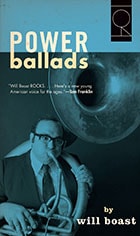
Power Ballads
Will Boast
University of Iowa Press, 2011
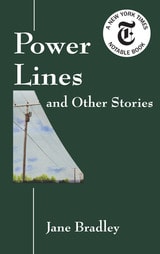
Power Lines
and Other StoriesJane Bradley
University of Arkansas Press, 1989
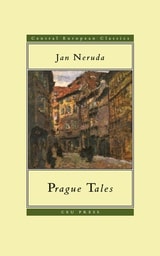
Prague Tales
Jan Neruda
Central European University Press, 1996
This is a collection of Jan Neruda's intimate, wry, bittersweet stories of life among the inhabitants of the Little Quarter of nineteenth-century Prague. These finely tuned and varied vignettes established Neruda as the quintessential Czech nineteenth-century realist, the Charles Dickens of a Prague becoming ever more aware of itself as a Czech rather than an Austrian city.
Prague Tales is a classic by a writer whose influence has been acknowledged by generations of Czech writers, including Ivan Klíma, who contributes an introduction to this new translation.
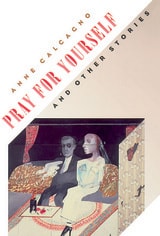
Pray for Yourself and Other Stories
Anne Calcagno
Northwestern University Press, 1993
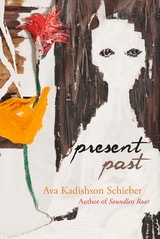
Present Past
Ava Kadishson Schieber
Northwestern University Press, 2016
The focus of Present Past is her life after the Shoah. Rejecting stereotypes of survivors as traumatized or broken, Schieber is stark yet exuberant, formidable yet nuanced. The woman who emerges in Schieber’s Present Past is a multifaceted, heterogeneous figure—poet, artist, and survivor. In it, she plays the passionate observer who dispassionately curates the kaleidoscopic memories of her tumultuous personal and professional life in Belgrade, Prague, Tel Aviv, New York, and Chicago.
Organized into thirteen chapters, each a blend of images, poems, and narrative, this moving new work offers myriad points of entry to readers of these genres, those fascinated in the relationship between the Holocaust and art, as well as readers interested in memory and survivorship.
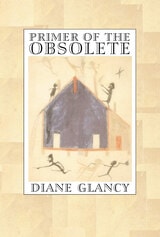
Primer of the Obsolete
Diane Glancy
University of Massachusetts Press, 2004
The poems have roots in history, religion, and illiteracy. They are inspired by folk artists who use materials and textures at hand—enamel and cornmeal on plywood, house paint on tar and tin, model airplane paint on corrugated scrap metal. The resulting lyrics walk the boundary between worlds, weaving remnants of the old way of viewing the world with pieces of the new world, such as a clapper that turns lights on and off. The experimental text revisits the gap between past and present. The past is just beneath a newly painted surface. The newly painted surface is not quite dry.
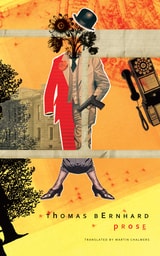
Prose
Thomas Bernhard
Seagull Books, 2010
“His manner of speaking, like that of all the subordinated, excluded, was awkward, like a body full of wounds, into which at any time anyone can strew salt, yet so insistent, that it is painful to listen to him,” from The Carpenter
The Austrian playwright, novelist, and poet Thomas Bernhard (1931–89) is acknowledged as among the major writers of our time. The seven stories in this collection capture Bernhard’s distinct darkly comic voice and vision—often compared to Kafka and Musil—commenting on a corrupted world.
First published in German in 1967, these stories were written at the same time as Bernhard’s early novels Frost, Gargoyles, and The Lime Works, and they display the same obsessions, restlessness, and disarming mastery of language. Martin Chalmer’s outstanding translation, which renders the work in English for the first time, captures the essential personality of the work. The narrators of these stories lack the strength to do anything but listen and then write, the reader in turn becoming a captive listener, deciphering the traps laid by memory—and the mere words, the neverending words with which we try to pin it down. Words that are always close to driving the narrator crazy, but yet, as Bernhard writes “not completely crazy.”
“Bernhard's glorious talent for bleak existential monologues is second only to Beckett's, and seems to have sprung up fully mature in his mesmerizing debut.”—From Publishers Weekly, on Frost
“The feeling grows that Thomas Bernhard is the most original, concentrated novelist writing in German. His connections . . . with the great constellation of Kafka, Musil, and Broch become ever clearer.” —George Steiner, Times Literary Supplement, on Gargoyles
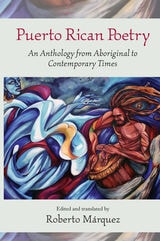
Puerto Rican Poetry
An Anthology from Aboriginal to Contemporary TimesRoberto Marquez
University of Massachusetts Press, 2007
This volume offers the most wide-ranging and comprehensive collection of Puerto Rican poetry available in English. It includes the work of sixty-four poets, as well as many previously inaccessible selections from Puerto Rico's tradition of popular verse forms—coplas, décimas, bombas—produced by anonymous writers. All are presented in English, contextualized and individually introduced by Roberto Márquez, a distinguished translator and literary scholar.
Book I, “Before Columbus and After, 1400–1820,” focuses on the foundational origins of Puerto Rican poetry and the clash of competing visions embodied in the rich and heterogeneous corpus of anonymous popular verse forms. Book II, “The Creole Matrix: Notions of Nation, 1821–1950s,” concentrates on the period in which a distinctively Puerto Rican consciousness emerged and the island's subsequent experience as a U. S. colony in the decades after the Spanish-Cuban-American War up to formal establishment of Commonwealth status. Books III and IV are devoted, respectively, to the era of insular “Critique, Revolt, and Renewal” in the mid-twentieth century, and to the “New Creoles, New Definitions” that developed in the late twentieth century, including the distinct and parallel growth of Puerto Rican poetry in the mainland United States.
In addition to a general introduction and concise biographical profiles of each poet, Márquez provides a detailed “Chronology” of the history of the island that has shaped the poets and informed their work. The resulting volume is a major contribution to our understanding and appreciation of Puerto Rican literature and the heterogeneous society in which it has been produced.
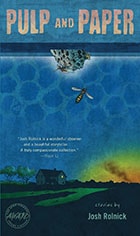
Pulp and Paper
Josh Rolnick
University of Iowa Press, 2011