Results by title
124 books match the query 'Slaves' and 2 start with p
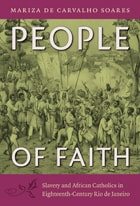
People of Faith
Slavery and African Catholics in Eighteenth-Century Rio de JaneiroMariza de Carvalho Soares
Duke University Press, 2011
In People of Faith, Mariza de Carvalho Soares reconstructs the everyday lives of Mina slaves transported in the eighteenth century to Rio de Janeiro from the western coast of Africa, particularly from modern-day Benin. She describes a Catholic lay brotherhood formed by the enslaved Mina congregants of a Rio church, and she situates the brotherhood in a panoramic setting encompassing the historical development of the Atlantic slave trade in West Africa and the ethnic composition of Mina slaves in eighteenth-century Rio. Although Africans from the Mina Coast constituted no more than ten percent of the slave population of Rio, they were a strong presence in urban life at the time. Soares analyzes the role that Catholicism, and particularly lay brotherhoods, played in Africans’ construction of identities under slavery in colonial Brazil. As in the rest of the Portuguese empire, black lay brotherhoods in Rio engaged in expressions of imperial pomp through elaborate festivals, processions, and funerals; the election of kings and queens; and the organization of royal courts. Drawing mainly on ecclesiastical documents, Soares reveals the value of church records for historical research.
[more]
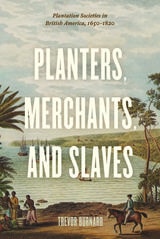
Planters, Merchants, and Slaves
Plantation Societies in British America, 1650-1820Trevor Burnard
University of Chicago Press, 2015
As with any enterprise involving violence and lots of money, running a plantation in early British America was a serious and brutal enterprise. In the contentious Planters, Merchants, and Slaves, Burnard argues that white men did not choose to develop and maintain the plantation system out of virulent racism or sadism, but rather out of economic logic because—to speak bluntly—it worked. These economically successful and ethically monstrous plantations required racial divisions to exist, but their successes were measured in gold, rather than skin or blood. Sure to be controversial, this book is a major intervention in the scholarship on slavery, economic development, and political power in early British America, mounting a powerful and original argument that boldly challenges historical orthodoxy.
[more]