Results by title
22279 books match the query 'Social Science' and 1104 start with p
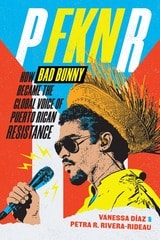
P FKN R
How Bad Bunny Became the Global Voice of Puerto Rican ResistanceVanessa Díaz and Petra R. Rivera-Rideau
Duke University Press, 2026
Global superstar Bad Bunny, born Benito Antonio Martínez Ocasio, like many other Puerto Ricans, has lived a life marked by public crises—blackouts, hurricanes, political corruption and oppression, among others—that have exposed the ongoing impacts of colonialism in Puerto Rico. Offering a portrait of the past and future of Puerto Rican resistance through one of its loudest and proudest voices, P FKN R draws on interviews with musicians, politicians, and journalists as well as ethnographic research to set Bad Bunny and Puerto Rican resistance in a historical, political, and cultural context. Authors Vanessa Díaz and Petra Rivera-Rideau—creators of the “Bad Bunny Syllabus”—demonstrate Bad Bunny’s place in a long tradition of infusing both joy and protest into music and honor the many evolving forms of daily resistance to oppression and colonialism that are part of Puerto Rican life.
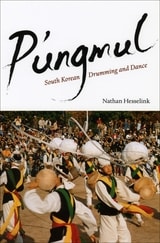
P'ungmul
South Korean Drumming and DanceNathan Hesselink
University of Chicago Press, 2006
The first book to introduce Korean drumming and dance to the English-speaking world, Nathan Hesselink’s P’ungmul offers detailed descriptions of its instrumentation, dance formations, costuming, actors, teaching lineages, and the complexities of training. Hesselink also evaluates how this tradition has taken on new roles and meanings in the twentieth and early-twenty-first centuries, investigating the interrelated yet contested spheres of history, memory, government policy, grassroots politics, opportunities for musical transmission, and performance practices and aesthetics.
P’ungmul offers those interested in ethnomusicology, world music, anthropology, sociology, and Asian studies a special glimpse into the inner workings of a historically rich, artistically complex, and aesthetically and aurally beautiful Korean musical and dance tradition.
PADRES
The National Chicano Priest MovementBy Richard Edward Martínez
University of Texas Press, 2005
From the 1848 Treaty of Guadalupe Hidalgo to the 1960s, Mexican American Catholics experienced racism and discrimination within the U.S. Catholic church, as white priests and bishops maintained a racial divide in all areas of the church's ministry. To oppose this religious apartheid and challenge the church to minister fairly to all of its faithful, a group of Chicano priests formed PADRES (Padres Asociados para Derechos Religiosos, Educativos y Sociales, or Priests Associated for Religious, Educational, and Social Rights) in 1969. Over the next twenty years of its existence, PADRES became a powerful force for change within the Catholic church and for social justice within American society.
This book offers the first history of the founding, activism, victories, and defeats of PADRES. At the heart of the book are oral history interviews with the founders of PADRES, who describe how their ministries in poor Mexican American parishes, as well as their own experiences of racism and discrimination within and outside the church, galvanized them into starting and sustaining the movement. Richard Martínez traces the ways in which PADRES was inspired by the Chicano movement and other civil rights struggles of the 1960s and also probes its linkages with liberation theology in Latin America. He uses a combination of social movement theory and organizational theory to explain why the group emerged, flourished, and eventually disbanded in 1989.

POLICING THE CITY
CRIME & LEGAL AUTHORITY IN LONDON, 1780-1840ANDREW T. HARRIS
The Ohio State University Press, 2004

PRESIDENTIAL MUSINGS FROM THE MERIDIAN
REFLECTIONS ON THE NATURE OF GEOGRAPHYM. DUANE NELLIS
West Virginia University Press, 2005
For decades, presidents of the Association of American Geographers have written insightful columns in the AAG Newsletter. One of the most popular sections of the newsletter, these columns illustrate the changes and consistencies of geography over the past thirty-four years. They offer an insight into the past of the geography discipline and a broader perspective on the future. Previously inaccessible even to most professional geographers, the Presidential Columns will now be available in Presidential Musings from the Meridian: Reflections of the Nature of Geography.

PUNK! Las Américas Edition
Edited by Olga Rodríguez-Ulloa, Rodrigo Quijano, and Shane Greene
Intellect Books, 2022
This book interrogates the dominant vision of punk—particularly its white masculine protagonists and deep Anglocentrism—by analyzing punk as a critical lens into the disputed territories of “America,” a term that hides the heterogeneous struggles, global histories, hopes, and despairs of late twentieth- and early twenty-first-century experience. Compiling academic essays and punk paraphernalia (including interviews, zines, poetry, and visual segments) into a single volume, the book explores punk life through its multiple registers: vivid musical dialogues, excessive visual displays, and underground literary expression.
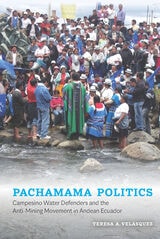
Pachamama Politics
Campesino Water Defenders and the Anti-Mining Movement in Andean EcuadorTeresa A. Velásquez
University of Arizona Press, 2022
Pachamama Politics provides a rich ethnographic account of the tensions that follow from neoextractivism in the southern Ecuadorian Andes, where campesinos mobilized to defend their community-managed watershed from a proposed gold mine. Positioned as an activist-scholar, Teresa A. Velásquez takes the reader inside the movement—alongside marches, road blockades, and river and high-altitude wetlands—to expose the rifts between social movements and the “pink tide” government. When the promise of social change turns to state criminalization of water defenders, Velásquez argues that the contradictions of neoextractivism created the political conditions for campesinos to reconsider their relationship to indigeneity.
The book takes an intersectional approach to the study of anti-mining struggles and explains how campesino communities and their allies identified with and redeployed Indigenous cosmologies to defend their water as a life-sustaining entity. Pachamama Politics shows why progressive change requires a shift away from the extractive model of national development to a plurinational defense of community water systems and Indigenous peoples and their autonomy.
Pachangas
Borderlands Music, U.S. Politics, and Transnational MarketingBy Margaret E. Dorsey
University of Texas Press, 2006
A uniquely Tejano version of the old-fashioned political barbeque, the traditional South Texas pachanga allowed politicians to connect with voters in a relaxed setting where all could enjoy live music and abundant food and drink along with political speeches and dealmaking. Today's pachanga still combines politics, music, and votes—along with a powerful new element. Corporate sponsorships have transformed the pachanga into a major marketing event, replete with celebrity performers and product giveaways, which can be recorded and broadcast on TV or radio to vastly increase the reach of the political—and the commercial—messages.
This book explores the growing convergence of politics, transnational marketing, and borderlands music in the South Texas pachanga. Anthropologist Margaret Dorsey has observed some one hundred pachangas and interviewed promoters, politicians, artists, and local people. She investigates how candidates and corporations market their products to Hispanic consumers, as well as how the use of traditional music for marketing is altering traditional forms such as the corrido. Her multifaceted study also shows clearly that the lines of influence run both ways—while corporate culture is transforming the traditions of the border, Tejano voters/consumers only respond to marketing appeals (whether for politicians or products) that resonate with their values and the realities of their lives. Far from being an example of how transnational marketing homogenizes culture, the pachanga demonstrates that local cultures can exert an equally strong influence on multinational corporations.
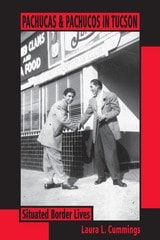
Pachucas and Pachucos in Tucson
Situated Border LivesLaura L. Cummings
University of Arizona Press, 2009
This innovative study examines the pachuco phenomenon in a new way. Exploring its growth in Tucson, Arizona, the book combines ethnography, history, and sociolinguistics to contextualize the early years of the phenomenon, its diverse cultural roots, and its language development in Tucson.
Unlike other studies, it features first-person research with men and women who—despite a wide span of ages—self-identify as pachucos and pachucas. Through these interviews and her archival research, the author finds that pachuco culture has deep roots in Tucson and the Southwest. And she discovers the importance of the pachuco/caló language variety to a shared sense of pachuquismo. Further, she identifies previously neglected pachuco ties to indigenous Indian languages and cultures in Mexico and the United States.
Cummings stresses that the great majority of people conversant with the culture and language do not subscribe to the dynamics of contemporary hardcore gangs, but while zoot suits are no longer the rage today, the pachuco language and sensibilities do live on in Mexican American communities across the Southwest and throughout the United States.
Pachuco
An American-Spanish Argot and Its Social Functions in Tucson, ArizonaGeorge Carpenter Barker
University of Arizona Press, 1969
He conducted additional field work on the social functions of language in cross-cultural situations in Tucson in 1947-48. This work centered around interviews with Mexican-American youths. Barker's quiet friendliness and understanding won the confidence of boys who were operating at the fringes, and who were his informants for this Pachuco study.
Pacific Citizens
Larry and Guyo Tajiri and Japanese American Journalism in the World War II EraEdited, with and Introduction and Notes, by Greg Robinson: Foreword by Harry Honda
University of Illinois Press, 2012

Pacific Northwest Women, 1815-1925
Lives, Memories, and WritingsJean M. Ward
Oregon State University Press, 1995
Pacific Northwest Women, 1815-1925
Lives, Memories, and WritingsJean M. Ward
Oregon State University Press, 1997
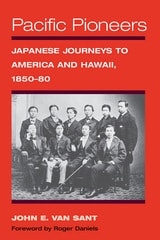
Pacific Pioneers
Japanese Journeys to America and Hawaii, 1850-80John E. Van Sant
University of Illinois Press, 2019
Although Japanese immigrants did not start arriving in substantial numbers in the West until after 1880, in the previous thirty years a handful of key encounters helped shape relations between Japan and the United States. John E. Van Sant explores the motivations and accomplishments of these resourceful, sometimes visionary individuals who made important inroads into a culture quite different from their own and paved the way for the Issei and Nisei.
Pacific Pioneers presents detailed biographical sketches of Japanese such as Joseph Heco, Niijima Jo, and the converts to the Brotherhood of the New Life and introduces the American benefactors, such as William Griffis, David Murray, and Thomas Lake Harris, who built relationships with their foreign visitors. Van Sant also examines the uneasy relations between Japanese laborers and sugar cane plantation magnates in Hawaii during this period and the shortlived Wakamatsu colony of Japanese tea and silk producers in California.
A valuable addition to the literature, Pacific Pioneers brings to life a cast of colorful, long-forgotten characters while forging a critical link between Asian and Asian American studies.
Pacifica Radio 2E
Matthew Lasar
Temple University Press, 2000
In this expanded paperback edition, Lasar provides a postscript ("A Crisis of Containment") that examines the external pressures and organizational problems within the Pacifica Foundation that led, in early 1999, to the police shutdown of network station KPFA. Lasar, an admittedly pro-KPFA partisan in the conflict, gives a first-person account, calling it "the worst crisis in the history of community radio."
Yet Pacifica Radio is about more than just the network's recent troubles. It is the story of visionary Lewis Hill and the small band of pacifists who in 1946, set out to build institutions that would promote dialogue between individuals and nations. KPFA took to the air in 1949 with stunningly unconventional programs that challenged the dreary cultural consensus of the Cold War. No one in the Bay Area, or anywhere else, had heard anything like it on the airwaves.
The first edition of Pacifica Radio, which made the San Francisco Chronicle's non-fiction bestseller list, was praised as "fascinating reading" by In These Times, "Lasar has an eye for paradox, irony and contradiction," wrote the Santa Rose Press Democrat, "but he is first and foremost an able and astute historian."
Package Deal
Marriage, Work And Fatherhood In Men'S LivesNicholas W. Townsend
Temple University Press, 2002
Packaged Plants
Seductive Supplements and Metabolic Precarity in the PhilippinesAnita Hardon and Michael Lim Tan
University College London, 2024
Through meticulous research and insightful analysis, Packaged Plants explores the intersectionality between health, economics, and environment in the Philippines, offering an absorbing ethnography and cultural history of how the production and consumption of plants for food and medicine have changed as well as how ultra-processed foods have become linked to health concerns, including cardiovascular disease, diabetes, and obesity.
Part one of the book presents a comprehensive analysis scrutinizing the colonial influences, urbanization, nutritional policies, research programs, and neoliberal marketing strategies in the Philippines that have proliferated packaged plant-based products as food and medicines. Part two interweaves contemporary urban political ecology frameworks with medical anthropological perspectives within Puerto Princesa and elucidates the precarious circumstances compelling individuals to invest in supplements.
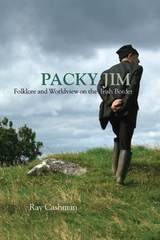
Packy Jim
Folklore and Worldview on the Irish BorderRay Cashman
University of Wisconsin Press, 2017
Ray Cashman, who has been interviewing McGrath for more than fifteen years, demonstrates how Packy Jim embellishes daily conversation with stories of ghosts and fairies, heroic outlaws and hateful landlords. Such folklore is a boundless resource that he uses to come to grips with the past and present, this world and the next. His stories reveal an intricate worldview that is both idiosyncratic and shared—a testament to individual intelligence and talent, and a window into Irish vernacular culture.
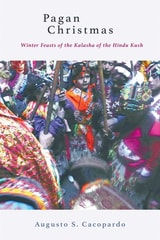
Pagan Christmas
Winter Feasts of the Kalasha of the Hindu KushAugusto S. Cacopardo
Gingko, 2017
Cacopardo outlines the history and culture of this ancient but still extant people. Exploring an array of relevant literature, he enriches our understanding of their practices and beliefs through illuminating comparisons with both the Indian religious world and the religious folklore of Europe. Bringing together several disciplinary approaches and drawing on extensive ethnographic fieldwork, this book offers the first extended study of this little-known but fascinating Kalasha community. It will take its place as a standard international reference source on the anthropology, ethnography, and history of religions in Pakistan and Central South Asia.
Paganism - Christianity - Judaism
A Confession of FaithMax Brod, translated by William Wolfe, introduction by Eric Gottgetreu
University of Alabama Press, 1970
Now remembered primarily as Franz Kafta's friend and literary executor, Max Brod was an accomplishered thinker and writer in his own right. In this volume, he considers the nature and differences between Judaism and Christianity, addressing some of the most perplexing questions at the heart of human existence.
“One of the most famous and widely discussed books of the 1920’s, Max Brod’s Paganism—Christianity—Judaism, has at last found its way into English translation to confront a new generation of readers. Max Brod is best remembered today as the literary editor and friend of Franz Kafka. In his day, however, he was the more famous of the two by far. A major novelist, playwright, poet, essayist, and composer, he was also, as this book demonstrates, a serious thinker on the perennial questions that are at the heart of human existence. . . .Some of his judgments are open to question. Still, with all its limitations, this is a forthright and passionate proclamation of the uniqueness of Judaism. Paganism—Christianity—Judaism was an intellectual and spiritual event when it was first published and it remains a valuable document even now.” —Rabbi Jack Riemer, Hadassah
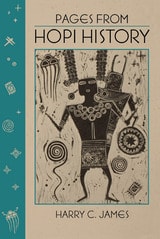
Pages from Hopi History
Harry C. James
University of Arizona Press, 1974
"It is personal yet precise, emotional and involved, yet objective and factual. . . . Readers who know something of Hopi history will be fascinated by the new insights and interpretations presented by James."—Arizona and the West
"The author has been an active supporter of Hopi interests for some fifty years and this book is as much a testimony to his unflagging personal devotion to a small and neglected tribe as it is a history of the Hopis' determination to maintain their identity and self-respect."—Journal of Arizona History
"Harry James writes with sympathy and restraint about a proud people who have suffered unjustly in the past, and who today are seeking an identity. He brings into sharp focus the dreams for tomorrow of the Hopi tribe. Let these dreams be shared by others before it is too late."—The American West
"An amazing and gripping account of a very great and intelligent people, concentrating on fact rather than the fantastic legends that have grown up around this unique culture."—The Masterkey
"The Hopi are indeed a most interesting people, and this authentic account of their way of life is a valuable contribution to our knowledge of the Indian tribes of Arizona."—The Book Exchange
"For an excellent account of the history of the Hopi, the Southwest, typical government intervention into tribal affairs and the lives of the people . . . a must for any library."—Whispering Winds

Paging God
Religion in the Halls of MedicineWendy Cadge
University of Chicago Press, 2012
Paging God
Religion in the Halls of MedicineWendy Cadge
University of Chicago Press, 2012
While the modern science of medicine often seems nothing short of miraculous, religion still plays an important role in the past and present of many hospitals. When three-quarters of Americans believe that God can cure people who have been given little or no chance of survival by their doctors, how do today’s technologically sophisticated health care organizations address spirituality and faith?
Paid to Care
Domestic Workers in Contemporary Latin American CultureRachel Randall
University of Texas Press, 2023
An insight into the struggles of paid domestic workers in Latin America through an exploration of films, texts, and digital media produced since the 1980s in collaboration with them or inspired by their experiences.
Paid domestic work in Latin America is often undervalued, underpaid, and underregulated. Exploring a wave of Latin American cultural texts since the 1980s that draw on the personal experiences of paid domestic work or intimate ties to domestic employees, Paid to Care offers insights into the struggles domestic workers face through an analysis of literary testimonials, documentary and fiction films, and works of digital media.
From domestic workers’ experiences of unionization in the 1980s to calls for their rights to be respected today, the cultural texts analyzed in Paid to Care provide additional insight into public debates about paid domestic work. Rachel Randall examines work made in Brazil, Argentina, Chile, Mexico, Peru, and Uruguay. The most recent of these texts respond to the Covid-19 pandemic, which put many domestic workers’ health and livelihoods at risk. Engaging with the legal histories of domestic work in multiple distinct national contexts, Randall demonstrates how the legacy of colonialism and slavery shapes the profession even today. Focusing on personal or coproduced cultural representations of domestic workers, Paid to Care explores complex ethical issues relating to consent, mediation, and appropriation.
Paid to Party
Working Time and Emotion in Direct Home SalesMullaney, Jamie L
Rutgers University Press, 2012
On any given night in living rooms across America, women gather for a fun girls’ night out to eat, drink, and purchase the latest products—from Amway to Mary Kay cosmetics. Beneath the party atmosphere lies a billion-dollar industry, Direct Home Sales (DHS), which is currently changing how women navigate work and family.
Drawing from numerous interviews with consultants and observations at company-sponsored events, Paid to Party takes a closer look at how DHS promises to change the way we think and feel about the struggles of balancing work and family. Offering a new approach to a flexible work model, DHS companies tell women they can, in fact, have it all and not feel guilty. In DHS, work time is not measured by the hands of the clock, but by the emotional fulfillment and fun it brings.
Pain and Shock in America
Politics, Advocacy, and the Controversial Treatment of People with DisabilitiesJan Nisbet
Brandeis University Press, 2021
For more than forty years, professionals in the field of disability studies have engaged in debates over the use of aversive interventions (such as electric shock) like the ones used at the Judge Rotenberg Center. Advocates and lawyers have filed complaints and lawsuits to both use them and ban them, scientists have written hundreds of articles for and against them, and people with disabilities have lost their lives and, some would say, lived their lives because of them. There are families who believe deeply in the need to use aversives to control their children’s behavior. There are others who believe the techniques used are torture. All of these families have children who have been excluded from numerous educational and treatment programs because of their behaviors. For most of the families, placement at the Judge Rotenberg Center is the last resort.
This book is a historical case study of the Judge Rotenberg Center, named after the judge who ruled in favor of keeping its doors open to use aversive interventions. It chronicles and analyzes the events and people involved for over forty years that contributed to the inability of the state of Massachusetts to stop the use of electric shock, and other severe forms of punishment on children and adults with disabilities. It is a long story, sad and tragic, complex, filled with intrigue and questions about society and its ability to protect and support its most vulnerable citizens.
Pain in Relation
On Causality, Chronicity, and (Crip) EvidenceAlyson Patsavas
University of Michigan Press, 2026
Pain in Relation: On Causality, Chronicity, and (Crip) Evidence argues that the dominant stories circulating within contemporary US culture are marked by seemingly contradictory certainties: pain is at once subjective yet universal; that pain makes life unlivable and can be overcome with perseverance. These certainties graft onto pained people as impossible imperatives: the imperatives to live “despite” our pain and to defend the value of lives imagined to be compromised “because of” it. Alyson Patsavas outlines the harm these imperatives cause and draws on feminist, queer, and disability theory to offer alternative frameworks for making sense of and relating to pain.
The study fleshes out “crip autotheory” and experiments with evidencing practices, using anecdotes, journal entries, personal reflections, list-making, and photography to map “cripistemologies of pain,” or critical, disability-informed experiential ways of knowing pain. Equal parts cultural critique, intimate portrait of pained life, and commentary, Pain in Relation invites readers to challenge what they think they know about pain and explore new ways of relating to pain, pained life, and the futures we imagine for pained people.
Pain, Death, and the Law
Austin Sarat, Editor
University of Michigan Press, 2001
Painting Culture
The Making of an Aboriginal High ArtFred R. Myers
Duke University Press, 2002
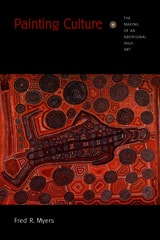
Painting Culture describes in detail the actual practice of painting, insisting that such a focus is necessary to engage directly with the role of the art in the lives of contemporary Aboriginals. The book includes a unique local art history, a study of the complete corpus of two painters over a two-year period. It also explores the awkward local issues around the valuation and sale of the acrylic paintings, traces the shifting approaches of the Australian government and key organizations such as the Aboriginal Arts Board to the promotion of the work, and describes the early and subsequent phases of the works’ inclusion in major Australian and international exhibitions. Myers provides an account of some of the events related to these exhibits, most notably the Asia Society’s 1988 "Dreamings" show in New York, which was so pivotal in bringing the work to North American notice. He also traces the approaches and concerns of dealers, ranging from semi-tourist outlets in Alice Springs to more prestigious venues in Sydney and Melbourne.
With its innovative approach to the transnational circulation of culture, this book will appeal to art historians, as well as those in cultural anthropology, cultural studies, museum studies, and performance studies.
Painting Publics
Transnational Legal Graffiti Scenes as Spaces for EncounterCaitlin Frances Bruce
Temple University Press, 2019
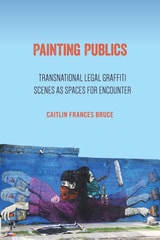
Public art is a form of communication that enables spaces for encounters across difference. These encounters may be routine, repeated, or rare, but all take place in urban spaces infused with emotion, creativity, and experimentation. In Painting Publics, Caitlin Bruce explores how various legal graffiti scenes across the United States, Mexico, and Europe provide diverse ways for artists to navigate their changing relationships with publics, institutions, and commercial entities.
Painting Publics draws on a combination of interviews with more than 100 graffiti writers as well as participant observation, and uses critical and rhetorical theory to argue that graffiti should be seen as more than counter-cultural resistance. Bruce claims it offers resources for imagining a more democratic city, one that builds and grows from personal relations, abandoned or under-used spaces, commercial sponsorship, and tacit community resources. In the case of Mexico, Germany, and France, there is even some state support for the production and maintenance of civic education through visual culture.
In her examination of graffiti culture and its spaces of inscription, Bruce allows us to see moments where practitioners actively reckon with possibility.
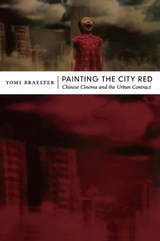
Painting the City Red
Chinese Cinema and the Urban ContractYomi Braester
Duke University Press, 2010
Drawing on extensive archival research, interviews with leading filmmakers and urban planners, and close readings of scripts and images, Braester describes how films and stage plays have promoted and opposed official urban plans and policies as they have addressed issues such as demolition-and-relocation plans, the preservation of vernacular architecture, and the global real estate market. He shows how the cinematic rewriting of historical narratives has accompanied the spatial reorganization of specific urban sites, including Nanjing Road in Shanghai; veterans’ villages in Taipei; and Tiananmen Square, centuries-old courtyards, and postmodern architectural landmarks in Beijing. In Painting the City Red, Braester reveals the role that film and theater have played in mediating state power, cultural norms, and the struggle for civil society in Chinese cities.
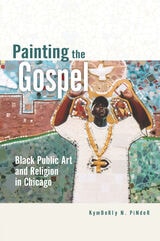
Painting the Gospel
Black Public Art and Religion in ChicagoKymberly Pinder
University of Illinois Press, 2016
Painting the Gospel includes maps and tour itineraries that allow readers to make conceptual, historical, and geographical connections among the works.
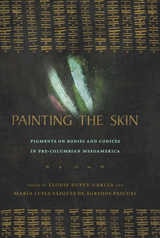
Painting the Skin
Pigments on Bodies and Codices in Pre-Columbian MesoamericaEdited by Élodie Dupey García and María Luisa Vázquez de Ágredos Pascual
University of Arizona Press, 2018
Painting the Skin brings together exciting research on painted skins in Mesoamerica. Chapters explore the materiality, uses, and cultural meanings of the colors applied to a multitude of skins, including bodies, codices made of hide and vegetal paper, and even building “skins.” Contributors offer physicochemical analysis and compare compositions, manufactures, and attached meanings of pigments and colorants across various social and symbolic contexts and registers. They also compare these Mesoamerican colors with those used in other ancient cultures from both the Old and New Worlds. This cross-cultural perspective reveals crucial similarities and differences in the way cultures have painted on skins of all types.
Examining color in Mesoamerica broadens understandings of Native religious systems and world views. Tracing the path of color use and meaning from pre-Columbian times to the present allows for the study of the preparation, meanings, social uses, and thousand-year origins of the coloring materials used by today’s Indigenous peoples.
Contributors:
María Isabel Álvarez Icaza Longoria
Christine Andraud
Bruno Giovanni Brunetti
David Buti
Davide Domenici
Élodie Dupey García
Tatiana Falcón Álvarez
Anne Genachte-Le Bail
Fabrice Goubard
Aymeric Histace
Patricia Horcajada Campos
Stephen Houston
Olivia Kindl
Bertrand Lavédrine
Linda R. Manzanilla Naim
Anne Michelin
Costanza Miliani
Virgina E. Miller
Sélim Natahi
Fabien Pottier
Patricia Quintana Owen
Franco D. Rossi
Antonio Sgamellotti
Vera Tiesler
Aurélie Tournié
María Luisa Vázquez de Ágredos Pascual
Cristina Vidal Lorenzo
Pakistan Desires
Queer Futures ElsewhereOmar Kasmani, editor
Duke University Press, 2023
Contributors. Ahmed Afzal, Asad Alvi, Anjali Arondekar, Vanja Hamzić, Omar Kasmani, Pasha M. Khan, Gwendolyn S. Kirk, Syeda Momina Masood, Nida Mehboob, Claire Pamment, Geeta Patel, Nael Quraishi, Abdullah Qureshi, Shayan Rajani, Jeffrey A. Redding, Gayatri Reddy, Syma Tariq

Pakistan’s Blasphemy Laws
From Islamic Empires to the TalibanBy Shemeem Burney Abbas
University of Texas Press, 2013
Under the guise of Islamic law, the prophet Muhammad’s Islam, and the Qur’an, states such as Pakistan, Afghanistan, Egypt, Saudi Arabia, and Bangladesh are using blasphemy laws to suppress freedom of speech. Yet the Prophet never tried or executed anyone for blasphemy, nor does the Qur’an authorize the practice. Asserting that blasphemy laws are neither Islamic nor Qur‘anic, Shemeem Burney Abbas traces the evolution of these laws from the Islamic empires that followed the death of the Prophet Muhammad to the present-day Taliban. Her pathfinding study on the shari’a and gender demonstrates that Pakistan’s blasphemy laws are the inventions of a military state that manipulates discourse in the name of Islam to exclude minorities, women, free thinkers, and even children from the rights of citizenship.
Abbas herself was persecuted under Pakistan’s blasphemy laws, so she writes from both personal experience and years of scholarly study. Her analysis exposes the questionable motives behind Pakistan’s blasphemy laws, which were resurrected during General Zia-ul-Haq’s regime of 1977–1988—motives that encompassed gaining geopolitical control of the region, including Afghanistan, in order to weaken the Soviet Union. Abbas argues that these laws created a state-sponsored “infidel” ideology that now affects global security as militant groups such as the Taliban justify violence against all “infidels” who do not subscribe to their interpretation of Islam. She builds a strong case for the suspension of Pakistan’s blasphemy laws and for a return to the Prophet’s peaceful vision of social justice.
Palaces and Power in the Americas
From Peru to the Northwest CoastEdited by Jessica Joyce Christie and Patricia Joan Sarro
University of Texas Press, 2006
Ancient American palaces still captivate those who stand before them. Even in their fallen and ruined condition, the palaces project such power that, according to the editors of this new collection, it must have been deliberately drawn into their formal designs, spatial layouts, and choice of locations. Such messages separated palaces from other elite architecture and reinforced the power and privilege of those residing in them. Indeed, as Christie and Sarro write, "the relation between political power and architecture is a pervasive and intriguing theme in the Americas."
Given the variety of cultures, time periods, and geographical locations examined within, the editors of this book have grouped the articles into four sections. The first looks at palaces in cultures where they have not previously been identified, including the Huaca of Moche Site, the Wari of Peru, and Chaco Canyon in the U.S. Southwest. The second section discusses palaces as "stage sets" that express power, such as those found among the Maya, among the Coast Salish of the Pacific Northwest, and at El Tajín on the Mexican Gulf Coast. The third part of the volume presents cases in which differences in elite residences imply differences in social status, with examples from Pasado de la Amada, the Valley of Oaxaca, Teotihuacan, and the Aztecs. The final section compares architectural strategies between cultures; the models here are Farfán, Peru, under both the Chimú and the Inka, and the separate states of the Maya and the Inka.
Such scope, and the quality of the scholarship, make Palaces and Power in the Americas a must-have work on the subject.
Pale Morning Dun
StoriesStories by Richard Dokey
University of Missouri Press, 2004
When Gramp tied those thin-bodied ephemerella, as he called them, on size-eighteen hooks, their pale green bodies and diaphanous gray wings reminded us of tiny, unmoored sailboats, and when the duns themselves were adrift upon the surface of the pool, we watched as an entire armada of delicate, translucent ships spun and took flight. . . . I couldn't fish right away. I never can when the duns first come up. I have to watch them, suddenly upon the surface, their wings drying for that one day of life above the stream. . . . To have a chance at life, each pale dun for a time must drift, ignorant of the forms that wait below.
In the thirteen stories of Pale Morning Dun, Richard Dokey endeavors to suggest common truths that uncover the human reality any time, in any place. He explores the ephemeral nature of life through an assemblage of characters as diverse as the settings they inhabit: from a beggar on the streets of San Francisco, “The West Coast Coliseum of Consumption,” to a boy and his brother fly-fishing in a peaceful mountain stream, unaware that they have stumbled upon the threshold of a horrific crime; from a desperate husband pursuing his estranged wife into the bloody arena of a bullfight, to a lakeside cottage where two lovers reveal perhaps too much of themselves. Each uniquely rendered character faces a dilemma that leads him beyond what he knows of himself, forcing him to new insights. The characters’ struggles, though distinctively their own, reveal universal truths about human nature and the transient quality of life. Employing an inspired blend of humor, irony, and imagination in seamless narration, Dokey allows one to enter readily into these idiosyncratic lives, inviting the reader to explore his own capacity to be human, to empathize and respond.
Paleoethnobotany of the Kameda Peninsula Jomon
Gary W. Crawford
University of Michigan Press, 1983
Paleoindian Geoarchaeology of the Southern High Plains
By Vance T. Holliday
University of Texas Press, 1997
The Southern High Plains of northwestern Texas and eastern New Mexico are rich in Paleoindian archaeological sites, including such well-known ones as Clovis, Lubbock Lake, Plainview, and Midland. These sites have been extensively researched over decades, not only by archaeologists but also by geoscientists, whose studies of soils and stratigraphy have yielded important information about cultural chronology and paleoenvironments across the region.
In this book, Vance T. Holliday synthesizes the data from these earlier studies with his own recent research to offer the most current and comprehensive overview of the geoarchaeology of the Southern High Plains during the earliest human occupation. He delves into twenty sites in depth, integrating new and old data on site geomorphology, stratigraphy, soils, geochronology, and paleoenvironments. He also compares the Southern High Plains sites with other sites across the Great Plains, for a broader chronological and paleoenvironmental perspective.
With over ninety photographs, maps, cross sections, diagrams, and artifact drawings, this book will be essential reading for geoarchaeologists, archaeologists, and Quaternary geoscientists, as well as avocational archaeologists who take part in Paleoindian site study throughout the American West.
Paleoindian Lifeways of the Cody Complex
Edward J. Knell
University of Utah Press, 2013
Paleoindian Lifeways of the Cody Complex represents the first synthesis in the more than fifty year history of one of the most important Paleoindian cultural traditions in North America. Research on the Cody complex (~10,000–8,000 radiocarbon yrs B.P.) began in the 1940s; however, until now publications have focused almost exclusively on specific sites, issues of projectile point technology and typology, and bison hunting. This volume provides fresh perspectives and cutting-edge research that significantly increases our understanding of the Cody complex by focusing more squarely on the human behaviors that created the archaeological record, rather than on more strictly technical aspects of the artifacts and faunal remains.
Because the Cody complex extends from the central Canadian plains to the Gulf of Mexico and from Nevada to the eastern Great Lakes—making it second only to Clovis in geographical expanse—this volume will appeal to a wide range of North American archaeologists. Across this broad geographic distribution, the contributors address hunter-gatherer adaptive strategies from diverse ecosystems at the onset of the Holocene, which will also make it of interest to human ecologists and paleoenvironmental researchers. Paleoindian Lifeways of the Cody Complex provides an innovative synthesis of a well-known but little-studied cultural tradition that opens the door for a new generation of exciting research.
Paleoindian or Paleoarchaic?
Great Basin Human Ecology at the Pleistocene-Holocene TransitionKelly E Graf
University of Utah Press, 2008

Paleonutrition
Mark Q. Sutton, Kristin D. Sobolik, and Jill K. Gardner
University of Arizona Press, 2010
This is the most comprehensive and up-to-date book on the topic. Intended for students and professionals, it describes the nature of paleonutrition studies, reviews the history of paleonutrition research, discusses methodological issues in the reconstruction of prehistoric diets, presents theoretical frameworks frequently used in paleonutrition research, and showcases examples in which paleonutritional analyses have been successfully conducted on prehistoric individuals, groups, and populations. It offers an integrative approach to understanding state-of-the-art anthropological dietary, health, and nutritional assessments. The most recent and innovative methods used to reconstruct prehistoric diets are discussed, along with the major ways in which paleonutrition data are recovered, analyzed, and interpreted.
Paleonutrition includes five contemporary case studies that provide useful models of how to conduct paleonutrition research. Topics range from ancient diets in medieval Nubia to children’s health in the prehistoric American Southwest to honey use by an ethnographic group of East African foragers. As well as providing interesting examples of applying paleonutrition techniques, these case studies illustrate the mutually beneficial linkages between ethnography and archaeology.
Palestine Is Throwing a Party and the Whole World Is Invited
Capital and State Building in the West BankKareem Rabie
Duke University Press, 2021
Palestine on the Air
Karma R. Chavez
University of Illinois Press, 2019
Palestine, Israel, and the Politics of Popular Culture
Rebecca L. Stein and Ted Swedenburg, eds.
Duke University Press, 2005
The volume is interdisciplinary, including the work of anthropologists, historians, sociologists, political scientists, ethnomusicologists, and Americanist and literary studies scholars. Contributors examine popular music of the Palestinian resistance, ethno-racial “passing” in Israeli cinema, Arab-Jewish rock, Euro-Israeli tourism to the Arab Middle East, Internet communities in the Palestinian diaspora, café culture in early-twentieth-century Jerusalem, and more. Together, they suggest new ways of conceptualizing Palestinian and Israeli political culture.
Contributors. Livia Alexander, Carol Bardenstein, Elliott Colla, Amy Horowitz, Laleh Khalili, Mary Layoun, Mark LeVine, Joseph Massad, Melani McAlister, Ilan Pappé, Rebecca L. Stein, Ted Swedenburg, Salim Tamari
Palestinian Lawyers and Israeli Rule
Law and Disorder in the West BankBy George Emile Bisharat
University of Texas Press, 1989
As frequent intermediaries between Israeli military authorities and Palestinian citizens, Palestinian lawyers stand close to the fault line dividing Israeli and Palestinian societies. The conflicts and tensions they experience in their profession mirror the larger conflicts between the two societies. Thus, as George Bisharat reveals in Palestinian Lawyers and Israeli Rule, a careful study of the work and lives of Palestinian lawyers ultimately helps to illuminate the causes of the intifada, or uprising, that began in December 1987.
The study revolves around the central question of why the Palestinian legal profession declined during twenty years of Israeli occupation when, in other Third World countries, the legal profession has often reached its peak during a period of Western colonization. Bisharat answers this question with a wide-ranging inquiry into the historical origins of the legal profession and court system in Palestine, the tenuous grounding of these institutions in Palestinian society and culture, and the structure, style, and policies of the late-twentieth-century Israeli military government in the West Bank.
For general readers interested in the Palestinian-Israeli conflict, as well as specialists in such fields as legal anthropology, sociology of the professions, Third World law and development, and Middle Eastern studies, Palestinian Lawyers and Israeli Rule will be required reading.

Palestinians Born in Exile
Diaspora and the Search for a HomelandBy Juliane Hammer
University of Texas Press, 2005
In the decade following the 1993 Oslo Peace Accords, some 100,000 diasporic Palestinians returned to the West Bank and Gaza. Among them were children and young adults who were born in exile and whose sense of Palestinian identity was shaped not by lived experience but rather through the transmission and re-creation of memories, images, and history. As a result, "returning" to the homeland that had never actually been their home presented challenges and disappointments for these young Palestinians, who found their lifeways and values sometimes at odds with those of their new neighbors in the West Bank and Gaza.
This original ethnography records the experiences of Palestinians born in exile who have emigrated to the Palestinian homeland. Juliane Hammer interviews young adults between the ages of 16 and 35 to learn how their Palestinian identity has been affected by living in various Arab countries or the United States and then moving to the West Bank and Gaza. Their responses underscore how much the experience of living outside of Palestine has become integral to the Palestinian national character, even as Palestinians maintain an overwhelming sense of belonging to one another as a people.
Palma Africana
Michael Taussig
University of Chicago Press, 2018
Palm oil. Saturating everything from potato chips to nail polish, palm oil has made its way into half of the packaged goods in our supermarkets. By 2020, world production will be double what it was in 2000. In Colombia, palm oil plantations are covering over one-time cornucopias of animal, bird, and plant life. Over time, they threaten indigenous livelihoods and give rise to abusive labor conditions and major human rights violations. The list of entwined horrors—climatic, biological, social—is long. But Taussig takes no comfort in our usual labels: “habitat loss,” “human rights abuses,” “climate change.” The shock of these words has passed; nowadays it is all a blur. Hence, Taussig’s keen attention to words and writing throughout this work. He takes cues from precursors’ ruminations: Roland Barthes’s suggestion that trees form an alphabet in which the palm tree is the loveliest; William Burroughs’s retort to critics that for him words are alive like animals and don’t like to be kept in pages—cut them and the words are let free.
Steeped in a lifetime of philosophical and ethnographic exploration, Palma Africana undercuts the banality of the destruction taking place all around us and offers a penetrating vision of the global condition. Richly illustrated and written with experimental verve, this book is Taussig’s Tristes Tropiques for the twenty-first century.
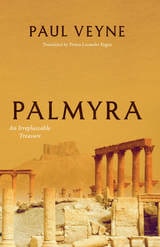
Palmyra
An Irreplaceable TreasurePaul Veyne
University of Chicago Press, 2017
In this concise and elegiac book, Paul Veyne, one of Palmyra’s most important experts, offers a beautiful and moving look at the history of this significant lost city and why it was—and still is—important. Today, we can appreciate the majesty of Palmyra only through its pictures and stories, and this book offers a beautifully illustrated memorial that also serves as a lasting guide to a cultural treasure.
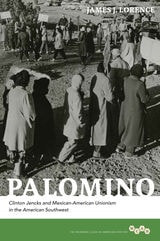
Palomino
Clinton Jencks and Mexican-American Unionism in the American SouthwestJames J. Lorence
University of Illinois Press, 2013