Results by title
4038 books match the query 'Social aspects' and 233 start with p
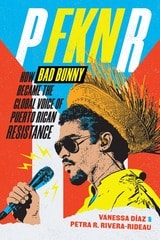
P FKN R
How Bad Bunny Became the Global Voice of Puerto Rican ResistanceVanessa Díaz and Petra R. Rivera-Rideau
Duke University Press, 2026
Global superstar Bad Bunny, born Benito Antonio Martínez Ocasio, like many other Puerto Ricans, has lived a life marked by public crises—blackouts, hurricanes, political corruption and oppression, among others—that have exposed the ongoing impacts of colonialism in Puerto Rico. Offering a portrait of the past and future of Puerto Rican resistance through one of its loudest and proudest voices, P FKN R draws on interviews with musicians, politicians, and journalists as well as ethnographic research to set Bad Bunny and Puerto Rican resistance in a historical, political, and cultural context. Authors Vanessa Díaz and Petra Rivera-Rideau—creators of the “Bad Bunny Syllabus”—demonstrate Bad Bunny’s place in a long tradition of infusing both joy and protest into music and honor the many evolving forms of daily resistance to oppression and colonialism that are part of Puerto Rican life.
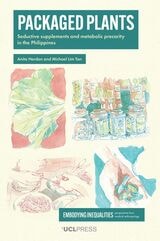
Packaged Plants
Seductive Supplements and Metabolic Precarity in the PhilippinesAnita Hardon and Michael Lim Tan
University College London, 2024
Through meticulous research and insightful analysis, Packaged Plants explores the intersectionality between health, economics, and environment in the Philippines, offering an absorbing ethnography and cultural history of how the production and consumption of plants for food and medicine have changed as well as how ultra-processed foods have become linked to health concerns, including cardiovascular disease, diabetes, and obesity.
Part one of the book presents a comprehensive analysis scrutinizing the colonial influences, urbanization, nutritional policies, research programs, and neoliberal marketing strategies in the Philippines that have proliferated packaged plant-based products as food and medicines. Part two interweaves contemporary urban political ecology frameworks with medical anthropological perspectives within Puerto Princesa and elucidates the precarious circumstances compelling individuals to invest in supplements.
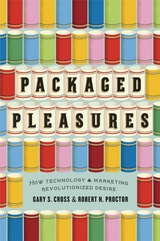
Packaged Pleasures
How Technology and Marketing Revolutionized DesireGary S. Cross and Robert N. Proctor
University of Chicago Press, 2014
In Packaged Pleasures, Gary S. Cross and Robert N. Proctor delve into an uncharted chapter of American history, shedding new light on the origins of modern consumer culture and how technologies have transformed human sensory experience. In the space of only a few decades, junk foods, cigarettes, movies, recorded sound, and thrill rides brought about a revolution in what it means to taste, smell, see, hear, and touch. New techniques of boxing, labeling, and tubing gave consumers virtually unlimited access to pleasures they could simply unwrap and enjoy. Manufacturers generated a seemingly endless stream of sugar-filled, high-fat foods that were delicious but detrimental to health. Mechanically rolled cigarettes entered the market and quickly addicted millions. And many other packaged pleasures dulled or displaced natural and social delights. Yet many of these same new technologies also offered convenient and effective medicines, unprecedented opportunities to enjoy music and the visual arts, and more hygienic, varied, and nutritious food and drink. For better or for worse, sensation became mechanized, commercialized, and, to a large extent, democratized by being made cheap and accessible. Cross and Proctor have delivered an ingeniously constructed history of consumerism and consumer technology that will make us all rethink some of our favorite things.
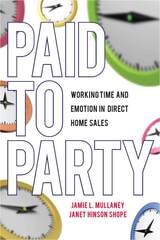
Paid to Party
Working Time and Emotion in Direct Home SalesMullaney, Jamie L
Rutgers University Press, 2012
On any given night in living rooms across America, women gather for a fun girls’ night out to eat, drink, and purchase the latest products—from Amway to Mary Kay cosmetics. Beneath the party atmosphere lies a billion-dollar industry, Direct Home Sales (DHS), which is currently changing how women navigate work and family.
Drawing from numerous interviews with consultants and observations at company-sponsored events, Paid to Party takes a closer look at how DHS promises to change the way we think and feel about the struggles of balancing work and family. Offering a new approach to a flexible work model, DHS companies tell women they can, in fact, have it all and not feel guilty. In DHS, work time is not measured by the hands of the clock, but by the emotional fulfillment and fun it brings.
Pain, Death, and the Law
Austin Sarat, Editor
University of Michigan Press, 2001
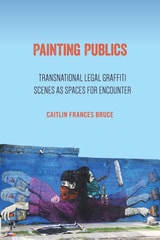
Painting Publics
Transnational Legal Graffiti Scenes as Spaces for EncounterCaitlin Frances Bruce
Temple University Press, 2019
Public art is a form of communication that enables spaces for encounters across difference. These encounters may be routine, repeated, or rare, but all take place in urban spaces infused with emotion, creativity, and experimentation. In Painting Publics, Caitlin Bruce explores how various legal graffiti scenes across the United States, Mexico, and Europe provide diverse ways for artists to navigate their changing relationships with publics, institutions, and commercial entities.
Painting Publics draws on a combination of interviews with more than 100 graffiti writers as well as participant observation, and uses critical and rhetorical theory to argue that graffiti should be seen as more than counter-cultural resistance. Bruce claims it offers resources for imagining a more democratic city, one that builds and grows from personal relations, abandoned or under-used spaces, commercial sponsorship, and tacit community resources. In the case of Mexico, Germany, and France, there is even some state support for the production and maintenance of civic education through visual culture.
In her examination of graffiti culture and its spaces of inscription, Bruce allows us to see moments where practitioners actively reckon with possibility.
Palestinian Cinema in the Days of Revolution
By Nadia Yaqub
University of Texas Press, 2018
Palestinian cinema arose during the political cinema movements of the late 1960s and early 1970s, yet it was unique as an institutionalized, though modest, film effort within the national liberation campaign of a stateless people. Filmmakers working within the Palestinian Liberation Organization (PLO) and through other channels filmed the revolution as it unfolded, including the Israeli bombings of Palestinian refugee camps, the Jordanian and Lebanese civil wars, and Palestinian life under Israeli occupation, attempting to create a cinematic language consonant with the revolution and its needs. They experimented with form both to make effective use of limited material and to process violent events and loss as a means of sustaining active engagement in the Palestinian political project.
Palestinian Cinema in the Days of Revolution presents an in-depth study of films made between 1968 and 1982, the filmmakers and their practices, the political and cultural contexts in which the films were created and seen, and their afterlives among Palestinian refugees and young filmmakers in the twenty-first century. Nadia Yaqub discusses how early Palestinian cinema operated within emerging public-sector cinema industries in the Arab world, as well as through coproductions and solidarity networks. Her findings aid in understanding the development of alternative cinema in the Arab world. Yaqub also demonstrates that Palestinian filmmaking, as a cinema movement created and sustained under conditions of extraordinary precarity, offers important lessons on the nature and possibilities of political filmmaking more generally.

Palma Africana
Michael Taussig
University of Chicago Press, 2018
Palm oil. Saturating everything from potato chips to nail polish, palm oil has made its way into half of the packaged goods in our supermarkets. By 2020, world production will be double what it was in 2000. In Colombia, palm oil plantations are covering over one-time cornucopias of animal, bird, and plant life. Over time, they threaten indigenous livelihoods and give rise to abusive labor conditions and major human rights violations. The list of entwined horrors—climatic, biological, social—is long. But Taussig takes no comfort in our usual labels: “habitat loss,” “human rights abuses,” “climate change.” The shock of these words has passed; nowadays it is all a blur. Hence, Taussig’s keen attention to words and writing throughout this work. He takes cues from precursors’ ruminations: Roland Barthes’s suggestion that trees form an alphabet in which the palm tree is the loveliest; William Burroughs’s retort to critics that for him words are alive like animals and don’t like to be kept in pages—cut them and the words are let free.
Steeped in a lifetime of philosophical and ethnographic exploration, Palma Africana undercuts the banality of the destruction taking place all around us and offers a penetrating vision of the global condition. Richly illustrated and written with experimental verve, this book is Taussig’s Tristes Tropiques for the twenty-first century.
Pan-Asian Sports and the Emergence of Modern Asia, 1913-1974
Stefan Huebner
National University of Singapore Press, 2016
Based on a vast range of archival materials and spanning sixty years and three continents, Sports and the Emergence of Modern Asia shows how pan-Asian sporting events helped shape anti-colonial sentiments, Asian nationalisms, and pan-Asian aspirations in places as diverse as Japan and Iran, and across the span of countries lying between them.
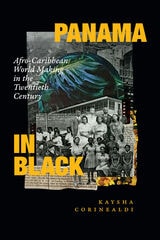
Panama in Black
Afro-Caribbean World Making in the Twentieth CenturyKaysha Corinealdi
Duke University Press, 2022
Pandemic Exposures
Economy and Society in the Time of CoronavirusEdited by Didier Fassin and Marion Fourcade
HAU, 2021
Didier Fassin and Marion Fourcade have assembled an eminent team of scholars from across the social sciences, conducting research on six continents, to reflect on the multiple ways the coronavirus has entered, reshaped, or exacerbated existing trends and structures in every part of the globe. The contributors show how the disruptions caused by the pandemic have both hastened the rise of new social divisions and hardened old inequalities and dilemmas. An indispensable volume, Pandemic Exposures provides an illuminating analysis of this watershed moment and its possible aftermath.
Pandemic Power
The Covid Response and the Erosion of Democracy - A Liberal CritiqueMuriel Blaive
Central European University Press, 2025
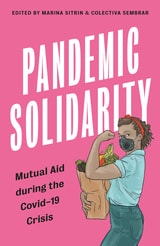
Pandemic Solidarity
Mutual Aid during the Coronavirus CrisisMarina Sitrin
Pluto Press, 2020
“Helps us to rethink and re-imagine an egalitarian society where no one is left behind”—London School of Economics Review of Books
In times of crisis, when institutions of power are laid bare, people turn to one another. Pandemic Solidarity collects firsthand experiences from around the world of people creating their own narratives of solidarity and mutual aid in the time of the global crisis of COVID-19.
The world's media was quick to weave a narrative of selfish individualism, full of empty supermarket shelves and con-men. However, if you scratch the surface, you find a different story of community and self-sacrifice.
Looking at thirteen countries and regions, including India, Rojava, China and the US, the personal accounts in the book weave together to create a larger picture, revealing a universality of experience - a housewife in Istanbul supports her neighbor in the same way as a punk in Portland, and a grandmother in Italy does. Moving beyond the present, these stories reveal what an alternative society could look like, and reflect the skills and relationships we already have to create that society, challenging institutions of power that have already shown their fragility. Chapters include:
*Capitalism Kills, Solidarity Gives Life": A Glimpse of Solidarity Networks from Turkey
*Solidarity Network in Iraq During Covid-19: This Time the Enemy is Invisible
*Sharing Spaces and Crossing Borders: Voices from Taiwan
*Rethinking Minority and Mainstream in India
*Confronting State Authoritarianism: Civil Society and Community-Based Solidarity in Southern Africa
*On Intersectional Solidarity in Portugal
*Solidarity Networks in Greece
*Argentina: Injustices Magnified; Memories of Resistance Reactivated
*On Grassroots Organizing: Excerpts from Brazil
What happens to society when we are not held back by the neoliberal narrative? What can we do, to protect ourselves and one another, when we organize and act collectively? From the stories told here, maybe more than we expect.
Panic Diaries
A Genealogy of Panic DisorderJackie Orr
Duke University Press, 2006
Orr, who has experienced panic attacks herself, kept a diary of her participation as a research subject in clinical trials for the Upjohn Company’s anti-anxiety drug Xanax. This “panic diary” grounds her study and suggests the complexity of her desire to track the diffusion and regulation of panic in U.S. society. Orr’s historical research, theoretical reflections, and biographical narrative combine in this remarkable and compelling genealogy, which documents the manipulation of panic by the media, the social sciences and psychiatry, the U.S. military and government, and transnational drug companies.
Paper Knowledge
Toward a Media History of DocumentsLisa Gitelman
Duke University Press, 2014
Paradoxes of Prosperity
Wealth Seeking in Pre-Civil War AmericaLorman A. Ratner, Paula T. Kaufman and Dwight L. Teeter Jr.
University of Illinois Press, 2008
At the same time, the United States felt the influence of the rise of popular mass-circulation newspapers and magazines and the surge in American book publishing. Concern over living correctly as well as prosperously was commonly discussed by leading authors and journalists, who were now writing for ever-expanding regional and national audiences. Women became more important as authors and editors, giving advice and building huge markets for women readers, with the magazine Godey's Lady's Book and novels by Susan Warner, Maria Cummins, and Harriet Beecher Stowe expressing women's views about the troubled state of society. Best-selling male writers--including novelist George Lippard, historian George Bancroft, and travel writer Bayard Taylor--were among those adding their voices to concerns about prosperity and morality and about America's place in the world. Writers and publishers discovered that a high moral tone could be exceedingly good for business.
The authors of this book examine how popular writers and widely read newspapers, magazines, and books expressed social tensions between prosperity and morality. This study draws on that nationwide conversation through leading mass media, including circulation-leading newspapers, the New York Herald and the New York Tribune, plus prominent newspapers from the South and West, the Richmond Enquirer and the Cincinnati Enquirer. Best-selling magazines aimed at middle-class tastes, Harper's Magazine and the Southern Literary Messenger, added their voices, as did two leading business magazines.
Paranatures in Culinary Culture
An Alimentary EcologyThomas R. Parker
University of Minnesota Press, 2025
Uncovering the intricate cultural threads that inform our dietary practices
Paranatures in Culinary Culture embarks on a gastronomic odyssey, redefining foods we thought we knew and revealing the extraordinary stories of ordinary ingredients and the cultural forces shaping our diets. The book begins with a simple premise: to eat is to assimilate the outer world into the inner body, both physically and mentally. But what happens when this assimilation process goes awry? Thomas R. Parker reveals how culinary staples are not only elements of identity formation but also instruments of cultural disruption when their true nature emerges and challenges our preconceptions.
Parker explores how certain foods—bread, oysters, pigs, cheese, and wine—can both create and destabilize narratives, unsettle assimilation, and decenter Western culinary traditions. Taking inspiration from architectural historian David Gissen’s concept of “subnature” and Michel Serres’s idea of the “parasite,” Parker develops the concept of paranatures: flavors, foods, and practices considered unpalatable by different societies at different times. He reveals how certain ordinary foods live parallel paranatural lives, addressing larger issues of colonial and postcolonial food theory and challenging long-held notions that cuisine was meant to uphold.
Serving up a rich blend of history, culture, and gastronomy, Parker leads readers to perceive food as an adventure, inviting them to taste the untamed side of nature. He offers a thought-provoking invitation to reconceptualize the roles and narratives we assign to the natural world and its produce, allowing us to see food, nature, and ourselves in new ways.
Parcels
Memories of Salvadoran MigrationMike Anastario
Rutgers University Press, 2019

Parchment, Paper, Pixels
Law and the Technologies of CommunicationPeter M. Tiersma
University of Chicago Press, 2010
Technological revolutions have had an unquestionable, if still debatable, impact on culture and society—perhaps none more so than the written word. In the legal realm, the rise of literacy and print culture made possible the governing of large empires, the memorializing of private legal transactions, and the broad distribution of judicial precedents and legislation. Yet each of these technologies has its shadow side: written or printed texts easily become static and the textual practices of the legal profession can frustrate ordinary citizens, who may be bound by documents whose implications they scarcely understand.
Parchment, Paper, Pixels offers an engaging exploration of the impact of three technological revolutions on the law. Beginning with the invention of writing, continuing with the mass production of identical copies of legal texts brought about by the printing press, and ending with a discussion of computers and the Internet, Peter M. Tiersma traces the journey of contracts, wills, statutes, judicial opinions, and other legal texts through the past and into the future.
Though the ultimate effects of modern technologies on our legal system remain to be seen, Parchment, Paper, Pixels offers readers an insightful guide as to how our shifting forms of technological literacy have shaped and continue to shape the practice of law today.
Parenting and Professing
Balancing Family Work with an Academic CareerRachel Hile Bassett
Vanderbilt University Press, 2005
Paris Concealed
Masks in the City of LightJames H. Johnson
University of Chicago Press, 2025
A comprehensive history of masks in France from the seventeenth to the nineteenth century.
Masks can conceal, disguise, or protect. They can guard status, inspire delight, or spread fear. They can also betray trust through insincerity, deceit, and hypocrisy. In Paris Concealed, historian James H. Johnson offers a sweeping history of masks both visible and unseen from the time of Louis XIV to the late nineteenth century, exploring the complex roles that masking and unmasking have played in the fashioning of our social selves.
Drawing from memoirs, novels, plays, and paintings, Paris Concealed explores the many domains in which masks have been decisive. Beginning in the court of Versailles, Johnson charts the genesis of courtly politesse and its widespread condemnation by Enlightenment philosophers and political thinkers. He describes strategies deployed in the era of the French Revolution for unmasking traitors and later efforts to penetrate criminal disguises through telltale marks on the body. He portrays the disruptive power of masks in public balls and carnivals and, with the coming of modernity, evokes their unsettling presence within the unconscious.
Compellingly written and beautifully illustrated, Paris Concealed lays bare the mask’s transformations, from marking one’s position in a static society to inspiring imagined identities in meritocracies to impeding the elusive search for one’s true self. To tell the history of masks, Johnson shows, is to tell the history of modern selfhood.
Paris in Despair
Art and Everyday Life under Siege (1870-1871)Hollis Clayson
University of Chicago Press, 2002
But the crisis did not halt artistic production, as some have suggested. In fact, Clayson argues that the siege actually encouraged innovation, fostering changed attitudes and new approaches to representation among a wide variety of artists as they made art out of their individual experiences of adversity and change—art that has not previously been considered within the context of the siege. Clayson focuses especially on Rosa Bonheur, Edgar Degas, Jean-Alexandre-Joseph Falguière, Edouard Manet, and Henri Regnault, but she also covers a host of other artists, including Ernest Barrias, Gustave Courbet, Edouard Detaille, Pierre Puvis de Chavannes, Albert Robida, and James Tissot. Paris in Despair includes more than two hundred color and black-and-white images of works by these artists and others, many never before published.
Using the visual arts as an interpretive lens, Clayson illuminates the wide range of issues at play during the siege and thereafter, including questions of political and cultural identity, artistic masculinity and femininity, public versus private space, everyday life and modernity, and gender and class roles in military and civilian society. For anyone concerned with these issues, or with nineteenth-century French art in general, Paris in Despair will be a landmark work.
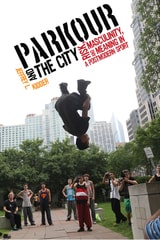
Parkour and the City
Risk, Masculinity, and Meaning in a Postmodern SportKidder, Jeffrey L.
Rutgers University Press, 2017
Parkour’s modern development has been tied closely to the growth of the internet. The sport is inevitably a YouTube phenomenon, making it exemplary of new forms of globalized communication. Parkour’s dangerous stunts resonate, too, Kidder contends, with a neoliberal ideology that is ambivalent about risk. Moreover, as a male-dominated sport, parkour, with its glorification of strength and daring, reflects contemporary Western notions of masculinity. At the same time, Kidder writes, most athletes (known as “traceurs” or “freerunners”) reject a “daredevil” label, preferring a deliberate, reasoned hedging of bets with their own safety—rather than a “pushing the edge” ethos normally associated with extreme sports.
Parlor Ponds
The Cultural Work of the American Home Aquarium, 1850 - 1970Judith Hamera
University of Michigan Press, 2012
Parlor Ponds: The Cultural Work of the American Home Aquarium, 1850–1970 examines the myriad cultural meanings of the American home aquarium during the nineteenth and twentieth centuries and argues that the home aquarium provided its enthusiasts with a potent tool for managing the challenges of historical change, from urbanization to globalization. The tank could be a window to an alien world, a theater for domestic melodrama, or a vehicle in a fantastical undersea journey. Its residents were seen as inscrutable and wholly disposable “its,” as deeply loved and charismatic individuals, and as alter egos by aquarists themselves.
Parlor Ponds fills a gap in the growing field of animal studies by showing that the tank is an emblematic product of modernity, one using elements of exploration, technology, science, and a commitment to rigorous observation to contain anxieties spawned by industrialization, urbanization, changing gender roles, and imperial entanglements. Judith Hamera engages advertisements, images, memoirs, public aquarium programs, and enthusiast publications to show how the history of the aquarium illuminates complex cultural attitudes toward nature and domestication, science and religion, gender and alterity, and national conquest and environmental stewardship with an emphasis on the ways it illuminates American public discourse on colonial and postcolonial expansion.
Partial Stories
Maternal Death from Six AnglesClaire L. Wendland
University of Chicago Press, 2022
By the early twenty-first century, about one woman in twelve could expect to die of a pregnancy or childbirth complication in Malawi. Specific deaths became object lessons. Explanatory stories circulated through hospitals and villages, proliferating among a range of practitioners: nurse-midwives, traditional birth attendants, doctors, epidemiologists, herbalists. Was biology to blame? Economic underdevelopment? Immoral behavior? Tradition? Were the dead themselves at fault?
In Partial Stories, Claire L. Wendland considers these explanations for maternal death, showing how they reflect competing visions of the past and shared concerns about social change. Drawing on extended fieldwork, Wendland reveals how efforts to legitimate a single story as the authoritative version can render care more dangerous than it might otherwise be. Historical, biological, technological, ethical, statistical, and political perspectives on death usually circulate in different expert communities and different bodies of literature. Here, Wendland considers them together, illuminating dilemmas of maternity care in contexts of acute change, chronic scarcity, and endemic inequity within Malawi and beyond.
Passages and Afterworlds
Anthropological Perspectives on Death in the CaribbeanMaarit Forde and Yanique Hume, editors
Duke University Press, 2018
Contributors. Donald Cosentino, Maarit Forde, Yanique Hume, Paul Christopher Johnson, Aisha Khan, Keith E. McNeal, George Mentore, Richard Price, Karen Richman, Ineke (Wilhelmina) van Wetering, Bonno (H.U.E.) Thoden van Velzen
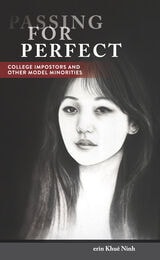
Passing for Perfect
College Impostors and Other Model Minoritieserin Khuê Ninh
Temple University Press, 2021
In her engaging study, Passing for Perfect,erin Khuê Ninh considers the factors that drove college imposters such as Azia Kim—who pretended to be a Stanford freshman—and Jennifer Pan—who hired a hitman to kill her parents before they found out she had never received her high school diploma—to extreme lengths to appear successful. Why would someone make such an illogical choice? And how do they stage these lies so convincingly, and for so long?
These outlier examples prompt Ninh to address the larger issue of the pressures and difficulties of striving to be model minority, where failure is too ruinous to admit. Passing for Perfect insists that being a “model minority” is not a “myth,” but coded into one’s programming as an identity—a set of convictions and aspirations, regardless of present socioeconomic status or future attainability—and that the true cost of turning children into high-achieving professionals may be higher than anyone can bear.
Ninh’s book codifies for readers the difference between imposters who are con artists or shysters and those who don’t know how to stop passing for perfect.
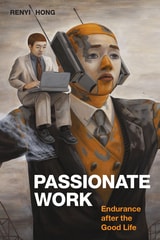
Passionate Work
Endurance after the Good LifeRenyi Hong
Duke University Press, 2022

Past Scents
Historical Perspectives on SmellJonathan Reinarz
University of Illinois Press, 2014
In this comprehensive and engaging volume, medical historian Jonathan Reinarz offers a historiography of smell from ancient to modern times. Synthesizing existing scholarship in the field, he shows how people have relied on their olfactory sense to understand and engage with both their immediate environments and wider corporal and spiritual worlds.
This broad survey demonstrates how each community or commodity possesses, or has been thought to possess, its own peculiar scent. Through the meanings associated with smells, osmologies develop--what cultural anthropologists have termed the systems that utilize smells to classify people and objects in ways that define their relations to each other and their relative values within a particular culture. European Christians, for instance, relied on their noses to differentiate Christians from heathens, whites from people of color, women from men, virgins from harlots, artisans from aristocracy, and pollution from perfume.
This reliance on smell was not limited to the global North. Around the world, Reinarz shows, people used scents to signify individual and group identity in a morally constructed universe where the good smelled pleasant and their opposites reeked.
With chapters including "Heavenly Scents," "Fragrant Lucre," and "Odorous Others," Reinarz's timely survey is a useful and entertaining look at the history of one of our most important but least-understood senses.
Pathways of Desire
The Sexual Migration of Mexican Gay MenHéctor Carrillo
University of Chicago Press, 2017
Further, Carrillo shows that sexual globalization must be regarded as a bidirectional, albeit uneven, process of exchange between countries in the global north and the global south. With this approach, Carrillo challenges the view that gay men from countries like Mexico would logically want to migrate to a “more sexually enlightened” country like the United States—a partial and limited understanding, given the dynamic character of sexuality in countries such as Mexico, which are becoming more accepting of sexual diversity. Pathways of Desire also provides a helpful analytical framework for the simultaneous consideration of structural and cultural factors in social scientific studies of sexuality. Carrillo explains the patterns of cross-cultural interaction that sexual migration generates and—at the most practical level—shows how the intricacies of cross-cultural sexual and romantic relations may affect the sexual health and HIV risk of transnational immigrant populations.
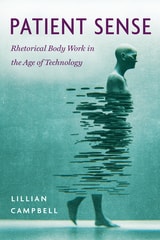
Patient Sense
Rhetorical Body Work in the Age of TechnologyLillian Campbell
The Ohio State University Press, 2025
In Patient Sense, Lillian Campbell introduces a theory of rhetorical body work and applies it to three distinct healthcare contexts: clinical nursing simulations, physical therapy labs, and tele-observation in a virtual intensive care unit. Drawing on sociological frameworks, she defines rhetorical body work as paid physical, emotional, or discursive labor performed at the material or technological interface of worker–client bodies. Such work is devalued within social and institutional systems and often gendered and racialized. Campbell captures the value of providers’ intuitive patient sense in the face of increasingly technology-mediated healthcare and intervenes in conversations about the future of healthcare training. Ultimately, she demonstrates that we will always need responsive healthcare providers whose rhetorical body work and patient sense cannot be replaced by technicians or algorithms.
Patina
A Profane ArchaeologyShannon Lee Dawdy
University of Chicago Press, 2016
In Patina, anthropologist Shannon Lee Dawdy examines what was lost and found through the destruction of Hurricane Katrina. Tracking the rich history and unique physicality of New Orleans, she explains how it came to adopt the nickname “the antique city.” With innovative applications of thing theory, Patina studies the influence of specific items—such as souvenirs, heirlooms, and Hurricane Katrina ruins—to explore how the city’s residents use material objects to comprehend time, history, and their connection to one another. A leading figure in archaeology of the contemporary, Dawdy draws on material evidence, archival and literary texts, and dozens of post-Katrina interviews to explore how the patina aesthetic informs a trenchant political critique. An intriguing study of the power of everyday objects, Patina demonstrates how sharing in the care of a historic landscape can unite a city’s population—despite extreme divisions of class and race—and inspire civil camaraderie based on a nostalgia that offers not a return to the past but an alternative future.

Patty's Got a Gun
Patricia Hearst in 1970s AmericaWilliam Graebner
University of Chicago Press, 2008
Paul Robeson and the Cold War Performance Complex
Race, Madness, ActivismTony Perucci
University of Michigan Press, 2012
Actor and singer Paul Robeson's performances in Othello, Show Boat, and The Emperor Jones made him famous, but his midcentury appearances in support of causes ranging from labor and civil rights to antilynching and American warmongering made him notorious. When Robeson announced at the 1949 Paris Peace Conference that it was "unthinkable" for blacks to go to war against the Soviet Union, the mainstream American press declared him insane.
Notions of Communism, blackness, and insanity were interchangeably deployed during the Cold War to discount activism such as Robeson's, just a part of an array of social and cultural practices that author Tony Perucci calls the Cold War performance complex. Focusing on two key Robeson performances---the concerts in Peekskill, New York, in 1949 and his appearance before the House Committee on Un-American Activities in 1956---Perucci demonstrates how these performances and the government's response to them are central to understanding the history of Cold War culture in the United States. His book provides a transformative new perspective on how the struggle over the politics of performance in the 1950s was also a domestic struggle over freedom and equality. The book closely examines both of these performance events as well as artifacts from Cold War culture---including congressional documents, FBI files, foreign policy papers, the popular literature on mental illness, and government propaganda films---to study the operation of power and activism in American Cold War culture.
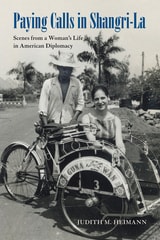
Paying Calls in Shangri-La
Scenes from a Woman’s Life in American DiplomacyJudith M. Heimann
Ohio University Press, 2016
Judith M. Heimann entered the diplomatic life in 1958 to join her husband, John, in Jakarta, Indonesia, at his American Embassy post. This, her first time out of the United States, would set her on a path across the continents as she mastered the fine points of diplomatic culture. She did so first as a spouse, then as a diplomat herself, thus becoming part of one of the Foreign Service’s first tandem couples.
Heimann’s lively recollections of her life in Africa, Asia, and Europe show us that when it comes to reconciling our government’s requirements with the other government’s wants, shuttle diplomacy, Skype, and email cannot match on-the-ground interaction. The ability to gauge and finesse gesture, tone of voice, and unspoken assumptions became her stock-in-trade as she navigated, time and again, remarkably delicate situations.
This insightful and witty memoir gives us a behind-the-scenes look at a rarely explored experience: that of one of the very first married female diplomats, who played an unsung but significant role in some of the important international events of the past fifty years. To those who know something of today’s world of diplomacy, Paying Calls in Shangri-La will be an enlightening tour through the way it used to be—and for aspiring Foreign Service officers and students, it will be an inspiration.
Published in association with ADST-DACOR Diplomats and Diplomacy Series
Paying the Price
College Costs, Financial Aid, and the Betrayal of the American DreamSara Goldrick-Rab
University of Chicago Press, 2016
Not necessarily, says Sara Goldrick-Rab, and with Paying the Price, she shows in damning detail exactly why. Quite simply, college is far too expensive for many people today, and the confusing mix of federal, state, institutional, and private financial aid leaves countless students without the resources they need to pay for it.
Drawing on an unprecedented study of 3,000 young adults who entered public colleges and universities in Wisconsin in 2008 with the support of federal aid and Pell Grants, Goldrick-Rab reveals the devastating effect of these shortfalls. Half the students in the study left college without a degree, while less than 20 percent finished within five years. The cause of their problems, time and again, was lack of money. Unable to afford tuition, books, and living expenses, they worked too many hours at outside jobs, dropped classes, took time off to save money, and even went without adequate food or housing. In many heartbreaking cases, they simply left school—not with a degree, but with crippling debt. Goldrick-Rab combines that shocking data with devastating stories of six individual students, whose struggles make clear the horrifying human and financial costs of our convoluted financial aid policies.
America can fix this problem. In the final section of the book, Goldrick-Rab offers a range of possible solutions, from technical improvements to the financial aid application process, to a bold, public sector–focused “first degree free” program. What’s not an option, this powerful book shows, is doing nothing, and continuing to crush the college dreams of a generation of young people.
Peace, Preference, and Property
Return Migration after Violent ConflictSandra F. Joireman
University of Michigan Press, 2022
Growing numbers of people are displaced by war and violent conflict. In Ukraine, Afghanistan, Ethiopia, Myanmar, Syria, and elsewhere violence pushes civilian populations from their homes and sometimes from their countries, making them refugees. In previous decades, millions of refugees and displaced people returned to their place of origin after conflict or were resettled in countries in the Global North. Now displacements last longer, the number of people returning home is lower, and opportunities for resettlement are shrinking. More and more people spend decades in refugee camps or displaced within their own countries, raising their children away from their home communities and cultures. In this context, international policies encourage return to place of origin.
Using case studies and first-person accounts from interviews and fieldwork in post-conflict settings such as Uganda, Liberia, and Kosovo, Sandra F. Joireman highlights the divergence between these policies and the preferences of conflict-displaced people. Rather than looking from the top down, at the rights that people have in international and domestic law, the perspective of this text is from the ground up—examining individual and household choices after conflict. Some refugees want to go home, some do not want to return, some want to return to their countries of origin but live in a different place, and others are repatriated against their will when they have no other options. Peace, Preference, and Property suggests alternative policies that would provide greater choice for displaced people in terms of property restitution and solutions to displacement.
Peak Oil
Apocalyptic Environmentalism and Libertarian Political CultureMatthew Schneider-Mayerson
University of Chicago Press, 2015
In Peak Oil, Matthew Schneider-Mayerson takes readers deep inside the world of “peakists,” showing how their hopes and fears about the postcarbon future led them to prepare for the social breakdown they foresee—all of which are fervently discussed and debated via websites, online forums, videos, and novels. By exploring the worldview of peakists, and the unexpected way that the fear of peak oil and climate change transformed many members of this left-leaning group into survivalists, Schneider-Mayerson builds a larger analysis of the rise of libertarianism, the role of oil in modern life, the political impact of digital technologies, the racial and gender dynamics of post-apocalyptic fantasies, and the social organization of environmental denial.
Pedagogies of Woundedness
Illness, Memoir, and the Ends of the Model MinorityJames Kyung-Jin Lee
Temple University Press, 2022
The pressures Asian Americans feel to be socially and economically exceptional include an unspoken mandate to always be healthy. Nowhere is this more evident than in the expectation for Asian Americans to enter the field of medicine, principally as providers of care rather than those who require care. Pedagogies of Woundedness explores what happens when those considered model minorities critically engage with illness and medicine whether as patients or physicians.
James Kyung-Jin Lee considers how popular culture often positions Asian Americans as medical authorities and what that racial characterization means. Addressing the recent trend of writing about sickness, disability, and death, Lee shows how this investment in Asian American health via the model minority is itself a response to older racial forms that characterize Asian American bodies as diseased. Moreover, he pays attention to what happens when academics get sick and how illness becomes both methodology and an archive for scholars.
Pedagogies of Woundedness also explores the limits of biomedical “care,” the rise of physician chaplaincy, and the impact of COVID. Throughout his book and these case studies, Lee shows the social, ethical, and political consequences of these common (mis)conceptions that often define Asian Americans in regard to health and illness.

Pedaling Resistance
Sympathy, Subversion, and Vegan CyclingCarol J. Adams
University of Arkansas Press, 2024
The essays in this collection explore the unity between cycling for health, work, competition, transport, and joy, and the issues of animal suffering, environmentalism, and speciesism inherent in veganism—all through lenses of class, race, gender, and disability. Pedaling Resistance illuminates themes of everyday resistance and boundary crossing to uncover the greater social and political issues that underlie the decisions to give up animal products and choose cycling over driving.

People of Prowess
Sport, Leisure, and Labor in Early Anglo-AmericaNancy L. Struna
University of Illinois Press, 1996
Perfectly Average
The Pursuit of Normality in Postwar AmericaAnna G. Creadick
University of Massachusetts Press, 2010
At the end of World War II, many Americans longed for a return to a more normal way of life after decades of depression and war. In fact, between 1945 and 1963 the idea of “normality” circulated as a keyword in almost every aspect of American culture. But what did this term really mean? What were its parameters? Whom did it propose to include and exclude?
In Perfectly Average, Anna Creadick investigates how and why “normality” reemerged as a potent homogenizing category in postwar America. Working with scientific studies, material culture, literary texts, film, fashion, and the mass media, she charts the pursuit of the “normal” through thematic chapters on the body, character, class, sexuality, and community.
Creadick examines such evidence as the “Norm and Norma” models produced during the war by sexologists and anthropologists—statistical composites of “normal” American bodies. In 1945, as thousands of Ohio women signed up for a Norma Look-Alike contest, a “Harvard Study of Normal Men” sought to define the typical American male according to specific criteria, from body shape to upbringing to blood pressure. By the early 1950s, the “man in the gray flannel suit” had come to symbolize what some regarded as the stultifying sameness of the “normalized” middle class. Meanwhile, novels such as From Here to Eternity and Peyton Place both supported and challenged normative ideas about gender, race, and sexuality, even as they worked to critique the postwar culture of surveillance—watching and being watched—through which normalizing power functioned.
As efforts to define normality became increasingly personal, the tensions em-bedded in its binary logic multiplied: Was normal descriptive of an average or prescriptive of an ideal? In the end, Creadick shows, a variety of statistics, assumptions, and aspirations converged to recast “normality” not as something innate or inborn, but rather as a quality to be actively pursued—a standard at once highly seductive and impossible to achieve because it required becoming perfectly average.
Performance and the Afterlives of Injustice
Catherine M. Cole
University of Michigan Press, 2020
Performance in America
Contemporary U.S. Culture and the Performing ArtsDavid Román
Duke University Press, 2005
The performances that Román analyzes range from localized community-based arts events to full-scale Broadway productions and from the controversial works of established artists such as Tony Kushner to those of emerging artists. Román considers dances produced by the choreographers Bill T. Jones and Neil Greenberg in the mid-1990s as new aids treatments became available and the aids crisis was reconfigured; a production of the Asian American playwright Chay Yew’s A Beautiful Country in a high-school auditorium in Los Angeles’s Chinatown; and Latino performer John Leguizamo’s one-man Broadway show Freak. He examines the revival of theatrical legacies by female impersonators and the resurgence of cabaret in New York City. Román also looks at how the performing arts have responded to 9/11, the U.S. invasion of Afghanistan, and the second war in Iraq. Including more than eighty illustrations, Performance in America highlights the dynamic relationships among performance, history, and contemporary culture through which the past is revisited and the future reimagined.
Performance, Transparency, and the Cultures of Surveillance
James M. Harding
University of Michigan Press, 2018
Performing Antiracist Pedagogy in Rhetoric, Writing, and Communication
Frankie Condon
University Press of Colorado, 2017
In Performing Antiracist Pedagogy, Frankie Condon and Vershawn Ashanti Young seek to help create openings to address race and racism not only in course readings and class discussion in writing, rhetoric, and communication courses but also in wider public settings. The contributors to this collection, drawn from a wide range of disciplines, urge readers to renew their commitment to intelligently and publicly deliberate race and to counteract the effects of racism. The book is both theoretically rigorous and practical, providing readers with insightful analyses of race and racism and useful classroom suggestions and examples.
Contributors: Chiara Bacigalupa, Sophia Bell, Susan Leigh Brooks, Frankie Condon, Rasha Diab, John Dean, Thomas Ferrell, Beth Godbee, Dae-Joong Kim, Timothy Lensmire, Calvin M. Logue, Aja Y. Martinez, Rebecca Nathan, Bobbi Olson, Jessica Parker, Charise Pimentel, Octavio Pimentel, Mya Poe, Neil Simpkins, Nathan Snaza, Deatra Sullivan, Vershawn Ashanti Young
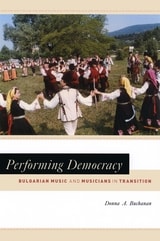
Performing Democracy
Bulgarian Music and Musicians in TransitionDonna A. Buchanan
University of Chicago Press, 2005
Based on fieldwork conducted between 1988 and 1996 with professional Bulgarian folk musicians, Donna A. Buchanan's PerformingDemocracy argues that the performances of traditional music groups may be interpreted not only as harbingers but as agents of Bulgaria's political transition. Many of the musicians in socialist Bulgaria's state folk ensembles served as official cultural emissaries for several decades. Through their reminiscences and repertoires, Buchanan reveals the evolution of Bulgarian musical life as it responded to and informed the political process. By modifying their art to accommodate changing political ideologies, these musicians literally played out regime change on the world's stages, performing their country's democratization musically at home and abroad.
Performing Democracy and its accompanying CD-ROM, featuring traditional Bulgarian music, lyrics, notation, and photos, will fascinate any reader interested in the many ways art echoes and influences politics.
Performing Loss
Rebuilding Community through Theater and WritingJodi Kanter
Southern Illinois University Press, 2007
In Performing Loss: Rebuilding Community through Theater and Writing, author Jodi Kanter explores opportunities for creativity and growth within our collective responses to grief. Performing Loss provides teachers, students, and others interested in performance with strategies for reading, writing, and performing loss as communities—in the classroom, the theater, and the wider public sphere.
From an adaptation of Jose Saramago’s novel Blindness to a reading of Suzan-Lori Parks’s The America Play, from Kanter’s own experience creating theater with terminally ill patients and federal prisoners to a visual artist’s response to September 11th, Kanter shows in practical, replicable detail how performing loss with community members can transform experiences of isolation and paralysis into experiences of solidarity and action.
Drawing on academic work in performance, cultural studies, literature, sociology, and anthropology, Kanter considers a range of responses to grief in historical context and goes on to imagine newer, more collaborative, and more civically engaged responses. Performing Loss describes Kanter’s pedagogical and artistic processes in lively and vivid detail, enabling the reader to use her projects as models or to adapt the techniques to new communities, venues, and purposes. Kanter demonstrates through each example the ways in which writing and performing can create new possibilities for mourning and living together.
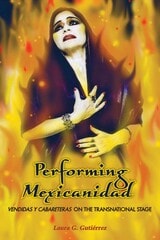
Performing Mexicanidad
Vendidas y Cabareteras on the Transnational StageBy Laura G. Gutiérrez
University of Texas Press, 2010
Using interdisciplinary performance studies and cultural studies frameworks, Laura G. Gutiérrez examines the cultural representation of queer sexuality in the contemporary cultural production of Mexican female and Chicana performance and visual artists. In particular, she locates the analytical lenses of feminist theory and queer theory in a central position to interrogate Mexican female dissident sexualities in transnational public culture.
This is the first book-length study to wed performance studies and queer theory in examining the performative/performance work of important contemporary Mexicana and Chicana cultural workers. It proposes that the creations of several important artists—Chicana visual artist Alma López; the Mexican political cabareteras Astrid Hadad, Jesusa Rodríguez, Liliana Felipe, and Regina Orozco; the Chicana performance artist Nao Bustamante; and the Mexican video artist Ximena Cuevas—unsettle heterosexual national culture. In doing so, they are not only challenging heterosexist and nationalist discourses head-on, but are also participating in the construction of a queer world-making project. Treating the notion of dis-comfort as a productive category in these projects advances feminist and queer theories by offering an insightful critical movement suggesting that queer worlds are simultaneously spaces of desire, fear, and hope.
Gutiérrez demonstrates how arenas formerly closed to female performers are now providing both an artistic outlet and a powerful political tool that crosses not only geographic borders but social, sexual, political, and class boundaries as well, and deconstructs the relationships among media, hierarchies of power, and the cultures of privilege.

Performing Television
Contemporary Drama and the Media CultureElizabeth Klaver
University of Wisconsin Press, 2000
Klaver applies post-structuralist theories of subjectivity to drama while ranging through Beckett’s plays, National Hockey League games, “The Tonight Show,” gay and lesbian drama, minority drama, avant-garde performance, and the topics of theatrical paranoia, the mediatized Imaginary, and the spectatorial gaze.