Results by title
3064 books match the query 'Social conditions' and 136 start with p

PADRES
The National Chicano Priest MovementBy Richard Edward Martínez
University of Texas Press, 2005
From the 1848 Treaty of Guadalupe Hidalgo to the 1960s, Mexican American Catholics experienced racism and discrimination within the U.S. Catholic church, as white priests and bishops maintained a racial divide in all areas of the church's ministry. To oppose this religious apartheid and challenge the church to minister fairly to all of its faithful, a group of Chicano priests formed PADRES (Padres Asociados para Derechos Religiosos, Educativos y Sociales, or Priests Associated for Religious, Educational, and Social Rights) in 1969. Over the next twenty years of its existence, PADRES became a powerful force for change within the Catholic church and for social justice within American society.
This book offers the first history of the founding, activism, victories, and defeats of PADRES. At the heart of the book are oral history interviews with the founders of PADRES, who describe how their ministries in poor Mexican American parishes, as well as their own experiences of racism and discrimination within and outside the church, galvanized them into starting and sustaining the movement. Richard Martínez traces the ways in which PADRES was inspired by the Chicano movement and other civil rights struggles of the 1960s and also probes its linkages with liberation theology in Latin America. He uses a combination of social movement theory and organizational theory to explain why the group emerged, flourished, and eventually disbanded in 1989.
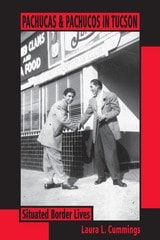
Pachucas and Pachucos in Tucson
Situated Border LivesLaura L. Cummings
University of Arizona Press, 2009
This innovative study examines the pachuco phenomenon in a new way. Exploring its growth in Tucson, Arizona, the book combines ethnography, history, and sociolinguistics to contextualize the early years of the phenomenon, its diverse cultural roots, and its language development in Tucson.
Unlike other studies, it features first-person research with men and women who—despite a wide span of ages—self-identify as pachucos and pachucas. Through these interviews and her archival research, the author finds that pachuco culture has deep roots in Tucson and the Southwest. And she discovers the importance of the pachuco/caló language variety to a shared sense of pachuquismo. Further, she identifies previously neglected pachuco ties to indigenous Indian languages and cultures in Mexico and the United States.
Cummings stresses that the great majority of people conversant with the culture and language do not subscribe to the dynamics of contemporary hardcore gangs, but while zoot suits are no longer the rage today, the pachuco language and sensibilities do live on in Mexican American communities across the Southwest and throughout the United States.
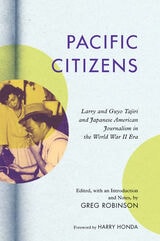
Pacific Citizens
Larry and Guyo Tajiri and Japanese American Journalism in the World War II EraEdited, with and Introduction and Notes, by Greg Robinson: Foreword by Harry Honda
University of Illinois Press, 2012
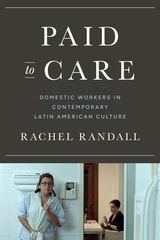
Paid to Care
Domestic Workers in Contemporary Latin American CultureRachel Randall
University of Texas Press, 2023
An insight into the struggles of paid domestic workers in Latin America through an exploration of films, texts, and digital media produced since the 1980s in collaboration with them or inspired by their experiences.
Paid domestic work in Latin America is often undervalued, underpaid, and underregulated. Exploring a wave of Latin American cultural texts since the 1980s that draw on the personal experiences of paid domestic work or intimate ties to domestic employees, Paid to Care offers insights into the struggles domestic workers face through an analysis of literary testimonials, documentary and fiction films, and works of digital media.
From domestic workers’ experiences of unionization in the 1980s to calls for their rights to be respected today, the cultural texts analyzed in Paid to Care provide additional insight into public debates about paid domestic work. Rachel Randall examines work made in Brazil, Argentina, Chile, Mexico, Peru, and Uruguay. The most recent of these texts respond to the Covid-19 pandemic, which put many domestic workers’ health and livelihoods at risk. Engaging with the legal histories of domestic work in multiple distinct national contexts, Randall demonstrates how the legacy of colonialism and slavery shapes the profession even today. Focusing on personal or coproduced cultural representations of domestic workers, Paid to Care explores complex ethical issues relating to consent, mediation, and appropriation.
Palestine Is Throwing a Party and the Whole World Is Invited
Capital and State Building in the West BankKareem Rabie
Duke University Press, 2021
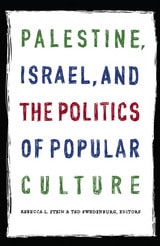
Palestine, Israel, and the Politics of Popular Culture
Rebecca L. Stein and Ted Swedenburg, eds.
Duke University Press, 2005
The volume is interdisciplinary, including the work of anthropologists, historians, sociologists, political scientists, ethnomusicologists, and Americanist and literary studies scholars. Contributors examine popular music of the Palestinian resistance, ethno-racial “passing” in Israeli cinema, Arab-Jewish rock, Euro-Israeli tourism to the Arab Middle East, Internet communities in the Palestinian diaspora, café culture in early-twentieth-century Jerusalem, and more. Together, they suggest new ways of conceptualizing Palestinian and Israeli political culture.
Contributors. Livia Alexander, Carol Bardenstein, Elliott Colla, Amy Horowitz, Laleh Khalili, Mary Layoun, Mark LeVine, Joseph Massad, Melani McAlister, Ilan Pappé, Rebecca L. Stein, Ted Swedenburg, Salim Tamari

Palestinians in Israel
Segregation, Discrimination and DemocracyBen White
Pluto Press, 2012
Palestinians in Israel considers a key issue ignored by the official 'peace process' and most mainstream commentators: that of the growing Palestinian minority within Israel itself.
What the Israeli right-wing calls 'the demographic problem' Ben White identifies as 'the democratic problem' which goes to the heart of the conflict. Israel defines itself not as a state of its citizens, but as a Jewish state, despite the substantial and increasing Palestinian population. White demonstrates how the consistent emphasis on privileging one ethno-religious group over another cannot be seen as compatible with democratic values and that, unless addressed, will undermine any attempts to find a lasting peace.
Individual case studies are used to complement this deeply informed study into the great, unspoken contradiction of Israeli democracy. It is a pioneering contribution which will spark debate amongst all those concerned with a resolution to the Israel/Palestine conflict.

Palma Africana
Michael Taussig
University of Chicago Press, 2018
Palm oil. Saturating everything from potato chips to nail polish, palm oil has made its way into half of the packaged goods in our supermarkets. By 2020, world production will be double what it was in 2000. In Colombia, palm oil plantations are covering over one-time cornucopias of animal, bird, and plant life. Over time, they threaten indigenous livelihoods and give rise to abusive labor conditions and major human rights violations. The list of entwined horrors—climatic, biological, social—is long. But Taussig takes no comfort in our usual labels: “habitat loss,” “human rights abuses,” “climate change.” The shock of these words has passed; nowadays it is all a blur. Hence, Taussig’s keen attention to words and writing throughout this work. He takes cues from precursors’ ruminations: Roland Barthes’s suggestion that trees form an alphabet in which the palm tree is the loveliest; William Burroughs’s retort to critics that for him words are alive like animals and don’t like to be kept in pages—cut them and the words are let free.
Steeped in a lifetime of philosophical and ethnographic exploration, Palma Africana undercuts the banality of the destruction taking place all around us and offers a penetrating vision of the global condition. Richly illustrated and written with experimental verve, this book is Taussig’s Tristes Tropiques for the twenty-first century.
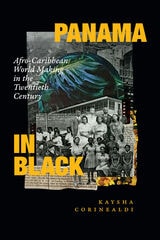
Panama in Black
Afro-Caribbean World Making in the Twentieth CenturyKaysha Corinealdi
Duke University Press, 2022
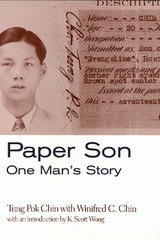
Paper Son
One Man's StoryTung Chin
Temple University Press, 2000
Chin's story begins in the early 1930s, when he followed the example of his father and countless other Chinese who bought documents that falsely identified them as children of Chinese Americans. Arriving in Boston and later moving to New York City, he worked and lived in laundries. Chin was determined to fit into American life and dedicated himself to learning English. But he also became an active member of key organizations -- a church, the Chinese Hand Laundrymen's Alliance, and the Chinese Consolidated Benevolent Association -- that anchored him in the community. A self-reflective and expressive man, Chin wrote poetry commenting on life in China and the hardships of being an immigrant in the United States. His work was regularly published in the China Daily News and brought him to the attention of the FBI, then intent on ferreting out communists and illegal immigrants. His vigorous narrative speaks to the day-to-day anxieties of living as a Paper Son as well as the more universal immigrant experiences of raising a family in modest circumstances and bridging cultures.
Historian K. Scott Wong introduces Chin's memoir, discussing the limitations on immigration from China and what is known about Exclusion-era Chinese American communities. Set in historical context, Tung Pok Chin's unique story offers and engaging account of a twentieth-century Paper Son.

Parallel Views
Education and Access for Deaf People in France and the United StatesThe French American Foundation
Gallaudet University Press, 1994
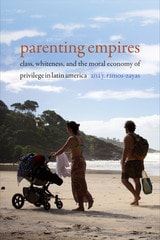
Parenting Empires
Class, Whiteness, and the Moral Economy of Privilege in Latin AmericaAna Yolanda Ramos-Zayas
Duke University Press, 2020
Parenting and Professing
Balancing Family Work with an Academic CareerRachel Hile Bassett
Vanderbilt University Press, 2005
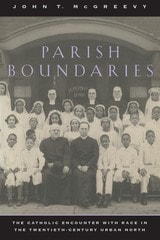
Parish Boundaries
The Catholic Encounter with Race in the Twentieth-Century Urban NorthJohn T. McGreevy
University of Chicago Press, 1996
"Parish Boundaries can take its place in the front ranks of the literature of urban race relations."—Jonathan Dorfman, Washington Post Book Review
"A prodigiously researched, gracefully written book distinguished especially by its seamless treatment of social and intellectual history."—Robert Orsi, American Historical Review
"Parish Boundaries will fascinate historians and anyone interested in the historic connection between parish and race."—Ed Marciniak, Chicago Tribune
"The history that remains to be written will rest on the firm foundation of Mr. McGreevy's remarkable book."—Richard Wightman Fox, New York Times Book Review

Passing the Baton
Black Women Track Stars and American IdentityCat M. Ariail
University of Illinois Press, 2020
A rare exploration of African American women athletes and national identity, Passing the Baton reveals young Black women as active agents in the remaking of what it means to be American.

Paternal Tyranny
Arcangela Tarabotti
University of Chicago Press, 2004
Paternal Tyranny, the first of these works, is a fiery but carefully argued manifesto against the oppression of women by the Venetian patriarchy. Denouncing key misogynist texts of the era, Tarabotti shows how despicable it was for Venice, a republic that prided itself on its political liberties, to deprive its women of rights accorded even to foreigners. She accuses parents of treating convents as dumping grounds for disabled, illegitimate, or otherwise unwanted daughters. Finally, through compelling feminist readings of the Bible and other religious works, Tarabotti demonstrates that women are clearly men's equals in God's eyes.
An avenging angel who dared to speak out for the rights of women nearly four centuries ago, Arcangela Tarabotti can now finally be heard.

Patient Citizens, Immigrant Mothers
Mexican Women, Public Prenatal Care, and the Birth Weight ParadoxGalvez, Alyshia
Rutgers University Press, 2011
According to the Latina health paradox, Mexican immigrant women have less complicated pregnancies and more favorable birth outcomes than many other groups, in spite of socioeconomic disadvantage. Alyshia Gálvez provides an ethnographic examination of this paradox. What are the ways that Mexican immigrant women care for themselves during their pregnancies? How do they decide to leave behind some of the practices they bring with them on their pathways of migration in favor of biomedical approaches to pregnancy and childbirth?
This book takes us from inside the halls of a busy metropolitan hospital’s public prenatal clinic to the Oaxaca and Puebla states in Mexico to look at the ways Mexican women manage their pregnancies. The mystery of the paradox lies perhaps not in the recipes Mexican-born women have for good perinatal health, but in the prenatal encounter in the United States. Patient Citizens, Immigrant Mothers is a migration story and a look at the ways that immigrants are received by our medical institutions and by our society
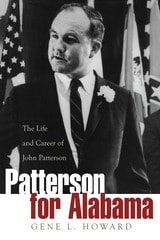
Patterson for Alabama
The Life and Career of John PattersonGene Howard
University of Alabama Press, 2013

Patty's Got a Gun
Patricia Hearst in 1970s AmericaWilliam Graebner
University of Chicago Press, 2008
Peasants In Arms
War and Peace in the Mountains of Nicaragua, 1979–1994Lynn Horton
Ohio University Press, 1999
Drawing on testimonies from contra collaborators and ex-combatants, as well as pro-Sandinista peasants, this book presents a dynamic account of the growing divisions between peasants from the area of Quilalí who took up arms in defense of revolutionary programs and ideals such as land reform and equality and those who opposed the FSLN.
Peasants in Arms details the role of local elites in organizing the first anti-Sandinista uprising in 1980 and their subsequent rise to positions of field command in the contras. Lynn Horton explores the internal factors that led a majority of peasants to turn against the revolution and the ways in which the military draft, and family and community pressures reinforced conflict and undermined mid-decade FSLN policy shifts that attempted to win back peasant support.
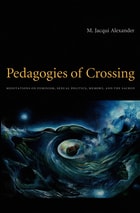
Pedagogies of Crossing
Meditations on Feminism, Sexual Politics, Memory, and the SacredM. Jacqui Alexander
Duke University Press, 2005
In these meditations, Alexander deftly unites large, often contradictory, historical processes across time and space. She focuses on the criminalization of queer communities in both the United States and the Caribbean in ways that prompt us to rethink how modernity invents its own traditions; she juxtaposes the political organizing and consciousness of women workers in global factories in Mexico, the Caribbean, and Canada with the pressing need for those in the academic factory to teach for social justice; she reflects on the limits and failures of liberal pluralism; and she presents original and compelling arguments that show how and why transgenerational memory is an indispensable spiritual practice within differently constituted women-of-color communities as it operates as a powerful antidote to oppression. In this multifaceted, visionary book, Alexander maps the terrain of alternative histories and offers new forms of knowledge with which to mold alternative futures.
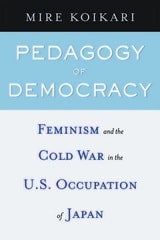
Pedagogy of Democracy
Feminism and the Cold War in the U.S. Occupation of JapanMire Koikari
Temple University Press, 2009
Pedagogy of Democracy re-interprets the U.S. occupation of Japan from 1945 to 1952 as a problematic instance of Cold War feminist mobilization rather than a successful democratization of Japanese women as previously argued. By combining three fields of research—occupation, Cold War, and postcolonial feminist studies—and examining occupation records and other archival sources, Koikari argues that postwar gender reform was one of the Cold War containment strategies that undermined rather than promoted women’s political and economic rights.
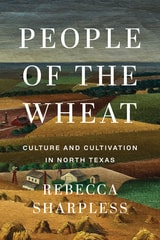
People of the Wheat
Culture and Cultivation in North TexasRebecca Sharpless
University of Texas Press, 2026
How wheat growing, milling, and baking shaped the people and culture of North Texas.
In the national imaginary, America’s amber fields of grain lie in the country’s center, but for more than a century, they also grew across one pocket of the South: North Texas. From the 1840s to the 1970s, the state's agriculture, dominated in lore by cotton in the east and livestock in the open range, was heavily invested in the cultivation, processing, sale, and consumption of wheat. Recalling a forgotten history, Rebecca Sharpless shows how the rhythms of the wheat harvest—and the evolution of the milling, distribution, and baking industries—governed daily life in what is now known as the Dallas–Fort Worth Metroplex.
In the 1840s, Anglo settlers discovered that grain flourished in North Texas and quickly built an economy that included wheat in fields, mills, and kitchens. After the Civil War, hand labor gave way to mechanization, greatly increasing production. Commercial bakeries churned out novel confections, and big cities were built on the bounty of the countryside. In the second half of the twentieth century, as production moved northward, industrial milling and baking declined, but home baking boomed, flour advertising supported regional music, and wheat fortunes financed the region’s cultural life. Sharpless covers 150 years of wheat’s very human history and shows how the labor that cultivated it, the sustenance it provided, and the prosperity it generated left an indelible mark on the people and institutions of Texas.
Peoplehood in the Nordic World
Ove Korsgaard
University of Wisconsin Press, 2022
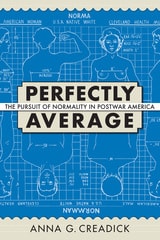
Perfectly Average
The Pursuit of Normality in Postwar AmericaAnna G. Creadick
University of Massachusetts Press, 2010
At the end of World War II, many Americans longed for a return to a more normal way of life after decades of depression and war. In fact, between 1945 and 1963 the idea of “normality” circulated as a keyword in almost every aspect of American culture. But what did this term really mean? What were its parameters? Whom did it propose to include and exclude?
In Perfectly Average, Anna Creadick investigates how and why “normality” reemerged as a potent homogenizing category in postwar America. Working with scientific studies, material culture, literary texts, film, fashion, and the mass media, she charts the pursuit of the “normal” through thematic chapters on the body, character, class, sexuality, and community.
Creadick examines such evidence as the “Norm and Norma” models produced during the war by sexologists and anthropologists—statistical composites of “normal” American bodies. In 1945, as thousands of Ohio women signed up for a Norma Look-Alike contest, a “Harvard Study of Normal Men” sought to define the typical American male according to specific criteria, from body shape to upbringing to blood pressure. By the early 1950s, the “man in the gray flannel suit” had come to symbolize what some regarded as the stultifying sameness of the “normalized” middle class. Meanwhile, novels such as From Here to Eternity and Peyton Place both supported and challenged normative ideas about gender, race, and sexuality, even as they worked to critique the postwar culture of surveillance—watching and being watched—through which normalizing power functioned.
As efforts to define normality became increasingly personal, the tensions em-bedded in its binary logic multiplied: Was normal descriptive of an average or prescriptive of an ideal? In the end, Creadick shows, a variety of statistics, assumptions, and aspirations converged to recast “normality” not as something innate or inborn, but rather as a quality to be actively pursued—a standard at once highly seductive and impossible to achieve because it required becoming perfectly average.
Performance Constellations
Networks of Protest and Activism in Latin AmericaMarcela A. Fuentes
University of Michigan Press, 2019
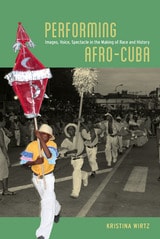
Performing Afro-Cuba
Image, Voice, Spectacle in the Making of Race and HistoryKristina Wirtz
University of Chicago Press, 2014
Wirtz analyzes a variety of performances and the ways they construct Cuban racial and historical imaginations. She offers a sophisticated view of performance as enacting diverse revolutionary ideals, religious notions, and racial identity politics, and she outlines how these concepts play out in the ongoing institutionalization of folklore as an official, even state-sponsored, category. Employing Bakhtin’s concept of “chronotopes”—the semiotic construction of space-time—she examines the roles of voice, temporality, embodiment, imagery, and memory in the racializing process. The result is a deftly balanced study that marries racial studies, performance studies, anthropology, and semiotics to explore the nature of race as a cultural sign, one that is always in process, always shifting.
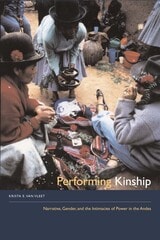
Performing Kinship
Narrative, Gender, and the Intimacies of Power in the AndesBy Krista E. Van Vleet
University of Texas Press, 2008
In the highland region of Sullk'ata, located in the rural Bolivian Andes, habitual activities such as sharing food, work, and stories create a sense of relatedness among people. Through these day-to-day interactions—as well as more unusual events—individuals negotiate the affective bonds and hierarchies of their relationships. In Performing Kinship, Krista E. Van Vleet reveals the ways in which relatedness is evoked, performed, and recast among the women of Sullk'ata.
Portraying relationships of camaraderie and conflict, Van Vleet argues that narrative illuminates power relationships, which structure differences among women as well as between women and men. She also contends that in the Andes gender cannot be understood without attention to kinship.
Stories such as that of the young woman who migrates to the city to do domestic work and later returns to the highlands voicing a deep ambivalence about the traditional authority of her in-laws provide enlightening examples of the ways in which storytelling enables residents of Sullk'ata to make sense of events and link themselves to one another in a variety of relationships. A vibrant ethnography, Performing Kinship offers a rare glimpse into an compelling world.
Performing Whitely in the Postcolony
Afrikaners in South African Theatrical and Public LifeMegan Lewis
University of Iowa Press, 2016
Performing Whitely examines the multiple speech acts, political acts, and theatrical acts of the Afrikaner volk or nation in theatrical and public life, including pageants, museum sites, film, and popular music as well as theatrical productions. Lewis explores the diverse ways in which Afrikaners perform whitely, and the tactics they use, including nostalgia, melodrama, queering, abjection, and kitsch. She first investigates the way that apartheid’s architects leveraged whiteness in support of their nation-building efforts in the early twentieth century. In addition to re-enacting national pilgrimages of colonial-era migrations and building massive monuments at home, Afrikaner nationalists took their show to the United States, staging critical events of the Boer War at the 1904 St. Louis Exposition. A case study of the South African experience, Performing Whitely also offers parables for global whitenesses in the postcolonial era.

Performing the Greek Crisis
Navigating National Identity in the Age of AusterityNatalie Zervou
University of Michigan Press, 2024
Winner of the 2025 Dance Studies Association de la Torre Bueno Book Prize
Performing the Greek Crisis explores the impact of the Greek financial crisis (2009–19) on the performing arts sector in Greece, and especially on contemporary concert dance. When Greece became the first European Union member to be threatened with default, the resulting budget cuts pushed dance to develop in unprecedented directions. The book examines the repercussions that the crisis had on artists’ daily lives and experiences, weaving the personal with the political to humanize a phenomenon that, to date, had been examined chiefly through economic and statistical lenses. Informed by the author’s experience of growing up in Greece and including interviews and rich descriptions of performances, the book offers a glimpse into a pivotal moment in Greek history.
In Greece, dance (and, by extension, the body) has historically held a central role in the process of national identity construction. When the crisis broke out, artists had to navigate through a precariously fluctuating landscape, with their bodies as their only stable referent. By centering the analysis of the Greek crisis on the dancing bodies, Performing the Greek Crisis is able to examine the various ways that artists reconceptualized their history and reframed ideas of national belonging, race, citizenship, and immigration.
Peripheral Labour Mobilities
Tanja Višic
Campus Verlag, 2022
The precarious situation in the successor states of Yugoslavia created a specific dynamic in the field of labor mobility. Still, little research has been done in this region on how women, who are older care workers from Serbia or Bosnia commute—often via illegal border crossings—to German households to look after the elderly. In Peripheral Labor Mobilities, Tanja Višic explores this gender-specific migration pattern in the first expansive ethnography of contemporary cross-border elder care in this region. She takes up questions about how the mobility and work practices of women are integrated into the socio-economic networks of the informal care work sector while also looking at worker confrontations with labor laws and border regimes. Illustrative case studies clearly detail culturally specific patterns of perception of care work, family relationships, and the mobility demanded by these labor arrangements.
Peripheral Visions
Politics, Society, and the Challenges of Modernity in YucatanEdward D. Terry
University of Alabama Press, 2010
The essays in this collection illuminate both the processes of change and the negative reactions that they frequently elicited
Yucatan has been called “a world apart”—cut off from the rest of Mexico by geography and culture. Yet, despite its peripheral location, the region experienced substantial change in the decades after independence. As elsewhere in Mexico, apostles of modernization introduced policies intended to remold Yucatan in the image of the advanced nations of the day. Indeed, modernizing change began in the late colonial era and continued throughout the 19th century as traditional patterns of land tenure were altered and efforts were made to divest the Catholic Church of its wealth and political and intellectual influence. Some changes, however, produced fierce resistance from both elites and humbler Yucatecans and modernizers were frequently forced to retreat or at least reach accommodation with their foes.
Covering topics from the early 19th century to the late 20th century, the essays in this collection illuminate both the processes of change and the negative reactions that they frequently elicited. The diversity of disciplines covered by this volume—history, anthropology, sociology, economics—illuminates at least three overriding challenges for study of the peninsula today. One is politics after the decline of the Institutional Revolutionary Party: What are the important institutions, practices, and discourses of politics in a post-postrevolutionary era? A second trend is the scholarly demystification of the Maya: Anthropologists have shown the difficulties of applying monolithic terms like Maya in a society where ethnic relations are often situational and ethnic boundaries are fluid. And a third consideration: researchers are only now beginning to grapple with the region’s transition to a post-henequen economy based on tourism, migration, and the assembly plants known as maquiladoras. Challenges from agribusiness and industry will no doubt continue to affect the peninsula’s fragile Karst topography and unique environments.
Contributors: Eric N. Baklanoff, Helen Delpar, Paul K. Eiss, Ben W. Fallaw, Gilbert M. Joseph, Marie Lapointe, Othón Baños Ramírez, Hernán Menéndez Rodríguez, Lynda S. Morrison, Terry Rugeley, Stephanie J. Smith

Perspectives on Milwaukee's Past
Edited by Margo Anderson and Victor Greene
University of Illinois Press, 2008
In this volume, a diverse group of scholars explores key themes in the distinctive history of Milwaukee, from settlement to the present, both in terms of the area's internal development and its comparative standing with other Great Lakes cities. Contributors discuss the importance of socialism and labor in local politics; Milwaukee's ethnic diversity, including long-standing African American, Latino, and Asian communities as well as an unusually large and significant German American population; the function and origins of the city's residential architecture; and the role of religious and ethnic culture in forming the city's identity. Rich in detail, the essays also challenge readers and researchers to pursue additional research on the city and the region by identifying critical areas and methods for future investigations into Milwaukee's past.
Contributors are Margo Anderson, Steven M. Avella, John D. Buenker, Jack Dougherty, Eric Fure-Slocum, Victor Greene, Thomas C. Hubka, Judith T. Kenny, Genevieve G. McBride, Aims McGuinness, Anke Ortlepp, Joseph A. Rodriguez, and N. Mark Shelley.
Peruvian Street Lives
Culture, Power, and Economy among Market Women of CuzcoLinda J. Seligmann
University of Illinois Press, 2004
In Peruvian Street Lives, Seligmann argues that the sometimes invisible and informal economic, social, and political networks market women establish may appear disorderly and chaotic, but in fact often keep dysfunctional economies and corrupt bureaucracies from utterly destroying the ability of citizens to survive from day to day. Seligmann asks why the constructive efforts of market women to make a living provoke such negative social perceptions from some members of Peruvian society, who see them as symbols and actual catalysts of social disorder. At the same time, Seligmann shows how market women eke out a living, combat discrimination, and transgress racial and gender ideologies within the rich and expressive cultural traditions they have developed.

Physics Demonstrations
A Sourcebook for Teachers of PhysicsJulien Clinton Sprott
University of Wisconsin Press, 2015
Dr. Sprott shares demonstrations tested over many years in his popular public lectures on “The Wonders of Physics,” which appeal to general audiences and to students from grade school to graduate school. Science teachers at all levels will find a wealth of detail showing how to present these demonstrations to students with flair. Science professionals will find indispensable information for creating educational and entertaining public programs. Organized to teach the six major areas of classical physics—motion, heat, sound, electricity, magnetism, and light—Physics Demonstrations includes:
• a brief description of each demonstration
• materials lists, with sources for common materials
• preparation procedures
• discussions of the physics principles demonstrated
• potential safety hazards
• references for further information.
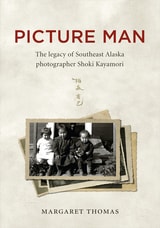
Picture Man
The Legacy of Southeast Alaska Photographer Shoki KayamoriMargaret Thomas
University of Alaska Press, 2015
In Picture Man, Margaret Thomas views Kayamori’s life through multiple lenses. Using Kayamori’s original photos, she explores the economic and political realities that sent Kayamori and thousands like him out of Japan toward opportunity and adventure in the United States, especially the Pacific Northwest. She reveals the tensions around Asian immigrants on the West Coast and the racism that sent many young men north to work in the canneries of Alaska. And she illuminates the intersecting—and at times conflicting—lives of villagers and migrants in a time of enormous change. Part history, part biography, part photographic showcase, Picture Man offers a fascinating new view of Alaska history.
Picture a Professor
Interrupting Biases about Faculty and Increasing Student LearningJessamyn Neuhaus
West Virginia University Press, 2022
“Does a service to all who would prefer a different path, offering realistic strategies to engage students in undermining scholarly stereotypes.”—Science
Picture a Professor is a collection of evidence-based insights and intersectional teaching strategies crafted by and for college instructors. It aims to inspire transformative student learning while challenging stereotypes about what a professor looks like.
Representing a variety of scholarly disciplines, the volume’s contributing authors offer practical advice for effectively navigating student preconceptions about embodied identity and academic expertise. Each contributor recognizes the pervasiveness of racialized, gendered, and other biases about professors and recommends specific ways to respond to and interrupt such preconceptions—helping students, teachers, and others reenvision what we think of when we picture a professor.
Educators at every stage of their career will find affirming acknowledgment of the ways systemic inequities affect college teaching conditions, as well as actionable advice about facilitating student learning with innovative course design, classroom activities, assessment techniques, and more.
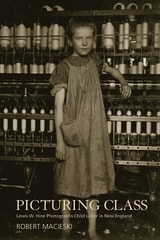
Picturing Class
Lewis W. Hine Photographs Child Labor in New EnglandRobert Macieski
University of Massachusetts Press, 2015
In this richly illustrated book, Robert Macieski examines Lewis W. Hine's art and advocacy on behalf of child laborers as part of the National Child Labor Committee (NCLC) between 1909 and 1917. A “social photographer”—as he called himself—Hine created images that documented children at work throughout New England, revealing their exploitation in the North as he had for rural working children in the South. Hine staged his images, highlighting particular types of labor in specific places: the “newsies” in Connecticut cities; sardine canners in Eastport, Maine; cranberry pickers in Cape Cod bogs; industrial homeworkers in Boston and Providence; and cotton textile workers throughout the region. His association with the NCLC connected him to a network of local and national reformers, social workers, and child welfare professionals, a broad coalition he supported in their fight to end this unethical labor practice. Macieski also chronicles Hine's efforts to mount major exhibitions that would help move public opinion against child labor.
In Picturing Class, Macieski explores the historical context of Hine's photographs and the social worlds of his subjects. He offers a detailed analysis of many of the images, unearthing the stories behind the creation of these photographs and the lives of their subjects. In telling the story of these photographs, their creation, and their reception, Macieski demonstrates how Hine worked to advance an unvarnished picture of a rapidly changing region and the young workers at the center of this important shift.
Pillars of the Nation
Child Citizens and Ugandan National DevelopmentKristen E. Cheney
University of Chicago Press, 2007
How can children simultaneously be the most important and least powerful people in a nation? In her innovative ethnography of Ugandan children—the pillars of tomorrow’s Uganda, according to the national youth anthem—Kristen E. Cheney answers this question by exploring the daily contradictions children face as they try to find their places amid the country’s rapidly changing social conditions.
Drawing on the detailed life histories of several children, Cheney shows that children and childhood are being redefined by the desires of a young country struggling to position itself in the international community. She moves between urban schools, music festivals, and war zones to reveal how Ugandans are constructing childhood as an empowering identity for the development of the nation. Moreover, through her analysis of children’s rights ideology, national government strategy, and children’s everyday concerns, Cheney also shows how these young citizens are vitally linked to the global political economy as they navigate the pitfalls and possibilities for a brighter tomorrow.
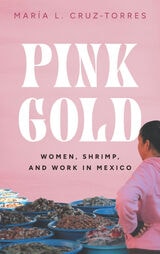
Pink Gold
Women, Shrimp, and Work in MexicoMaria L. Cruz-Torres
University of Texas Press, 2023
A rich, long-term ethnography of women seafood traders in Mexico.
The "shrimp ladies," locally known as changueras in southern Sinaloa, Mexico, sell seafood in open-air markets, forming an extralegal but key part of the economy built around this "pink gold.” Over time, they struggled to evolve from marginalized peddlers to local icons depicted in popular culture, even as they continue to work at an open-air street market.
Pink Gold documents the shrimp traders' resilience and resourcefulness, from their early conflicts with the city, state, and federal authorities and forming a union, to carving out a physical space for a seafood market, and even engaging in conflicts with the Mexican military. Drawing from her two decades of fieldwork, María L. Cruz-Torres explores the inspiring narrative of this overlooked group of women involving grassroots politics, trans-border and familial networking, debt and informal economic practices, personal sacrifices, and simple courage. She argues that, amid intense economic competition, their success relies on group solidarity that creates interlocking networks of mutual trust, or confianza, that in turn enable them to cross social and political boundaries that would typically be closed to them. Ultimately, Pink Gold offers fresh insights into issues of gender and labor, urban public space, the street economy, commodities, and globalization.
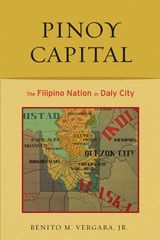
Pinoy Capital
The Filipino Nation in Daly CityBenito M. Vergara, Jr.
Temple University Press, 2009
Home to 33,000 Filipino American residents, Daly City, California, located just outside of San Francisco, has been dubbed “the Pinoy Capital of the United States.” In this fascinating ethnographic study of the lives of Daly City residents, Benito Vergara shows how Daly City has become a magnet for the growing Filipino American community.
Vergara challenges rooted notions of colonialism here, addressing the immigrants’ identities, connections and loyalties. Using the lens of transnationalism, he looks at the “double lives” of both recent and established Filipino Americans. Vergara explores how first-generation Pinoys experience homesickness precisely because Daly City is filled with reminders of their homeland’s culture, like newspapers, shops and festivals. Vergara probes into the complicated, ambivalent feelings these immigrants have—toward the Philippines and the United States—and the conflicting obligations they have presented by belonging to a thriving community and yet possessing nostalgia for the homeland and people they left behind.

Pissarro, Neo-Impressionism, and the Spaces of the Avant-Garde
Martha Ward
University of Chicago Press, 1996
Paying particular attention to the participation of Camille Pissarro, the only older artist to join the otherwise youthful movement, Ward sets the neo-impressionists' individual achievements in the context of a generational struggle to redefine the purposes of painting. She describes the conditions of display, distribution, and interpretation that the neo-impressionists challenged, and explains how these artists sought to circulate their own work outside of the prevailing system. Paintings, Ward argues, often anticipate and respond to their own conditions of display and use, and in the case of the neo-impressionists, the artists' relations to market forces and exhibition spaces had a decisive impact on their art.
Ward details the changes in art dealing, and chronicles how these and new freedoms for the press made artistic vanguardism possible while at the same time affecting the content of painting. She also provides a nuanced account of the neo-impressionists' engagements with anarchism, and traces the gradual undermining of any strong correlation between artistic allegiance and political direction in the art world of the 1890s.
Throughout, there are sensitive discussions of such artists as Georges Seurat and Paul Signac, as well as Pissarro. Yet the touchstone of the book is Pissarro's intricate relationship to the various factions of the Paris art world.
Place and Replace
Essays on Western CanadaAdele Perry
University of Manitoba Press, 2013
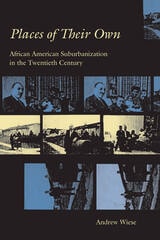
Places of Their Own
African American Suburbanization in the Twentieth CenturyAndrew Wiese
University of Chicago Press, 2005
For most people, this cozy image of suburbia does not immediately evoke images of African Americans. But as this pioneering work demonstrates, the suburbs have provided a home to black residents in increasing numbers for the past hundred years—in the last two decades alone, the numbers have nearly doubled to just under twelve million. Places of Their Own begins a hundred years ago, painting an austere portrait of the conditions that early black residents found in isolated, poor suburbs. Andrew Wiese insists, however, that they moved there by choice, withstanding racism and poverty through efforts to shape the landscape to their own needs. Turning then to the 1950s, Wiese illuminates key differences between black suburbanization in the North and South. He considers how African Americans in the South bargained for separate areas where they could develop their own neighborhoods, while many of their northern counterparts transgressed racial boundaries, settling in historically white communities. Ultimately, Wiese explores how the civil rights movement emboldened black families to purchase homes in the suburbs with increased vigor, and how the passage of civil rights legislation helped pave the way for today's black middle class.
Tracing the precise contours of black migration to the suburbs over the course of the whole last century and across the entire United States, Places of Their Own will be a foundational book for anyone interested in the African American experience or the role of race and class in the making of America's suburbs.
Winner of the 2005 John G. Cawelti Book Award from the American Culture
Association.
Winner of the 2005 Award for Best Book in North American Urban
History from the Urban History Association.
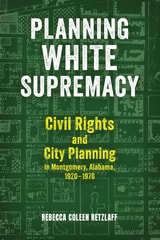
Planning White Supremacy
Civil Rights and City Planning in Montgomery, Alabama, 1920–1970Rebecca Coleen Retzlaff
University of Alabama Press, 2026
An unflinching account of how city planning was deployed to enforce white supremacy in Montgomery, Alabama—the birthplace of the Civil Rights Movement—and how Black activists fought back, block by neighborhood block.
At the heart of the Civil Rights Movement was a city meticulously designed to enforce inequality. In Planning White Supremacy: Civil Rights and City Planning in Montgomery, Alabama, 1920–1970, Rebecca Coleen Retzlaff traces how city officials used the tools of modern planning—zoning, infrastructure, housing codes, public investment, and highway construction—to suppress political power, economic opportunity, and spatial freedom for Black citizens.
As the birthplace of the Civil Rights Movement, Montgomery became a battleground where urban planning and direct-action protest collided, shaping the city’s culture in ways that still resonate today. Retzlaff’s analysis exposes the calculated use of municipal power to control land use, displace Black communities, keep schools and neighborhoods segregated, and preserve white political dominance. By placing urban planning at the center of Montgomery’s story, this groundbreaking work reframes the movement not only as a fight for voting rights and legal equality, but as a struggle for space, housing, mobility, education, and the right to live with dignity. Retzlaff also highlights the resilience and joy of the close-knit Black neighborhoods that nurtured the civil rights activists who changed history.
Retzlaff reveals how urban planning decisions systematically targeted Black neighborhoods, reinforcing racial inequality under the guise of modernization. With historical depth and critical insight, Planning White Supremacy situates Montgomery within the broader context of American urban history—offering a vital perspective on the intersection of race, space, and power. Essential for scholars of urban planning, history, and racial justice, this book also provides urgent insight into how these legacies continue to shape cities and Black socioeconomic opportunities today.
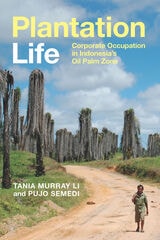
Plantation Life
Corporate Occupation in Indonesia's Oil Palm ZoneTania Murray Li and Pujo Semedi
Duke University Press, 2021
Plantation Worlds
Maan Barua
Duke University Press, 2024
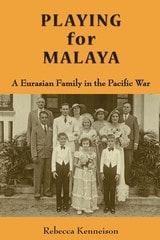
Playing for Malaya
A Eurasian Family in the Pacific WarRebecca Kenneison
National University of Singapore Press, 2011
So begins a stunning personal account of a Eurasian family living in Malaya. One of the many gaps in Reggie's account of his family was that his mother was Eurasian. When Rebecca Kenneison discovered this omission after his death, she set out to learn more about her extended family on the other side of the world. Her voyage of discovery is compelling in itself, but Playing for Malaya has a much larger purpose. Set in the 1930s and 1940s, it recounts the experiences of an extended Eurasian family during the invasion and occupation of Malaya by the Japanese. Colonial society considered Eurasians insufficiently European to be treated as British, but they seemed all too European to the Japanese, who subjected the Eurasian community to discrimination and considerable violence. Because many Eurasians, including members of the Kenneison family, supported the Allied cause, their wartime experiences are an extraordinary account of tragedy, heroism and endurance, presented here with great consequence and clarity.
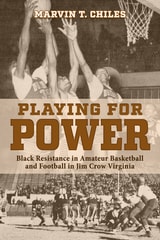
Playing for Power
Black Resistance in Amateur Basketball and Football in Jim Crow VirginiaMarvin T. Chiles
University of Alabama Press, 2025
Reveals the role of amateur Black football and basketball in Virginia before integration as a form of resistance to white supremacy
In Playing for Power, Marvin T. Chiles offers a fascinating account of amateur sports in Jim Crow Virginia, revealing how, in addition to churches, workspaces, and civil rights organizations, sports were also a key arena for Black resistance to white supremacy. Drawing from a rich trove of primary sources, Chiles recounts the development of Black football and basketball culture at the high school and college levels in Virginia from the 1890s to the early 1970s. Looking beyond their role as leisure pastimes, Chiles demonstrates how amateur sports strengthened education, neutralized class divisions, shaped Black masculinity, mentored Black male leadership, cultivated race pride, and reflected Black desires for urban modernity.
Illuminating the ways Black athletes created a world that pushed for racial progress through objective, meritocratic achievement anchored by masculine leadership and institutional success, Playing for Power traces how amateur sports coalesced into a key cultural institution that fostered Black Virginians’ collective sense of community, achievement, and purpose during segregation, cornerstones of later advances in the Civil Rights Movement. Playing for Power also contributes to a larger understanding of sports history and how amateur sports became favorite American spectacles and markers of Southern identity. Chiles’s groundbreaking work will interest historians, scholars, and individuals interested in the intersection of sports and civil rights and the history of Black sports during the Jim Crow era.
Playing with History
American Identities and Children’s Consumer CultureMolly Rosner
Rutgers University Press, 2021