Results by title
231 books match the query 'Society' and 13 start with p

Pandemic Exposures
Economy and Society in the Time of CoronavirusEdited by Didier Fassin and Marion Fourcade
HAU, 2021
Didier Fassin and Marion Fourcade have assembled an eminent team of scholars from across the social sciences, conducting research on six continents, to reflect on the multiple ways the coronavirus has entered, reshaped, or exacerbated existing trends and structures in every part of the globe. The contributors show how the disruptions caused by the pandemic have both hastened the rise of new social divisions and hardened old inequalities and dilemmas. An indispensable volume, Pandemic Exposures provides an illuminating analysis of this watershed moment and its possible aftermath.

Payne Hollow
Life on the Fringe of SocietyHarlan Hubbard
Ohio University Press, 1997
Originally published in 1974, this second edition was published by Gnomon Press in 1997.Payne Hollow is a reflective and poetic memoir that details the simple, self-sufficient life Harlan Hubbard and his wife, Anna, led along the banks of the Ohio River in the 1950s–80s. After living on a shantyboat for eight years, the Hubbards crafted a custom home and studio at Payne Hollow, in Trimble County, Kentucky, where they lived off the land and embraced a lifestyle focused on nature, art, and solitude. The book, illustrated with Harlan’s own ink drawings, captures the couple’s philosophy of living in harmony with the natural world, free from the distractions and demands of modern society. Hubbard eloquently describes in words and images their daily routines, the changing seasons, and the deep satisfaction he and Anna found in their way of life. Through his writing, Hubbard rejoices in the return to simplicity and creates an appreciation for the living world, making Payne Hollow not just a memoir, but a model for building a deliberate, mindful life in tune with nature.
Peripheral Visions
Politics, Society, and the Challenges of Modernity in YucatanEdward D. Terry
University of Alabama Press, 2010
The essays in this collection illuminate both the processes of change and the negative reactions that they frequently elicited
Yucatan has been called “a world apart”—cut off from the rest of Mexico by geography and culture. Yet, despite its peripheral location, the region experienced substantial change in the decades after independence. As elsewhere in Mexico, apostles of modernization introduced policies intended to remold Yucatan in the image of the advanced nations of the day. Indeed, modernizing change began in the late colonial era and continued throughout the 19th century as traditional patterns of land tenure were altered and efforts were made to divest the Catholic Church of its wealth and political and intellectual influence. Some changes, however, produced fierce resistance from both elites and humbler Yucatecans and modernizers were frequently forced to retreat or at least reach accommodation with their foes.
Covering topics from the early 19th century to the late 20th century, the essays in this collection illuminate both the processes of change and the negative reactions that they frequently elicited. The diversity of disciplines covered by this volume—history, anthropology, sociology, economics—illuminates at least three overriding challenges for study of the peninsula today. One is politics after the decline of the Institutional Revolutionary Party: What are the important institutions, practices, and discourses of politics in a post-postrevolutionary era? A second trend is the scholarly demystification of the Maya: Anthropologists have shown the difficulties of applying monolithic terms like Maya in a society where ethnic relations are often situational and ethnic boundaries are fluid. And a third consideration: researchers are only now beginning to grapple with the region’s transition to a post-henequen economy based on tourism, migration, and the assembly plants known as maquiladoras. Challenges from agribusiness and industry will no doubt continue to affect the peninsula’s fragile Karst topography and unique environments.
Contributors: Eric N. Baklanoff, Helen Delpar, Paul K. Eiss, Ben W. Fallaw, Gilbert M. Joseph, Marie Lapointe, Othón Baños Ramírez, Hernán Menéndez Rodríguez, Lynda S. Morrison, Terry Rugeley, Stephanie J. Smith
Personality and the Cultural Construction of Society
Edited by David K. Jordan and Marc J. Swartz
University of Alabama Press, 1990
Pyschological anthropology is a vital area of contemporary social science, and one of the field's most important and innovative thinkers is Melford E. Spiro. This volume brings together sixteen essays that review Spiro's theoretical insights and extend them into new areas. The essays center on several general problems: In what ways is it meaningful to speak of a social act as having "functions"? What elements and processes of human personality are universal, and why? What is the relationship between religion and personality? Why? What are the pyschological underpinnings of social manipulation?
Playing the Other
Gender and Society in Classical Greek LiteratureFroma I. Zeitlin
University of Chicago Press, 1995
Zeitlin demonstrates the indispensable workings of gender as a major factor in Greek social, religious, and cultural practices and in more abstract ideas about nature and culture, public and private, citizen and outsider, self and other, and mortal and immortal. Focusing on the prominence of female figures in these male authored texts, she enlarges our perspective on critical components of political order and civic identity by including issues of sexuality, the body, modes of male and female maturation, and speculations about parentage, kinship, and reproductive strategies. Along with considerations of genre, poetics, and theatrical mimesis, she points to the powerful mythmaking capacities of Greek culture for creating memorable paradigms and dramatic scenarios that far exceed simple notions of male and female opposition and predictable enforcement of social norms. Consisting of both new and revised essays, Playing the Other is a wide-ranging account of a central category of Greek literature by a scholar who pioneered an approach to classics through the perspective of gender.
Political Power in Pre-Colonial Buganda
Economy, Society, and Warfare in the Nineteenth CenturyRichard Reid
Ohio University Press, 2002
Blessed with fertile and well-watered soil, East Africa’s kingdom of Buganda supported a relatively dense population and became a major regional power by the mid-nineteenth century. This complex and fascinating state has also long been in need of a thorough study that cuts through the image of autocracy and military might.
Political Power in Pre-Colonial Buganda explores the material basis of Ganda political power, gives us a new understanding of what Ganda power meant in real terms, and relates the story of how the kingdom used the resources at its disposal to meet the challenges that confronted it. Reid further explains how these same challenges ultimately limited Buganda’s dominance of the East African great lakes region.

Politics, Economy, and Society in Bourbon Central America, 1759-1821
Jordana Dym
University Press of Colorado, 2007
These reforms profoundly changed aspects of Central America's politics and society; however, these essays reveal that changes in the region were shaped both internally and externally and that they weakened the region's ties to metropolitan Spain as often as they reinforced them. Contributors focus on specific policy changes and their consequences as well as transformations throughout the region for which no direct Bourbon inspiration appears to be responsible. Together they demonstrate that whether or not the Crown achieved its primary goals of centralization and control, its policies nevertheless provided opportunities for evident, often subtle, and occasionally unintentional shifts in the colonial government's relationship to its constituent populations. Contributors include Christophe Belaubre, Michel Bertrand, Jordana Dym, Jorge H. González, Timothy Hawkins, Sajid Alfredo Herrera, Gustavo Palma, Eugenia Rodriguez, Doug Tompson, and Stephen Webre.

Politics, Society, and the Klan in Alabama, 1915-1949
Glenn Feldman
University of Alabama Press, 1999
This first book-length examination of the Klan in Alabama represents exhaustive research that challenges traditional interpretations.
The Ku Klux Klan has wielded considerable power both as a terrorist group and as a political force. Usually viewed as appearing in distinct incarnations, the Klans of the 20th century are now shown by Glenn Feldman to have a greater degree of continuity than has been previously suspected. Victims of Klan terrorism continued to be aliens, foreigners, or outsiders in Alabama: the freed slave during Reconstruction, the 1920s Catholic or Jew, the 1930s labor organizer or Communist, and the returning black veteran of World War II were all considered a threat to the dominant white culture. Feldman offers new insights into this "qualified continuity" among Klans of different eras, showing that the group remained active during the 1930s and 1940s when it was presumed dormant, with elements of the "Reconstruction syndrome" carrying over to the smaller Klan of the civil rights era.
In addition, Feldman takes a critical look at opposition to Klan activities by southern elites. He particularly shows how opponents during the Great Depression and war years saw the Klan as an impediment to attracting outside capital and federal relief or as a magnet for federal action that would jeopardize traditional forms of racial and social control. Other critics voiced concerns about negative national publicity, and others deplored the violence and terrorism.
This in-depth examination of the Klan in a single state, which features rare photographs, provides a means of understanding the order's development throughout the South. Feldman's book represents definitive research into the history of the Klan and makes a major contribution to our understanding of both that organization and the history of Alabama.
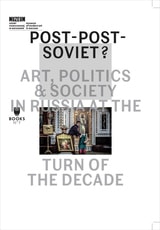
Post-Post-Soviet?
Art, Politics and Society in Russia at the Turn of the DecadeEdited by Marta Dziewanska, Ekaterina Degot, and Ilya Budratskis
Museum of Modern Art in Warsaw, 2013

Poverty and Society
The Growth of the American Welfare State in International ComparisonLevine, Daniel
Rutgers University Press, 1988

Power and Society in Greater NY
David C. Hammack
Russell Sage Foundation, 1982

Primate Encounters
Models of Science, Gender, and SocietyEdited by Shirley C. Strum and Linda Marie Fedigan
University of Chicago Press, 2000
"[A] fascinating study . . . on how and why ideas about primate society have changed. The volume consists of dialogues among scientists from different disciplines, national traditions, scientific culture, generations, standpoints, and genders. . . . A wonderful reflection on the discipline of primatology and on science in general."—Science Books and Films
"Primate Encounters should be required reading for anyone about to embark on a career in the field. But it equally valuable for its miscellany of opinions, recollections and off-the-cuff remarks, as well as for its thoughtful observations, 'outrageous ravings' and humour (from the elders in the field). It gives us a glimpse of how scientists work together to understand their place in the world."—Deborah L. Mazolillo, Times Literary Supplement

Psychology and Society
Radical Theory and PracticeEdited by Ian Parker and Russell Spears
Pluto Press, 1996