Results by title
479 books match the query 'Sources' and 17 start with p

Papal Letters in the Early Middle Ages
Detlev Jasper
Catholic University of America Press, 2001
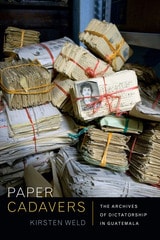
Paper Cadavers
The Archives of Dictatorship in GuatemalaKirsten Weld
Duke University Press, 2014
The unearthing of the archives renewed fierce debates about history, memory, and justice. In Paper Cadavers, Weld explores Guatemala's struggles to manage this avalanche of evidence of past war crimes, providing a firsthand look at how postwar justice activists worked to reconfigure terror archives into implements of social change. Tracing the history of the police files as they were transformed from weapons of counterinsurgency into tools for post-conflict reckoning, Weld sheds light on the country's fraught transition from war to an uneasy peace, reflecting on how societies forget and remember political violence.
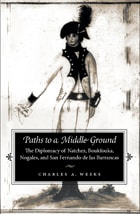
Paths to a Middle Ground
The Diplomacy of Natchez, Boukfouka, Nogales, and San Fernando de las Barrancas, 1791-1795Charles A. Weeks
University of Alabama Press, 2005
Weeks shows how diplomatic relations were established and maintained in the Gulf South between Choctaw, Chickasaw, Creek, and Cherokee chiefs and their Spanish counterparts aided by traders who had become integrated into Indian societies. He explains that despite the absence of a European state system, Indian groups had diplomatic skills that Europeans could understand: full-scale councils or congresses accompanied by elaborate protocol, interpreters, and eloquent metaphorical language.
Paths to a Middle Ground is both a narrative and primary documents. Key documents from Spanish archival sources serve as a basis for the examination of the political culture and imperial rivalry playing out in North America in the waning years of the 18th century.
Pedro de Rivera and the Military Regulations for Northern New Spain, 1724-1729
A Documentary History of His Frontier Inspection and the Reglamento de 1729Thomas H. Naylor
University of Arizona Press, 1989
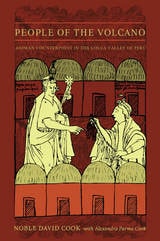
People of the Volcano
Andean Counterpoint in the Colca Valley of PeruNoble David Cook, with Alexandra Parma Cook
Duke University Press, 2007
Social structures, the domestic export and economies, and spiritual spheres within native Andean communities are key elements of analysis. Also highlighted is the persistence of duality in the Andean world: perceived dichotomies such as those between the coast and the highlands, Europeans and Indo-Peruvians. Even before the conquest, the Cabana and Collagua communities sharing the Colca Valley were divided according to kinship and location. The Incas, and then the Spanish, capitalized on these divisions, incorporating them into their state structure in order to administer the area more effectively, but Colca Valley peoples resisted total assimilation into either. Colca Valley communities have shown a remarkable tenacity in retaining their social, economic, and cultural practices while accommodating various assimilationist efforts over the centuries. Today’s population maintains similarities with their ancestors of more than five hundred years ago—in language, agricultural practices, daily rituals, familial relationships, and practices of reciprocity. They also retain links to ecological phenomena, including the volcanoes from which they believe they emerged and continue to venerate.

Perspectives on Women's Archives
All rights reserved. No part of this publication may be reproduced, stored in a retrieval system, or transmitted in any form or by any means without prior permission from the publisher.
Society of American Archivists, 2013

Petrograd, 1917
Witnesses to the Russian RevolutionJohn Pinfold
Bodleian Library Publishing, 2017
Assembling extracts from letters, journals, diaries, and memoirs from a remarkably diverse cast of both Russians and foreign nationals who were there when the revolution broke, Petrograd, 1917 is a strikingly close-up account of these world-shaking events. Each entry is supplemented with a short introductory note that sets it in context, and the book is rounded out with more than seventy illustrations, including photographs of the Romanovs and the violence in the streets as well as propaganda posters, postcards to loved ones, and more. In these pages, the drama and terror of those days comes to life once more, a century on.

Petrushka
Sources and ContextsAndrew Baruch Wachtel
Northwestern University Press, 1998

Planting the Garden
An Annotated Archival Bibliography of the History of Women in ManitobaMary Kinnear
University of Manitoba Press, 1987
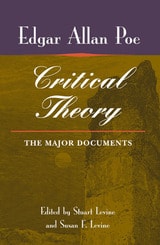
Poe's Critical Theory
THE MAJOR DOCUMENTSEdgar Allan Poe
University of Illinois Press, 2007
This edition shows that what is consistent in Poe is not any single theory. Rather, always present are wit, playfulness, concern for the strong effect, a bin of recyclable allusions, anecdotes and quotations, and a writer’s discipline. His writing on theory is of a piece with his fiction, poetry, and journalism. The Levines explain how these pieces also tie in tightly to the social, political, economic, and technological history of the world in which Poe lived.
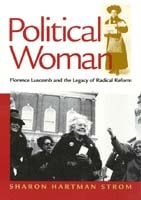
Political Woman
FlorenceSharon Strom
Temple University Press, 2001
Politcal Women counters the traditional narratives that place men at the center of political thinking and history. Showing how three generations of Luscomb's family had set the stage for her activism, this biography presents her story against the backdrop of Boston's politics and larger struggles for social justice. Luscomb participated in every significant social reform movement of her time -- from securing women's right to vote and supporting trade unionism to advocating an end to the war in Vietnam. Luscomb also ran for public office; she was narrowly defeated when she ran for Boston's city council in 1922. Although unsuccessful as a third-party candidate for Congress (in 1936 and 1950) and for Governor of Massachusetts (in 1952), she was one of the few women of her time to seek office. Independent, athletic, and spirited, she apparently never thought that traditional gender prescriptions applied to her. A practicing architect before the First World War, an exuberant hiker all her life, and a member in collective-living arrangements, Luscomb enjoyed a life of rich experiences and sustaining relationships.
In Florence Luscomb's biography, Sharon Hartman Strom suggests that although women were excluded from the activities and sites associated with conventional politics until recently, they did political work that gave purpose to their lives and affected political thinking in their communities, states, and ultimately the nation.
Pompeis Difficile Est
Studies in the Political Life of Imperial PompeiiJames L. Franklin, Jr.
University of Michigan Press, 2001
By collecting, sifting, and cross-referencing these varied documents, Franklin proves it possible to trace the major political alliances of the times, explore the remains of their houses, and find traces of their personalities. A few families, like the powerful Holconii, developers of the region's most famous grape vine, prove to have been steady players throughout Pompeii's history; but most families rose and fell within two generations at most. Chapters examine the men and families most prominent in each imperial period, including an analysis of their houses, and concludes with family trees. The documents themselves, elsewhere difficult to access, are prominently featured and translated in the text, making these discussions available and vivid to all readers.
This book is the first such attempt to cross-reference and animate all kinds of writing found at this legendary site. Outside of the city of Rome itself, this is the largest collection of writing from Roman antiquity, and it has lain mostly unexamined in the course of three centuries of excavations at Pompeii. This volume will interest not only students of Pompeii and classical scholars, but also historians, political scientists, sociologists, and enthusiasts of human behavior of all eras.
James L. Franklin is Professor of Classical Studies, Indiana University.
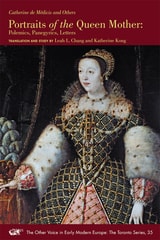
Portraits of the Queen Mother
Polemics, Panegyrics, LettersCatherine de Médicis and Others
Iter Press, 2014
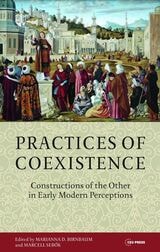
Practices of Coexistence
Constructions of the Other in Early Modern PerceptionsMarianna D. Birnbaum
Central European University Press, 2017

Pre-Election Polling
Sources of Accuracy and ErrorIrving Crespi
Russell Sage Foundation, 1988
Princes and Political Cultures
The New Tiberian Senatorial DecreesGreg Rowe
University of Michigan Press, 2002
Public Documents from Sinnar
Jay Spaulding
Michigan State University Press, 1989
This selection of Arabic and English translations illuminates the changes of eighteenth-century government in the northern Nile Valley of Sudan, and provides reliable chronological points of reference for the history of the region.
The documents offered in this volume, including charter grants of land and privilege, administrative letters, judicial rulings, and other official government records, date form 1702 to 1820. This period marks the apogee of the wealth, power, and geographical extent of the realm of the Funji kings of Sinnar who reigned over much of the Sudan from about 1500 until the Turkish colonial conquest of 1821.
These records document with concrete precision and eloquence the dissolution of the agrarian social order of an old African kingdom under the corroding influence of intrusive Mediterranean commercial practices and culture. They reveal the Sudan's legacy of a traditionally weak government vulnerable to manipulation or conquest by foreign powers and a divided and impoverished society dominated by a minority of urban interests.