Results by title
661 books match the query 'South America' and 43 start with p
Pachacuti
World OverturnedLori Eshleman
Arizona Center for Medieval and Renaissance Studies, 2015
Paracas Art and Architecture
Object and Context in South Coastal PeruAnne Paul
University of Iowa Press, 1991
Paraguay and the Triple Alliance
The Postwar Decade, 1869-1878By Harris Gaylord Warren
University of Texas Press, 1978
In the War of the Triple Alliance—the most terrible conflict in South American history—Paraguay was almost annihilated by the armed forces of Brazil, Argentina, and Uruguay. The chaotic postwar decade began with the Allied occupation of Asunción, which lasted seven years, and was marked by Brazilian-Argentine rivalry and interference in Paraguayan affairs and by the efforts of Paraguay’s governments to revive their stricken land, efforts often thwarted by corruption, factionalism, and revolutions. It ended with the arbitral award eliminating Argentina as a claimant to the Chaco Boreal and with the ascendancy of the Colorado Party, which dominated Paraguayan politics for most of the next century.
This is the first book in any language that examines political, economic, and social developments to provide a well-integrated study of this significant and eventful period. It is based on archival resources, largely unused before, in England, the United States, Brazil, Argentina, and Paraguay, as well as on newspapers, books, pamphlets, and published documents in many libraries. As one historian has said, the study is “a masterpiece of sleuthing and historical synthesis.” It will be of interest not only to students of Paraguay but also to those concerned with Brazilian, Argentine, and Latin American history.
Partners in Conflict
The Politics of Gender, Sexuality, and Labor in the Chilean Agrarian Reform, 1950–1973Heidi Tinsman
Duke University Press, 2002
Tinsman restores women to a scholarly narrative that has been almost exclusively about men, recounting the centrality of women’s labor to the pre-Agrarian Reform world of the hacienda during the 1950s and recovering women’s critical roles in union struggles and land occupations during the Agrarian Reform itself. Providing a theoretical framework for understanding why the Agrarian Reform ultimately empowered men more than women, Tinsman argues that women were marginalized not because the Agrarian Reform ignored women but because, under both the Frei and Allende governments, it promoted the male-headed household as the cornerstone of a new society. Although this emphasis on gender cooperation stressed that men should have more respect for their wives and funneled unprecedented amounts of resources into women’s hands, the reform defined men as its protagonists and affirmed their authority over women.
This is the first monographic social history of Chile’s Agrarian Reform in either English or Spanish, and the first historical work to make sexuality and gender central to the analysis of the reforms.
Patients of the State
The Politics of Waiting in ArgentinaJavier Auyero
Duke University Press, 2012
Peasants in Revolt
A Chilean Case Study, 1965–1971By James Petras and Hugo Zemelman Merino; translated by Thomas Flory
University of Texas Press, 1973
Based on extended interviews at the Culiprán fundo in Chile with peasants who recount in their own terms their political evolution, this is an in-depth study of peasants in social and political action. It deals with two basic themes: first, the authoritarian structure within a traditional latifundio and its eventual replacement by a peasant-based elected committee, and second, the events shaping the emergence of political consciousness among the peasantry. Petras and Zemelman Merino trace the careers of local peasant leaders, followers, and opponents of the violent illegal land seizure in 1965 and the events that triggered the particular action.
The findings of this study challenge the oft-accepted assumption that peasants represent a passive, traditional, downtrodden group capable only of following urban-based elites. The peasant militants, while differing considerably in their ability to grasp complex political and social problems, show a great deal of political skill, calculate rationally on the possibility of success, and select and manipulate political allies on the basis of their own primary needs. The politicized peasantry lend their allegiance to those forces with whom they anticipate they have the most to gain—and under circumstances that minimize social costs. The authors identify the highly repressive political culture within the latifundio—reinforced by the national political system—as the key factor inhibiting overt expressions of political demands.
The emergence of revolutionary political consciousness is found to be the result of cumulative experiences and the breakdown of traditional institutions of control. The violent illegal seizure of the farm is perceived by the peasantry as a legitimate act based on self-interest as well as general principles of justice—in other words, the seizure is perceived as a “natural act,” suggesting that perhaps two sets of moralities functioned within the traditional system.
The book is divided into two parts: the first part contains a detailed analysis of peasant behavior; the second contains transcriptions of peasant interviews. Combined, they give the texture and flavor of insurgent peasant politics.
Peasants on Plantations
Subaltern Strategies of Labor and Resistance in the Pisco Valley, PeruVincent Peloso
Duke University Press, 1999
Grounded in the theoretical perspectives of subaltern studies and drawing on an extremely complete archive of landed estates that includes detailed regular reports by plantation managers on all aspects of farming life, Peasants on Plantations reveals the intricate ways peasants, managers, and owners manipulated each other to benefit their own interests. As Peloso demonstrates, rather than a simple case of domination of the peasants by the owners, both parties realized that negotiation was the key to successful growth, often with the result that peasants cooperated with plantation growth strategies in order to participate in a market economy. Long-term contracts gave tenants and sharecroppers many opportunities to make farming choices, to assert claims on the land, compete among themselves, and participate in plantation expansion. At the same time, owners strove to keep the peasants in debt and well aware of who maintained ultimate control.
Peasants on Plantations offers a largely untold view of the monumental struggle between planters and peasants that was fundamental in shaping the agrarian history of Peru. It will interest those engaged in Latin American studies, anthropology, and peasant and agrarian studies.
People of Faith
Slavery and African Catholics in Eighteenth-Century Rio de JaneiroMariza de Carvalho Soares
Duke University Press, 2011
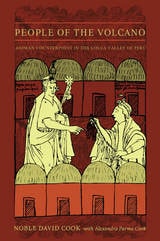
People of the Volcano
Andean Counterpoint in the Colca Valley of PeruNoble David Cook, with Alexandra Parma Cook
Duke University Press, 2007
Social structures, the domestic export and economies, and spiritual spheres within native Andean communities are key elements of analysis. Also highlighted is the persistence of duality in the Andean world: perceived dichotomies such as those between the coast and the highlands, Europeans and Indo-Peruvians. Even before the conquest, the Cabana and Collagua communities sharing the Colca Valley were divided according to kinship and location. The Incas, and then the Spanish, capitalized on these divisions, incorporating them into their state structure in order to administer the area more effectively, but Colca Valley peoples resisted total assimilation into either. Colca Valley communities have shown a remarkable tenacity in retaining their social, economic, and cultural practices while accommodating various assimilationist efforts over the centuries. Today’s population maintains similarities with their ancestors of more than five hundred years ago—in language, agricultural practices, daily rituals, familial relationships, and practices of reciprocity. They also retain links to ecological phenomena, including the volcanoes from which they believe they emerged and continue to venerate.
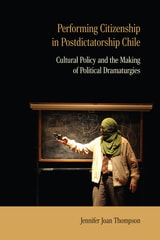
Performing Citizenship in Postdictatorship Chile
Cultural Policy and the Making of Political DramaturgiesJennifer Joan Thompson
Northwestern University Press, 2025
Offering a nuanced understanding of the performing arts’ relationship to politics
Through careful readings of key political performances in Chile's transition from military dictatorship to neoliberal democracy, Jennifer Joan Thompson examines how the production and aesthetics of theater are intertwined in processes of democratization, enactments of citizenship, and the development of cultural policy. Performing Citizenship in Postdictatorship Chile: Cultural Policy and the Making of Political Dramaturgies reveals how artists performed changing models of democratic citizenship. Thompson traces the ways artists confronted and resisted the military dictatorship of Augusto Pinochet, how they then reimagined the body politic during the early transitional period and challenged official constructions of history and memory as the transition to democracy progressed, how they critiqued Chile’s neoliberal economic model and its violence, and, finally, how they have made claims for feminist and Indigenous citizen subjectivities throughout Chile’s current social crisis. Incorporating archival and ethnographic research alongside readings of theatrical and political performances, this study offers a nuanced understanding of the performing arts’ relationship to politics, one that accounts for the ways artists and the state collaborate in the production of the political imagination.
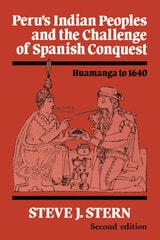
Peru's Indian Peoples and the Challenge of Spanish Conquest
Huamanga to 1640Steve J. Stern
University of Wisconsin Press, 1993
This second edition of Peru’s Indian Peoples and the Challenge of Spanish Conquest includes Stern’s 1992 reflections on the ten years of historical interpretation that have passed since the book’s original publication—setting his analysis of Huamanga in a larger perspective.
“This book is a monument to both scholarship and comprehension, comparable in its treatment of the indigenous peoples after the conquest only to that of Charles Gibson for the Aztecs, and perhaps the best volume read by this reviewer in several years.”—Frederick P. Bowser, American Historical Review
“Peru’s Indian Peoples and the Challenge of Spanish Conquest is clearly indispensable reading for Andeanists and highly recommended to ethnohistorians generally. In technical respects it is a job done right, and conceptually it stands out as a handsome example of anthropology and history woven into one tight fabric of inquiry.”—Frank Salomon, Ethnohistory
Peruvian Lives across Borders
Power, Exclusion, and HomeM. Cristina Alcalde
University of Illinois Press, 2018
Alcalde draws on interviews, surveys, participant observation, and textual analysis to argue that to belong is to exclude. To that end, transnational Peruvians engage in both subtle and direct policing along the borders of belonging. These acts allow them to claim and maintain the social status they enjoyed in their homeland even as they profess their openness and tolerance. Alcalde details these processes and their origins in Peru's gender, racial, and class hierarchies. As she shows, the idea of return—whether desired or rejected, imagined or physical—spurs constructions of Peruvianness, belonging, and home.
Deeply researched and theoretically daring, Peruvian Lives across Borders answers fascinating questions about an understudied group of migrants.

Phenomenal Justice
Violence and Morality in ArgentinaEva van Roekel
Rutgers University Press, 2020
Short-listed for the Juan E. Méndez Book Award for Human Rights in Latin America from Duke University Libraries
How do victims and perpetrators of political violence caught up in a complicated legal battle experience justice on their own terms? Phenomenal Justice is a compelling ethnography about the reopened trials for crimes against humanity committed during the brutal military dictatorship that ruled Argentina between 1976 and 1983. Grounded in phenomenological anthropology and the anthropology of emotion, this book establishes a new theoretical basis that is faithful to the uncertainties of justice and truth in the aftermath of human rights violations. The ethnographic observations and the first-person stories about torture, survival, disappearance, and death reveal the enduring trauma, heartfelt guilt, happiness, battered pride, and scratchy shame that demonstrate the unreserved complexities of truth and justice in post-conflict societies. Phenomenal Justice will be an indispensable contribution to a better understanding of the military dictatorship in Argentina and its aftermath.
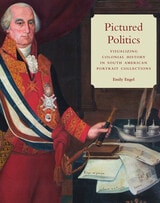
Pictured Politics
Visualizing Colonial History in South American Portrait CollectionsBy Emily Engel
University of Texas Press, 2020
The Spanish colonial period in South America saw artists develop the subgenre of official portraiture, or portraits of key individuals in the continent’s viceregal governments. Although these portraits appeared to illustrate a narrative of imperial splendor and absolutist governance, they instead became a visual record of the local history that emerged during the colonial occupation.
Using the official portrait collections accumulated between 1542 and 1830 in Lima, Buenos Aires, and Bogotá as a lens, Pictured Politics explores how official portraiture originated and evolved to become an essential component in the construction of Ibero-American political relationships. Through the surviving portraits and archival evidence—including political treatises, travel accounts, and early periodicals—Emily Engel demonstrates that these official portraits not only belie a singular interpretation as tools of imperial domination but also visualize the continent's multilayered history of colonial occupation. The first stand alone analysis of South American portraiture, Pictured Politics brings to light the historical relevance of political portraits in crafting the history of South American colonialism.
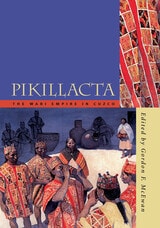
Pikillacta
The Wari Empire in CuzcoMcEwan, Gordon F.
University of Iowa Press, 2005
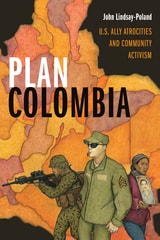
Plan Colombia
U.S. Ally Atrocities and Community ActivismJohn Lindsay-Poland
Duke University Press, 2018
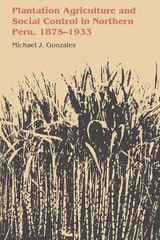
Plantation Agriculture and Social Control in Northern Peru, 1875–1933
By Michael J. Gonzales
University of Texas Press, 1985
During the late nineteenth and early twentieth centuries, the social, economic, and political landscape of Peru was transformed profoundly. Within a decade of the country’s disastrous defeat by Chile during the War of the Pacific, the export economy was recovering on the strength of a variety of agricultural and mineral products. The sugar industry played a pivotal role in this process and produced wealthy and socially ambitious families who became prominent political leaders on the national level.
This study, based primarily on previously unavailable private records of sugarcane plantations, examines the external and internal dynamics of the sugar industry. It offers new insights into the process of land consolidation, the economics of sugar technology and production, the formation of the coastal elite, and the organization, recruitment, and control of labor. By focusing on the plantation Cayalti within a regional context, Gonzales presents one of the richest descriptions of the modern plantation for any region of Latin America. The book is a vivid social history of laborers from a variety of racial and ethnic backgrounds, from Chinese to Peruvians of Indian, mestizo, and black heritage.
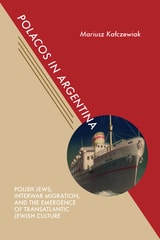
Polacos in Argentina
Polish Jews, Interwar Migration, and the Emergence of Transatlantic Jewish CultureMariusz Kalczewiak
University of Alabama Press, 2020
An examination of the social and cultural repercussions of Jewish emigration from Poland to Argentina in the 1920s and 1930s
Between the 1890s and 1930s, Argentina, following the United States and Palestine, became the main destination for Eastern European Ashkenazi Jews seeking safety, civil rights, and better economic prospects. In the period between 1918 and 1939, sixty thousand Polish Jews established new homes in Argentina. They formed a strong ethnic community that quickly embraced Argentine culture while still maintaining their unique Jewish-Polish character. This mass migration caused the transformation of cultural, social, and political milieus in both Poland and Argentina, forever shaping the cultural landscape of both lands.
In Polacos in Argentina: Polish Jews, Interwar Migration, and the Emergence of Transatlantic Jewish Culture, Mariusz Kałczewiak has constructed a multifaceted and in-depth narrative that sheds light on marginalized aspects of Jewish migration and enriches the dialogue between Latin American Jewish studies and Polish Jewish Studies. Based on archival research, Yiddish travelogues on Argentina, and the Yiddish and Spanish-language press, this study recreates a mosaic of entanglements that Jewish migration wove between Poland and Argentina.
Most studies on mass migration fail to acknowledge the role of the country of origin, but this innovative work approaches Jewish migration to Argentina as a continuous process that took place on both sides of the Atlantic. Taken as a whole, Polacos in Argentina enlightens the heterogeneous and complex issue of immigrant commitments, belongings, and expectations. Jewish emigration from Poland to Argentina serves as a case study of how ethnicity evolves among migrants and their children, and the dynamics that emerge between putting down roots in a new country and maintaining commitments to the country of origin.
Political Attitudes in Venezuela
Societal Cleavages and Political OpinionBy Enrique A. Baloyra and John D. Martz
University of Texas Press, 1979
Here is a benchmark study of voter attitudes in a Latin American country. This volume is based on extensive survey research conducted during the Venezuelan elections of 1973. The methods employed by Baloyra and Martz to poll an "unpollable" society successfully challenge previously established paradigms.
The authors interviewed a representative sample of over 1,500 voters to determine relationships between class, status, community, context, religion, ideology, and partisanship on the one hand and political attitudes and preferences on the other. They found that the Venezuelan electorate is defined by a series of contradictory tendencies, and they place their conclusions in the context of contemporary political science literature regarding class and party, ideology and party, and inequality and participation.
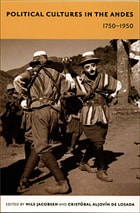
Political Cultures in the Andes, 1750-1950
Nils Jacobsen and Cristóbal Aljovín de Losada, eds.
Duke University Press, 2005
The contributors foreground the struggles over democracy and citizens’ rights as well as notions of race, ethnicity, gender, and class that have been at the forefront of political debates and social movements in the Andes since the waning days of the colonial regime some two hundred years ago. Among the many topics they consider are the significance of the Bourbon reform era to subsequent state-formation projects, the role of race and nation in the work of early-twentieth-century Bolivian intellectuals, the fiscal decentralization campaign in Peru following the devastating War of the Pacific in the late nineteenth century, and the negotiation of the rights of “free men of all colors” in Colombia’s Atlantic coast region during the late colonial period. Political Cultures in the Andes includes an essay by the noted Mexicanist Alan Knight in which he considers the value and limits of the concept of political culture and a response to Knight’s essay by the volume’s editors, Nils Jacobsen and Cristóbal Aljovín de Losada. This important collection exemplifies the rich potential of a pragmatic political culture approach to deciphering the processes involved in the formation of historical polities.
Contributors. Cristóbal Aljovín de Losada, Carlos Contreras, Margarita Garrido, Laura Gotkowitz, Aline Helg, Nils Jacobsen, Alan Knight, Brooke Larson, Mary Roldan, Sergio Serulnikov, Charles F. Walker, Derek Williams
Politics after Violence
Legacies of the Shining Path Conflict in PeruEdited by Hillel David Soifer and Alberto Vergara
University of Texas Press, 2019
Between 1980 and 1994, Peru endured a bloody internal armed conflict, with some 69,000 people killed in clashes involving two insurgent movements, state forces, and local armed groups. In 2003, a government-sponsored “Truth and Reconciliation Committee” reported that the conflict lasted longer, affected broader swaths of the national territory, and inflicted higher costs in both human and economic terms than any other conflict in Peru’s history. Of those killed, 75 percent were speakers of an indigenous language, and almost 40 percent were among the poorest and most rural members of Peruvian society. These unequal impacts of the violence on the Peruvian people revealed deep and historical disparities within the country.
This collection of original essays by leading international experts on Peruvian politics, society, and institutions explores the political and institutional consequences of Peru’s internal armed conflict in the long 1980s. The essays are grouped into sections that cover the conflict itself in historical, comparative, and theoretical perspectives; its consequences for Peru’s political institutions; its effects on political parties across the ideological spectrum; and its impact on public opinion and civil society. This research provides the first systematic and nuanced investigation of the extent to which recent and contemporary Peruvian politics, civil society, and institutions have been shaped by the country’s 1980s violence.
Politics of the Chaco Peace Conference, 1935–1939
By Leslie B. Rout, Jr.
University of Texas Press, 1970
After three years of indecisive but bloody war, guns lay silent in the Chaco Boreal in June 1935. Fifty years of bickering between Bolivia, a landlocked country seeking a river exit to the sea, and Paraguay, a land-hungry country seeking territorial aggrandizement and supposed mineral wealth, had culminated in open warfare in June 1932. By 1935 the antagonists, near exhaustion, finally agreed to discuss their differences.
Leslie B. Rout, Jr., examines three facets of the dispute and the inter-American peace conference that settled it. He analyzes the futile diplomatic efforts to prevent the outbreak of hostilities, discusses the diplomatic initiatives that culminated in the June cease-fire, and describes the frustrating but ultimately successful diplomatic struggle that produced a definitive settlement.
By enumerating the problems and progress of the peace conference, Rout demonstrates that, despite occasions of open diplomacy, it was through secret negotiation that agreement was finally attained. He concludes that, although the negotiators betrayed unabashed cynicism, violated stated Pan-American ideals, and disregarded the "troublesome" terms of the June 1935 cease-fire, they deserve praise.
Had the mediators failed to produce a viable solution in July 1938, the peace conference would have collapsed, renewed warfare would have resulted—and the neighboring powers inevitably would have become involved. Given this potential catastrophe, the mediators had to solve the diplomatic problems by the means available.
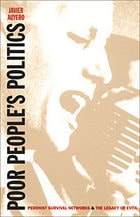
Poor People's Politics
Peronist Survival Networks and the Legacy of EvitaJavier Auyero
Duke University Press, 2000
Looking closely at the slum-dwellers’ informal problem-solving networks, which are necessary for material survival, and the different meanings of Peronism within these networks, Auyero presents the first ethnography of urban clientelism ever carried out in Argentina. Revealing a deep familiarity with the lives of the urban poor in Villa Paraíso, a stigmatized and destitute shantytown of Buenos Aires, Auyero demonstrates the ways in which local politicians present their vital favors to the poor and how the poor perceive and evaluate these favors. Having penetrated the networks, he describes how they are structured, what is traded, and the particular way in which women facilitate these transactions. Moreover, Auyero proposes that the act of granting favors or giving food in return for votes gives the politicians’ acts a performative and symbolic meaning that flavors the relation between problem-solver and problem-holder, while also creating quite different versions of contemporary Peronism. Along the way, Auyero is careful to situate the emergence and consolidation of clientelism in historic, cultural, and economic contexts.
Poor People’s Politics reexamines the relationship between politics and the destitute in Latin America, showing how deeply embedded politics are in the lives of those who do not mobilize in the usual sense of the word but who are far from passive. It will appeal to a wide range of students and scholars of Latin American studies, sociology, anthropology, political science, history, and cultural studies.

Pope Francis and the Search for God in America
The Significance of His Early Visits to the AmericasMaria Clara Bingemer
Catholic University of America Press, 2021
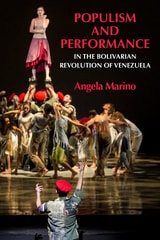
Populism and Performance in the Bolivarian Revolution of Venezuela
Angela Marino
Northwestern University Press, 2018
Based on ethnographic and archival research, Marino focuses on performances of the devil figure, tracing this beloved trickster through religious fiestas, mid-century theater and film, and other media as it both antagonizes and unifies a movement against dictatorship and neoliberalism. She then demonstrates that performance became a vehicle through which cultural producers negotiated boundaries of inclusion and exclusion in ways that overcame the simplistic logic of good versus evil, us versus them. The result is a nuanced insight into the process of building political mobilization out of crisis and through monumental times of change.
The book will interest readers of Latin American politics, cultural studies, political science, and performance studies by providing a vital record of the revolution, with valuable insights into its internal dynamics and lessons towards building a populist movement of the left in contentious times.
Populism in Latin America
Second EditionMichael L. Conniff
University of Alabama Press, 2012
A scholarly analysis of the origins, evolution, and enduring impact of populism in Latin American political life.
This updated edition of Populism in Latin America discusses new developments in populism as a political phenomenon and the emergence of new populist political figures in Mexico, Argentina, and Venezuela in particular.
For more than one hundred years—from the beginning of the twentieth to the early twenty-first century—Latin American populists proved amazingly successful at gaining high office, holding on to power, maintaining their followings, and renewing their careers. They raised more campaign money, got more voters to the polls,and held followers’ allegiances far better than traditional politicians. Certainly some populist leaders were corrupt, others manipulated their followers, and still others disgraced themselves. Nevertheless, populist leaders were extraordinarily effective in reaching masses of voters, and some left positive legacies for future generations.
Populism in Latin America examines the notion of populism in the political and social culture of Latin American societies as expressed through the populist leaders of several Latin American countries including Argentina, Brazil, Mexico, Chile, Ecuador, Panama, Peru, and Venezuela. This second edition also includes a new preface by Kenneth M. Roberts, professor of comparative and Latin American politics and the Robert S. Harrison Director of the Institute for the Social Sciences at Cornell University.
Contributors
Jorge Basurto / Michael L. Conniff / Paul W. Drake / Steve Ellner / Joel Horowitz /
Kenneth M. Roberts / W. Frank Robinson /Ximena Sosa / Steve Stein / Kurt Weyland
Power, Institutions, and Leadership in War and Peace
Lessons from Peru and Ecuador, 1995–1998By David R. Mares and David Scott Palmer
University of Texas Press, 2012
In January 1995, fighting broke out between Ecuadorian and Peruvian military forces in a remote section of the Amazon. It took more than three years and the interplay of multiple actors and factors to achieve a definitive peace agreement, thus ending what had been the region's oldest unresolved border dispute. This conflict and its resolution provide insights about other unresolved and/or disputed land and sea boundaries which involve almost every country in the Western Hemisphere.
Drawing on extensive field research at the time of the dispute and during its aftermath, including interviews with high-ranking diplomats and military officials, Power, Institutions, and Leadership in War and Peace is the first book-length study to relate this complex border dispute and its resolution to broader theories of conflict. The findings emphasize an emerging leadership approach in which individuals are not mere captives of power and institutions. In addition, the authors illuminate an overlap in national and international arenas in shaping effective articulation, perception, and selection of policy.
In the “new” democratic Latin America that emerged in the late 1970s through the early 1990s, historical memory remains influential in shaping the context of disputes, in spite of presumed U.S. post–Cold War influence. This study offers important, broader perspectives on a hemisphere still rife with boundary disputes as a rising number of people and products (including arms) pass through these borderlands.
Precarious Democracy
Ethnographies of Hope, Despair, and Resistance in BrazilBenjamin Junge
Rutgers University Press, 2021
Prehispanic Settlement Patterns in the Upper Mantaro and Tarma Drainages, Junín, Peru
The Tarama-Chinchaycocha Region, Vol. 1, Parts 1 and 2Jeffrey R. Parsons, Charles M. Hastings, Ramiro Matos M.
University of Michigan Press, 2000
Prehispanic Settlement Patterns in the Upper Mantaro and Tarma Drainages, Junín, Peru
Volume 2, The Wanka RegionEdited by Jeffrey R. Parsons, Charles M. Hastings and Ramiro Matos M.
University of Michigan Press, 2000
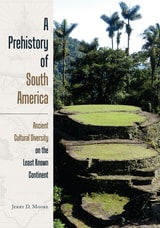
Prehistory of South America
Ancient Cultural Diversity on the Least Known ContinentJerry D. Moore
University Press of Colorado, 2014
For more than 12,000 years, South American cultures ranged from mobile hunters and gatherers to rulers and residents of colossal cities. In the process, native South American societies made advancements in agriculture and economic systems and created great works of art—in pottery, textiles, precious metals, and stone—that still awe the modern eye. Organized in broad chronological periods, A Prehistory of South America explores these diverse human achievements, emphasizing the many adaptations of peoples from a continent-wide perspective. Moore examines the archaeologies of societies across South America, from the arid deserts of the Pacific coast and the frigid Andean highlands to the humid lowlands of the Amazon Basin and the fjords of Patagonia and beyond.
Illustrated in full color and suitable for an educated general reader interested in the Precolumbian peoples of South America, A Prehistory of South America is a long overdue addition to the literature on South American archaeology.
Preso sin Nombre, Celda sin Numero
Jacobo Timerman; Con textos de Arthur Miller y Ariel Dorfman
University of Wisconsin Press, 2004
Wisconsin edition is for sale only in North America.

Pretty Modern
Beauty, Sex, and Plastic Surgery in BrazilAlexander Edmonds
Duke University Press, 2010
Prisoner of Pinochet
My Year in a Chilean Concentration CampSergio Bitar
University of Wisconsin Press, 2017
Prisoner of Pinochet is the gripping first-person chronicle of Bitar's year as a political prisoner before being expelled from Chile; a poignant narrative of men held captive together in a labor camp under harsh conditions, only able to guess at their eventual fate; and an insightful memoir of the momentous events of the early 1970s that led to seventeen years of bloody authoritarian rule in Chile. Available in English for the first time, this edition includes maps and photos from the 1970s and contextual notes by historian Peter Winn.
Profiles in Cultural Evolution
Papers from a Conference in Honor of Elman R. ServiceEdited by A. Terry Rambo and Kathleen Gillogly
University of Michigan Press, 1991
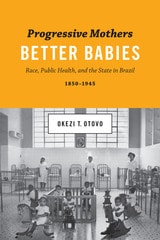
Progressive Mothers, Better Babies
Race, Public Health, and the State in Brazil, 1850-1945By Okezi T. Otovo
University of Texas Press, 2016
In Bahia, Brazil, the decades following emancipation saw the rise of reformers who sought to reshape the citizenry by educating Bahian women in methods for raising “better babies.” The idealized Brazilian would be better equipped to contribute to the labor and organizational needs of a modern nation. Backed by many physicians, politicians, and intellectuals, the resulting welfare programs for mothers and children mirrored complex debates about Brazilian nationality. Examining the local and national contours of this movement, Progressive Mothers, Better Babies investigates families, medical institutions, state-building, and social stratification to trace the resulting policies, which gathered momentum in the aftermath of abolition (1888) and the declaration of the First Republic (1889), culminating during the administration of President Getúlio Vargas (1930–1945).
Exploring the cultural discourses on race, gender, and poverty that permeated medical knowledge and the public health system for almost a century, Okezi T. Otovo draws on extensive archival research to reconstruct the implications for Bahia, where family patronage politics governed poor women’s labor as the mothers who were the focus of medical interventions were often the nannies and nursemaids of society’s wealthier families. The book reveals key transition points as the state of Bahia transformed from being a place where poor families could expect few social services to becoming the home of numerous programs targeting the poorest mothers and their children. Negotiating crucial questions of identity, this history sheds new light on larger debates about Brazil’s past and future.
Promises Beyond Memory
Archives, Art, and the Afterlives of Violence in Latin AmericaVikki Bell
Duke University Press, 2026
Prophets of Agroforestry
Guaraní Communities and Commercial GatheringBy Richard K. Reed
University of Texas Press, 1995
For almost four centuries, the indigenous Chiripá (Guaraní) people of eastern Paraguay have maintained themselves as a distinct society and culture, despite continual and often intense relations with Paraguayan society and the international economy. In this study, Richard K. Reed explores the economic and social basis for this ethnic autonomy.
Reed finds that Chiripá economic power derives from their practice of commercial agroforestry. Unlike Latin American indigenous societies that have been forced to clear land for commercial agriculture, the Chiripá continue to harvest and sell forest products, such as caffeinated yerba mate, without destroying the forests. Reed also explores the relation of this complex economy to Chiripá social organization and shows how flexible kin ties allowed the Chiripá to adapt to the pressure and opportunities of the commercial economy without adopting the authoritarian nature of rural Paraguayan society.
These findings offer important insights into the relations among indigenous groups, nation-states, and the international economy. They also provide a timely alternative model for sustainable management of subtropical forests that will be of interest in the fields of development and environmental studies.
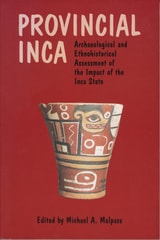
Provincial Inca
Archaeological and Ethnohistorical Assessment of the Impact of the Inca StateMichael A. Malpass
University of Iowa Press, 1993
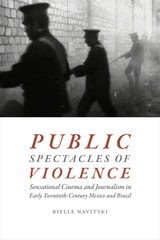
Public Spectacles of Violence
Sensational Cinema and Journalism in Early Twentieth-Century Mexico and BrazilRielle Navitski
Duke University Press, 2017
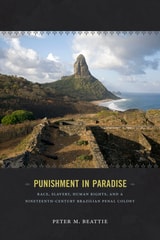
Punishment in Paradise
Race, Slavery, Human Rights, and a Nineteenth-Century Brazilian Penal ColonyPeter M. Beattie
Duke University Press, 2015
Punk and Revolution
Seven More Interpretations of Peruvian RealityShane Greene
Duke University Press, 2016
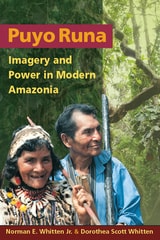
Puyo Runa
Imagery and Power in Modern AmazoniaNorman E. Whitten Jr. and Dorothea Scott Whitten
University of Illinois Press, 2007
The Andean nation of Ecuador derives much of its revenue from petroleum that is extracted from its vast Upper Amazonian rain forest, which is home to ten indigenous nationalities. Norman E. Whitten Jr. and Dorothea Scott Whitten have lived among and studied one such people, the Canelos Quichua, for nearly forty years. In Puyo Runa, they present a trenchant ethnography of history, ecology, imagery, and cosmology to focus on shamans, ceramic artists, myth, ritual, and political engagements. Canelos Quichua are active participants in national politics, including large-scale movements for social justice for Andean and Amazonian people. Puyo Runa offers readers exceptional insight into this cultural world, revealing its intricacies and embedded humanisms.