Results by title
323 books match the query 'Southeast Asia' and 18 start with p
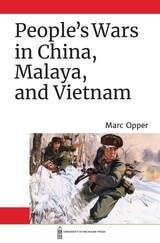
People's Wars in China, Malaya, and Vietnam
Marc Opper
University of Michigan Press, 2020
People’s Wars in China, Malaya, and Vietnam explains why some insurgencies collapse after a military defeat while under other circumstances insurgents are able to maintain influence, rebuild strength, and ultimately defeat the government. The author argues that ultimate victory in civil wars rests on the size of the coalition of social groups established by each side during the conflict. When insurgents establish broad social coalitions (relative to the incumbent), their movement will persist even when military defeats lead to loss of control of territory because they enjoy the support of the civilian population and civilians will not defect to the incumbent. By contrast, when insurgents establish narrow coalitions, civilian compliance is solely a product of coercion. Where insurgents implement such governing strategies, battlefield defeats translate into political defeats and bring about a collapse of the insurgency because civilians defect to the incumbent. The empirical chapters of the book consist of six case studies of the most consequential insurgencies of the 20th century including that led by the Chinese Communist Party from 1927 to 1949, the Malayan Emergency (1948–1960), and the Vietnam War (1960–1975). People’s Wars breaks new ground in systematically analyzing and comparing these three canonical cases of insurgency. The case studies of China and Malaya make use of Chinese-language archival sources, many of which have never before been used and provide an unprecedented level of detail into the workings of successful and unsuccessful insurgencies. The book adopts an interdisciplinary approach and will be of interest to both political scientists and historians.
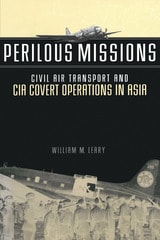
Perilous Missions
Civil Air Transport and CIA Covert Operations in AsiaWilliam M. Leary
University of Alabama Press, 2005
Civil Air Transport (CAT), founded in China after World War II by Claire Chennault and Whiting Willauer, was initially a commercial carrier specializing in air freight. Its role quickly changed as CAT became first a paramilitary adjunct of the Nationalist Chinese Air Force, then the CIA's secret "air force" in Korea, then "the most shot-at airline in the world" in French Indochina, and eventually becoming reorganized as Air America at the height of the Vietnam War. William M. Leary's detailed operational history of CAT sets the story in the perspective of Asian and Cold War geopolitics and shows how CAT allowed the CIA to operate with a level of flexibility and secrecy that it would not have attained through normal military or commercial air transportation.

Philippine Sanctuary
A Holocaust OdysseyBonnie M. Harris
University of Wisconsin Press, 2022
This untold history is brought to life by focusing on the incredible journey of synagogue cantor Joseph Cysner. Drawing from oral histories, memoirs, and personal papers, Harris documents Cysner's harrowing escape from the Nazis and his heroic rescue by the American-led Jewish community of the Philippines in 1939. Moving and rich in historical detail, Philippine Sanctuary reveals new insights for an overlooked period in our recent history, and emphasizes the continued importance of humanitarian efforts to aid those being persecuted.
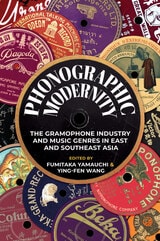
Phonographic Modernity
The Gramophone Industry and Music Genres in East and Southeast AsiaEdited by Fumitaka Yamauchi and Ying-fen Wang
University of Illinois Press, 2024
A roster of experts on countries from Japan to Indonesia explores the complicated relationship between the gramophone industry and music genres in East and Southeast Asia. Extending the boundaries of their research across multiple disciplines, the contributors connect the gramophone industry to theories surrounding phonography and modernity. Their focus on phonography combines an interest in discs with an interest in the sounds contributing to the recent sonic-auditory turn in sound studies.
Ambitious and expansive, Phonographic Modernity examines the bloc of East and Southeast Asia within the larger global history of sound recording.
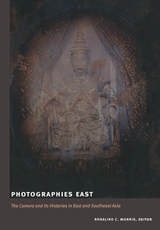
Photographies East
The Camera and Its Histories in East and Southeast AsiaRosalind C. Morris, ed.
Duke University Press, 2009
The contributors analyze how in specific cultural and historical contexts, the camera has affected experiences of time and subjectivity, practices of ritual and tradition, and understandings of death. They highlight the links between photography and power, looking at how the camera has figured in the operations of colonialism, the development of nationalism, the transformation of monarchy, and the militarization of violence. Moving beyond a consideration of historical function or effect, the contributors also explore the forms of illumination and revelation for which the camera has offered itself as instrument and symbol. And they trace the emergent forms of alienation and spectralization, as well as the new kinds of fetishism, that photography has brought in its wake. Taken together, the essays chart a bravely interdisciplinary path to visual studies, one that places the particular knowledge of a historicized anthropology in a comparative frame and in conversation with aesthetics and art history.
Contributors. James L. Hevia, Marilyn Ivy, Thomas LaMarre, Rosalind C. Morris, Nickola Pazderic, John Pemberton, Carlos Rojas, James T. Siegel, Patricia Spyer
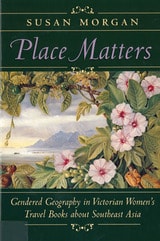
Place Matters
Morgan, Susan
Rutgers University Press, 1996
"Morgan has written an important and original work that presents a well-substantiated challenge to many recent studies of 'colonial discourse'."--Nancy L. Paxton,
Susan Morgan's study of materials and regions, previously neglected in contemporary postcolonial studies, begins with the transforming premise that "place matters." Concepts derived from writings about one area of the world cannot simply be transposed to another area, in some sort of global theoretical move. Moreover, place in the discourse of Victorian imperialism is a matter of gendered as well as geographic terms. Taking up works by Anna Forbes and Marianne North on the Malay Archipelago, by Margaret Brooke and Harriette McDougall on Sarawak, by Isabella Bird and Emily Innes on British Malaya, by Anna Leonowens on Siam, Morgan also makes extensive use of theorists whose work on imperialism in Southeast Asia is unfamiliar to most American academics.
This vivid examination of a different region and different writings emphasizes that in Victorian literature there was no monolithic imperialist location, authorial or geographic. The very notion of a ‘colony’ or an ‘imperial presence’ in Southeast Asia is problematic. Morgan is concerned with marking the intersections of particular Victorian imperial histories and constructions of subjectivity. She argues that specific places in Southeast Asia have distinctive, and differing, masculine imperial rhetorics. It is within these specific rhetorical contexts that women’s writings, including their moments of critique, can be read.
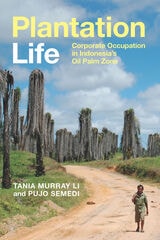
Plantation Life
Corporate Occupation in Indonesia's Oil Palm ZoneTania Murray Li and Pujo Semedi
Duke University Press, 2021
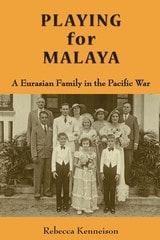
Playing for Malaya
A Eurasian Family in the Pacific WarRebecca Kenneison
National University of Singapore Press, 2011
So begins a stunning personal account of a Eurasian family living in Malaya. One of the many gaps in Reggie's account of his family was that his mother was Eurasian. When Rebecca Kenneison discovered this omission after his death, she set out to learn more about her extended family on the other side of the world. Her voyage of discovery is compelling in itself, but Playing for Malaya has a much larger purpose. Set in the 1930s and 1940s, it recounts the experiences of an extended Eurasian family during the invasion and occupation of Malaya by the Japanese. Colonial society considered Eurasians insufficiently European to be treated as British, but they seemed all too European to the Japanese, who subjected the Eurasian community to discrimination and considerable violence. Because many Eurasians, including members of the Kenneison family, supported the Allied cause, their wartime experiences are an extraordinary account of tragedy, heroism and endurance, presented here with great consequence and clarity.
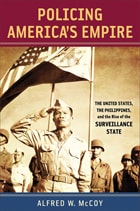
Policing America’s Empire
The United States, the Philippines, and the Rise of the Surveillance StateAlfred W. McCoy
University of Wisconsin Press, 2009
But security techniques bred in the tropical hothouse of colonial rule were not contained, McCoy shows, at this remote periphery of American power. Migrating homeward through both personnel and policies, these innovations helped shape a new federal security apparatus during World War I. Once established under the pressures of wartime mobilization, this distinctively American system of public-private surveillance persisted in various forms for the next fifty years, as an omnipresent, sub rosa matrix that honeycombed U.S. society with active informers, secretive civilian organizations, and government counterintelligence agencies. In each succeeding global crisis, this covert nexus expanded its domestic operations, producing new contraventions of civil liberties—from the harassment of labor activists and ethnic communities during World War I, to the mass incarceration of Japanese Americans during World War II, all the way to the secret blacklisting of suspected communists during the Cold War.
“With a breathtaking sweep of archival research, McCoy shows how repressive techniques developed in the colonial Philippines migrated back to the United States for use against people of color, aliens, and really any heterodox challenge to American power. This book proves Mark Twain’s adage that you cannot have an empire abroad and a republic at home.”—Bruce Cumings, University of Chicago
“This book lays the Philippine body politic on the examination table to reveal the disease that lies within—crime, clandestine policing, and political scandal. But McCoy also draws the line from Manila to Baghdad, arguing that the seeds of controversial counterinsurgency tactics used in Iraq were sown in the anti-guerrilla operations in the Philippines. His arguments are forceful.”—Sheila S. Coronel, Columbia University
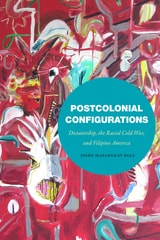
Postcolonial Configurations
Dictatorship, the Racial Cold War, and Filipino AmericaJosen Masangkay Diaz
Duke University Press, 2023
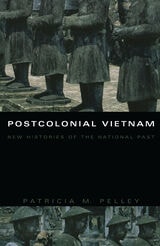
Postcolonial Vietnam
New Histories of the National PastPatricia M. Pelley
Duke University Press, 2002
Although she considers a variety of sources—government directives, census reports, statistics, poetry, civic festivities, ethnographies, and museum displays—Pelley focuses primarily on the work of official historians in Hanoi who argued about and tried to stabilize the meaning of topics ranging from prehistory to the Vietnam War. She looks at their strained and idiosyncratic attempts to plot the Vietnamese past according to Marxist and Stalinist paradigms and their ultimate abandonment of such models. She explores their struggle to redefine Vietnam in multiethnic terms and to normalize the idea of the family-state. Centering on the conversation that began in 1954 among historians in North Vietnam, her work identifies a threefold process of creating the new history: constituting historiographical issues, resolving problems of interpretation and narration, and conventionalizing various elements of the national narrative. As she tracks the processes that shaped the history of postcolonial Vietnam, Pelley dismantles numerous clichés of contemporary Vietnamese history and helps us to understand why and how its history-writing evolved.

Powers of Exclusion
Land Dilemmas in Southeast AsiaHall Derek
National University of Singapore Press, 2011
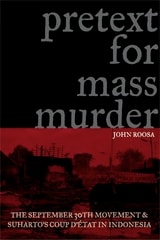
Pretext for Mass Murder
The September 30th Movement and Suharto's Coup d'Etat in IndonesiaJohn Roosa
University of Wisconsin Press, 2006
In the early morning hours of October 1, 1965, a group calling itself the September 30th Movement kidnapped and executed six generals of the Indonesian army, including its highest commander. The group claimed that it was attempting to preempt a coup, but it was quickly defeated as the senior surviving general, Haji Mohammad Suharto, drove the movement’s partisans out of Jakarta. Riding the crest of mass violence, Suharto blamed the Communist Party of Indonesia for masterminding the movement and used the emergency as a pretext for gradually eroding President Sukarno’s powers and installing himself as a ruler. Imprisoning and killing hundreds of thousands of alleged communists over the next year, Suharto remade the events of October 1, 1965 into the central event of modern Indonesian history and the cornerstone of his thirty-two-year dictatorship.
Despite its importance as a trigger for one of the twentieth century’s worst cases of mass violence, the September 30th Movement has remained shrouded in uncertainty. Who actually masterminded it? What did they hope to achieve? Why did they fail so miserably? And what was the movement’s connection to international Cold War politics? In Pretext for Mass Murder, John Roosa draws on a wealth of new primary source material to suggest a solution to the mystery behind the movement and the enabling myth of Suharto’s repressive regime. His book is a remarkable feat of historical investigation.
Finalist, Social Sciences Book Award, the International Convention of Asian Scholars
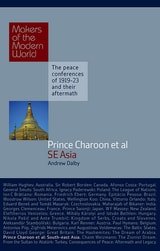
Prince Charoon et al
South East AsiaAndrew Dalby
Haus Publishing, 2010
Print Passages
Colonial Book Culture in the Dutch East IndiesLisa Kuitert
National University of Singapore Press, 2026
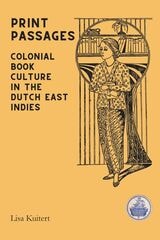
Although printed material has become intertwined with everyday life in the twenty-first century, book culture has not always been ubiquitous. Print Passages researches the history of the arrival of the printed book in Indonesia, and the consequences this new technology brought with it. The introduction of the printing press during the Dutch occupation of the archipelago (then the Dutch East Indies) laid the foundation for a flourishing cultural and intellectual life centered on books and printed materials, especially after 1816. Though printed matter was used to colonize and control the land, it also gave the resistance a voice.
Through an exploration of selected themes, author Lisa Kuitert answers practical questions such as how Dutch language researchers and printers found their way to and within Indonesia, while also diving into the parallel printing culture that was entirely run by Indonesians, often with a Chinese background.
Profiles in Cultural Evolution
Papers from a Conference in Honor of Elman R. ServiceEdited by A. Terry Rambo and Kathleen Gillogly
University of Michigan Press, 1991
Projections of Power
The United States and Europe in Colonial Southeast Asia, 1919-1941Anne L. Foster
Duke University Press, 2010
Promises and Predicaments
Trade and Entrepreneurship in Colonial and Independent Indonesia in the 19th and 20th CenturiesEdited by Alicia Schrikker and Jeroen Touwen
National University of Singapore Press, 2015
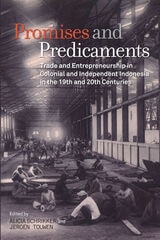
The authors deal with entrepreneurship and economic specialization within different ethnic groups, the geographical distribution of exports and resource drains from exporting regions, and connections between an export economy and mass poverty. One recurring issue is the way actors from different ethnic groups occupied complementary niches, highlighting the rich variety of roles played by Asian entrepreneurs. A study of the international sugar trade shows how regime change fostered co-operation between different ethnic groups and nationalities involved with trading networks, inter-island shipping, urban public transport, and the construction sector. A comparison of export earnings and population groups involved in trade before and after 1900 shows that unexpected agricultural and industrial transitions could underpin a fundamental shift in income growth, with improved living standards for broad sectors of the population.