Results by title
382 books match the query 'Southwest (AZ, NM, OK, TX)' and 21 start with p

Parson Henry Renfro
Free Thinking on the Texas FrontierBy William C. Griggs
University of Texas Press, 1994
The years following the Texas Revolution held even more turbulent events as diverse droves of pioneers crossed the Sabine and Red Rivers to start new lives in Texas. Early Texas society contended with religious issues, family life in a rugged environment, and the Civil War. This cultural history was clearly reflected in the life of frontier preacher Henry C. Renfro.
Migrating to Texas in 1851, Renfro enrolled in the fledgling Baylor University and became a Baptist preacher. Eventually disillusioned with Baptist orthodoxy, Renfro was disenfranchised on charges of infidelity as he embraced the ideals of the Free Thought Movement, inspired by the writings of men such as Thomas Paine, Spinoza, and Robert Ingersoll.
Renfro's Civil War experience was no less unusual. Serving as both soldier and chaplain, Renfro left a valuable legacy of insight into the conflict, captured in a wealth of correspondence that is in itself significant.
Drawing on a vast body of letters, speeches, sermons, and oral histories that had never before been available, this chronological narrative of "The Parson's" life describes significant changes in Texas from 1850 to 1900, especially the volatile formation and growth of Baptist churches in North Central Texas. William Griggs' study yields numerous new details about the Free Thought Movement and depicts public reaction to sectarian leaders in nineteenth-century Texas.
The author also describes the developing Central Texas region known as the Cross Timbers, including the personal dynamics between a frontier family and its patriarch and encompassing such issues as property conflicts, divorce, and family reconciliation. This work unlocks an enlightening, engaging scene from Texas history.
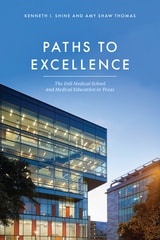
Paths to Excellence
The Dell Medical School and Medical Education in TexasKenneth I. Shine and Amy Shaw Thomas
University of Texas Press, 2021
This book tells in detail and for the first time the story of how this change came about: how dedicated administrators, alumni, business leaders, community organizers, doctors, legislators, professors, and researchers joined forces, overcame considerable resistance, and raised the funds to build a new medical school without any direct state monies. Funding was secured in large part by the unique willingness of the local community to tax itself to pay for the financial operations of the school. Kenneth I. Shine and Amy Shaw Thomas, who witnessed this process from their unique vantages as past and present vice chancellors for health affairs in the University of Texas System, offer a working model that will enable other leaders to more effectively seek solutions, avoid pitfalls, and build for the future.
Peculiar Honor
A History of the 28th Texas Cavalry 1862-1865Jane Johansson
University of Arkansas Press, 1998
People of the Wheat
Culture and Cultivation in North TexasRebecca Sharpless
University of Texas Press, 2026
How wheat growing, milling, and baking shaped the people and culture of North Texas.
In the national imaginary, America’s amber fields of grain lie in the country’s center, but for more than a century, they also grew across one pocket of the South: North Texas. From the 1840s to the 1970s, the state's agriculture, dominated in lore by cotton in the east and livestock in the open range, was heavily invested in the cultivation, processing, sale, and consumption of wheat. Recalling a forgotten history, Rebecca Sharpless shows how the rhythms of the wheat harvest—and the evolution of the milling, distribution, and baking industries—governed daily life in what is now known as the Dallas–Fort Worth Metroplex.
In the 1840s, Anglo settlers discovered that grain flourished in North Texas and quickly built an economy that included wheat in fields, mills, and kitchens. After the Civil War, hand labor gave way to mechanization, greatly increasing production. Commercial bakeries churned out novel confections, and big cities were built on the bounty of the countryside. In the second half of the twentieth century, as production moved northward, industrial milling and baking declined, but home baking boomed, flour advertising supported regional music, and wheat fortunes financed the region’s cultural life. Sharpless covers 150 years of wheat’s very human history and shows how the labor that cultivated it, the sustenance it provided, and the prosperity it generated left an indelible mark on the people and institutions of Texas.

Phoenix Indian School
The Second Half-CenturyDorothy R. Parker
University of Arizona Press, 1996
This book provides a history of the school from 1930 until the graduation of its final class of nineteen students in 1990. Dorothy Parker tells how the Phoenix Indian School not only adapted to policy changes instituted by the federal government but also had to contend with events occurring in the world around it, such as the Great Depression, World War II, and the advent of the "red power" movement.
Although the Phoenix Indian School has closed its doors forever, the National Park Service has undertaken an archaeological analysis of the site and an architectural documentation of the school's buildings. This history of its final years further attests to the legacy of this institution.
Phoenix
The History of a Southwestern MetropolisBradford Luckingham
University of Arizona Press, 1989
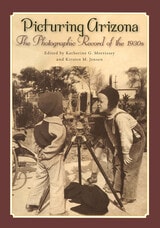
Picturing Arizona
The Photographic Record of the 1930sEdited by Katherine G. Morrissey and Kirsten Jensen
University of Arizona Press, 2005
This book places the work of local Arizonans alongside that of federal photographers both to illuminate the impact of the Depression on the state’s distinctive racial and natural landscapes and to show the influence of differing cultural agendas on the photographic record. The more than one hundred images—by well-known photographers such as Dorothea Lange and Laura Gilpin as well as by an array of less familiar photographers—represent a variety of purposes and perspectives, from public to personal, political to promotional. Six essays and three photo-essays bring together prominent authorities in history, the arts, and other fields who provide diverse perspectives on this period in Arizona and American history. Viewed together, the words and images capture a Depression-era Arizona bustling with activity as federally funded construction projects and seasonal agricultural jobs brought migrants and newcomers to the state. They convey the celebrations and the struggles of commercial photographers, archaeologists, city folks, farmers, tourists, native peoples and others in these hard times.
As the economic strains of the decade reverberated through the state, local photographers documented the lives of Arizona residents—including those frequently overlooked by historians. As this book persuasively shows, photographs can conceal as much as they reveal. A young Mexican American girl stands in front of a backdrop that hides the outhouse behind her, a deeply moving image for what it suggests about the efforts of her family to conceal their economic circumstances. Yet this image is a perfect metaphor for all the photographs in this book: stories remain hidden, but when viewers begin to question what they cannot see, pictures resonate more loudly than ever before.
This book is a history of Arizona written from the photographic record, offering a point of view that may differ from the written record. From the images and the insights of the authors, we can gain a new appreciation of how one state—and its indomitable people—weathered our nation’s toughest times.
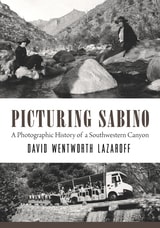
Picturing Sabino
A Photographic History of a Southwestern CanyonDavid Wentworth Lazaroff
University of Arizona Press, 2023
The story is vividly told through numerous historical photographs, lively anecdotes, and an engaging text, informed by decades of research by David Wentworth Lazaroff. Along the way the reader makes the acquaintance of ordinary picnickers as well as influential citizens who helped to reshape the canyon, while witnessing the canyon’s evolving relationship with its growing urban neighbor. The book will fascinate readers who are already familiar with Sabino Canyon, as well as anyone with an interest in local or regional history, or in historical photography.
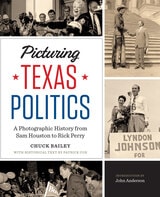
Picturing Texas Politics
A Photographic History from Sam Houston to Rick PerryBy Chuck Bailey; with historical text by Patrick Cox; introduction by John Anderson
University of Texas Press, 2015
With rare, previously unpublished photographs and iconic images of politicians from the state’s founders to Ann Richards, George W. Bush, and Rick Perry, here is the first-ever photographic album of Texas politicians and political campaigns.
The Republic of Texas was founded in 1839, around the time that photography was being invented. So while there were no photographers at the Alamo or San Jacinto, they arrived soon after to immortalize, on film, Sam Houston, David Burnett, Mirabeau Lamar, and many other founding fathers of the Lone Star State. Over the following nearly two centuries, Texas politics and politicians have provided reliable, often dramatic, and sometimes larger-than-life subjects for photographers to capture in the moment and add to the historical record.
Picturing Texas Politics presents the first photographic album of Texas politicians and political campaigns ever assembled. Chuck Bailey has searched archives, museums, libraries, and private collections to find photographs that have never been published, as well as iconic images, such as Russell Lee’s pictures of one of Ralph Yarborough’s campaigns. These photographs are arranged into four chronological sections, each one introduced by historian Patrick Cox, who also provides informative photo captions. The photographs display power and political savvy from the early Republic to Lyndon Johnson and Bob Bullock; unmatched dedication to Texas in the Hobby and Bush families; and the growing influence of women in politics, from Miriam “Ma” Ferguson to Barbara Jordan, Ann Richards, and Kay Bailey Hutchison. With Sam Houston’s jaguar vest, W. Lee “Pappy” O’Daniel’s hillbilly band, a famous governor with an ostrich, and prominent Texans eating watermelons, shooting guns, and riding horses, this is Texas politics at its liveliest and best.
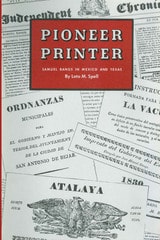
Pioneer Printer
Samuel Bangs in Mexico and TexasBy Lota M. Spell
University of Texas Press, 1963
Samuel Bangs, the first printer in the territory that is now Texas, once owed his life to his printing press. One of the few survivors of the Mina Expedition to Mexico in 1817, Bangs wrote to Servando de Mier, “I had the good fortune, through the will of God, to have my life saved, as I was a printer.”
Bangs was not always so fortunate. Losses and disappointments plagued him throughout his career, and he spent many miserable months in Mexican jails. But his ingenuity in the face of adversity, his courage and charm, stamped him not only as a storybook hero but as a man whose virtues were large enough to be their own reward.
Lota Spell’s fine biography of Samuel Bangs is at the same time a fascinating history of northern Mexico (including Texas) in the first half of the nineteenth century. Through the successes and failures of an individual it presents the facts about the operation of a business during a time of important political and economic change.
Even more important is its contribution to our knowledge of printing and of the contemporary periodical press. Although first of all a printer, Samuel Bangs was also involved in the production of newspapers, making this book a detailed history of journalism in the Mexico and Texas of his day. His printing office also functioned as a typographer’s school, through which he instituted the apprentice system in the Southwest; and as a result of his interest in presses as a commodity of trade, the first business for merchandising and servicing printing presses in the area was developed.
This narrative, combining the story of a man’s life, the history of his times, and the development of his profession, fills a gap in our knowledge of Mexico and Texas, and does it with perception and charm.

Playback
By Richard "Cactus" Pryor
University of Texas Press, 1995
From the town that brought you Molly Ivins, Liz Carpenter, John Henry Faulk, and Greater Tuna, here's Cactus Pryor. For decades, Cactus' wit and wisdom have delighted radio listeners, as well as the many social, political, business, and philanthropic groups throughout the United States whose functions have been enlivened by this accomplished master of ceremonies and after-dinner speaker.
Now the University of Texas Press takes great pleasure in bringing you this quintessential Texas humorist. Playback gathers over forty of Cactus Pryor's favorite radio essays, translating "ear words into eye words," as he puts it. In these pieces, Cactus paints vivid word pictures of people and places, offering readers the same "you are there" immediacy that makes his radio broadcasts so popular. In them, you'll take a sentimental journey with Cactus and his wife to the Maui grave site of Charles Lindbergh—discover how legendary University of Texas football coach Darrell Royal faced the agony of defeat with humor—meet unsung heroes like the 104-year-old who's teaching himself to read and write—get acquainted with the notable folks Cactus has known, including Lady Bird Johnson, John Wayne, Jane Fonda, and James Michener—and, of course, share Cactus' love of family, friends, and the Texas coast.
As Bailey White's essays on National Public Radio have introduced listeners across the country to the lifeways of the Deep South, so Cactus Pryor offers a humorous, revealing look at how we Texans view ourselves, our neighbors, and the world. Read Playback now, and see what you've been missing.
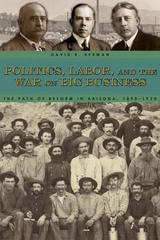
Politics, Labor, and the War on Big Business
The Path of Reform in Arizona, 1890-1920David R. Berman
University Press of Colorado, 2012
In the 1890s, once-heavily courted corporations had become, in the eyes of many, outside "money interests" or "beasts" that exploited the wealth of the sparsely settled area. Arizona's anticorporate reformers condemned the giant corporations for mistreating workers, farmers, ranchers, and small-business people and for corrupting the political system. During a thirty-year struggle, Arizona reformers called for changes to ward off corporate control of the political system, increase corporate taxation and regulation, and protect and promote the interests of working people.
Led by George W.P. Hunt and progressive Democrats, Arizona's brand of Progressivism was heavily influenced by organized labor, third parties, and Socialist activists. As highly powerful railroad and mining corporations retaliated, conflict took place on both political levels and industrial backgrounds, sometimes in violent form.
Politics, Labor and the War on Big Business places Arizona's experience in the larger historical discussion of reform activity of the period, considering issues involving the role of government in the economy and the possibility of reform, topics highly relevant to current debates.
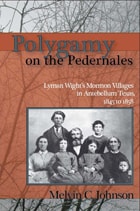
Polygamy on the Pedernales
Lyman Wight's Mormon Village in Antebellum TexasMelvin C. Johnson
Utah State University Press, 2006
In the wake of Joseph Smith Jr.’s murder in 1844, his following splintered, and some allied themselves with a maverick Mormon apostle, Lyman Wight. Sometimes called the "Wild Ram of Texas," Wight took his splinter group to frontier Texas, a destination to which Smith, before his murder, had considered moving his followers, who were increasingly unwelcome in the Midwest. He had instructed Wight to take a small band of church members from Wisconsin to establish a Texas colony that would prepare the ground for a mass migration of the membership. Having received these orders directly from Smith, Wight did not believe the former’s death changed their significance. If anything, he felt all the more responsible for fulfilling what he believed was a prophet’s intention.
Antagonism with Brigham Young and the other LDS apostles grew, and Wight refused to join with them or move to their new gathering place in Utah. He and his small congregation pursued their own destiny, becoming an interesting component of the Texas frontier, where they had a significant economic role as early millers and cowboys and a political one as a buffer with the Comanches. Their social and religious practices shared many of the idiosyncracies of the larger Mormon sect, including polygamous marriages, temple rites, and economic cooperatives. Wight was a charismatic but authoritarian and increasingly odd figure, in part because of chemical addictions. His death in 1858 while leading his shrinking number of followers on yet one more migration brought an effective end to his independent church.
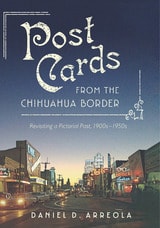
Postcards from the Chihuahua Border
Revisiting a Pictorial Past, 1900s–1950sDaniel D. Arreola
University of Arizona Press, 2019
In Postcards from the Chihuahua Border Daniel D. Arreola captures the exhilaration of places in time, taking us back to Mexico’s northern border towns of Cuidad Juárez, Ojinaga, and Palomas in the early twentieth century. Drawing on more than three decades of archival work, Arreola uses postcards and maps to unveil the history of these towns along west Texas’s and New Mexico’s southern borders.
Postcards offer a special kind of visual evidence. Arreola’s collection of imagery and commentary about them shows us singular places, enriching our understandings of history and the history of change in Chihuahua. No one postcard tells the entire story. But image after image offers a collected view and insight into changing perceptions. Arreola’s geography of place looks both inward and outward. We see what tourists see, while at the same time gaining insight about what postcard photographers and postcard publishers wanted to be seen and perceived about these border communities.
Postcards from the Chihuahua Border is a colorful and dynamic visual history. It invites the reader to time travel, to revisit another era—the first half of the last century—when these border towns were framed and made popular through picture postcards.
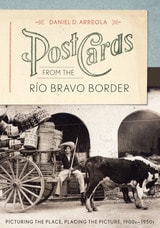
Postcards from the Río Bravo Border
Picturing the Place, Placing the Picture, 1900s–1950sBy Daniel D. Arreola
University of Texas Press, 2013
Between 1900 and the late 1950s, Mexican border towns came of age both as tourist destinations and as emerging cities. Commercial photographers produced thousands of images of their streets, plazas, historic architecture, and tourist attractions, which were reproduced as photo postcards. Daniel Arreola has amassed one of the largest collections of these border town postcards, and in this book, he uses this amazing visual archive to offer a new way of understanding how the border towns grew and transformed themselves in the first half of the twentieth century, as well as how they were pictured to attract American tourists.
Postcards from the Río Bravo Border presents nearly two hundred images of five significant towns on the lower Río Bravo—Matamoros, Reynosa, Nuevo Laredo, Piedras Negras, and Villa Acuña. Using multiple images of sites within each city, Arreola tracks changes both within the cities as places and in the ways in which the cities have been pictured for tourist consumption. He makes a strong case that visual imagery has a shaping influence on how we negotiate and think about places, creating a serial scripting or narrating of the place. Arreola also shows how postcard images, when systematically and chronologically arranged, can tell us a great deal about how Mexican border towns have been viewed over time. This innovative visual approach demonstrates that historical imagery, no less than text or maps, can be assembled to tell a compelling geographical story about place and time.

Postcards from the Sonora Border
Visualizing Place Through a Popular Lens, 1900s–1950sDaniel D. Arreola
University of Arizona Press, 2017
Young men ride horses on a dusty main road through town. Cars and gas stations gradually intrude on the land, and, years later, curiosity shops and cantinas change the face of Mexican border towns south of Arizona. Between 1900 and the late 1950s, Mexican border towns came of age both as centers of commerce and as tourist destinations. Postcards from the Sonora Border reveals how images—in this case the iconic postcard—shape the way we experience and think about place.
Making use of his personal collection of historic images, Daniel D. Arreola captures the evolution of Sonoran border towns, creating a sense of visual “time travel” for the reader. Supported by maps and visual imagery, the author shares the geographical and historical story of five unique border towns—Agua Prieta, Naco, Nogales, Sonoyta, and San Luis Río Colorado.
Postcards from the Sonora Border introduces us to these important towns and provides individual stories about each, using the postcards as markers. No one postcard view tells the complete story—rather, the sense of place emerges image by image as the author pulls readers through the collection as an assembled view. Arreola reveals how often the same locations and landmarks of a town were photographed as postcard images generation after generation, giving a long and dynamic view of the inhabitants through time. Arranged chronologically, Arreola’s postcards allow us to discover the changing perceptions of place in the borderlands of Sonora, Mexico.
Power Moves
Transportation, Politics, and Development in HoustonBy Kyle Shelton
University of Texas Press, 2017
Since World War II, Houston has become a burgeoning, internationally connected metropolis—and a sprawling, car-dependent city. In 1950, it possessed only one highway, the Gulf Freeway, which ran between Houston and Galveston. Today, Houston and Harris County have more than 1,200 miles of highways, and a third major loop is under construction nearly thirty miles out from the historic core. Highways have driven every aspect of Houston’s postwar development, from the physical layout of the city to the political process that has transformed both the transportation network and the balance of power between governing elites and ordinary citizens.
Power Moves examines debates around the planning, construction, and use of highway and public transportation systems in Houston. Kyle Shelton shows how Houstonians helped shape the city’s growth by attending city council meetings, writing letters to the highway commission, and protesting the destruction of homes to make way for freeways, which happened in both affluent and low-income neighborhoods. He demonstrates that these assertions of what he terms “infrastructural citizenship” opened up the transportation decision-making process to meaningful input from the public and gave many previously marginalized citizens a more powerful voice in civic affairs. Power Moves also reveals the long-lasting results of choosing highway and auto-based infrastructure over other transit options and the resulting challenges that Houstonians currently face as they grapple with how best to move forward from the consequences and opportunities created by past choices.
Power, Prayers, and Protection
A Cultural History of the Utah San Juan River NavajoRobert S. McPherson
University Press of Colorado, 2022
Navajo oral tradition is rich in stories and themes that form the basis for ceremonial performance. Everything that is physical, emotional, or spiritual has been placed in this world by the holy people at the time of creation, a process recognized in these accounts and teachings. Each chapter references sacred narratives that provide power through prayers that bring protection and a path for believers to follow. Topics include life on the river before and during the introduction of the white man, efficacy of the chantways, teachings of medicine people, childhood memories, arrival of trading posts, encounters with the automobile and other technology, livestock reduction and its aftermath, and the development of the Aneth oilfield with its ensuing protests. This is the Navajo elders’ story as seen through their eyes and told in their voice.
Pregnancy, Motherhood, and Choice in Twentieth-Century Arizona
Mary S. Melcher
University of Arizona Press, 2012
Early twentieth-century Arizona was a life-threatening place for new and expectant mothers. Towns were small and very far apart, and the weather and harsh landscape often delayed midwives. It was not uncommon for a woman to give birth without medical care and with the aid of only family members. By the 1920s, Arizona was at the top of the list for the highest number of infant deaths.
Mary Melcher’s Pregnancy, Motherhood, and Choice in Twentieth-Century Arizona provides a deep and diverse history of the dramatic changes in childbirth, birth control, infant mortality, and abortion over the course of the last century. Using oral histories, memoirs, newspaper accounts, government documents, letters, photos, and biographical collections, this fine-grained study of women’s reproductive health places the voices of real women at the forefront of the narrative, providing a personal view into some of the most intense experiences of their lives.
Tackling difficult issues such as disparities in reproductive health care based on race and class, abortion, and birth control, this book seeks to change the way the world looks at women’s health. An essential read for both historians and public health officials, this book reveals that many of the choices and challenges that women once faced remain even today.
Progressive Country
How the 1970s Transformed the Texan in Popular CultureBy Jason Mellard
University of Texas Press, 2013
Winner, Coral Horton Tullis Memorial Prize, Texas State Historical Association, 2014
During the early 1970s, the nation’s turbulence was keenly reflected in Austin’s kaleidoscopic cultural movements, particularly in the city’s progressive country music scene. Capturing a pivotal chapter in American social history, Progressive Country maps the conflicted iconography of “the Texan” during the ’70s and its impact on the cultural politics of subsequent decades.
This richly textured tour spans the notion of the “cosmic cowboy,” the intellectual history of University of Texas folklore and historiography programs, and the complicated political history of late-twentieth-century Texas. Jason Mellard analyzes the complex relationship between Anglo-Texan masculinity and regional and national identities, drawing on cultural studies, American studies, and political science to trace the implications and representations of the multi-faceted personas that shaped the face of powerful social justice movements. From the death of Lyndon Johnson to Willie Nelson’s picnics, from the United Farm Workers’ marches on Austin to the spectacle of Texas Chic on the streets of New York City, Texas mattered in these years not simply as a place, but as a repository of longstanding American myths and symbols at a historic moment in which that mythology was being deeply contested.
Delivering a fresh take on the meaning and power of “the Texan” and its repercussions for American history, this detail-rich exploration reframes the implications of a populist moment that continues to inspire progressive change.
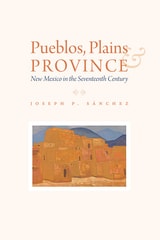
Pueblos, Plains, and Province
New Mexico in the Seventeenth CenturyJoseph P. Sánchez
University Press of Colorado, 2024
In Pueblos, Plains, and Province Joseph P. Sánchez offers an in-depth examination of sociopolitical conflict in seventeenth-century New Mexico, detailing the effects of Spanish colonial policies on settlers’, missionaries’, and Indigenous peoples’ struggle for economic and cultural control of the region. Sánchez explores the rich archival documentation that provides cultural, linguistic, and legal perspectives of the values of the period.
Spanish dual Indian policies for Pueblo and Plains tribes challenged Indigenous political and social systems to conform to the imperial structure for pacification purposes. Meanwhile, missionary efforts to supplant Indigenous religious beliefs with a Christian worldview resulted, in part, in a syncretism of the two worlds. Indigenous resentment of these policies reflected the contentious disagreements between Spanish clergymen and civil authorities, who feuded over Indigenous labor and encroachment on tribal sovereignties with demands for sworn loyalty to Spanish governance. The little-studied “starvation period” adversely affected Spanish-Pueblo relationships for the remainder of the century and contributed significantly to the battle at Acoma, the Jumano War, and the Pueblo Revolt of 1680.
Pueblos, Plains, and Province shows how history, culture, and tradition in New Mexico shaped the heritage shared by Spain, Mexico, the United States, and Native American tribes and will be of interest to scholars and students of Indigenous, colonial, and borderlands history.