Results by title
191 books match the query 'Studies' and 7 start with p
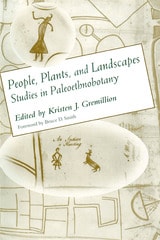
People, Plants, and Landscapes
Studies in PaleoethnobotanyKristen J. Gremillion
University of Alabama Press, 1997
Discover how ancient peoples and plants shaped one another across generations and landscapes.
People, Plants, and Landscapes showcases the potential of modern paleoethnobotany, an interdisciplinary field that explores the interactions between human beings and plants by examining archaeological evidence. Using different methods and theoretical approaches, the essays in this work apply botanical knowledge to studies of archaeological plant remains and apply paleoethnobotany to nonarchaeological sources of evidence. The resulting techniques often lie beyond the traditional boundaries of either archaeology or botany.
With this ground-breaking work, the technically and methodologically enhanced paleoethnobotany of the 1990s has joined forces with ecological and evolutionary theory to forge explanations of changing relationships between human and plant populations.
Politics and the Muse
Studies in the Politics of Recent American LiteratureAdam J. Sorkin
University of Wisconsin Press, 1989
Pompeis Difficile Est
Studies in the Political Life of Imperial PompeiiJames L. Franklin, Jr.
University of Michigan Press, 2001
By collecting, sifting, and cross-referencing these varied documents, Franklin proves it possible to trace the major political alliances of the times, explore the remains of their houses, and find traces of their personalities. A few families, like the powerful Holconii, developers of the region's most famous grape vine, prove to have been steady players throughout Pompeii's history; but most families rose and fell within two generations at most. Chapters examine the men and families most prominent in each imperial period, including an analysis of their houses, and concludes with family trees. The documents themselves, elsewhere difficult to access, are prominently featured and translated in the text, making these discussions available and vivid to all readers.
This book is the first such attempt to cross-reference and animate all kinds of writing found at this legendary site. Outside of the city of Rome itself, this is the largest collection of writing from Roman antiquity, and it has lain mostly unexamined in the course of three centuries of excavations at Pompeii. This volume will interest not only students of Pompeii and classical scholars, but also historians, political scientists, sociologists, and enthusiasts of human behavior of all eras.
James L. Franklin is Professor of Classical Studies, Indiana University.

Power and Protest in the Countryside
Studies of Rural Unrest in Asia, Europe, and Latin AmericaRobert P. Weller and Scott Guggenheim
Duke University Press, 1993

Power of the Weak
STUDIES ON MEDIEVAL WOMENEdited by Jennifer Carpenter and Sally-Beth MacLean
University of Illinois Press, 1996
sixteenth centuries, these essays suggest that influence and power may
have paradoxically been available to women despite, and sometimes precisely
because of, their subordinate position in society. Striking for its range
of scholarship, this collection explores the power and independence, relationships
and influence of medieval queens, holy women, mothers, widows, Jewish
conversas, and others. Latin and Anglo-Norman hagiography, confessors'
manuals, coronation rituals, responsa literature, and legal theory
are represented.
"An intriguing exploration
of a basic paradox of medieval society, and an excellent blend of theory
and gender studies with detailed work relevant for social and political
history." -- Joel Rosenthal, author of Patriarchy and Families
of Privilege in Fifteenth-Century England
JENNIFER CARPENTER
is a lecturer in history at the University of Otago, Dunedin, New Zealand.

Premier Issue
Studies in Working-Class History of the Americas, Volume 1Leon Fink
Duke University Press, 0
Contributors. James R. Barrett, Joshua Brown, Leon Fink, Dana Frank, John French, James Green, Julie Greene, Gregory Kealey, Kristen Hill Maher, Steve Meyer
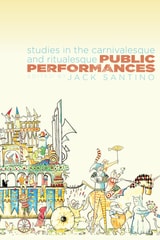
Public Performances
Studies in the Carnivalesque and RitualesqueJack Santino
Utah State University Press, 2024
Public Performances offers a deep and wide-ranging exploration of relationships among genres of public performance and of the underlying political motivations they share. Illustrating the connections among three themes—the political, the carnivalesque, and the ritualesque—this volume provides rich and comprehensive insight into public performance as an assertion of political power.
Contributors consider how public genres of performance express not only celebration but also dissent, grief, and remembrance; examine the permeability of the boundaries between genres; and analyze the approval or regulation of such events by municipalities and other institutions. Where the particular use of public space is not sanctioned or where that use meets with hostility from institutions or represents a critique of them, performers are effectively reclaiming public space to make public statements on their own terms—an act of popular sovereignty.
Through these concepts, Public Performances distinguishes the sometimes overlapping dimensions of public symbolic display. Carnival, and thus the carnivalesque, is understood to possess tacit social permission for unconventional or even deviant performance, on the grounds that normal social order will resume when the performance concludes. Ritual, and the ritualesque, leverages a deeper symbolic sensibility, one believed—or at least intended—by the participants to effect transformative, longer-term change.
Contributors: Roger D. Abrahams, John Borgonovo, Laurent Sébastien Fournier, Lisa Gilman, Barbara Graham, David Harnish, Samuel Kinser, Scott Magelssen, Elena Martinez, Pamela Moro, Beverly J. Stoeltje, Daniel Wojcik, Dorothy L. Zinn