Results by title
1927 books match the query 'Technology & Engineering' and 115 start with p

PCE 1604 Series, Frigate Panter
Henk Visser
Amsterdam University Press, 2023

Pacific Northwest Cheese
A HistoryTami Parr
Oregon State University Press, 2013
For years, farmers in the Pacific Northwest made and sold cheese to support themselves, but over time the craft of cheesemaking became a profitable industry and production was consolidated into larger companies and cooperatives. Eventually, few individual cheesemakers were left in the region. In the late sixties and early seventies, influenced by the counterculture and back-to-the-land movements, the number of small farms and cheesemakers began to grow, initiating an artisan cheese renaissance that continues today.
Along with documenting the history of cheese in the region, Parr reveals some of the Pacific Northwest’s untold cheese stories: the fresh cheese made on the Oregon Trail, the region’s thriving blue cheese and regional swiss cheese makers, and the rise of goat’s milk and goat’s milk cheese (not the modern phenomenon many assume it to be).
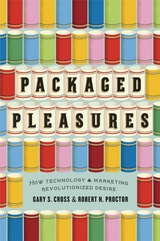
Packaged Pleasures
How Technology and Marketing Revolutionized DesireGary S. Cross and Robert N. Proctor
University of Chicago Press, 2014
In Packaged Pleasures, Gary S. Cross and Robert N. Proctor delve into an uncharted chapter of American history, shedding new light on the origins of modern consumer culture and how technologies have transformed human sensory experience. In the space of only a few decades, junk foods, cigarettes, movies, recorded sound, and thrill rides brought about a revolution in what it means to taste, smell, see, hear, and touch. New techniques of boxing, labeling, and tubing gave consumers virtually unlimited access to pleasures they could simply unwrap and enjoy. Manufacturers generated a seemingly endless stream of sugar-filled, high-fat foods that were delicious but detrimental to health. Mechanically rolled cigarettes entered the market and quickly addicted millions. And many other packaged pleasures dulled or displaced natural and social delights. Yet many of these same new technologies also offered convenient and effective medicines, unprecedented opportunities to enjoy music and the visual arts, and more hygienic, varied, and nutritious food and drink. For better or for worse, sensation became mechanized, commercialized, and, to a large extent, democratized by being made cheap and accessible. Cross and Proctor have delivered an ingeniously constructed history of consumerism and consumer technology that will make us all rethink some of our favorite things.
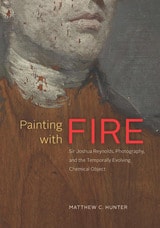
Painting with Fire
Sir Joshua Reynolds, Photography, and the Temporally Evolving Chemical ObjectMatthew C. Hunter
University of Chicago Press, 2019
Tracing the long arc of chemically produced and reproduced art from the 1670s through the 1860s, the book reconsiders early photography by situating it in relationship to Reynolds’s replicated paintings and the literal engines of British industry. By following the chemicals, Painting with Fire remaps familiar stories about academic painting and pictorial experiment amid the industrialization of chemical knowledge.
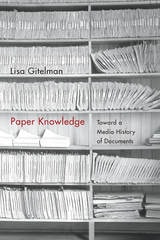
Paper Knowledge
Toward a Media History of DocumentsLisa Gitelman
Duke University Press, 2014

Parabolic Equation Methods for Electromagnetic Wave Propagation
Mireille Levy
The Institution of Engineering and Technology, 2000
Passive Radars on Moving Platforms
Diego Cristallini
The Institution of Engineering and Technology, 2023

Patent Politics
Life Forms, Markets, and the Public Interest in the United States and EuropeShobita Parthasarathy
University of Chicago Press, 2017
To demonstrate this, Parthasarathy takes readers through a particularly fierce and prolonged set of controversies over patents on life forms linked to important advances in biology and agriculture and potentially life-saving medicines. Comparing battles over patents on animals, human embryonic stem cells, human genes, and plants in the United States and Europe, she shows how political culture, ideology, and history shape patent system politics. Clashes over whose voices and which values matter in the patent system, as well as what counts as knowledge and whose expertise is important, look quite different in these two places. And through these debates, the United States and Europe are developing very different approaches to patent and innovation governance. Not just the first comprehensive look at the controversies swirling around biotechnology patents, Patent Politics is also the first in-depth analysis of the political underpinnings and implications of modern patent systems, and provides a timely analysis of how we can reform these systems around the world to maximize the public interest.
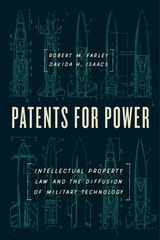
Patents for Power
Intellectual Property Law and the Diffusion of Military TechnologyRobert M. Farley and Davida H. Isaacs
University of Chicago Press, 2020
The book probes two major issues: the effect of IP law on innovation itself and the effect of IP law on the international diffusion, or sharing, of technology. Discussing a range of inventions, from the AK-47 rifle to the B-29 Superfortress bomber to the MQ-1 Predator drone, the authors show how IP systems (or their lack) have impacted domestic and international relations across a number of countries, including the United States, Russia, China, and South Korea. The study finds, among other results, that while the open nature of the IP system may encourage industrial espionage like cyberwarfare, increased state uptake of IP law is helping to establish international standards for IP protection. This clear-eyed approach to law and national security is thus essential for anyone interested in history, political science, and legal studies.
Patient-Centered Digital Healthcare Technology
Novel applications for next generation healthcare systemsLeonard Goldschmidt
The Institution of Engineering and Technology, 2021

People in Control
Human factors in control room designJan Noyes
The Institution of Engineering and Technology, 2001

People of the Machine
Computers and Human Reason in the Cold WarJoy Rohde
University of Chicago Press, 0
How Cold War computational experts invested in diplomacy, world peace, and human agency created systems that threatened democratic values.
Beginning in the 1950s, international relations experts and United States government officials built novel computer systems designed to make foreign policy knowledge and practice more scientific. Human reason, they feared, might not be enough to guarantee the survival of American democracy in a nuclear-armed world. They didn’t seek to replace humans with machines; they hoped computers would sift information or provide interactive models that analysts could use to make better decisions. But as they struggled to deliver on their ambitious goals, and as the Defense Department became more involved in their projects after the Vietnam War, their commitments to advancing knowledge, policy agency, and peace gave way to very different computing systems, ones in which correlation replaces causality and prediction replaces understanding.
In People of the Machine, Joy Rohde reveals how even the best-intentioned attempts at fostering political engagement and human autonomy evolved into an anti-democratic nightmare. Her political and intellectual history shows how the subtle and corrosive effects of technological change set the template for today’s political and conceptual regimes. Doing so reveals not just the roots of contemporary inequality and disfranchisement but how thoroughly that antihumanism has been baked into our institutions and norms.
Performance, Modelling and Reliability of Photovoltaic Systems
George E. Georghiou
The Institution of Engineering and Technology, 2020

Periodic Control of Power Electronic Converters
Keliang Zhou
The Institution of Engineering and Technology, 2017

Persistent Progressives
The Rocky Mountain Farmers UnionJohn F. Freeman
University Press of Colorado, 2015
Using data spanning decades, author John Freeman covers the founding of the RMFU in 1907 until the present, demonstrating how members continually sought to control the means of production and marketing by forming cooperatives, providing consumer services, and engaging in politics. Powering this evolution was a group of “practical idealists”—the Farmers Union leaders and titular persistent progressives who shaped the organization’s growth and expansion. Initiated by Jim Patton, who brought the organization out of its oppositional roots and into its cooperative advocacy, the RMFU passed to John Stencel and then David Carter, joining hands with agricultural conservationists and small organic producers along the way to carry the torch for progressive agrarianism in today’s urbanized world. Shaken but undeterred by some notable failures, its leadership remains convinced of the efficacy of cooperatives as a means to achieve justice for all.
Discussing the broader social, economic, political, and environmental issues related to farming, ranching, and urbanization, Persistent Progressives seamlessly blends regional history with ongoing issues of agricultural and economic development.

Perspectives on Food-Safety Issues of Animal-Derived Foods
Steven C. Ricke
University of Arkansas Press, 2010
Petroforms
Oil and the Shaping of Nigerian AestheticsHelen Kapstein
West Virginia University Press, 2025
2026 PROSE Award Finalist, Humanities: Literature
Petroforms contributes a much-needed theory of form and genre to the cutting-edge field of petrocriticism, itself an offshoot of developments in postcolonial ecocriticism. Studies of resource fiction and inquiries in the energy humanities have recently taken their rightful place as necessary reflections on the role of the literary imagination in intervening in the Anthropocene as we find ourselves precariously placed in the face of a fossil fuel crisis, climate change, and mass extinctions.
With Petroforms, Helen Kapstein undertakes close readings of a range of Nigerian aesthetic forms: short stories, romance novels, documentary film, the “Nollywood” film industry, fine art sculpture, and poetry. She uses these forms to argue that the demands of paying attention to petroleum extraction, production, consumption, and distribution in the creation of resource fictions must necessarily alter and affect conventional forms and structures. What results is a new set of genre-bending forms, like documentary film that we can read as horror, in response to the forceful and fluid demands of the petroleum industry and its master narrative.
Nigeria is one of the world’s largest oil-producing nations, in which that production is concentrated in the Niger Delta, resulting in a local environment that has been steadily degraded by oil spills, flares, pollution, and contamination, and a local culture shaped by false scarcity in a space of abundance, murderous politics, and escalating violence. At the same time as the Niger Delta grounds Kapstein’s argument in its own political realities and cultural responses, Nigeria’s participation in a global economy of petrodependency allows her theory of petroforms to be extended and applied more generally.
What Peter Hitchcock calls “oil’s generative law” is that it is “everywhere and obvious, it must be opaque or otherwise fantastic.” He means the coexistence of oil’s taken-for-granted qualities is something constitutive of every level of everyday life and its spectacular displays—gushers, spills, explosions. Oil’s nature, the fact that it is everywhere, unctuously oozing into every corner of everyday life, means that it constantly spills over out of our existing forms, genres, and systems, demanding accommodation. To try to contain it, we create new forms. Thus, a petroform is simultaneously reactionary (a necessary response to oil’s pressures, a by-product of the commodity itself) and resistant (an attempt at containment, at generating a retort to the very thing that shapes it). Each form figures oil and then configures and reconfigures itself in reaction to it.
Phase Noise in Signal Sources
Theory and applicationsW.P. Robins
The Institution of Engineering and Technology, 1984

Phase-Locked Frequency Generation and Clocking
Architectures and circuits for modern wireless and wireline systemsWoogeun Rhee
The Institution of Engineering and Technology, 2020
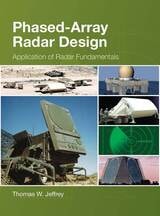
Phased-Array Radar Design
Application of radar fundamentalsThomas W. Jeffrey
The Institution of Engineering and Technology, 2009
Photonic Integrated Circuits
Integration platforms, building blocks and design rulesGuillermo Carpintero
The Institution of Engineering and Technology, 2019
Photonics for Radar Networks and Electronic Warfare Systems
Antonella Bogoni
The Institution of Engineering and Technology, 2019
Photovoltaic Technology for Hot and Arid Environments
Brahim Aïssa
The Institution of Engineering and Technology, 2023
Physical Biometrics for Hardware Security of DSP and Machine Learning Coprocessors
Anirban Sengupta
The Institution of Engineering and Technology, 2023
Physical Layer Security for 6G Networks
Trung Q. Duong
The Institution of Engineering and Technology, 2024

Physical Layer Security for Wireless Sensing and Communication
Hüseyin Arslan
The Institution of Engineering and Technology, 2022
Physics and Technology of Heterojunction Devices
D. Vernon Morgan
The Institution of Engineering and Technology, 1991
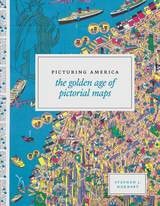
Picturing America
The Golden Age of Pictorial MapsStephen J. Hornsby
University of Chicago Press, 2017
Picturing America is the first book to showcase this vivid and popular genre of maps. Geographer Stephen J. Hornsby gathers together 158 delightful pictorial jewels, most drawn from the extensive collections of the Library of Congress. In his informative introduction, Hornsby outlines the development of the cartographic form, identifies several representative artists, describes the process of creating a pictorial map, and considers the significance of the form in the history of Western cartography. Organized into six thematic sections, Picturing America covers a vast swath of the pictorial map tradition during its golden age, ranging from “Maps to Amuse” to “Maps for War.” Hornsby has unearthed the most fascinating and visually striking maps the United States has to offer: Disney cartoon maps, college campus maps, kooky state tourism ads, World War II promotional posters, and many more. This remarkable, charming volume’s glorious full-color pictorial maps will be irresistible to any map lover or armchair traveler.
Pivotal Strategies
Claiming Writing Studies as DisciplineLynn C. Lewis
Utah State University Press, 2024
Because undergraduate degrees in writing studies are relatively new, claiming the discipline has required reinvention and revision at personal and professional levels far different than any other discipline. Suspicions about the viability of the discipline linger in many departments and universities, as well as outside the academy, leading writing studies scholars to develop innovative strategies to deal with covertly hostile attitudes. Within the collection, contributors name explicit claiming strategies from the discipline’s beginnings to the contemporary moment, locating opportune spaces, negotiating identities and fostering resilience, and developing allegiances by foregrounding their embodiment as underrepresented members of academia through a commitment to social justice and equity.
Responding to current conversations on the worth of education with honest stories about the burdens and joys of becoming and being an academic, Pivotal Strategies features a spectrum of voices across racial, gender, class, and age categories. This collection not only makes the discipline more visible but also helps map the contemporary state of writing studies.
Planet Management
Limits to Growth, Computer Simulation, and the Emergence of Global SpacesFernando Elichirigoity
Northwestern University Press, 1999
Planet Work
Rethinking Labor and Leisure in the AnthropoceneRyan Hediger
Bucknell University Press, 2023

Playful Frames
Styles of Widescreen CinemaSteven Rybin
Rutgers University Press, 2024

Playing with Feelings
Video Games and AffectAubrey Anable
University of Minnesota Press, 2018
How gaming intersects with systems like history, bodies, and code
Why do we so compulsively play video games? Might it have something to do with how gaming affects our emotions? In Playing with Feelings, scholar Aubrey Anable applies affect theory to game studies, arguing that video games let us “rehearse” feelings, states, and emotions that give new tones and textures to our everyday lives and interactions with digital devices. Rather than thinking about video games as an escape from reality, Anable demonstrates how video games—their narratives, aesthetics, and histories—have been intimately tied to our emotional landscape since the emergence of digital computers.
Looking at a wide variety of video games—including mobile games, indie games, art games, and games that have been traditionally neglected by academia—Anable expands our understanding of the ways in which these games and game studies can participate in feminist and queer interventions in digital media culture. She gives a new account of the touchscreen and intimacy with our mobile devices, asking what it means to touch and be touched by a game. She also examines how games played casually throughout the day create meaningful interludes that give us new ways of relating to work in our lives. And Anable reflects on how games allow us to feel differently about what it means to fail.
Playing with Feelings offers provocative arguments for why video games should be seen as the most significant art form of the twenty-first century and gives the humanities passionate, incisive, and daring arguments for why games matter.
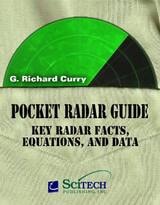
Pocket Radar Guide
Key radar facts, equations, and dataG. Richard Curry
The Institution of Engineering and Technology, 2010
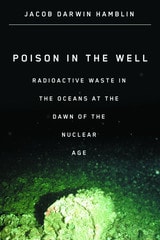
Poison in the Well
Radioactive Waste in the Oceans at the Dawn of the Nuclear AgeHamblin, Jacob D
Rutgers University Press, 2009
In the early 1990s, Russian President Boris Yeltsin revealed that for the previous thirty years the Soviet Union had dumped vast amounts of dangerous radioactive waste into rivers and seas in blatant violation of international agreements. The disclosure caused outrage throughout the Western world, particularly since officials from the Soviet Union had denounced environmental pollution by the United States and Britain throughout the cold war.
Poison in the Well provides a balanced look at the policy decisions, scientific conflicts, public relations strategies, and the myriad mishaps and subsequent cover-ups that were born out of the dilemma of where to house deadly nuclear materials. Why did scientists and politicians choose the sea for waste disposal? How did negotiations about the uses of the sea change the way scientists, government officials, and ultimately the lay public envisioned the oceans? Jacob Darwin Hamblin traces the development of the issue in Western countries from the end of World War II to the blossoming of the environmental movement in the early 1970s.
This is an important book for students and scholars in the history of science who want to explore a striking case study of the conflicts that so often occur at the intersection of science, politics, and international diplomacy.

Polarimetric Radar Signal Processing
Augusto Aubry
The Institution of Engineering and Technology, 2022
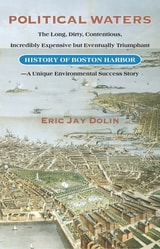
Political Waters
The Long, Dirty, Contentious, Incredibly Expensive but Eventually Triumphant History of Boston Harbor-A Unique Environmental Success StoryEric Jay Dolin
University of Massachusetts Press, 2004
Boston Harbor served as a colonial gateway to the world, witnessed the Boston Tea Party, and helped the community transform itself from an outpost of a few hardy settlers into a bustling metropolis and self-proclaimed hub of the universe. Yet for hundreds of years Boston Harbor was also a cesspool. Long before Bostonians dumped tea into the harbor to protest English taxes, they dumped sewage there.
As the Boston area grew and prospered, its sewage problems worsened, as did the harbor's health, to the point where in the 1980s it was considered the most polluted harbor in the country and ridiculed as the “harbor of shame.” Then, in one of the most impressive environmental comebacks in American history, Boston Harbor was dramatically cleaned up. All it took was two lawsuits, two courts, dozens of lawyers, the creation of a powerful sewage authority, thousands of workers, millions of labor hours, and billions of dollars.
Sewage management is rarely as compelling and exciting as higher profile environmental issues such as global climate change, preserving endangered species, or protecting tropical rainforests. But it can be, as Eric Jay Dolin shows in this engaging narrative account. Boston's struggle to deal with its sewage is an epic story of failure and success, replete with colorful characters, political, bureaucratic, and legal twists and turns, engineering feats, and massive amounts of money. In the end, success hinged on the often overlooked yet monumentally important act of responsibly disposing of the waste people produce every day.
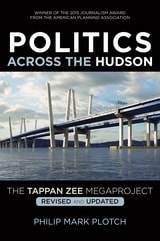
Politics Across the Hudson
The Tappan Zee MegaprojectPhilip Mark Plotch
Rutgers University Press, 2015
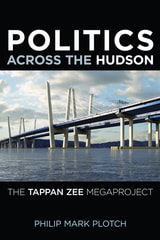
The State of New York built one of the world’s longest, widest, and most expensive bridges—the new Tappan Zee Bridge—stretching more than three miles across the Hudson River, approximately thirteen miles north of New York City. In Politics Across the Hudson, urban planner Philip Plotch offers a behind-the-scenes look at three decades of contentious planning and politics centered around this bridge, recently renamed for Governor Mario M. Cuomo, the state's governor from 1983 to 1994. He reveals valuable lessons for those trying to tackle complex public policies while also confirming our worst fears about government dysfunction.
Politics Across the Hudson
The Tappan Zee MegaprojectPhilip Mark Plotch
Rutgers University Press, 2015
Polynomial Methods in Optimal Control and Filtering
Kenneth Hunt
The Institution of Engineering and Technology, 1993
Port Newark and the Origins of Container Shipping
Angus Kress Gillespie
Rutgers University Press, 2023
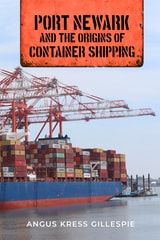
This fascinating study traces the birth of containerization to Port Newark, New Jersey, in 1956 when trucker Malcom McLean thought of a brilliant new way to transport cargo. It tells the story of how Port Newark grew rapidly as McLean’s idea was backed by both New York banks and the US military, who used containerization to ship supplies to troops in Vietnam. Angus Gillespie takes us behind the scenes of today’s active container shipping operations in Port Newark, talking to the pilots who guide the ships into port, the Coast Guard personnel who help manage the massive shipping traffic, the crews who unload the containers, and even the chaplains who counsel and support the mariners. Port Newark shines a spotlight on the unsung men and women who help this complex global shipping operation run smoothly.
Since McLean's innovation, Port Newark has expanded with the addition of the nearby Elizabeth Marine Terminal. This New Jersey complex now makes up the busiest seaport on the East Coast of the United States. Some have even called it “America’s Front Door.” The book tells the story of the rapid growth of worldwide containerization, and how Port Newark has adapted to bigger ships with deeper channels and a raised bridge. In the end, there is speculation of the future of this port with ever-increasing automation, artificial intelligence, and automation.

Portable Biosensors and Point-of-Care Systems
Spyridon E. Kintzios
The Institution of Engineering and Technology, 2017
Portals
A Treatise on Internet-Distributed TelevisionAmanda D. Lotz
Michigan Publishing Services, 2017
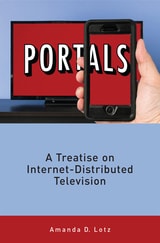
Portals: A Treatise on Internet-Distributed Television pushes understandings of the business of television to keep pace with the considerable technological change of the last decade. It explains why shows such as Orange is the New Black or Transparent are indeed television despite coming to screens over internet connection and in exchange for a monthly fee. It explores how internet-distributed television is able to do new things – particularly, allow different people to watch different shows chosen from a library of possibilities. This technological ability allows new audience behaviors and new norms in making television.
Portals are the “channels” of internet-distributed television, and Portals identifies how the task of curating a library of shows differs from channels’ task of building a schedule. It explores the business model—subscriber funding—that supports many portals, and identifies the key differences from advertiser or direct purchase. Portals considers what we know about the future of television, even though we remain early in a process of transformative change.

Post-processing Techniques in Antenna Measurement
Manuel Sierra Castañer
The Institution of Engineering and Technology, 2019
Power Circuit Breaker Theory and Design
C.H. Flurscheim
The Institution of Engineering and Technology, 1982
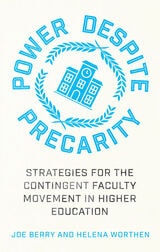
Power Despite Precarity
Strategies for the Contingent Faculty Movement in Higher EducationJoe Berry
Pluto Press, 2021
Higher education is the site of an ongoing conflict. At the heart of this struggle are the precariously employed faculty 'contingents' who work without basic job security, living wages or benefits. Yet they have the incentive and, if organized, the power to shape the future of higher education.
Power Despite Precarity is part history, part handbook and a wholly indispensable resource in this fight. Joe Berry and Helena Worthen outline the four historical periods that led to major transitions in the worklives of faculty of this sector. They then take a deep dive into the 30-year-long struggle by California State University lecturers to negotiate what is recognized as the best contract for contingents in the US.
The authors ask: what is the role of universities in society? Whose interests should they serve? What are the necessary conditions for the exercise of academic freedom? Providing strategic insight for activists at every organizing level, they also tackle 'troublesome questions' around legality, union politics, academic freedom and how to recognize friends (and foes) in the struggle.
Power Despite Precarity
Strategies for the Contingent Faculty Movement in Higher EducationJoe Berry
Pluto Press, 2021
Higher education is the site of an ongoing conflict. At the heart of this struggle are the precariously employed faculty 'contingents' who work without basic job security, living wages or benefits. Yet they have the incentive and, if organized, the power to shape the future of higher education.
Power Despite Precarity is part history, part handbook and a wholly indispensable resource in this fight. Joe Berry and Helena Worthen outline the four historical periods that led to major transitions in the worklives of faculty of this sector. They then take a deep dive into the 30-year-long struggle by California State University lecturers to negotiate what is recognized as the best contract for contingents in the US.
The authors ask: what is the role of universities in society? Whose interests should they serve? What are the necessary conditions for the exercise of academic freedom? Providing strategic insight for activists at every organizing level, they also tackle 'troublesome questions' around legality, union politics, academic freedom and how to recognize friends (and foes) in the struggle.
Power Distribution Automation
Biswarup Das
The Institution of Engineering and Technology, 2016

Power Distribution System State Estimation
Elizete Maria Lourenço
The Institution of Engineering and Technology, 2022
Power Electronic Converters and Systems
Applications, Volume 2Marcelo Godoy Simões
The Institution of Engineering and Technology, 2024