Results by title
71 books match the query 'Textbooks for foreign speakers' and 2 start with p
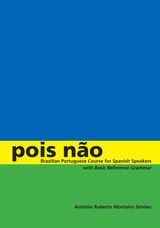
Pois não
Brazilian Portuguese Course for Spanish Speakers, with Basic Reference GrammarBy Antônio Roberto Monteiro Simões
University of Texas Press, 2008
Spanish speakers can learn Brazilian Portuguese much more rapidly than any other language, and thousands of students have used Antônio Simões's text/workbook Com licença: Brazilian Portuguese for Spanish Speakers to make the transition between the two languages. Recognizing the need for a text that incorporates current cultural references and the latest language pedagogy, Simões now offers Pois não: Brazilian Portuguese Course for Spanish Speakers, with Basic Reference Grammar.
Pois não contrasts Portuguese and Spanish, which accomplishes two main goals. It teaches the equivalent of one year of college Portuguese in one semester, three times a week, to Spanish speakers who also have a solid understanding of English. Additionally, the book serves as a basic reference guide to Brazilian Portuguese for the same audience.
Pois não can be used by students in the classroom or by independent learners. Users of the book may focus on the drills alone, concentrate on both the explanations and drills, or use the book as a reference for consultation only. Answers to all of the exercises are included in the book. Audio and video recordings by native Brazilian speakers of dialogues that appear in the book can be downloaded at https://utexas.box.com/v/PoisNaoAudio.
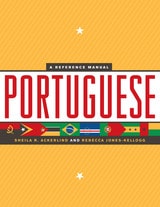
Portuguese
A Reference ManualBy Sheila R. Ackerlind and Rebecca Jones-Kellogg
University of Texas Press, 2011
An essential, comprehensive guide for all who are interested in learning the Portuguese language and mastering its complexities, Portuguese: A Reference Manual supplements the phonetic and grammatical explanations offered in basic textbooks. While the Manual focuses on Brazilian Portuguese, it incorporates European Portuguese variants and thus provides a more complete description of the language. Accessible to non-linguists and novice language learners, as well as informative for instructors of Portuguese and specialists in other languages, this guide incorporates the Orthographic Accord (in effect since 2009–2010), which attempts to standardize Portuguese orthography.
The Manual reflects the language as it is currently taught at both the undergraduate and graduate levels by providing detailed explanations of the sound and writing systems and the grammar of the principal Portuguese dialects. A reference guide rather than a textbook, the Manual also provides extensive verb charts, as well as comparisons of Portuguese with English and Spanish.