Results by title
493 books match the query 'Theory' and 23 start with p
Party Competition and Responsible Party Government
A Theory of Spatial Competition Based Upon Insights from Behavioral Voting ResearchJames Adams
University of Michigan Press, 2001
Passions and Constraint
On the Theory of Liberal DemocracyStephen Holmes
University of Chicago Press, 1995
According to Holmes, three elements of classical liberal theory are commonly used to attack contemporary liberalism as antagonistic to genuine democracy and the welfare state: constitutional constraints on majority rule, the identification of individual freedom with an absence of government involvement, and a strong emphasis on the principle of self-interest. Through insightful essays on Hobbes's analysis of the English Civil War in Behemoth, Bodin's writings on the benefits of limited government, and Mill's views on science and politics, Holmes shows that these basic principles provide, to the contrary, a necessary foundation for the development of democratic, regulatory, and redistributionist politics in the modern era.
Holmes argues that the aspirations of liberal democracy—including individual liberty, the equal dignity of citizens, and a tolerance for diversity—are best understood in relation to two central themes of classical liberal theory: the psychological motivations of individuals and the necessary constraint on individual passions provided by institutions. Paradoxically, Holmes argues that such institutional restraints serve to enable, rather than limit, effective democracy.
In explorations of subjects ranging from self-interest to majoritarianism to "gag rules," Holmes shows that limited government can be more powerful than unlimited government—indeed, that liberalism is one of the most effective philosophies of state building ever contrived. By restricting the arbitrary powers of government officials, Holmes states, a liberal constitution can increase the state's capacity to focus on specific problems and mobilize collective resources for common purposes.
Passions and Constraint is an assessment of what that tradition has meant and what it can mean today.
Patterns, Thinking, and Cognition
A Theory of JudgmentHoward Margolis
University of Chicago Press, 1988
Illusions of judgment—standard anomalies where people consistently misjudge or misperceive what is logically implied or really present—are often used in cognitive science to explore the workings of the cognitive process. The explanations given for these anomalous results have generally explained only the anomaly under study and nothing more. Margolis provides a provocative and systematic analysis of these illusions, which explains why such anomalies exist and recur.
Offering empirical applications of his theory, Margolis turns to historical cases to show how an individual's cognitive repertoire—the available cognitive patterns and their relation to cues—changes or resists changes over time. Here he focuses on the change in worldview occasioned by the Copernican discovery: not only how an individual might come to see things in a radically new way, but how it is possible for that new view to spread and become the dominant one. A reanalysis of the trial of Galileo focuses on social cognition and its interactions with politics.
In challenging the prevailing paradigm for understanding how the human mind works, Patterns, Thinking, and Cognition is certain to stimulate fruitful debate.

Perception, Theory, and Commitment
The New Philosophy of ScienceHarold I. Brown
University of Chicago Press, 1979
empiricist tradition and then the more historical and process-oriented
approach he calls the “new philosophy of science.” Examining the two
together, he describes the very transition between them as an example
of the kind of change in historical tradition with which the new
philosophy of science concerns itself.
“I would recommend it to every historian of science and to every
philosopher of science. . . . I found it clear, readable, accurate,
cogent, insightful, perceptive, judicious, and full of original
ideas.”
—Maurice A. Finocchiaro, Isis
“The best and most original aspect of the book is its overall
conception.”
—Thomas S. Kuhn
Harold I. Brown is professor of philosophy at Northern Illinois
University.
Pervasive Prejudice?
Unconventional Evidence of Race and Gender DiscriminationIan Ayres
University of Chicago Press, 2001
In Pervasive Prejudice? Ian Ayres confronts these questions and more. In a series of important studies he finds overwhelming evidence that in a variety of markets—retail car sales, bail bonding, kidney transplantation, and FCC licensing—blacks and females are consistently at a disadvantage. For example, when Ayres sent out agents of different races and genders posing as potential buyers to more than 200 car dealerships in Chicago, he found that dealers regularly charged blacks and women more than they charged white men. Other tests revealed that it is commonly more difficult for blacks than whites to receive a kidney transplant because of federal regulations. Moreover, Ayres found that minority male defendants are frequently required to post higher bail bonds than their Caucasian counterparts.
Traditional economic theory predicts that free markets should drive out discrimination, but Ayres's startling findings challenge that position. Along with empirical research, Ayres offers game—theoretic and other economic methodologies to show how prejudice can enter the bargaining process even when participants are supposedly acting as rational economic agents. He also responds to critics of his previously published studies included here. These studies suggest that race and gender discrimination is neither a thing of the past nor merely limited to the handful of markets that have been the traditional focus of civil rights laws.

Phase Noise in Signal Sources
Theory and applicationsW.P. Robins
The Institution of Engineering and Technology, 1984
Phenomenal Blackness
Black Power, Philosophy, and TheoryMark Christian Thompson
University of Chicago Press, 2022
Phenomenal Blackness examines the changing interdisciplinary investments of key mid-century Black writers and thinkers, including the growing interest in German philosophy and critical theory. Mark Christian Thompson analyzes this shift in intellectual focus across the post-war decades, placing Black Power thought in a philosophical context.
Prior to the 1960s, sociologically oriented thinkers such as W. E. B. Du Bois had understood Blackness as a singular set of socio-historical characteristics. In contrast, writers such as Amiri Baraka, James Baldwin, Angela Y. Davis, Eldridge Cleaver, and Malcolm X were drawn to notions of an African essence, an ontology of Black being. With these perspectives, literary language came to be seen as the primary social expression of Blackness. For this new way of thinking, the works of philosophers such as Adorno, Habermas, and Marcuse were a vital resource, allowing for continued cultural-materialist analysis while accommodating the hermeneutical aspects of Black religious thought. Thompson argues that these efforts to reimagine Black singularity led to a phenomenological understanding of Blackness—a “Black aesthetic dimension” wherein aspirational models for Black liberation might emerge.

Phenomenology and Theory of Science
Aron Gurwitsch
Northwestern University Press, 1974

Physical Attractiveness and the Theory of Sexual Selection
Results from Five PopulationsDoug Jones with a foreword by Donald Symons
University of Michigan Press, 1996
Pivotal Politics
A Theory of U.S. LawmakingKeith Krehbiel
University of Chicago Press, 1998

Playing Sociology
Theory and Games for Coping with Mimetic Crisis and Social ConflictMartino Doni
Michigan State University Press, 2024

Pluralism in Theory and Practice
Richard McKeon and American PhilosophyEugene Garver
Vanderbilt University Press, 2000
Political Arithmetic
Simon Kuznets and the Empirical Tradition in EconomicsRobert William Fogel, Enid M. Fogel, Mark Guglielmo, and Nathaniel Grotte
University of Chicago Press, 2013
With Political Arithmetic, Nobel Prize–winning economist Robert Fogel and his collaborators tell the story of economist Simon Kuznets, the founding of the National Bureau of Economic Research, and the creation of the concept of GNP, which for the first time enabled us to measure the performance of entire economies. The book weaves together the many strands of political and economic thought and historical pressures that together created the demand for more detailed economic thinking—Progressive-era hopes for activist government, the production demands of World War I, Herbert Hoover’s interest in business cycles as President Harding’s commerce secretary, and the catastrophic economic failures of the Great Depression—and shows how, through trial and error, measurement and analysis, economists such as Kuznets rose to the occasion and in the process built a discipline whose knowledge could be put to practical use in everyday decision-making.
The product of a lifetime of studying the workings of economies and skillfully employing the tools of economics, Political Arithmetic is simultaneously a history of a key period of economic thought and a testament to the power of applied ideas.
Political Learning in Adulthood
A Sourcebook of Theory and ResearchEdited by Roberta S. Sigel
University of Chicago Press, 1989
In Political Learning in Adulthood, social scientists for the first time examine the changes in political outlook and behavior that take place during the adult years, providing an invaluable overview of the problems, theories, and methodological approaches that characterize the field of political socialization. They consider which political values remain constant and which are subject to change, and they explore the ways in which both ordinary and extraordinary life events affect adults' political worldviews. Among specific topics considered are the effects of age and aging, the relation between participation in the work force and the development and expression of political views, continuity and change in the wake of revolutionary social and political movements, and the effects of such traumatic and life-threatening situations as war and terrorist activity.
Politicizing Digital Space
Theory, the Internet, and Renewing DemocracyTrevor Garrison Smith
University of Westminster Press, 2017
The objective of this book is to outline how a radically democratic politics can be reinvigorated in theory and practice through the use of the internet. The author argues that politics in its proper sense can be distinguished from anti-politics by analyzing the configuration of public space, subjectivity, participation, and conflict. Each of these terrains can be configured in a more or less political manner, though the contemporary status quo heavily skews them towards anti-political configuration.
Using this understanding of what exactly politics entails, this book considers how the internet can both help and hinder efforts to move each area in a more political direction. By explicitly interpreting contemporary theories of the political in terms of the internet, this analysis avoids the twin traps of both technological determinism and technological cynicism.
Raising awareness of what the word ‘politics’ means, the author develops theoretical work by Arendt, Rancière, Žižek and Mouffe to present a clear and coherent view of how in theory, politics can be digitized and alternatively how the internet can be deployed in the service of trulydemocratic politics.
Polycentric Games and Institutions
Readings from the Workshop in Political Theory and Policy AnalysisMichael D. McGinnis, Editor
University of Michigan Press, 2000
The readings in this volume illustrate several varieties of institutional analysis. Each reading builds upon the foundation of game theory to address similar sets of questions concerning institutions and self-governance. The chapters in the first section lay out interrelated frameworks for analysis. Section two illustrates the normative component of institutions and their effects on human behavior. Readings in the following two sections detail how these frameworks have been applied to models of specific situations. Section five presents a modeling exercise exploring the functions of monitoring and enforcement, and the sixth section discusses approaches to the problems of complexity that confront individuals playing polycentric games. The final readings provide overviews of experimental research on the behavior of rational individuals.
Contributors include Arun Agrawal, Sue E. S. Crawford, Clark C. Gibson, Roberta Herzberg, Larry L. Kiser, Michael McGinnis, Stuart A. Marks, Elinor Ostrom, Vincent Ostrom, James Walker, Franz J. Weissing, John T. Williams, and Rick Wilson.
Michael McGinnis is Associate Professor, Department of Political Science and Co-Associate Director, Workshop in Political Theory and Policy Analysis, Indiana University.

Pornography, the Theory
What Utilitarianism Did to ActionFrances Ferguson
University of Chicago Press, 2004
Positive Political Theory II
Strategy and StructureDavid Austen-Smith and Jeffrey S. Banks
University of Michigan Press, 2005
other book like it.”
—Norman Schofield, Washington University
“The authors succeed brilliantly in tackling a large
number of important questions concerning the
interaction among voters and elected representatives
in the political arena, using a common, rigorous
language.”
—Antonio Merlo, University of Pennsylvania
Positive Political Theory II: Strategy and Structure
is the second volume in Jeffrey Banks and David
Austen-Smith’s monumental study of the links
between individual preferences and collective choice.
The book focuses on representative systems, including
both elections and legislative decision-making
processes, clearly connecting individual preferences to
collective outcomes. This book is not a survey. Rather,
it is the coherent, cumulative result of the authors’
brilliant efforts to indirectly connect preferences to
collective choice through strategic behaviors such as
agenda-selection and voting.
The book will be an invaluable reference and teaching
tool for economists and political scientists, and an
essential companion to any scholar interested in the
latest theoretical advances in positive political theory.
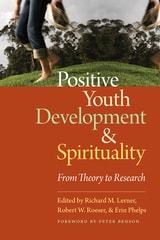
Positive Youth Development and Spirituality
From Theory to ResearchRichard M. Lerner
Templeton Press, 2008
<p>Bringing together a never-before-assembled network of biologists, psychologists, and sociologists, <em>Positive Youth Development and Spirituality</em> scientifically examines how spirituality and its cultivation may affect the positive development of adolescents. </p>
<p>Chapters provide groundbreaking new discussions of conceptual, theoretical, definitional, and methodological issues that need to be addressed when exploring the relationships between spirituality and development. Throughout the book, contributors recommend ways in which the research on the spirituality/positive youth development connection may be integral in building the larger field of spiritual development as a legitimate and active domain of developmental science. This volume, which is sure to be seen as a seminal contribution to a field in need of theoretical underpinnings, will be of interest to scholars and scientists in the fields of biology and the social and behavioral sciences.</p>
<p>Contributors include: Mona Abo-Zena, Jeffrey Jensen Arnnett, Peter L. Benson, Marina Umaschi Bers, Aerika Brittian, William Damon, Angela M. DeSilva, Jacquelynne S. Eccles, David Henry Feldman, Simon Gächter, Elena L. Grigorenko, Sonia S. Isaac, Lene Arnett Jensen, Carl N. Johnson, Linda Juang, Pamela Ebstyne King, Richard M. Lerner, Jennifer Menon, Na'ilah Sued Nasir, Guerda Nicolas, Toma´š Paus, Stephen C. Peck, Erin Phelps, Alan P. Poey, Robert W. Roeser, W. George Scarlett, Lonnie R. Sherrod, Gabriel S. Spiewak, Chris Starmer, Moin Syed, Janice L. Templeton, Heather L. Urry, and Richard Wilkinson.</p>
Professionalism Reborn
Theory, Prophecy, and PolicyEliot Freidson
University of Chicago Press, 1994
In this concise synthesis of the major debates about the professions since World War II, Eliot Freidson explores several broad questions about professionalism today—what it is, what its future is likely to be, and its value to public policy. Freidson argues that because professionalism is based on specialized knowledge, it is distinct from either bureaucratic or market-based forms of work. He predicts a rebirth of the professions during which practitioners lose some of their independence and become more accountable to standards of a professional elite. And, defending professionalism as a desirable method of providing complex, discretionary services to the public, Freidson argues that market-based or bureaucratic methods would impoverish the quality of service to consumers, and suggests ways the virtues of professionalism can be reinforced.
The most accessible survey available of almost fifty years of theory and research by the scholar whose own work helped define the field, this book will appeal to the growing international body of scholars concerned with studying and theorizing about the professions.

Prosdocimo de' Beldomandi's Musica Plana and Musica Speculativa
Prosdocimo de Beldomandi. Translated by Jan Herlinger.
University of Illinois Press, 2007
Available in English for the first time, Prosdocimo's Tractatus plane musice (1412) and Tractatus musice speculative (1425) are exemplary texts for understanding the high sophistication of music theory in the early fifteenth century. Known for considering music as a science based on demonstrable mathematical principles, Prosdocimo praises Marchetto for his theory of plainchant but criticizes his influential Lucidarium for its heterodox mathematics. In dismissing Marchetto as a “mere performer,” Prosdocimo takes up matters as broad as the nature and definition of music and as precise as counterpoint, tuning, and ecclesiastical modes. The treatises also reveal much about Prosdocimo’s understanding of plainchant; his work with Euclid's Elementa; and his familiarity with the music theory of Boethius, Macrobius, and Johannes de Muris. A foremost authority on Italian music theory of the Middle Ages and early Renaissance, Jan Herlinger consults manuscripts from Bologna, Cremona, and Lucca in preparing these valuable first critical editions.
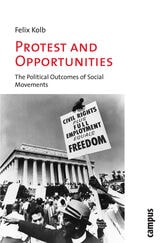
Protest and Opportunities
A Theory of Social Movements and Political ChangeFelix Kolb
Campus Verlag, 2007
In addition to reviewing the existing literature on the political outcomes of social movements, this volume analyzes the examples of the American civil rights movement and anti-nuclear energy efforts in eighteen countries to forge a new understanding of their momentous impact.
Psychoanalysis--A Theory in Crisis
Marshall Edelson
University of Chicago Press, 1988