349 books match the query 'Violence' and 19 start with p

cover of Passionate Fictions: Gender, Narrative, and Violence in Clarice Lispector

Passionate Fictions

Gender, Narrative, and Violence in Clarice Lispector

Marta Peixoto

University of Minnesota Press, 1994

Passionate Fictions was first published in 1994. Minnesota Archive Editions uses digital technology to make long-unavailable books once again accessible, and are published unaltered from the original University of Minnesota Press editions.

"Clarice Lispector is the premiere Latin American woman prose writer of this century," Suzanne Ruta noted in the New York Times Book Review, "but because she is a woman and a Brazilian, she has remained virtually unknown in the United States." Passionate Fictions provides American readers with a critical introduction to this remarkable writer and offers those who already know Lispector's fiction a deeper understanding of its complex workings.
[more]
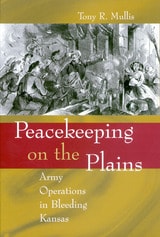
cover of Peacekeeping on the Plains: Army Operations in Bleeding Kansas

Peacekeeping on the Plains

Army Operations in Bleeding Kansas

Tony R. Mullis

University of Missouri Press, 2004
 

Historians have written on “Bleeding Kansas” and on the frontier army as a constabulary force, but little scholarship exists on how the army performed its peacekeeping operations in the 1850s. In Peacekeeping on the Plains, Tony R. Mullis is one of the first scholars to detail the military concerns associated with peace enforcement in Kansas and the trans-Missouri West.


Between 1854 and 1856, the Franklin Pierce administration called upon the U.S. Army to conduct a series of peace operations in the newly formed Kansas and Nebraska territories. The army responded to the president’s call by successfully completing a mission against the Lakota Sioux in 1855 and by aiding civil authorities in the imposition of peace among competing factions in Kansas during 1856.


Although these police duties were not always popular with the soldiers that conducted them, the purpose behind them remained constant—the maintenance of peace, order, and security. Given Americans’ misgivings about a standing army and their limited expectations for it as a domestic peacekeeper, its use in this fashion during the 1850s was a delicate proposition.


By drawing on diverse sources, including official army correspondence, personal papers of key military and political leaders, and local accounts of army activities, Mullis shows how peace operations were conducted by the U.S. Army long before the second half of the twentieth century. He alsopresents a thorough analysis of the professional dilemmas confronted by army officers, as well as the delicate command and control issues associated with the different types of peace operations.


Mullis’s assessment of the army’s peacekeeping efforts in the mid-1850s offers a full understanding of the constraints and frustrations involved. Many of the dilemmas faced by the army in Kansas parallel those encountered in various spots around the globe today. Peacekeeping on the Plains will provide any reader with a better insight into the nuances of peace operations in the 1850s and assist military historians in their understanding of these activities as they relate to the twenty-first century.
[more]
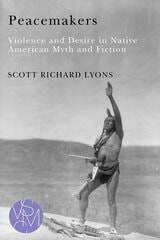
cover of Peacemakers: Violence and Desire in Native American Myth and Fiction

Peacemakers

Violence and Desire in Native American Myth and Fiction

Scott Richard Lyons

Michigan State University Press, 2027

Employing the mimetic theory of René Girard as its heuristic, Peacemakers offers a unique analysis of Native American myth and fiction. It explores two important founding myths (Lac du Flambeau Ojibwe and Acoma Pueblo) and analyzes four modern novels: three from the Native American Renaissance of the 1960s and 1970s (N. Scott Momaday’s House Made of Dawn, James Welch’s Winter in the Blood, Leslie Marmon Silko’s Ceremony) and the fourth from the twenty-first century (Sherman Alexie’s Flight). While Native American literary criticism typically points to continuities across the traditional-modern divide, Scott Richard Lyons emphasizes a decisive break happening in the progressive era. Following Girard’s theory, Lyons finds that the Indigenous worlds of sacred tradition and secular modernity confront situations of mimetic desire and violence in significantly different ways, given their different cultural resources. Ultimately problems of violence and desire come down to questions of how people can live together peacefully with a sense of meaning and transcendence, questions that are more “religious” than “political.” Thus, the outlook of Peacemakers is more Shakespearian than Marxian.
[more]
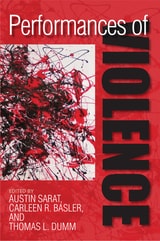
cover of Performances of Violence

Performances of Violence

Austin Sarat

University of Massachusetts Press, 2011
From acts of terrorism to war, from arson to capital punishment, from sadism to torture, performances of violence are all around us. Sometimes they grab headlines and rivet our attention, sometimes they are barely noticed, constituting part of our taken-for-granted world. Yet whether dramatic or barely noticed, violence seems everywhere to be on the rise. The essays in this volume explore the relationship between selfhood, agency, and violence, focusing on the psychic life of violence and its expression in the performances of particular individuals. At the same time, they look more closely at the way political contexts and ideologies shape both particular performances of violence and the way they are understood. By drawing on the expertise of scholars in a variety of fields—anthropology, history, political theory, law, and social thought—this book seeks to expose some of the subterranean cross currents of the cultural lives of violence and, in so doing, to reveal their connections. In addition to the editors, contributors include criminal justice scholar Mary Welek Atwell, anthropologist Veena Das, historian Ruth Miller, political scientist Anne Norton, political scientist Corey Robin, and historian Paul Steege.
[more]
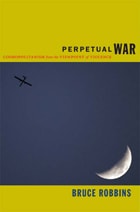
cover of Perpetual War: Cosmopolitanism from the Viewpoint of Violence

Perpetual War

Cosmopolitanism from the Viewpoint of Violence

Bruce Robbins

Duke University Press, 2012

For two decades Bruce Robbins has been a theorist of and participant in the movement for a "new cosmopolitanism," an appreciation of the varieties of multiple belonging that emerge as peoples and cultures interact. In Perpetual War he takes stock of this movement, rethinking his own commitment and reflecting on the responsibilities of American intellectuals today. In this era of seemingly endless U.S. warfare, Robbins contends that the declining economic and political hegemony of the United States will tempt it into blaming other nations for its problems and lashing out against them.

Under these conditions, cosmopolitanism in the traditional sense—primary loyalty to the good of humanity as a whole, even if it conflicts with loyalty to the interests of one's own nation—becomes a necessary resource in the struggle against military aggression. To what extent does the "new" cosmopolitanism also include or support this "old" cosmopolitanism? In an attempt to answer this question, Robbins engages with such thinkers as Noam Chomsky, Edward Said, Anthony Appiah, Immanuel Wallerstein, Louis Menand, W. G. Sebald, and Slavoj Zizek. The paradoxes of detachment and belonging they embody, he argues, can help define the tasks of American intellectuals in an era when the first duty of the cosmopolitan is to resist the military aggression perpetrated by his or her own country.
[more]
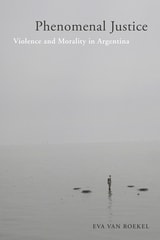
cover of Phenomenal Justice: Violence and Morality in Argentina

Phenomenal Justice

Violence and Morality in Argentina

Eva van Roekel

Rutgers University Press, 2020

2020 Choice​ Outstanding Academic Title​
Short-listed for the Juan E. Méndez Book Award for Human Rights in Latin America from Duke University Libraries

How do victims and perpetrators of political violence caught up in a complicated legal battle experience justice on their own terms? Phenomenal Justice is a compelling ethnography about the reopened trials for crimes against humanity committed during the brutal military dictatorship that ruled Argentina between 1976 and 1983. Grounded in phenomenological anthropology and the anthropology of emotion, this book establishes a new theoretical basis that is faithful to the uncertainties of justice and truth in the aftermath of human rights violations. The ethnographic observations and the first-person stories about torture, survival, disappearance, and death reveal the enduring trauma, heartfelt guilt, happiness, battered pride, and scratchy shame that demonstrate the unreserved complexities of truth and justice in post-conflict societies. Phenomenal Justice will be an indispensable contribution to a better understanding of the military dictatorship in Argentina and its aftermath.
[more]
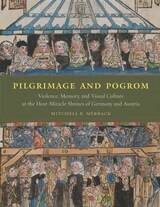
cover of Pilgrimage and Pogrom: Violence, Memory, and Visual Culture at the Host-Miracle Shrines of Germany and Austria

Pilgrimage and Pogrom

Violence, Memory, and Visual Culture at the Host-Miracle Shrines of Germany and Austria

Mitchell B. Merback

University of Chicago Press, 2013
In the late Middle Ages, Europe saw the rise of one of its most virulent myths: that Jews abused the eucharistic bread as a form of anti-Christian blasphemy, causing it to bleed miraculously. The allegation fostered tensions between Christians and Jews that would explode into violence across Germany and Austria. And pilgrimage shrines were built on the sites where supposed desecrations had led to miracles or to anti-Semitic persecutions. Exploring the legends, cult forms, imagery, and architecture of these host-miracle shrines, Pilgrimage and Pogrom reveals how they not only reflected but also actively shaped Christian anti-Judaism in the two centuries before the Reformation.
 
Mitchell B. Merback studies surviving relics and eucharistic cult statues, painted miracle cycles and altarpieces, propaganda broadsheets, and more in an effort to explore how accusation and legend were transformed into propaganda and memory. Merback shows how persecution and violence became interdependent with normative aspects of Christian piety, from pilgrimage to prayers for the dead, infusing them with the ideals of crusade. Valiantly reconstructing the cult environments created for these sacred places, Pilgrimage and Pogrom is an illuminating look at Christian-Jewish relations in premodern Europe.
[more]
cover of Pobre Raza!: Violence, Justice, and Mobilization among México Lindo Immigrants, 1900-1936

Pobre Raza!

Violence, Justice, and Mobilization among México Lindo Immigrants, 1900-1936

By F. Arturo Rosales

University of Texas Press, 1999

Fleeing the social and political turmoil spawned by the Mexican Revolution, massive numbers of Mexican immigrants entered the southwestern United States in the early decades of the twentieth century. But instead of finding refuge, many encountered harsh, anti-Mexican attitudes and violence from an Anglo population frightened by the influx of foreigners and angered by anti-American sentiments in Mexico.

This book examines the response of Mexican immigrants to Anglo American prejudice and violence early in the twentieth century. Drawing on archival sources from both sides of the border, Arturo Rosales traces the rise of "México Lindo" nationalism and the efforts of Mexican consuls to help poor Mexican immigrants defend themselves against abuses and flagrant civil rights violations by Anglo citizens, police, and the U.S. judicial system. This research illuminates a dark era in which civilian and police brutality, prejudice in the courtroom, and disproportionate arrest, conviction, and capital punishment rates too often characterized justice for Mexican Americans.
[more]
cover of Poetics of Processing: Memory Formation, Identity, and the Handling of the Dead

Poetics of Processing

Memory Formation, Identity, and the Handling of the Dead

Anna J. Osterholtz

University Press of Colorado, 2020

In 2002, Neil Whitehead published Dark Shamans: Kanaimà and the Poetics of Violent Death, in which he applied the concept of poetics to the study of violence and observed the power of violence in the creation and expression of identity and social relationships. The Poetics of Processing applies Whitehead’s theory on violence to mortuary and skeletal assemblages in the Andes, Mexico, the US Southwest, Jordan, Ethiopia, Egypt, and Turkey, examining the complex cultural meanings of the manipulation of remains after death.
 
The contributors interpret postmortem treatment of the physical body through a poetics lens, examining body processing as a mechanism for the re-creation of cosmological events and processing’s role in the creation of social memory. They analyze methods of processing and the ways in which the living use the physical body to stratify society and gain power, as evidenced in rituals of body preparation and burial around the world, objects buried with the dead and the hierarchies of tomb occupancy, the dissection of cadavers by medical students, the appropriation of living spaces once occupied by the dead, and the varying treatments of the remains of social outsiders, prisoners of war, and executed persons.
 
The Poetics of Processing combines social theory and bioarchaeology to examine how the living manipulate the bodies of the dead for social purposes. These case studies—ranging from prehistoric to historic and modern and from around the globe—explore this complex material relationship that does not cease with physical death. This volume will be of interest to mortuary archaeologists, bioarchaeologists, and cultural anthropologists.
 
Contributors:
Dil Singh Basanti, Roselyn Campbell, Carlina de la Cova, Eric Haanstad, Scott Haddow, Christina Hodge, Christopher Knusel, Kristin Kuckelman, Clark Spencer Larsen, Debra Martin, Kenneth Nystrom, Adrianne Offenbecker, Megan Perry, Marin Pilloud, Beth K. Scaffidi, Mehmet Somel, Kyle D. Waller
 
[more]
cover of Poetry and Violence: The Ballad Tradition of Mexico's Costa Chica

Poetry and Violence

The Ballad Tradition of Mexico's Costa Chica

John H. McDowell

University of Illinois Press, 1999

John H. McDowell provides an in-depth look at the Mexican ballad form known as the corrido, a body of poetry that draws from violence for its subject matter. Through interviews with male and female corrido composers and performers, plus a generous sampling of ballad texts, McDowell reveals a living vernacular tradition that chronicles local and regional rivalries and spawned the narcocorrido, ballads set in the drug trade and particularly popular along the Rio Grande border.

Detailed and rife with social and cultural implications, Poetry and Violence is a compelling commentary on violence as both human experience and communicative action.
[more]
cover of Politics after Violence: Legacies of the Shining Path Conflict in Peru

Politics after Violence

Legacies of the Shining Path Conflict in Peru

Edited by Hillel David Soifer and Alberto Vergara

University of Texas Press, 2019

Between 1980 and 1994, Peru endured a bloody internal armed conflict, with some 69,000 people killed in clashes involving two insurgent movements, state forces, and local armed groups. In 2003, a government-sponsored “Truth and Reconciliation Committee” reported that the conflict lasted longer, affected broader swaths of the national territory, and inflicted higher costs in both human and economic terms than any other conflict in Peru’s history. Of those killed, 75 percent were speakers of an indigenous language, and almost 40 percent were among the poorest and most rural members of Peruvian society. These unequal impacts of the violence on the Peruvian people revealed deep and historical disparities within the country.

This collection of original essays by leading international experts on Peruvian politics, society, and institutions explores the political and institutional consequences of Peru’s internal armed conflict in the long 1980s. The essays are grouped into sections that cover the conflict itself in historical, comparative, and theoretical perspectives; its consequences for Peru’s political institutions; its effects on political parties across the ideological spectrum; and its impact on public opinion and civil society. This research provides the first systematic and nuanced investigation of the extent to which recent and contemporary Peruvian politics, civil society, and institutions have been shaped by the country’s 1980s violence.

[more]
cover of Portraits of Violence: War and the Aesthetics of Disfigurement

Portraits of Violence

War and the Aesthetics of Disfigurement

Suzannah Biernoff

University of Michigan Press, 2017

Portraits of Violence explores the image and idea of facial disfigurement in one of its most troubling modern formations, as a symbol and consequence of war. It opens with Nina Berman’s iconic photograph Marine Wedding, which provoked a debate about the medical, military, and psychological response to serious combat injuries. While these issues remain urgent, it is equally crucial to interrogate the representation of war and injury. The concepts of valor, heroism, patriotism, and courage assume visible form and do their cultural work when they are personified and embodied. The mutilated or disabled veteran’s body can connote the brutalizing, dehumanizing potential of modern combat.
 
Suzannah Biernoff draws on a wide variety of sources mainly from WWI but also contemporary photography and computer games. Each chapter revolves around particular images: Marine Wedding is discussed alongside Stuart Griffiths’ portraits of British veterans; Henry Tonks’ drawings of WWI facial casualties are compared to the medical photographs in the Gillies Archives; the production of portrait masks for the severely disfigured is approached through the lens of documentary film and photography; and finally the haunting image of one of Tonks’s patients reappears in BioShock, a highly successful computer game. The book simultaneously addresses a neglected area in disability studies; puts disfigurement on the agenda for art history and visual studies; and makes a timely and provocative contribution to the literature on the First World War.

[more]
cover of Post-Soviet Chaos: Violence and Dispossession in Kazakhstan

Post-Soviet Chaos

Violence and Dispossession in Kazakhstan

Joma Nazpary

Pluto Press, 2001

[more]
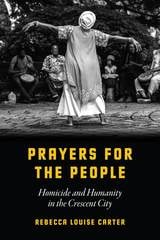
cover of Prayers for the People: Homicide and Humanity in the Crescent City

Prayers for the People

Homicide and Humanity in the Crescent City

Rebecca Louise Carter

University of Chicago Press, 2019

“Grieve well and you grow stronger.” Anthropologist Rebecca Louise Carter heard this wisdom over and over while living in post-Katrina New Orleans, where everyday violence disproportionately affects Black communities. What does it mean to grieve well? How does mourning strengthen survivors in the face of ongoing threats to Black life?
 
Inspired by ministers and guided by grieving mothers who hold birthday parties for their deceased sons, Prayers for the People traces the emergence of a powerful new African American religious ideal at the intersection of urban life, death, and social and spiritual change. Carter frames this sensitive ethnography within the complex history of structural violence in America—from the legacies of slavery to free but unequal citizenship, from mass incarceration and overpolicing to social abandonment and the unequal distribution of goods and services. And yet Carter offers a vision of restorative kinship by which communities of faith work against the denial of Black personhood as well as the violent severing of social and familial bonds. A timely directive for human relations during a contentious time in America’s history, Prayers for the People is also a hopeful vision of what an inclusive, nonviolent, and just urban society could be.
 
[more]
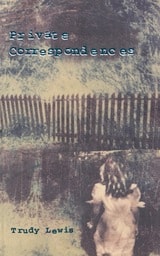
cover of Private Correspondences

Private Correspondences

Trudy Lewis

Northwestern University Press, 1996
Libby is a politician's daughter maturing amidst barely sublimated violence, sexuality, and corruption. Her tangled emotions about her father and the roil of sexual and social politics surrounding her are brought into relief when she receives a shocking anonymous letter. Horrified but fascinated, Libby works to discover the identity and the motivation of the sender while struggling to interpret the layers of deceit and manipulation enveloping her.
[more]
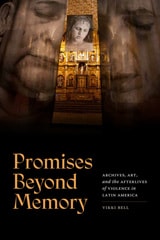
cover of Promises Beyond Memory: Archives, Art, and the Afterlives of Violence in Latin America

Promises Beyond Memory

Archives, Art, and the Afterlives of Violence in Latin America

Vikki Bell

Duke University Press, 2026

In Promises Beyond Memory, Vikki Bell shows how archives of contemporary political violence in Argentina, Chile, and Colombia challenge the idea that simply sheltering the documentation of violence is sufficient to fulfill the obligations of attending to the past. Beyond mere preservation, these archives, museums, and sites of memory invite exploratory modes of enlivening the past through aesthetic practices like photography, installation, film, and performance. These practices foster the “survivance” of memory where populations still grapple with legacies of violence and often state-sponsored mass disappearance and torture. Rather than produce a definitive account of the past, such survivance facilitates polyvocal articulations that open deeply political and ethical questions around contested histories. They may even create moments for what Bell terms “tender forgetting”—the ability to remember without reawakening trauma. Integrating theory, extensive archival work, and interviews with artists, archivists, museum workers, and survivors of state violence, Bell analyses the creative ways that archives pass on stories of violence as they seek to defend against attempts to rewrite the past.
[more]
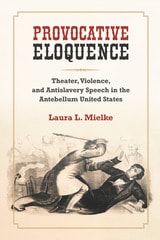
cover of Provocative Eloquence: Theater, Violence, and Antislavery Speech in the Antebellum United States

Provocative Eloquence

Theater, Violence, and Antislavery Speech in the Antebellum United States

Laura L. Mielke

University of Michigan Press, 2019
In the mid-19th century, rhetoric surrounding slavery was permeated by violence. Slavery’s defenders often used brute force to suppress opponents, and even those abolitionists dedicated to pacifism drew upon visions of widespread destruction. Provocative Eloquence recounts how the theater, long an arena for heightened eloquence and physical contest, proved terribly relevant in the lead up to the Civil War. As antislavery speech and open conflict intertwined, the nation became a stage. The book brings together notions of intertextuality and interperformativity to understand how the confluence of oratorical and theatrical practices in the antebellum period reflected the conflict over slavery and deeply influenced the language that barely contained that conflict. The book draws on a wide range of work in performance studies, theater history, black performance theory, oratorical studies, and literature and law to provide a new narrative of the interaction of oratorical, theatrical, and literary histories of the nineteenth-century U.S.
[more]
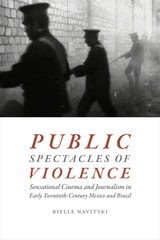
cover of Public Spectacles of Violence: Sensational Cinema and Journalism in Early Twentieth-Century Mexico and Brazil

Public Spectacles of Violence

Sensational Cinema and Journalism in Early Twentieth-Century Mexico and Brazil

Rielle Navitski

Duke University Press, 2017
In Public Spectacles of Violence Rielle Navitski examines the proliferation of cinematic and photographic images of criminality, bodily injury, and technological catastrophe in early twentieth-century Mexico and Brazil, which were among Latin America’s most industrialized nations and later developed two of the region’s largest film industries. Navitski analyzes a wide range of sensational cultural forms, from nonfiction films and serial cinema to illustrated police reportage, serial literature, and fan magazines, demonstrating how media spectacles of violence helped audiences make sense of the political instability, high crime rates, and social inequality that came with modernization. In both nations, sensational cinema and journalism—influenced by imported films—forged a common public sphere that reached across the racial, class, and geographic divides accentuated by economic growth and urbanization. Highlighting the human costs of modernization, these media constructed everyday experience as decidedly modern, in that it was marked by the same social ills facing industrialized countries. The legacy of sensational early twentieth-century visual culture remains felt in Mexico and Brazil today, where public displays of violence by the military, police, and organized crime are hypervisible.
[more]
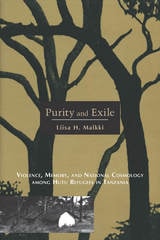
cover of Purity and Exile: Violence, Memory, and National Cosmology among Hutu Refugees in Tanzania

Purity and Exile

Violence, Memory, and National Cosmology among Hutu Refugees in Tanzania

Liisa H. Malkki

University of Chicago Press, 1995

In this study of Hutu refugees from Burundi, driven into exile in Tanzania after their 1972 insurrection against the dominant Tutsi was brutally quashed, Liisa Malkki shows how experiences of dispossession and violence are remembered and turned into narratives, and how this process helps to construct identities such as "Hutu" and "Tutsi."

Through extensive fieldwork in two refugee communities, Malkki finds that the refugees' current circumstances significantly influence these constructions. Those living in organized camps created an elaborate "mythico-history" of the Hutu people, which gave significance to exile, and envisioned a collective return to the homeland of Burundi. Other refugees, who had assimilated in a more urban setting, crafted identities in response to the practical circumstances of their day to day lives. Malkki reveals how such things as national identity, historical consciousness, and the social imagination of "enemies" get constructed in the process of everyday life. The book closes with an epilogue looking at the recent violence between Hutu and Tutsi in Rwanda and Burundi, and showing how the movement of large refugee populations across national borders has shaped patterns of violence in the region.
[more]