52 books match the query 'Women, Black' and 3 start with p
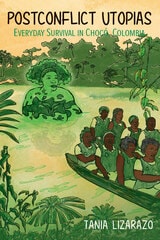
cover of Postconflict Utopias: Everyday Survival in Chocó, Colombia

Postconflict Utopias

Everyday Survival in Chocó, Colombia

Tania Lizarazo

University of Illinois Press, 2024

Black women in the department of Chocó, Colombia, respond to the violence endemic to their region with activism and storytelling. Tania Lizarazo focuses on members of COCOMACIA, a Black farmers’ association that defends communities and territories along the nation’s Pacific lowlands’ rivers. Drawing on the life stories of members, Lizarazo explains how Chocó’s Black Colombian women answered firsthand experiences of violence with a dedication to survival and activism. Survival amid armed conflict proves to be an embodied practice. Day by day, the women imagine what memory, peace, and justice could look like when the bloodshed ends. Though peace may seem impossible, wishing and working for a better world motivates these women to steadily dismantle the scaffolding of violence built around their lives.

A merger of eyewitness accounts and theory, Postconflict Utopias explores the links between lived knowledge and survival while revealing the power unleashed when women ask the simple question, “Why not?”

[more]
cover of Predatory Welfare: Debt, Race, and Cash Transfers

Predatory Welfare

Debt, Race, and Cash Transfers

Erin Torkelson

Duke University Press, 2026
In Predatory Welfare, Erin Torkelson explores how the direct cash transfer program instituted in South Africa revised and reworked post-apartheid racialized and gendered dispossession, despite its promise of ameliorating extreme poverty. Beginning in 2012, she focuses on how poor Black South African women asserted their entitlements to social assistance and responsibilities for familial care against the pressures of expropriation built into the grant payment system. Because the grants did not cover monthly bills, recipients were pushed into predatory loans collateralized by welfare payments. Torkelson finds that the state-sponsored but privately-run program was fundamentally undermined by its reliance on digital financial technologies which encoded wider forces of colonial rule, nationalist politics, and global development. Even when the government assumed control of grant payment in 2018, the neoliberal bent of fiscal policy continued to drive recipients into debt in new ways. Drawing on seven years of ethnographic fieldwork and organization—in grant payment queues, loan offices, grocery stores, Parliament, and the Constitutional Court—Torkelson demonstrates how cash transfers can offer a means to making racial capitalism more acceptable and how recipients can push back to demand reparation.
[more]
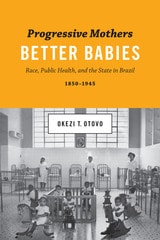
cover of Progressive Mothers, Better Babies: Race, Public Health, and the State in Brazil, 1850-1945

Progressive Mothers, Better Babies

Race, Public Health, and the State in Brazil, 1850-1945

By Okezi T. Otovo

University of Texas Press, 2016

In Bahia, Brazil, the decades following emancipation saw the rise of reformers who sought to reshape the citizenry by educating Bahian women in methods for raising “better babies.” The idealized Brazilian would be better equipped to contribute to the labor and organizational needs of a modern nation. Backed by many physicians, politicians, and intellectuals, the resulting welfare programs for mothers and children mirrored complex debates about Brazilian nationality. Examining the local and national contours of this movement, Progressive Mothers, Better Babies investigates families, medical institutions, state-building, and social stratification to trace the resulting policies, which gathered momentum in the aftermath of abolition (1888) and the declaration of the First Republic (1889), culminating during the administration of President Getúlio Vargas (1930–1945).

Exploring the cultural discourses on race, gender, and poverty that permeated medical knowledge and the public health system for almost a century, Okezi T. Otovo draws on extensive archival research to reconstruct the implications for Bahia, where family patronage politics governed poor women’s labor as the mothers who were the focus of medical interventions were often the nannies and nursemaids of society’s wealthier families. The book reveals key transition points as the state of Bahia transformed from being a place where poor families could expect few social services to becoming the home of numerous programs targeting the poorest mothers and their children. Negotiating crucial questions of identity, this history sheds new light on larger debates about Brazil’s past and future.

[more]