Results by title
173 books match the query 'Women in literature' and 9 start with p

Passionate Fictions
Gender, Narrative, and Violence in Clarice LispectorMarta Peixoto
University of Minnesota Press, 1994
Passionate Fictions was first published in 1994. Minnesota Archive Editions uses digital technology to make long-unavailable books once again accessible, and are published unaltered from the original University of Minnesota Press editions.
"Clarice Lispector is the premiere Latin American woman prose writer of this century," Suzanne Ruta noted in the New York Times Book Review, "but because she is a woman and a Brazilian, she has remained virtually unknown in the United States." Passionate Fictions provides American readers with a critical introduction to this remarkable writer and offers those who already know Lispector's fiction a deeper understanding of its complex workings.
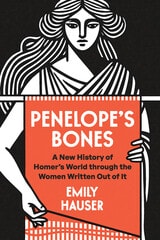
Penelope’s Bones
A New History of Homer’s World through the Women Written Out of ItEmily Hauser
University of Chicago Press, 2025
Achilles. Agamemnon. Odysseus. Hector. The lives of these and many other men in the greatest epics of ancient Greece have been pored over endlessly in the past three millennia. But these are not just tales about heroic men. There are scores of women as well—complex, fascinating women whose stories have gone unexplored for far too long.
In Penelope’s Bones, award-winning classicist and historian Emily Hauser pieces together compelling evidence from archaeological excavations and scientific discoveries to unearth the richly textured lives of women in Bronze Age Greece—the era of Homer’s heroes. Here, for the first time, we come to understand the everyday lives and experiences of the real women who stand behind the legends of Helen, Briseis, Cassandra, Aphrodite, Circe, Athena, Hera, Calypso, Penelope, and more. In this captivating journey through Homer’s world, Hauser explains era-defining discoveries, such as the excavation of Troy and the decipherment of Linear B tablets that reveal thousands of captive women and their children; more recent finds like the tomb of the Griffin Warrior at Pylos, whose tomb contents challenge traditional gender attributes; DNA evidence showing that groups of warriors buried near the Black Sea with their weapons and steeds were, in fact, Amazon-like female fighters; a prehistoric dye workshop on Crete that casts fresh light on “women’s work” of dyeing, spinning, and weaving textiles; and a superbly preserved shipwreck off the coast of Turkey whose contents tell of the economic and diplomatic networks crisscrossing the Bronze Age Mediterranean.
Essential reading for fans of Madeline Miller or Natalie Haynes, this riveting new history brings to life the women of the Bronze Age Aegean as never before, offering a groundbreaking reassessment of the ancient world.
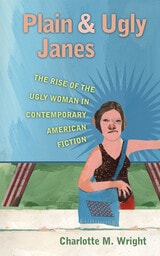
Plain and Ugly Janes
The Rise of the Ugly Woman in Contemporary American FictionWright, Charlotte M.
University of Iowa Press, 2000
“If beauty is truth, is ugliness falsehood and deception? If all art need concern itself with is beauty, what need have we to explore in our literature the nature and consequences of ugliness?” In Plain and Ugly Janes, originally published in hardcover in 2000 by Garland, Charlotte Wright defines and explores the ramifications of a new character type in twentieth-century American literature, the “ugly woman,” whose roots can be traced to the old maid/spinster character of the nineteenth century.
During the 1970s, stories began to appear in which the ugly woman is a figure of power—heroic not in the traditional old maid's way of quiet, passive acceptance but in a way more in keeping with the active, masculine definition of heroic behavior. Wright uses these stories to discuss the nature and definitions of ugliness and the effects of female ugliness on both male and female literary characters in the works of a range of American authors, including Sherwood Anderson, Russell Banks, Djuna Barnes, Peter S. Beagle, Sarah Bird, Ray Bradbury, Katherine Dunn, Louise Erdrich, William Faulkner, Tess Gallagher, Barry Hannah, Ernest Hemingway, Zora Neale Hurston, Alison Lurie, Lorrie Moore, Joyce Carol Oates, Flannery O'Connor, Katherine Anne Porter, Leon Rooke, Anne Tyler, Alice Walker, and Eudora Welty. Wright concludes that the ugly woman character allows American authors to explore the ironies and inequalities inherent in the beauty system.
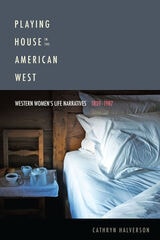
Playing House in the American West
Western Women's Life Narratives, 1839–1987Cathryn Halverson
University of Alabama Press, 2013
How domestic life shaped identity, gender, and power in the American West
The controlling metaphor Cathryn Halverson uses in her engrossing study is “playing house.” From Caroline Kirkland and Laura Ingalls Wilder to Willa Cather and Marilynne Robinson, from the mid-nineteenth to the late-twentieth centuries, western authors have persistently embraced wayward or eccentric housekeeping to prove a woman’s difference from western neighbors and eastern readers alike.
The readings in Playing House investigate the surprising textual ends to which westerners turn the familiar terrain of the home: evaluating community; arguing for different conceptions of race and class; and perhaps most especially, resisting traditional gender roles. Western women writers, Halverson argues, render the home as a stage for autonomy, resistance, and imagination rather than as a site of sacrifice and obligation.
The western women examined in Playing House in the American West are promoted and read as representatives of a region, as insiders offering views of distant and intriguing ways of life, even as they conceive of themselves as outsiders. By playing with domestic conventions, they recast the region they describe, portraying the West as a place that fosters female agency, individuality, and subjectivity.
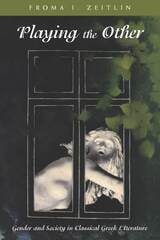
Playing the Other
Gender and Society in Classical Greek LiteratureFroma I. Zeitlin
University of Chicago Press, 1995
Zeitlin demonstrates the indispensable workings of gender as a major factor in Greek social, religious, and cultural practices and in more abstract ideas about nature and culture, public and private, citizen and outsider, self and other, and mortal and immortal. Focusing on the prominence of female figures in these male authored texts, she enlarges our perspective on critical components of political order and civic identity by including issues of sexuality, the body, modes of male and female maturation, and speculations about parentage, kinship, and reproductive strategies. Along with considerations of genre, poetics, and theatrical mimesis, she points to the powerful mythmaking capacities of Greek culture for creating memorable paradigms and dramatic scenarios that far exceed simple notions of male and female opposition and predictable enforcement of social norms. Consisting of both new and revised essays, Playing the Other is a wide-ranging account of a central category of Greek literature by a scholar who pioneered an approach to classics through the perspective of gender.
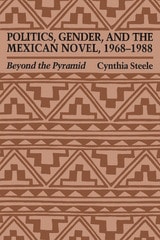
Politics, Gender, and the Mexican Novel, 1968-1988
Beyond the PyramidBy Cynthia Steele
University of Texas Press, 1992
The student massacre at Tlatelolco in Mexico City on October 2, 1968, marked the beginning of an era of rapid social change in Mexico. In this illuminating study, Cynthia Steele explores how the writers of the next two decades responded to the massacre and to the social crisis it signaled in terms of political change and gender identity.
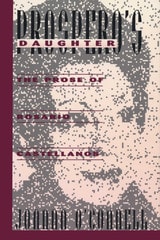
Prospero's Daughter
The Prose of Rosario CastellanosBy Joanna O'Connell
University of Texas Press, 1995
A member of Mexico's privileged upper class, yet still subordinated because of her gender, Rosario Castellanos became one of Latin America's most influential feminist social critics. Joanna O'Connell here offers the first book-length study of all Castellanos' prose writings, focusing specifically on how Castellanos' experiences as a Mexican woman led her to an ethic of solidarity with the oppressed peoples of her home state of Chiapas.
O'Connell provides an original and detailed analysis of Castellanos' first venture into feminist cultural analysis in her essay Sobre cultura feminina (1950) and traces her moral and intellectual trajectory as feminist and social critic. An overview of Mexican indigenismo establishes the context for individual chapters on Castellanos' narratives of ethnic conflict (the novels Balún Canán and Oficio de tinieblas and the short stories of Ciudad Real). In further chapters O'Connell reads Los convidados de agosto,Album de familia, and Castellanos' four collections of essays as developments of her feminist social analysis.
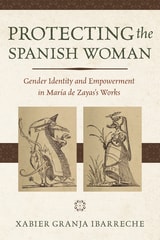
Protecting the Spanish Woman
Gender Identity and Empowerment in María de Zayas's WorksXabier Granja Ibarreche
University of Nevada Press, 2023
María de Zayas is unique in the seventeenth century as the only Spanish woman to write a collection of exemplary novels whose quality is often compared to Miguel de Cervantes’ masterful works. Her two main collections of short stories, Novelas amorosas y ejemplares and Desengaños amorosos, encompass a social critique based on literary fiction that exposes flaws in the idealized archetypes of masculine identity in early modern Spain. Zayas’s stories redefine women’s patriarchal disadvantage as a tool to expose the ways in which early modern Spanish women could be empowered to counteract men’s discursive and political authority, which they use to unfairly maintain their own social privilege.
Xabier Granja Ibarreche explores how Zayas defies Spanish hegemony by manipulating and transforming the ideals of courtly masculinity that had been popularized by conduct manuals and the traits they specified for appropriate noble comportment. In doing so, Zayas elaborates a nonofficial discourse throughout plots that subvert patriarchal hierarchies: she rearticulates the existing ideological order to empower women who are no longer willing to remain silent and oppressed by masculine domination after centuries of failing to attain a sufficiently self-sufficient political position to ascend in the social hierarchy. By inverting the male gaze that assumes masculinity as a preeminent identity, Zayas subverts the patriarchal subject/masculine, object/feminine order and destabilizes manly superiority as a basic universal reality, thereby empowering and unshackling Spanish women to liberate Iberian culture from the repressive and pernicious future she forebodes.
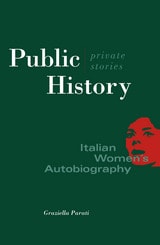
Public History, Private Stories
Italian Women’s AutobiographyGraziella Parati
University of Minnesota Press, 1996
Explores the way Italian women writers craft identities through writing.
In this important volume, Graziella Parati examines the ways in which Italian women writers articulate their identities through autobiography—a public act that is also the creation of a private life. Considering autobiographical writings by five women writers from the seventeenth century to the present, Parati draws important connections between self-writing and the debate over women’s roles, both traditional and transgressive.
Parati considers the first prose autobiography written by an Italian woman -Camilla Faà Gonzaga’s 1622 memoir—as her beginning point, citing it as a central “pre-text.” In her memoir, Gonzaga makes explicit her conflict over the public silence imposed on her, yet succeeds in writing herself into history through self-narrative. Parati then examines Enif Robert’s autobiography, in which Robert strives to enter the public sphere of the post-World War I futurist movement by writing about her fight to overcome cancer of the uterus. Next, Parati considers Fausta Cialente’s life story, an account of her family's life in Trieste from World War I through the fascist era, as well as the narrative in which Rita Levi Montalcini describes her life as a woman, a Nobel-Prize winning scientist, and a Jew who lived under fascism in the thirties and forties. Finally, Parati analyzes Luisa Passerini's look back on her involvement with the student movement of 1968. Through her discussion of these women’s writings, Parati demonstrates the complex negotiations over identity contained within them, negotiations that challenge dichotomies between male and female, maternal and paternal, and private and public. Public History, Private Stories is a compelling exploration of the disparate identities created by these women through the act of writing autobiography.