Results by title
331 books match the query 'World Literature' and 11 start with p
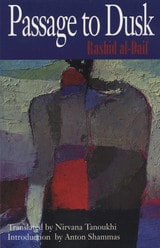
Passage to Dusk
By Rashid al-Daif
University of Texas Press, 2001
Passage to Dusk deals with the Lebanese civil war of the 1970s in a postmodern, poetic style. The narrative focuses on the deranged, destabilized, confused, and hyper-perceptive state of mind created by living on the scene through a lengthy war. The story is filled with details that transcend the willed narcissism of the main character, while giving clues to the culture of the time. It is excellent fiction, written in a surrealistic mode, but faithful to the characters of the people of Lebanon, their behavior during the war, and their contradictions. Issues of gender and identity are acutely portrayed against Lebanon's shifting national landscape.
The English-language reader has not been much exposed to Lebanese literature in translation, and Rashid al-Daif is one of Lebanon's leading writers. He has been translated into eight languages, including French, German, Italian, Polish, and Spanish. Translator Nirvana Tanoukhi manages to preserve Daif's unusual, moving, and at times humorous style in her English rendition.
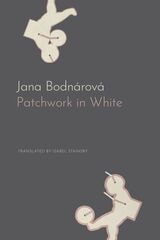
Patchwork in White
Jana Bodnárová
Seagull Books, 2026
An intimate story of otherness and care by a major voice in Slovak literature.
For more than three decades, Jana Bodnárová has been one of Slovak literature’s most distinctive voices, writing with a lyricism that is at once tender and unflinchingly harsh. Patchwork in White is a brief yet powerful novel that stitches together fragments of lives bound by intimacy, difference, and care, set against the social fabric of Czechoslovakia from the mid-1950s to the present.
At the center of the novel are Ota and Andrej, a couple whose shared memories unfold through shards of childhood, marriage, and parenthood. Their lives are irrevocably shaped by the decision to adopt albino twins—children marked by abuse and exclusion because of their otherness. As these fragments accumulate, the novel becomes a meditation on motherhood, femininity, love, and the quiet imminence of death.
Poetic, restrained, and brutally honest, Bodnárová’s prose finds resonance in what is left unsaid. Illustrations by Eva Moflárová deepen the book’s emotional texture, creating a work of rare intimacy and moral force.
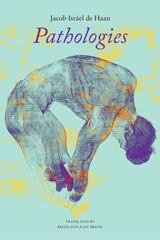
Pathologies
The Downfall of Johan van Vere de WithJacob Isräel de Haan
Seagull Books, 2024
At the start of the twentieth century, Jewish anti-Zionist Jacob Israël de Haan led an eventful life as a poet, journalist, teacher, and lawyer in the Netherlands. His autobiographical novella Pipelines caused a storm of controversy in 1904 with its portrayal of a subject that was considered scandalous at the time—a romantic relationship between two young men. He lost his teaching job, and the entire print run was pulped.
In his iconic 1908 novel Pathologies, he once again openly and radically explored the topic of homosexuality. The story centers around adolescent Johan, who lives a secluded life with his father and their elderly housekeeper in a large house. For a while, Johan has been plagued by erotic fantasies about his classmates. When, to make matters worse, he finds himself feeling attracted to his father—first in a dream, and then in real life—he grows desperate. Johan moves out, finding room and board with an older married couple in Haarlem, where he meets René, a young confident artist. Johan falls head-over-heels in love, and the two men enter a sadomasochistic relationship that soon begins to spiral out of control.
Johan is one of world literature’s most tragic, troubled young heroes, at par with Goethe’s Werther and Dostoevsky’s Raskolnikov. His struggle to come to terms with his fantasies and desires—rife with taboos that continue to resonate today—forms the beating heart of this daring novel. Written in De Haan’s precise, lyrical prose, Pathologies has lost none of its force more than a century after it was first published.
Peltse and Pentameron
Volodymyr Dibrova
Northwestern University Press, 1996
Peltse portrays the formation of an average apparatchik. Both funny and alarming, it provides a psychological portrait of an individual trapped in a system he simultaneously dislikes and depends upon for survival. Pentameron tells the story of one day in the life of five colleagues at a Soviet research institute. Each is dissatisfied, yet all are trapped in and by a system that has taken away their ability to act decisively.
Perverzion
Yuri Andrukhovych
Northwestern University Press, 2005
Or, then again, it may not.
Perverzion constructs Perfetsky's final days using a mishmash of relics, from official documents to recorded interviews to scraps of paper. Perfetsky, the personification of the Ukrainian artistic superman—he used his masterful musicianship in a collaboration with Elton John during the pop star's secret sojourn in Ukraine—is bound for Venice to participate in a seminar to save the world from absurdity. On the way he becomes a Ukrainian Orpheus descending into the decadence of the West, navigating through surrealistic adventures and no less surrealistic seminar topics as he charges head up (and pants down) toward his fate.
Platero and I
By Juan Ramón Jiménez
University of Texas Press, 1957
This lyric portrait of life—and the little donkey, Platero—in a remote Andalusian village is the masterpiece of Juan Ramón Jiménez, the Spanish poet awarded the 1956 Nobel Prize for Literature.
Platinum Bible of the Public Toilet
Ten Queer StoriesCui Zi'en. Edited and with an introduction by Petrus Liu and Lisa Rofel
Duke University Press, 2024
Poetry and Politics in the Play Sir Thomas More
L. Joseph Hebert
Catholic University of America Press, 2026
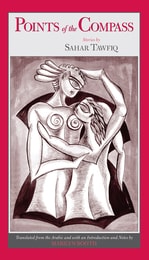
Points of the Compass
StoriesSahar Tawfiq
University of Arkansas Press, 1995
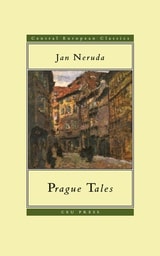
Prague Tales
Jan Neruda
Central European University Press, 1996
This is a collection of Jan Neruda's intimate, wry, bittersweet stories of life among the inhabitants of the Little Quarter of nineteenth-century Prague. These finely tuned and varied vignettes established Neruda as the quintessential Czech nineteenth-century realist, the Charles Dickens of a Prague becoming ever more aware of itself as a Czech rather than an Austrian city.
Prague Tales is a classic by a writer whose influence has been acknowledged by generations of Czech writers, including Ivan Klíma, who contributes an introduction to this new translation.
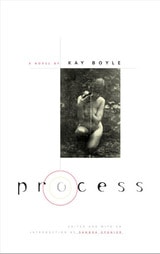
Process
A NovelKay Boyle. Edited and with an Introduction by Sandra Spanier
University of Illinois Press, 2006
Three quarters of a century after the manuscript of Kay Boyle’s first novel disappeared, a carbon copy of it was discovered by Sandra Spanier, the preeminent Boyle authority. Set off by Spanier’s substantial introduction, Process is published here for the first time in paperback.
A classic bildungsroman, Process tells the story of Kerith Day, who is in search of her own identity and place in the world. A keenly critical observer of the dreary industrial landscape and the beaten-down inhabitants of her native Cincinnati, Ohio, Kerith is determined to discover something better. She places her faith in art and politics and sets off for France, where workers and radicals are on the same side.