Results by title
22279 books match the query 'Social Science' and 1104 start with p
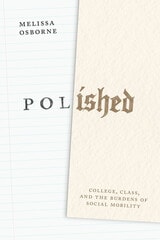
Polished
College, Class, and the Burdens of Social MobilityMelissa Osborne
University of Chicago Press, 2024
While college initiates a major transition in all students’ lives, low-income and first-generation students attending elite schools are often entering entirely new worlds. Amid the financial and academic challenges of adapting to college, their emotional lives, too, undergo a transformation. Surrounded by peers from different classes and cultural backgrounds, they are faced with an impossible choice: turn away from their former lives to blend in or stay true to themselves and remain on the outside.
An ethnography that draws on in-depth interviews with one hundred and fifty first-generation and low-income students across eighteen elite institutions, Polished uncovers the hidden consequences of the promise of social mobility in today’s educational landscape. Sociologist Melissa Osborne reveals how the very support designed to propel first-generation students forward can unexpectedly reshape their identities, often putting them at odds with their peers and families. Without direct institutional support, this emotional journey can lead to alienation, mental health challenges, poor academic outcomes, and difficult choices between upward mobility or maintaining authenticity and community. Whether you're an educator, advocate, or student, Polished provides a powerful perspective on the uncharted challenges of social mobility and personal identity during college.

Polished
College, Class, and the Burdens of Social MobilityMelissa Osborne
University of Chicago Press, 2024
An illuminating look at the emotional costs of mobility faced by first-generation and low-income college students.
While college initiates a major transition in all students’ lives, low-income and first-generation students attending elite schools are often entering entirely new worlds. Amid the financial and academic challenges of adapting to college, their emotional lives, too, undergo a transformation. Surrounded by peers from different classes and cultural backgrounds, they are faced with an impossible choice: turn away from their former lives to blend in or stay true to themselves and remain on the outside.
An ethnography that draws on in-depth interviews with one hundred and fifty first-generation and low-income students across eighteen elite institutions, Polished uncovers the hidden consequences of the promise of social mobility in today’s educational landscape. Sociologist Melissa Osborne reveals how the very support designed to propel first-generation students forward can unexpectedly reshape their identities, often putting them at odds with their peers and families. Without direct institutional support, this emotional journey can lead to alienation, mental health challenges, poor academic outcomes, and difficult choices between upward mobility or maintaining authenticity and community. Whether you're an educator, advocate, or student, Polished provides a powerful perspective on the uncharted challenges of social mobility and personal identity during college.
Political Aspects of Social Indicators
Implications for ResearchPeter J. Henriot
Russell Sage Foundation, 1972
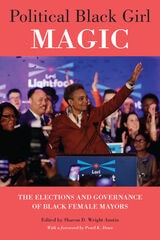
Political Black Girl Magic
The Elections and Governance of Black Female MayorsEdited by Sharon D. Wright Austin
Temple University Press, 2023
Case studies in this interdisciplinary volume include female mayors in Atlanta, Baltimore, Charlotte, Chicago, Compton, and Washington, DC, among other cities, along with discussion of each official’s political context. Covering mayors from the 1960s to the present, Political Black Girl Magic identifies the most significant obstacles black women have faced as mayors and mayoral candidates, and seeks to understand how race, gender, or the combination of both affected them.
Contributors: Andrea Benjamin, Nadia E. Brown, Pearl K. Dowe, Christina Greer, Precious Hall, Valerie C. Johnson, Yolanda Jones, Lauren King, Angela K. Lewis-Maddox, Minion K.C. Morrison, Marcella Mulholland, Stephanie A. Pink-Harper, Kelly Briana Richardson, Emmitt Y. Riley, III, Ashley Robertson Preston, Taisha Saintil, Jamil Scott, Fatemeh Shafiei, James Lance Taylor, LaRaven Temoney, Linda Trautman, and the editor
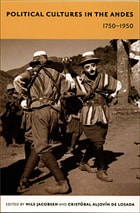
Political Cultures in the Andes, 1750-1950
Nils Jacobsen and Cristóbal Aljovín de Losada, eds.
Duke University Press, 2005
The contributors foreground the struggles over democracy and citizens’ rights as well as notions of race, ethnicity, gender, and class that have been at the forefront of political debates and social movements in the Andes since the waning days of the colonial regime some two hundred years ago. Among the many topics they consider are the significance of the Bourbon reform era to subsequent state-formation projects, the role of race and nation in the work of early-twentieth-century Bolivian intellectuals, the fiscal decentralization campaign in Peru following the devastating War of the Pacific in the late nineteenth century, and the negotiation of the rights of “free men of all colors” in Colombia’s Atlantic coast region during the late colonial period. Political Cultures in the Andes includes an essay by the noted Mexicanist Alan Knight in which he considers the value and limits of the concept of political culture and a response to Knight’s essay by the volume’s editors, Nils Jacobsen and Cristóbal Aljovín de Losada. This important collection exemplifies the rich potential of a pragmatic political culture approach to deciphering the processes involved in the formation of historical polities.
Contributors. Cristóbal Aljovín de Losada, Carlos Contreras, Margarita Garrido, Laura Gotkowitz, Aline Helg, Nils Jacobsen, Alan Knight, Brooke Larson, Mary Roldan, Sergio Serulnikov, Charles F. Walker, Derek Williams
Political Discourse in Exile
Karl Marx and the Jewish QuestionDennis Fischman
University of Massachusetts Press, 1991
Political Ecologies of Cattle Ranching in Northern Mexico
Private RevolutionsEric P. Perramond
University of Arizona Press, 2010
In this study of the Río Sonora region of northern Mexico, where ranchers own anywhere from several hundred to tens of thousands of acres, Eric Perramond evaluates management techniques, labor expenditures, gender roles, and decision-making on private ranches of varying size. By examining the economic and ecological dimensions of daily decisions made on and off the ranch he shows that, contrary to prevailing notions, ranchers rarely collude as a class unless land titles are at issue, and that their decision-making is as varied as the landscapes they oversee.
Through first-hand observation, field measurements, and intimate ethnographies, Perramond sheds light on a complex set of decisions made, avoided, and confronted by these land managers and their families. He particularly shows that ranching has endured because of its extended kinship network, its reliance on all household members, and its close ties to local politics.
Perramond follows ranchers caught between debt, drought, and declining returns to demonstrate the novel approaches they have developed to adapt to changing economies and ecologies alike—such as strategically marketing the ranches for wild-game hunting or establishing small businesses that subsidize their lifestyles and livelihoods. Even more importantly, he reveals the false dichotomy between private and communal ranching. Political Ecologies of Cattle Ranching in Northern Mexico is essential reading for anyone interested in the future of ranching in western North America.
Political Ecology Across Spaces, Scales, and Social Groups
Paulson, Susan
Rutgers University Press, 2004
Environmental issues have become increasingly prominent in local struggles, national debates, and international policies. In response, scholars are paying more attention to conventional politics and to more broadly defined relations of power and difference in the interactions between human groups and their biophysical environments. Such issues are at the heart of the relatively new interdisciplinary field of political ecology, forged at the intersection of political economy and cultural ecology.
This volume provides a toolkit of vital concepts and a set of research models and analytic frameworks for researchers at all levels. The two opening chapters trace rich traditions of thought and practice that inform current approaches to political ecology. They point to the entangled relationship between humans, politics, economies, and environments at the dawn of the twenty-first century and address challenges that scholars face in navigating the blurring boundaries among relevant fields of enquiry. The twelve case studies that follow demonstrate ways that culture and politics serve to mediate human-environmental relationships in specific ecological and geographical contexts. Taken together, they describe uses of and conflicts over resources including land, water, soil, trees, biodiversity, money, knowledge, and information; they exemplify wide-ranging ecological settings including deserts, coasts, rainforests, high mountains, and modern cities; and they explore sites located around the world, from Canada to Tonga and cyberspace.
Political Ecology in a Yucatec Maya Community
E. N. Anderson with Aurora Dzib Xihum de Cen, Felix Medina Tzuc, and Pastor Valdez Chale
University of Arizona Press, 2005
Unlike many small tropical towns, Chunhuhub in rural Quintana Roo, Mexico, has not been a helpless victim of international forces. Its people are descendants of heroic Mayans who stood off the Spanish invaders. People in Chunhuhub continue to live largely through subsistence farming of maize and vegetables, supplemented by commercial orchard, livestock, and field crop cultivation. They are, however, also self-consciously “modernizing” by seeking better educational and economic opportunities.
Political Ecology in a Yucatec Maya Community tells the story of Chunhuhub at the beginning of the twenty-first century, focusing on the resource management of plants and animals. E. N. Anderson and his Maya co-authors provide a detailed overview of Maya knowledge of and relationships with the environment, describing how these relationships have been maintained over the centuries and are being transformed by modernization. They show that the Quintana Roo Mayas have been working to find ways to continue ancient and sustainable methods of making a living while also introducing modern techniques that can improve that living. For instance, traditional subsistence agriculture is broadly sustainable at current population densities, but hunting is not, and modern mechanized agriculture has an uncertain future.
Bringing the voice of contemporary Mayas to every page, the authors offer an encyclopedic overview of the region: history, environment, agriculture, medicine, social relations, and economy. Whether discussing the fine points of beekeeping or addressing the problem of deforestation, they provide a remarkably detailed account that immerses readers in the landscape.
Maya of the Yucatán Peninsula have had more than their share of successes—and some failures as well—and as a study in political and cultural ecology, Political Ecology in a Yucatec Maya Community has much to tell us about tropical development and about the human condition. Their experience tells us that if we wish to have not only farms but also mahogany, wildlife, and ecotourism, then further efforts are needed.
As Anderson observes, traditional Maya management, with its immense knowledge base, remains the best—indeed, the only—effective system for making a living from the Yucatán’s harsh landscape. Political Ecology in a Yucatec Maya Community is a compelling testament to the daily life practices of modern peasant farmers that can provide us with clues about more efficient management techniques for the conservation of biodiversity worldwide.

Political Economy of the Urban Ghetto
Daniel R. Fusfeld and Timothy Bates
Southern Illinois University Press, 1984
The income of blacks in most northern industrial states today is lower relative to the income of whites than in 1949.Fusfeld and Bates examine the forces that have led to this state of affairs and find that these economic relationships are the product of a complex pattern of historical development and change in which black-white economic relationships play a major part, along with patterns of industrial, agricultural, and technological change and urban development. They argue that today’s urban racial ghettos are the result of the same forces that created modern America and that one of the by-products of American affluence is a ghettoized racial underclass.
These two themes, they state, are essential for an understanding of the problem and for the formulation of policy. Poverty is not simply the result of poor education, skills, and work habits but one outcome of the structure and functioning of the economy. Solutions require more than policies that seek to change people: they await a recognition that basic economic relationships must be changed.
Political Epistemics
The Secret Police, the Opposition, and the End of East German SocialismAndreas Glaeser
University of Chicago Press, 2011
What does the durability of political institutions have to do with how actors form knowledge about them? Andreas Glaeser investigates this question in the context of a fascinating historical case: socialist East Germany’s unexpected self-dissolution in 1989. His analysis builds on extensive in-depth interviews with former secret police officers and the dissidents they tried to control as well as research into the documents both groups produced. In particular, Glaeser analyzes how these two opposing factions’ understanding of the socialist project came to change in response to countless everyday experiences. These investigations culminate in answers to two questions: why did the officers not defend socialism by force? And how was the formation of dissident understandings possible in a state that monopolized mass communication and group formation? He also explores why the Stasi, although always well informed about dissident activities, never developed a realistic understanding of the phenomenon of dissidence.
Out of this ambitious study, Glaeser extracts two distinct lines of thought. On the one hand he offers an epistemic account of socialism’s failure that differs markedly from existing explanations. On the other hand he develops a theory—a sociology of understanding—that shows us how knowledge can appear validated while it is at the same time completely misleading.
Political Ethnography
What Immersion Contributes to the Study of PowerEdited by Edward Schatz
University of Chicago Press, 2009
Scholars of politics have sought in recent years to make the discipline more hospitable to qualitative methods of research. Lauding the results of this effort and highlighting its potential for the future, Political Ethnography makes a compelling case for one such method in particular. Ethnography, the contributors amply demonstrate in a wide range of original essays, is uniquely suited for illuminating the study of politics.
Situating these pieces within the context of developments in political science, Edward Schatz provides an overarching introduction and substantive prefaces to each of the volume’s four sections. The first of these parts addresses the central ontological and epistemological issues raised by ethnographic work, while the second grapples with the reality that all research is conducted from a first-person perspective. The third section goes on to explore how ethnographic research can provide fresh perspectives on such perennial topics as opinion, causality, and power. Concluding that political ethnography can and should play a central role in the field as a whole, the final chapters illuminate the many ways in which ethnographic approaches can enhance, improve, and, in some areas, transform the study of politics.

Political Fiction, the Spirit of Age, and Allen Drury
Tom Kemme
University of Wisconsin Press, 1987

Political Film
The Dialectics of Third CinemaMike Wayne
Pluto Press, 2001

Political Justice in Budapest after World War II
Andrea Peto
Central European University Press, 2015
In Hungary, which fell under Soviet influence at the end of World War II, those who had participated in the wartime atrocities were tried by so called people’s courts. This book analyses this process in an objective, quantitative way, contributing to the present timely discussion on the Hungarian war guilt. The authors apply a special focus on the gender aspect of the trials.
Political justice had a specific nature in Hungary. War criminals began to be brought to trial while fighting was still underway in the western part of the country, well before the Nuremberg trials. Not only crimes committed during the war were tried in the same frame but also post-war ones. As far as the post-war period is concerned, legal proceedings regarding these crimes were most often launched on the basis of Act VII of 1946. This act of law concerned “the criminal law protection of the democratic constitutional order and the republic” and its basic aim was to facilitate the creation of a communist dictatorship and to deal with perceived or real enemies of the regime.
Political Landscapes of Capital Cities
Jessica Joyce Christie
University Press of Colorado, 2016
Political Landscapes of Capital Cities blends the historical, political, and cultural narratives of capital cities such as Bangkok, Cusco, Rome, and Tehran with a careful visual analysis, hinging on the methodological tools of not only architectural and urban design but also cultural, historiographical, and anthropological studies. The collection provides further ways to conceive of how processes of urbanization, monumentalization, ritualization, naturalization, and unification affected capitals differently without losing grasp of local distinctive architectural and spatial features. The essays also articulate the many complex political and ideological agendas of a diverse set of sovereign entities that planned, constructed, displayed, and performed their societal ideals in the spaces of their capitals, ultimately confirming that political authority is profoundly spatial.
Contributors: Jelena Bogdanović, Jessica Joyce Christie, Talinn Grigor, Eulogio Guzmán, Gregor Kalas, Stephanie Pilat, Melody Rod-ari, Anne Toxey, Alexei Vranich
Political Leadership in Contemporary Japan
Terry Edward MacDougall, Editor
University of Michigan Press, 1982

Political Learning in Adulthood
A Sourcebook of Theory and ResearchEdited by Roberta S. Sigel
University of Chicago Press, 1989
In Political Learning in Adulthood, social scientists for the first time examine the changes in political outlook and behavior that take place during the adult years, providing an invaluable overview of the problems, theories, and methodological approaches that characterize the field of political socialization. They consider which political values remain constant and which are subject to change, and they explore the ways in which both ordinary and extraordinary life events affect adults' political worldviews. Among specific topics considered are the effects of age and aging, the relation between participation in the work force and the development and expression of political views, continuity and change in the wake of revolutionary social and political movements, and the effects of such traumatic and life-threatening situations as war and terrorist activity.
Political Life in the Wake of the Plantation
Sovereignty, Witnessing, RepairDeborah A. Thomas
Duke University Press, 2019
Political Matter
Technoscience, Democracy, and Public LifeBruce Braun
University of Minnesota Press, 2010
Exploring the frictions that come from linking the work of scholars in science and technology studies and political theory, these essays spark new ways of understanding the matter of politics.
Contributors: Andrew Barry, U of Oxford; Jane Bennett, Johns Hopkins U; Stephen J. Collier, New School; William E. Connolly, Johns Hopkins U; Rosalyn Diprose, U of New South Wales; Lisa Disch, U of Michigan; Gay Hawkins, U of New South Wales; Andrew Lakoff, UC San Diego; Noortje Marres, U of London; Isabelle Stengers, U Libre de Bruxelles; Nigel Thrift, U of Warwick.

Political Memory in and after the Persian Empire
Jason M. Silverman
SBL Press, 2015
An interdisciplinary study of the Persian Period
Various disciplines that deal with Achaemenid rule offer starkly different assessments of Persian kingship. While Assyriologists treat Cyrus's heirs as legitimate successors of the Babylonian kings, biblical scholars often speak of a "kingless era" in which the priesthood took over the function of the Davidic monarch. Egyptologists see their land as uniquely independently minded despite conquests, while Hellenistic scholarship tends to evaluate the interface between Hellenism and native traditions without reference to the previous two centuries of Persian rule. This volume brings together in dialogue a broad array of scholars with the goal of seeking a broader context for assessing Persian kingship through the anthropological concept of political memory.
Features
- Articles present the results of an international symposium held in Leiden, the Netherlands, 2014
- More than twenty illustrations
- Seventeen articles, an introduction, and a summary response
Political Monopolies in American Cities
The Rise and Fall of Bosses and ReformersJessica Trounstine
University of Chicago Press, 2008
Situating her in-depth studies of Chicago and San Jose in the broad context of data drawn from more than 240 cities over the course of a century, she finds that the answer—a resounding yes—illuminates the nature of political power. Both political machines and reform governments, she reveals, bias the system in favor of incumbents, effectively establishing monopolies that free governing coalitions from dependence on the support of their broader communities. Ironically, Trounstine goes on to show, the resulting loss of democratic responsiveness eventually mobilizes residents to vote monopolistic regimes out of office. Envisioning an alternative future for American cities, Trounstine concludes by suggesting solutions designed to free urban politics from this damaging cycle.
Political Mourning
Identity and Responsibility in the Wake of TragedyHeather Pool
Temple University Press, 2021
What leads us to respond politically to the deaths of some citizens and not others? This is one of the critical questions Heather Pool asks in Political Mourning. Born out of her personal experiences with the trauma of 9/11, Pool’s astute book looks at how death becomes political, and how it can mobilize everyday citizens to argue for political change.
Pool examines four tragedies in American history—the Triangle Shirtwaist Factory Fire, the lynching of Emmett Till, the September 11 attacks, and the Black Lives Matter movement—that offered opportunities to tilt toward justice and democratic inclusion. Some of these opportunities were taken, some were not. However, these watershed moments show, historically, how political identity and political responsibility intersect and how racial identity shapes who is mourned. Political Mourning helps explain why Americans recognize the names of Trayvon Martin and Sandra Bland; activists took those cases public while many similar victims have been ignored by the news media.
Concluding with an afterword on the coronavirus, Pool emphasizes the importance of collective responsibility for justice and why we ought to respond to tragedy in ways that are more politically inclusive.
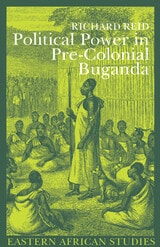
Political Power in Pre-Colonial Buganda
Economy, Society, and Warfare in the Nineteenth CenturyRichard Reid
Ohio University Press, 2002
Blessed with fertile and well-watered soil, East Africa’s kingdom of Buganda supported a relatively dense population and became a major regional power by the mid-nineteenth century. This complex and fascinating state has also long been in need of a thorough study that cuts through the image of autocracy and military might.
Political Power in Pre-Colonial Buganda explores the material basis of Ganda political power, gives us a new understanding of what Ganda power meant in real terms, and relates the story of how the kingdom used the resources at its disposal to meet the challenges that confronted it. Reid further explains how these same challenges ultimately limited Buganda’s dominance of the East African great lakes region.
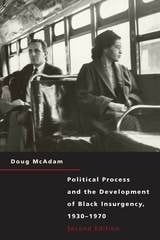
Political Process and the Development of Black Insurgency, 1930-1970
Doug McAdam
University of Chicago Press, 1999
"[A] first-rate analytical demonstration that the civil rights movement was the culmination of a long process of building institutions in the black community."—Raymond Wolters, Journal of American History
"A fresh, rich, and dynamic model to explain the rise and decline of the black insurgency movement in the United States."—James W. Lamare, Annals of the American Academy of Political and Social Science
Political Sociology
Tom Bottomore
Pluto Press, 1993
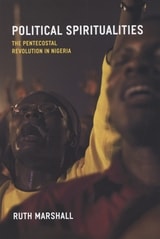
Political Spiritualities
The Pentecostal Revolution in NigeriaRuth Marshall
University of Chicago Press, 2009
After an explosion of conversions to Pentecostalism over the past three decades, tens of millions of Nigerians now claim that “Jesus is the answer.” But if Jesus is the answer, what is the question? What led to the movement’s dramatic rise and how can we make sense of its social and political significance? In this ambitiously interdisciplinary study, Ruth Marshall draws on years of fieldwork and grapples with a host of important thinkers—including Foucault, Agamben, Arendt, and Benjamin—to answer these questions.
To account for the movement’s success, Marshall explores how Pentecostalism presents the experience of being born again as a chance for Nigerians to realize the promises of political and religious salvation made during the colonial and postcolonial eras. Her astute analysis of this religious trend sheds light on Nigeria’s contemporary politics, postcolonial statecraft, and the everyday struggles of ordinary citizens coping with poverty, corruption, and inequality.
Pentecostalism’s rise is truly global, and Political Spiritualities persuasively argues that Nigeria is a key case in this phenomenon while calling for new ways of thinking about the place of religion in contemporary politics.
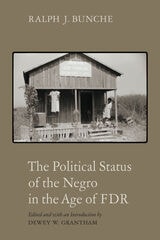
Political Status of the Negro in the Age of FDR
A Carnegie-Myrdal Report Emphasizing the American SouthRalph J. Bunche
University of Chicago Press, 1973
This volume presents the essence of a massive report prepared in 1940 by a team headed by political scientist and civil rights leader Ralph J. Bunche for the Carnegie Corporation’s Survey of the Negro in America. The report was used by Swedish social economist Gunnar Myrdal in writing his monumental An American Dilemma, and it shaped Myrdal’s treatment of the Black political experience. As a valuable historical document, it provides a backdrop against which we can measure change in the Black American’s political status and interpret the origins and consequences of the second Reconstruction.
The Political Status of the Negro introduces essential information about political practices in the Southern states. It offers insight into the historical, economic, sociological, and psychological factors that accounted for these practices, as well as some understanding of the myths, stereotypes, and symbols that contemporaries often used to explain and justify them. The study’s most enduring value lies in its wealth of personal interviews which were conducted in the South in the late 1930s and in its first-hand impressions of the African Americans and Southern politics.
The book is divided into two parts: The first contains Bunche’s explanations, comments, and analytical writings on the subject; the second includes almost all of the interviews and field reports. To this text historian Dewey W. Grantham added a comprehensive introduction that discusses Bunche and his work, the preparation of the research manuscript, and the book’s role in Gunnar Myrdal’s later work.
Political Strategies in Pre-Columbian Mesoamerica
Sarah Kurnick
University Press of Colorado, 2020
Political authority contains an inherent contradiction. Rulers must reinforce social inequality and bolster their own unique position at the top of the sociopolitical hierarchy, yet simultaneously emphasize social similarities and the commonalities shared by all. Political Strategies in Pre-Columbian Mesoamerica explores the different and complex ways that those who exercised authority in the region confronted this contradiction.
New data from a variety of well-known scholars in Mesoamerican archaeology reveal the creation, perpetuation, and contestation of politically authoritative relationships between rulers and subjects and between nobles and commoners. The contributions span the geographic breadth and temporal extent of pre-Columbian Mesoamerica—from Preclassic Oaxaca to the Classic Petén region of Guatemala to the Postclassic Michoacán—and the contributors weave together archaeological, epigraphic, and ethnohistoric data.
Grappling with the questions of how those exercising authority convince others to follow and why individuals often choose to recognize and comply with authority, Political Strategies in Pre-Columbian Mesoamerica discusses why the study of political authority is both timely and significant, reviews how scholars have historically understood the operation of political authority, and proposes a new analytical framework to understand how rulers rule.
Contributors include Sarah B. Barber, Joanne Baron, Christopher S. Beekman, Jeffrey Brzezinski, Bryce Davenport, Charles Golden, Takeshi Inomata, Arthur A. Joyce, Sarah Kurnick, Carlo J. Lucido, Simon Martin, Tatsuya Murakami, Helen Perlstein Pollard, and Víctor Salazar Chávez.

Political Theology Reimagined
Alex Dubilet and Vincent W. Lloyd, editors
Duke University Press, 2025
Contributors. Prathama Banerjee, Agata Bielik-Robson, Kirill Chepurin, Alex Dubilet, James Edward Ford III, Lucia Hulsether, Basit Kareem Iqbal, Ada S. Jaarsma, Siobhan Kelly, David Kline, Adam Kotsko, Dana Lloyd, Vincent W. Lloyd, Beatrice Marovich, Aseel Najib, Milad Odabaei, Inese Radzins, George Shulman, Martin Shuster, Rafael Vizcaíno
Political Trust in China
Lianjiang Li
University of Michigan Press, 2025
Political Visions of Ukraine
Models of a Common FutureBogdan Kolesnyk
Central European University Press, 2026
Drawing on intellectual discourses from 2013 onwards, this book maps those collisions, reconstructing Ukraine’s “noumenal parliament” — the constellation of voices that have vied to define the nation’s future. Bogdan Kolesnyk explains why Ukraine’s is not a single story but a composite of many, why neither liberal consolidation nor national stories alone provide a sufficient answer, and suggests how justice, reason and republican institutions might be the anchors for plural polity to endure.
In attempting to understand Ukrainian socio-political reality on its own terms from beyond its borders, this book urgently enquires what kind of future is worth fighting for?

Political and Social Writings
Volume 1, 1946-1955Cornelius CastoriadisDavid Ames Curtis, EditorTranslated by David Ames Curtis
University of Minnesota Press, 1988
Political and Social Writings: Volume 1, 1946–1955 was first published in 1988. Minnesota Archive Editions uses digital technology to make long-unavailable books once again accessible, and are published unaltered from the original University of Minnesota Press editions.
A series of writings by the man who inspired the students of the Workers' Rebellion in May of 1968.
"Given the rapid pace of change in the Soviet Union and Eastern Europe, and the radical nature of these transformations, the work of Cornelius Castoriadis, a consistent and radical critic of Soviet Marxism, gains renewed significance. . . . these volumes are instructive because they enable us to trace his rigorous engagement with the project of socialist construction from his break with Trotskyism to his final breach with Marxism . . . and would be read with profit by all those seeking to comprehend the historical originality of events in the USSR and Eastern Europe." –Contemporary Sociology
Politicians, Judges, and City Schools
Reforming School Finance in New YorkJoel S. Berke
Russell Sage Foundation, 1984
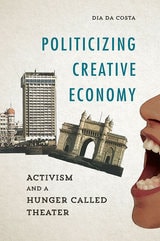
Politicizing Creative Economy
Activism and a Hunger Called TheaterDia Da Costa
University of Illinois Press, 2016
As Da Costa shows, commodification, heritage, and management discussions inevitably creep into performance. Yet the ability of performance to undermine such subtle invasions make activist theater a crucial site for considering what counts as creativity in the cultural politics of creative economy. Da Costa explores the precarious lives, livelihoods, and ideologies at the intersection of heritage projects, planning discourse, and activist performance. By analyzing the creators, performers, and activists involved--individuals at the margins of creative economy as well as society--Da Costa builds a provocative argument. Their creative economy practices may survive, challenge, and even reinforce the economies of death, displacement, and divisiveness used by the urban poor to survive.
Politicizing Digital Space
Theory, the Internet, and Renewing DemocracyTrevor Garrison Smith
University of Westminster Press, 2017
The objective of this book is to outline how a radically democratic politics can be reinvigorated in theory and practice through the use of the internet. The author argues that politics in its proper sense can be distinguished from anti-politics by analyzing the configuration of public space, subjectivity, participation, and conflict. Each of these terrains can be configured in a more or less political manner, though the contemporary status quo heavily skews them towards anti-political configuration.
Using this understanding of what exactly politics entails, this book considers how the internet can both help and hinder efforts to move each area in a more political direction. By explicitly interpreting contemporary theories of the political in terms of the internet, this analysis avoids the twin traps of both technological determinism and technological cynicism.
Raising awareness of what the word ‘politics’ means, the author develops theoretical work by Arendt, Rancière, Žižek and Mouffe to present a clear and coherent view of how in theory, politics can be digitized and alternatively how the internet can be deployed in the service of trulydemocratic politics.
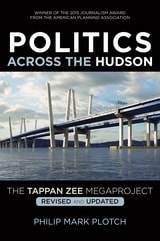
Politics Across the Hudson
The Tappan Zee MegaprojectPhilip Mark Plotch
Rutgers University Press, 2015
The State of New York built one of the world’s longest, widest, and most expensive bridges—the new Tappan Zee Bridge—stretching more than three miles across the Hudson River, approximately thirteen miles north of New York City. In Politics Across the Hudson, urban planner Philip Plotch offers a behind-the-scenes look at three decades of contentious planning and politics centered around this bridge, recently renamed for Governor Mario M. Cuomo, the state's governor from 1983 to 1994. He reveals valuable lessons for those trying to tackle complex public policies while also confirming our worst fears about government dysfunction.
Politics Across the Hudson
The Tappan Zee MegaprojectPhilip Mark Plotch
Rutgers University Press, 2015
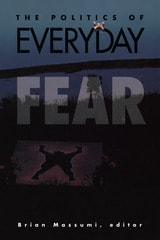
Politics Of Everyday Fear
Brian Massumi
University of Minnesota Press, 1993
The contemporary consumer is bombarded with fear-inducing images and information. This media shower of imagery is equaled only by the sheer quantity of fear-assuaging products offered for our consumption. The contributors address questions raised by the saturation of social space by capitalized fear.
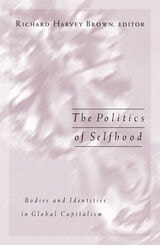
Politics Of Selfhood
Bodies And Identities In Global CapitalismRichard Harvey Brown
University of Minnesota Press, 2003
Looks at the ways social change is expressed through debates over identities and bodies
In bodies and selves, we can see politics, economics, and culture play out, and the tensions and crises of society made visible. The women’s movement, lobbies for the elderly, pro-choice and pro-life movements, AIDS research and education, pedophilia and repressed memory, global sports spectacles, organ donor networks, campaigns for safe sex, chastity, or preventive medicine—all are aspects of the contemporary politics of bodies and identities touched on in this book. Three broad themes run through the collection: how the body is constructed in various ways for different purposes, how the electronic media and its uses shape selves and sensualities and contribute to civic discourse, and how global capitalism acts as a direct force in these processes. By taking a distinctly cross-cultural and comparative approach, this volume explores more fully than ever the political, economic, institutional, and cultural settings of corporeality, identity, and representation.
Contributors: Antonella Fabri, John Jay College and New York Academy of Medicine; Eva Illouz, Hebrew U of Jerusalem; Philip W. Jenks, Portland State U; Lauren Langman, Loyola U; Timothy W. Luke, Virginia Polytechnic Institute and State U; Timothy McGettigan, Colorado State U, Pueblo; Margaret J. Tally, SUNY, Empire State College.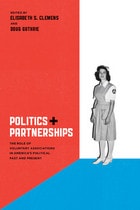
Politics and Partnerships
The Role of Voluntary Associations in America's Political Past and PresentEdited by Elisabeth S. Clemens and Doug Guthrie
University of Chicago Press, 2011
But despite the ubiquity of the idea of volunteerism in public policy debates, analysis of its role in American governance has been fragmented. Bringing together a diverse set of disciplinary approaches, Politics and Partnerships is a thorough examination of the place of voluntary associations in political history and an astute investigation into contemporary experiments in reshaping that role. The essays here reveal the key role nonprofits have played in the evolution of both the workplace and welfare and illuminate the way that government’s retreat from welfare has radically altered the relationship between nonprofits and corporations.
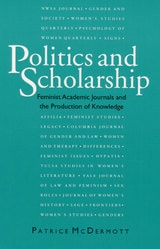
Politics and Scholarship
Feminist Academic Journals and the Production of KnowledgePatrice McDermott
University of Illinois Press, 1994
-- J'nana Morse Sellery, coauthor of Elizabeth Bowen: A Bibliography
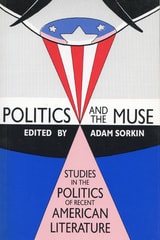
Politics and the Muse
Studies in the Politics of Recent American LiteratureAdam J. Sorkin
University of Wisconsin Press, 1989
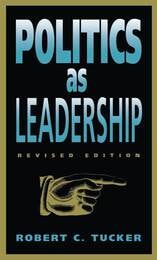
Politics as Leadership
Revised EditionRobert C. Tucker
University of Missouri Press, 1995
Robert C. Tucker begins this invaluable book with an analytical look at politics, leadership, and the effect each has on the other. Aligning himself with Plato's view of politics as leadership, Tucker argues that politics is more usefully defined from this perspective than from the more familiar stance of the exercise of power. He maintains leaders must define collective problems, prescribe actions or policies, and finally seek support for their diagnoses and policy prescriptions.
Tucker contends that political science must take account not only of leadership by those in state authority, but also of sociopolitical movements for change as vehicles of attempted leadership of political communities. Dividing such movements into those for reform and those for revolution, he illustrates this distinction with examples, including Martin Luther King Jr. as a reform leader and Lenin as a revolutionary one.
Finally, Tucker raises a central question of his study: how can leadership save humankind from itself in the troubled world of today? In an insightful and moving discussion of what he calls the "crisis syndrome," Tucker analyzes problems such as population growth, resource depletion, and environmental degradation with respect to leadership. He argues that the current political process has focused on the immediate present while ignoring crises with far-reaching implications that require tough solutions.
In the epilogue to this revised edition, Tucker draws on his expertise as a Russian specialist, extending the book's discussion of leadership by viewing Mikhail Gorbachev as a reform leader in Soviet Russia and Boris Yeltsin as a post-Soviet Russian leader. Tucker also readdresses the "crisis syndrome" by examining leaders' responses in the 1980s and early 1990s.
Tucker's incisive reasoning, original insights, and commentary on the theory and practice of politics should make this revised edition of Politics as Leadership equally valuable and fascinating for experts in the field of political science and for concerned citizens.
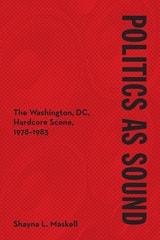
Politics as Sound
The Washington, DC, Hardcore Scene, 1978-1983Shayna L. Maskell
University of Illinois Press, 2021
A fascinating analysis of a punk rock hotbed, Politics as Sound tells the story of how a generation created music that produced--and resisted--politics and power.
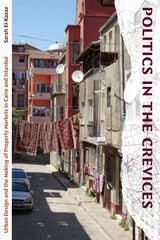
Politics in the Crevices
Urban Design and the Making of Property Markets in Cairo and IstanbulSarah El-Kazaz
Duke University Press, 2023

Politics of Emotion/Power of Affect
Edited by Susanne Witzgall and Marietta Kesting
Diaphanes, 2021
With contributions by Marie-Luise Angerer, Ben Anderson, Jace Clayton, Keren Cytter, Antonio Damasio, Cécile B. Evans, Karianne Fogelberg, Deborah Gould, Susanna Hertrich, Serhat Karakayali, Marietta Kesting, Carolyn Pedwell, and Susanne Witzgall.
Politics of Legitimacy
State-Society Relations and Patterns of Chinese PoliticsDingxin Zhao
University of Chicago Press, 2026
The Chinese communist state has survived massive social changes, including the introduction of capitalist markets, an ongoing explosion of technological innovation, and an unprecedented jump in wealth and education, accompanied by a major cultural transformation. How has China managed to maintain its power even as the ground has so profoundly shifted? In Politics of Legitimacy, Dingxin Zhao argues that state power can be legitimized in three ideal-typical ways: a set of values upheld by the state (ideological legitimacy), recognized political processes such as regular competitive elections (procedural legitimacy), and the state’s capacity to provide public goods (performance legitimacy).
Building on this theoretical framework, Zhao analyzes different aspects of Chinese politics, including the tragic ending of the 1989 pro-democracy movement, the weak development of mass-based nationalism in post-Mao China, the reasons behind China’s economic success, the anti-establishment tendency of the Chinese mass media and social media, and the sources of political tension in China, despite a superb economy. Moreover, Zhao’s innovative framework is widely applicable beyond China, shifting our attention from regime-type categories to the tools and relationships that determine their survival or collapse, and illuminating the current global emergence of conservatism and religious nationalism.
Politics of Rightful Killing
Civil Society, Gender, and Sexuality in WeblogistanSima Shakhsari
Duke University Press, 2020
Politics of the Sword
Dueling, Honor, and Masculinity in Modern ItalySteven C. Hughes
The Ohio State University Press, 2007